💡 Key Takeaways
- Make the easy walk a default, not a decision: 20-30 minutes, conversational pace, RPE 2-4 — same in a hotel hallway, an airport concourse, or your neighborhood.
- A daylight walk on arrival does double duty — easy movement plus a circadian cue that helps you adjust to a new time zone faster.
- Aim for a daily floor near 6,000-8,000 steps rather than the marketing 10,000; most of the health benefit lands in that range, and it survives a packed calendar.
- Keep recovery walks flat and easy; if HRV is trending down or resting heart rate up across several mornings, take full rest instead of even a walk.
Tuesday: a 6am call, four hours of meetings, a redeye, a hotel arrival at an hour your body insists is the middle of the night. In that week the structured workout is the first thing to vanish. But the easy recovery walk is the one piece of movement that survives — because it asks almost nothing of you and fits in the cracks the rest of your schedule leaves.
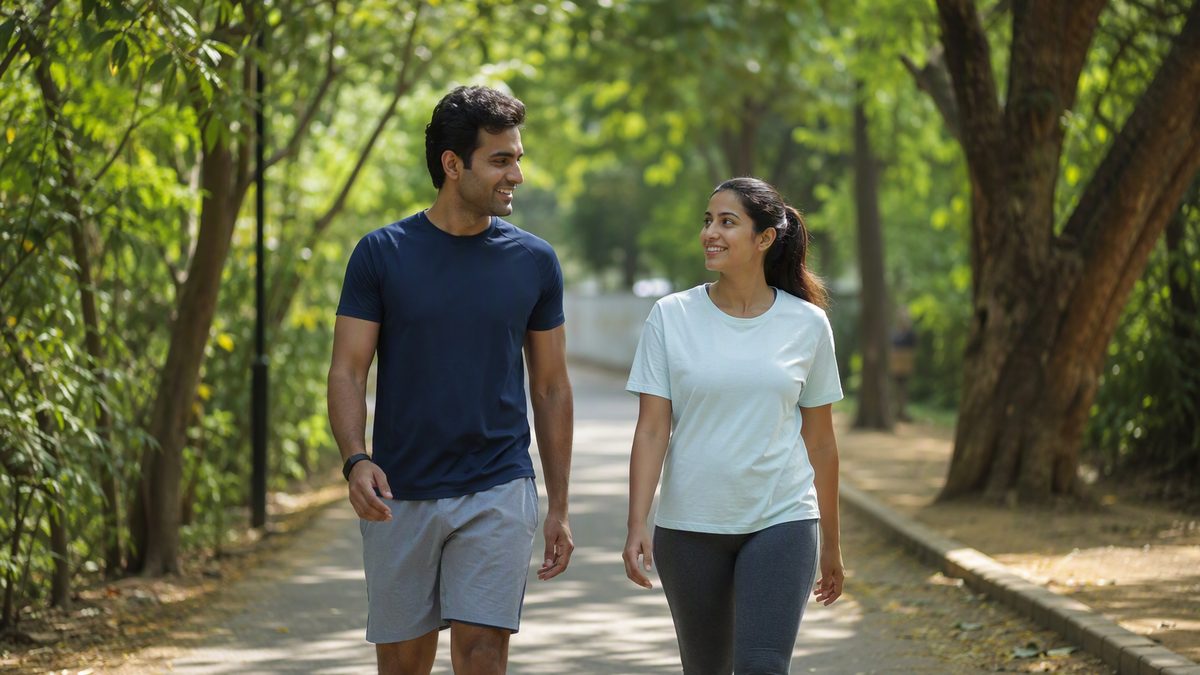
Think of the recovery walk as the portable default. After a hard session, between meetings, walking a concourse, or stepping outside on arrival in a new city, it adds gentle blood flow and nudges a chronically stressed nervous system back toward rest-and-digest. No gym, no kit, no decision.
This page covers the walking specifics: where the easy walk slots into your actual week, the airport and time-zone defaults you can run on autopilot, the pace that keeps it recovery rather than a stressor, and the step floor worth holding even when everything else slips.
1. Where the Easy Walk Slots Into Your Week
Begin with your real constraint: the week is unpredictable, so the recovery walk has to be the flexible piece that absorbs the chaos. The rule is simple — after any hard session or on any travel day, you walk easy for 20-30 minutes, full stop. Walking is the one modality that needs no equipment and no booking, so it works in a city you've never visited at an hour you didn't plan for.
This is where defaults beat decisions. Decision fatigue is real, and a recovery routine that demands a fresh choice each day won't survive a 60-hour week. So predefine it: 'Post-hard or travel day, I walk 20-30 minutes at a pace where I can still take a call.' That last detail is the unlock — for you, the easy walk often doubles as a phone call or a thinking block, which is exactly why it sticks when a hotel-gym session gets skipped. The point of the recovery walk is that it costs you nothing in willpower, so it survives the week that breaks everything else.
2. The Pace Rule When You're Tempted to Power Through
Your instinct is to make everything maximally efficient — to walk fast and get something out of it. For a recovery walk, resist that. The walk should sit at roughly Zone 1: about 50-60% of max heart rate, an effort of 2-4 out of 10, fully conversational. The test is built for your day — if you couldn't comfortably take a phone call at this pace, you're walking too hard for recovery.
On the premium wearable you already own — Oura, Whoop, Garmin — a rough max-heart-rate estimate is 220 minus your age, so near 130 at 50, putting your easy ceiling around 78-93 beats per minute. Treat it as a guardrail, not a target. Going faster adds no recovery benefit; it just stacks another low-grade stressor on a system already running hot from cortisol, travel, and broken sleep. After a client dinner, hydrate before you walk and keep the effort minimal — the alcohol already taxed your sleep. When unsure, slow down; the recovery walk is the one place in your day where doing less is the optimization.
3. Travel and Time-Zone Walk Defaults
Here's a default walking playbook you can run without thinking, mapped to the situations your week actually throws at you. Every entry stays genuinely easy and short enough to never become another stressor.
| Situation | Walk default | Duration / steps | Pace anchor |
|---|---|---|---|
| Day after a hard session | Easy outdoor or hotel-hallway walk | 25-30 min / ~2,500-3,000 | RPE 2-4; full sentences easy |
| Long-haul travel day | Concourse walking between gates | 20-30 min / ~2,000-3,000 | 30-50% effort; never breathless |
| Arrival, new time zone | Daylight walk outside on arrival | 20-30 min / ~2,000-2,500 | RPE 2-3; aids circadian reset |
| Morning after a client dinner | Easy walk, hydrate first | 20-25 min / ~2,000 | RPE 2-3; gentle, no push |
| Wiped / poor-sleep streak | Skip it — full rest | 0 | Sit, sleep, recover |
A couple of load-bearing rules. The daylight arrival walk earns its spot twice over: easy movement plus a light-exposure cue that helps reset your body clock to the new zone faster. And hold a daily step floor near 6,000-8,000 — the famous 10,000 is a marketing round number, and most of the measured health benefit lands below it, which means a realistic floor survives a brutal calendar where a perfect one wouldn't.
4. Why Flat, Easy Walking Beats Pushing on a Stressed System
Your physiology is the argument for keeping these walks easy and flat. Long hours, travel, and disrupted sleep keep cortisol and sympathetic tone elevated — you're already running hot. A brisk uphill walk doesn't help; walking energy cost rises steeply with grade (PMID 28729390), so a hill quietly turns a recovery walk into another stressor. Easy, flat, rhythmic walking does the opposite: it supports a parasympathetic shift toward rest-and-digest, the recovery side of your nervous system.
Be clear on what the walk does and doesn't deliver. The honest evidence is that easy movement's edge over simply sitting, for restoring performance or reducing soreness, is modest and mixed. What it reliably does is clear the acute by-products of hard effort faster than sitting, support mood and perceived recovery, and keep your routine intact when everything conspires against it. That consistency compounds; no single walk does. And it never replaces sleep — sleep is where real recovery happens, and no walk offsets a chronic deficit. If you want the default-rule approach to durable routines under a demanding schedule, our guide to building fitness habits goes deeper.
5. The One Signal That Means Skip the Walk
Make your morning recovery trend the decider. The wearable you already wear tracks resting heart rate and HRV. A multi-day rise in resting heart rate, or a falling HRV trend, flags accumulated stress — and that's your cue to take full rest, not even an easy walk. Watch the trend across days, not a single noisy reading; consumer devices are best for your personal trend, not absolute truth.
When that trend turns sour — or you simply feel wiped, slept badly several nights, or feel motivation crater — full passive rest beats any walk. An easy walk is for when you're basically fine but a little stiff. Under-recovery, illness, or sharp localized pain calls for actual rest and, with pain, clinical input. Two cautions for your profile: don't paper over a bad trend with stimulants — that masks the signal your body is sending — and treat your annual executive physical as a natural checkpoint for the bigger biomarker picture. When unsure which kind of day it is, rest wins.
Recovery Walk Questions From the Road
What's the minimum recovery walk when I'm traveling?
A 20-30 minute easy walk handles it almost anywhere — a hotel hallway, an airport concourse, or a city block on arrival. The walk's job is light movement, blood flow, and routine, not intensity, so keep it conversational at RPE 2-4. Make it a default rule rather than a daily decision: any travel or post-hard day, walk easy for 20-30 minutes. If you're genuinely wiped or sleep-deprived, skip it and rest fully — that's the more recovering choice.
Can an easy walk help me beat jet lag?
A daylight walk right after arrival does double duty: gentle easy movement plus light exposure that cues your body clock toward the new time zone, which can help you adjust faster. Keep it conversational, RPE 2-3, and outdoors if you can for the daylight. It won't replace sleep, but combining an easy arrival walk with good light timing is a low-cost way to ease a time-zone shift without adding training stress.
Does alcohol at client dinners undo my recovery walk?
Alcohol works against recovery mainly by disrupting sleep and adding dehydration, not by undoing the walk itself. Don't try to out-walk it. The morning after, hydrate first, then take an easy 20-25 minute walk rather than anything brisk, since your sleep was already compromised. The bigger lever is moderating the drinks and protecting sleep — the walk is a gentle adjunct, not a way to atone for a heavy night.
What's a realistic daily step target for my schedule?
Aim for a floor around 6,000-8,000 steps a day. Most of the measured health benefit lands in that range — the famous 10,000 figure was a marketing round number, not a clinical threshold. A realistic floor survives a packed travel week where a perfect target wouldn't, and concourse walking, walking meetings, and an arrival walk add up faster than you'd expect. Even on a brutal day, far fewer steps still beats sitting all day.
Disclaimer: This article is for educational purposes only and is not medical advice. Consult a qualified healthcare professional before starting any supplement, nutrition, or training protocol — especially if you are pregnant or breastfeeding, under 18, taking medication, or managing a health condition.
Scientific References & Clinical Sources
- Ludlow LW, Weyand PG. Walking economy is predictably determined by speed, grade, and gravitational load. J Appl Physiol (1985), 2017. PMID: 28729390
- Williams PT, Thompson PD. Relationship of walking and running LISS to cardiovascular risk factors. Arterioscler Thromb Vasc Biol, 2013. PMID: 23559628
- Dupuy O, et al. An Evidence-Based Approach for Choosing Post-exercise Recovery Techniques to Reduce Markers of Muscle Damage, Soreness, Fatigue, and Inflammation: A Systematic Review With Meta-Analysis. Front Physiol, 2018. PMID: 29755363
- Toledo FG, et al. Effects of physical activity and weight loss on skeletal muscle mitochondria and relationship with glucose control in type 2 diabetes. Diabetes, 2007. PMID: 17536069
- Haggerty M, et al. The influence of incline walking on joint mechanics. Gait Posture, 2014. PMID: 24472218

