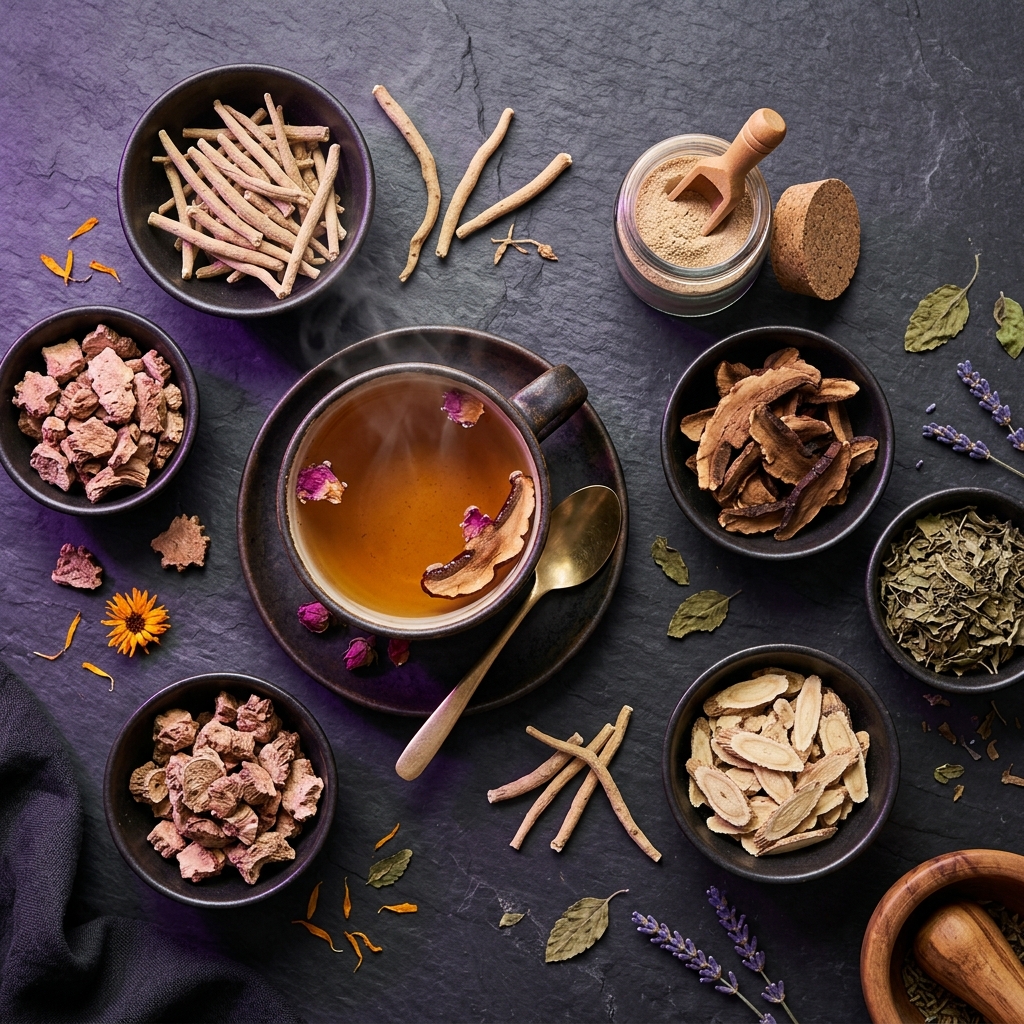
Training hard and living harder — that's the reality for most people chasing fitness goals in 2026. Work pressure, poor sleep, and back-to-back workout sessions all draw from the same physiological reservoir. When that reservoir runs dry, performance tanks, mood craters, and injuries follow. Enter adaptogens: a class of botanical and fungal compounds that have been used in traditional medicine for centuries and are now gaining serious traction in sports science and integrative health. They don't replace good programming or recovery habits, but used intelligently, they can help your body handle stress — both mental and physical — without tipping into burnout.
What Makes an Adaptogen an Adaptogen
The term "adaptogen" was coined in the 1940s by Soviet pharmacologist Nikolai Lazarev to describe substances that increase the body's nonspecific resistance to stress. To qualify, a compound must be nontoxic at normal doses, produce a broad normalizing effect on physiological function, and reduce the impact of stressors regardless of their origin. That last point is key: adaptogens don't just sedate or stimulate — they modulate. They help the body find homeostasis when it's been knocked off balance, whether the stressor is a heavy deadlift session, a brutal work week, or a run of poor sleep nights. This mechanism is distinct from stimulants, sedatives, or nootropics, which tend to push physiology in one fixed direction.
The HPA Axis: Why Stress Is a Training Variable
To understand how adaptogens work, you need to understand the hypothalamic-pituitary-adrenal (HPA) axis. This is the body's central stress-response system. When your brain detects a stressor — a hard interval session, a tense meeting, or a sleepless night — the hypothalamus signals the pituitary gland, which triggers the adrenal glands to release cortisol. In the short term, cortisol is useful: it mobilizes energy, sharpens focus, and suppresses inflammation during the stress event. The problem is chronic elevation. When cortisol stays high over weeks and months, it degrades muscle tissue, disrupts sleep architecture, suppresses immune function, and blunts testosterone and growth hormone output. Athletes in heavy training blocks are especially vulnerable because they're stacking physiological stressors on top of life stressors, and the HPA axis doesn't distinguish between the two. Adaptogens primarily work by modulating HPA axis activity — dampening the cortisol spike when it's excessive while supporting baseline adrenal function when output is depleted.
Ashwagandha: The Cornerstone Adaptogen
Ashwagandha (Withania somnifera) is the most studied adaptogen in Western sports science, and for good reason. Its active compounds — withanolides — have a well-documented effect on cortisol regulation. Multiple randomized controlled trials in healthy adults have shown reductions in perceived stress, salivary cortisol, and markers of anxiety following eight to twelve weeks of supplementation. From a training perspective, some trials have reported improvements in:
- VO2 max — likely via enhanced mitochondrial oxygen utilization
- Muscular strength and recovery — with reductions in exercise-induced muscle damage markers
- Sleep quality — reduced sleep onset latency and improved deep sleep duration
- Testosterone levels — modest but meaningful increases in men under training stress
A typical evidence-supported dose is 300–600 mg of a root extract standardized to withanolides (KSM-66 and Sensoril are well-studied branded forms), taken daily with food. Effects accumulate over weeks — this isn't a pre-workout stimulant. Most protocols run eight to twelve weeks, followed by a two-to-four week break.
Rhodiola Rosea: Fatigue, Focus, and Endurance
Rhodiola rosea grows in cold, high-altitude environments across Europe and Asia — a fitting origin for an herb that helps the body adapt to harsh conditions. Its primary actives, rosavins and salidroside, act on the monoamine system and influence serotonin, dopamine, and norepinephrine signaling. This gives rhodiola a slightly different profile than ashwagandha: where ashwagandha leans more into cortisol and anabolic support, rhodiola tends to shine in acute mental fatigue, endurance performance, and mood stabilization during high-stress periods. Research suggests it can reduce the perception of effort during submaximal endurance work, improve reaction time and cognitive accuracy under fatigue, and attenuate the burnout-associated drop in motivation that often hits in the middle of a training block. Effective doses in research range from 200–600 mg of a standardized extract (typically 3% rosavins, 1% salidroside) taken in the morning or before training on an empty stomach. Rhodiola is mildly stimulating, so evening dosing can interfere with sleep for some people.
Cordyceps: Oxygen, Energy, and Mitochondrial Output
Cordyceps is a genus of parasitic fungi with a long history in traditional Chinese medicine. The two most relevant species for athletic performance are Cordyceps sinensis (now reclassified as Ophiocordyceps sinensis) and the more accessible cultivated strain Cordyceps militaris. The latter is what you'll find in most quality supplements and has been the focus of more recent human research. Cordyceps appears to work through a distinct mechanism from the two plants above: it supports ATP synthesis via adenosine pathways and may improve oxygen utilization at the cellular level. Studies in active adults have shown improved VO2 max and time-to-exhaustion metrics after several weeks of supplementation. It's less about stress modulation and more about mitochondrial output — which makes it a natural complement to ashwagandha and rhodiola in a stacked protocol. Look for products standardized to cordycepin content; doses typically range from 1,000–3,000 mg of whole fruiting body extract daily.
Stacking and Cycling: How to Use Adaptogens Intelligently
Adaptogens are not pharmaceuticals, but they aren't candy either. A few principles apply:
- Cycling is recommended. Most practitioners suggest eight to twelve weeks on, two to four weeks off. This prevents receptor desensitization and gives you a clearer read on what's actually working.
- Start with one. Introducing multiple adaptogens simultaneously makes it impossible to know what's doing what. Start with ashwagandha for four weeks, assess, then layer in rhodiola or cordyceps if needed.
- Timing matters. Ashwagandha is flexible — morning or evening. Rhodiola is best taken earlier in the day. Cordyceps pairs well as a pre-training supplement.
- Context-match your selection. High stress and poor sleep? Lean ashwagandha-first. Heavy endurance block with mental fatigue? Rhodiola. Performance optimization alongside good recovery? Cordyceps has a strong case.
- Quality is non-negotiable. The supplement industry is poorly regulated. Look for third-party tested products (NSF Certified for Sport, Informed Sport, or USP verified), standardized extracts with disclosed active compound percentages, and transparent sourcing.
Stacking all three is not unreasonable for experienced athletes during demanding training blocks, but it's a more advanced approach and should be introduced gradually. A sensible sequencing might be: ashwagandha through the base-building phase, adding rhodiola in the intensity block, and cordyceps in the peaking phase when output is the priority.
Safety, Contraindications, and When to Talk to a Clinician
The safety profile of adaptogens is generally favorable at recommended doses in healthy adults, but there are important caveats. Ashwagandha belongs to the nightshade family and should be avoided by individuals with nightshade sensitivities or autoimmune thyroid conditions, as it may stimulate thyroid hormone production. Rhodiola can interact with antidepressants and other medications affecting the monoamine system; individuals on SSRIs, MAOIs, or stimulant medications should not use it without medical clearance. Cordyceps is generally well-tolerated but may affect blood clotting — a consideration for anyone on anticoagulants or preparing for surgery. Pregnancy and breastfeeding are contraindications for all three without explicit clinical guidance. Liver-related adverse events have been reported anecdotally with high-dose ashwagandha supplementation, though these appear rare and often involve products of uncertain quality. More broadly, adaptogens address stress load on the margins — they are not a substitute for adequate sleep, appropriate training periodization, nutrition sufficiency, or addressing the root causes of chronic stress. If you're experiencing signs of clinical burnout, adrenal fatigue, or disordered sleep, a conversation with a physician or functional medicine practitioner is the right first step before reaching for any supplement. Always disclose supplementation to your healthcare provider, especially if you are managing any chronic condition or taking prescription medications.
Fitting Adaptogens Into Your Training System
The 2026 approach to fitness treats mental and physical resilience as one system — not separate domains. Adaptogens fit cleanly into this framework because they work at exactly that intersection: they influence how your brain and body process and recover from stress, which determines how hard you can train, how well you adapt, and how long you can sustain high performance without breaking down. Tracking subjective readiness, HRV trends, sleep quality, and perceived fatigue over the course of an adaptogen cycle gives you real data on whether a compound is actually moving the needle for you — or whether the investment is better spent elsewhere.
UltraFit360's daily readiness check-in and recovery tracking tools are built for exactly this kind of self-experimentation. Log your energy, sleep, and mood scores each day during an adaptogen cycle and let the trends tell you what's working. Your body's response is the only data point that matters.
Transform Your Fitness Journey
Log your workouts, track your diet, and get AI coaching insights — all with UltraFit360.