If you spend any time in health and wellness communities online, you have almost certainly come across berberine being called "nature's Ozempic." The comparison has made this ancient botanical compound one of the most searched supplements of the past two years. But the hype, as it often does, runs well ahead of the evidence. Berberine is a genuinely interesting compound with real metabolic benefits — it just works through entirely different mechanisms than semaglutide, produces more modest results, and comes with its own set of considerations. Here is what the science actually says, and how to think about berberine if metabolic health is on your radar.
What Is Berberine?
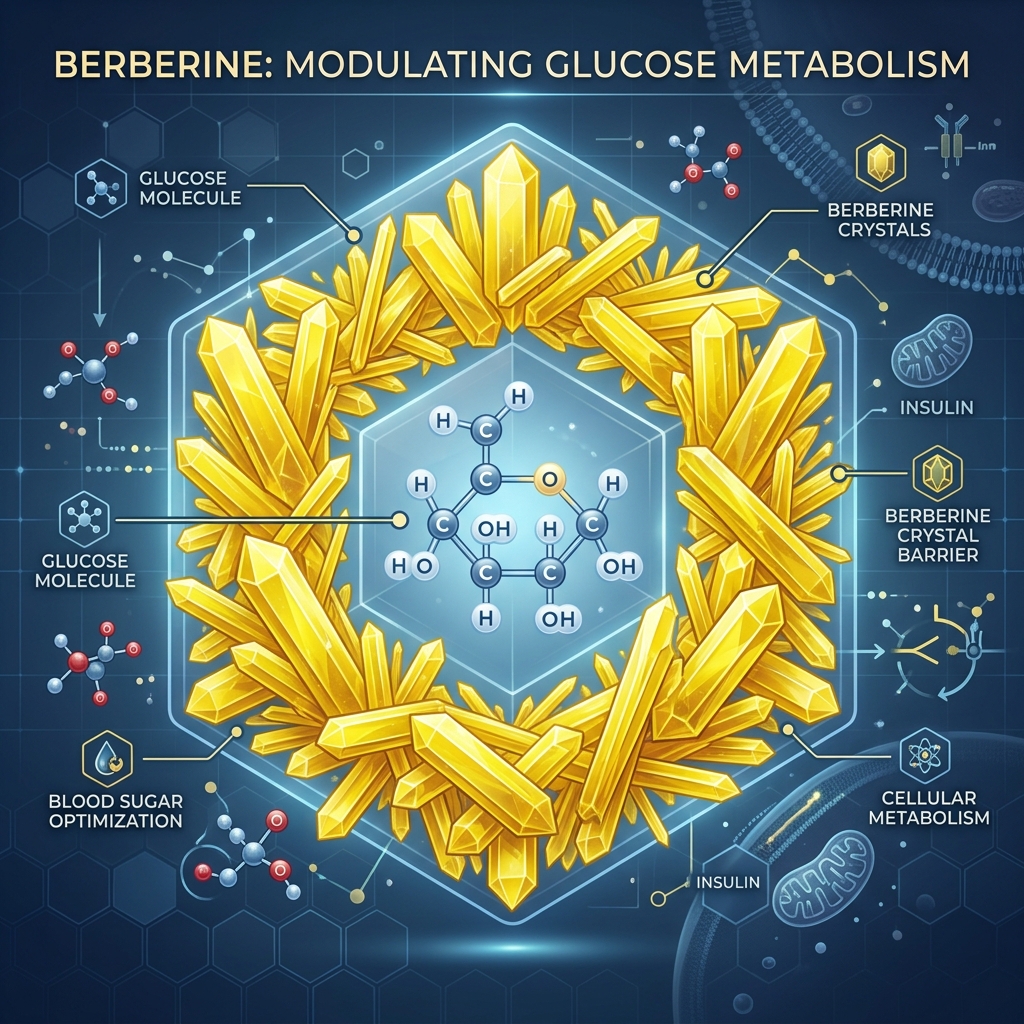
Berberine is a bright yellow alkaloid found naturally in several plants, including barberry (Berberis vulgaris), goldenseal, and Oregon grape root. It has been used in traditional Chinese and Ayurvedic medicine for centuries, primarily as an antimicrobial and digestive aid. Western research interest picked up in the early 2000s when scientists began investigating its effects on glucose metabolism, and the compound has since become one of the more rigorously studied botanical supplements in metabolic health.
Unlike many supplements that accumulate a mountain of low-quality studies, berberine has been evaluated in a reasonable number of randomized controlled trials — enough to draw some meaningful, if cautious, conclusions. It is available over the counter in most countries and is typically sold in capsule form.
How Berberine Works: The AMPK Pathway
The primary mechanism behind berberine's metabolic effects is activation of AMP-activated protein kinase (AMPK) — an enzyme often described as the body's master metabolic switch. AMPK is activated naturally during exercise and caloric restriction; it signals cells to shift from energy storage to energy burning, improves insulin sensitivity, and helps regulate glucose uptake in muscle tissue.
Berberine activates AMPK largely by inhibiting mitochondrial complex I, which temporarily lowers the cell's energy charge and triggers AMPK as a compensatory response. The downstream effects include:
- Increased glucose uptake in skeletal muscle, independent of insulin signaling
- Reduced hepatic glucose production — the liver makes less glucose between meals
- Improved insulin receptor sensitivity at the cellular level
- Modest lipid-lowering effects, particularly reductions in LDL cholesterol and triglycerides
- Favorable shifts in gut microbiome composition, which may contribute to metabolic improvements over time
It is worth noting that metformin, the most widely prescribed type 2 diabetes medication, also works partly through AMPK activation — which is one reason berberine is sometimes loosely compared to it. However, drug-to-supplement comparisons like this are always imprecise, and berberine is not a substitute for metformin or any prescription medication.
What the Evidence Actually Shows
Clinical research on berberine is more encouraging than for most supplements, but it requires honest interpretation. Multiple trials in people with type 2 diabetes or prediabetes have shown berberine can meaningfully reduce fasting blood glucose and HbA1c (a marker of average blood sugar over three months). Some head-to-head trials have found berberine to perform comparably to metformin in certain populations over short study periods, though these studies have limitations and have not been replicated at scale.
Key evidence-based benefits that appear fairly consistent across studies:
- Modest reductions in fasting blood glucose in people with elevated levels
- Small but meaningful improvements in HbA1c in type 2 diabetic populations
- Reductions in fasting insulin and improvements in insulin sensitivity indices
- Lowering of LDL cholesterol and triglycerides in people with dyslipidemia
- Some evidence for modest weight and waist circumference reduction, likely secondary to metabolic improvements
An important caveat: most berberine trials are relatively short (three to six months), conducted in Asian populations (where dietary patterns and baseline metabolic status may differ), and have varying quality of blinding and control. The evidence is promising, not definitive.
The "Nature's Ozempic" Hype — Setting the Record Straight
The comparison to Ozempic (semaglutide) has been wildly overstated, and it is worth being direct about why. Semaglutide is a GLP-1 receptor agonist — a drug that directly mimics a gut hormone involved in insulin secretion, appetite suppression, and gastric emptying. Clinical trials have shown semaglutide producing average weight losses in the range of 10–15% of body weight in people with obesity, with dramatic cardiovascular and metabolic benefits.
Berberine does not work through the GLP-1 pathway at all. It does not suppress appetite through the same central nervous system mechanisms. It does not produce anywhere near the weight loss magnitude seen with GLP-1 drugs. The "nature's Ozempic" label appears to have originated from social media, not science, and it sets expectations that berberine simply cannot meet.
What berberine can realistically offer people with elevated blood sugar or insulin resistance is a meaningful — though modest — improvement in metabolic markers, particularly when combined with dietary changes and regular exercise. That is genuinely useful. It just is not a pharmaceutical-grade intervention, and treating it as one leads to disappointment and potentially to people delaying evidence-based care.
Dosing and Practical Use
The most commonly studied dosing protocol is 500 mg taken two to three times per day with meals, for a total of 1,000–1,500 mg daily. Taking berberine with food helps reduce gastrointestinal discomfort and may improve absorption. Splitting doses across the day is generally preferred over a single large dose because berberine has a relatively short half-life.
Some practitioners suggest cycling berberine — for example, eight weeks on followed by two to four weeks off — to prevent potential tolerance, though the evidence for this practice is largely theoretical rather than well-established in clinical data.
Things to keep in mind when using berberine:
- Effects on blood sugar tend to become apparent over four to eight weeks of consistent use
- Berberine has low oral bioavailability; some formulations combine it with piperine or use dihydroberberine to improve absorption
- It is generally considered to be reasonably well-tolerated, though individual responses vary considerably
- Quality control varies widely between supplement brands — third-party tested products are worth seeking out
Side Effects and Drug Interactions
Berberine's most common side effects are gastrointestinal: nausea, diarrhea, constipation, cramping, and bloating are reported by a meaningful percentage of users, particularly at the start of supplementation. These effects often diminish over the first week or two and can be minimized by starting with a lower dose and always taking it with food.
More serious considerations involve drug interactions. Berberine inhibits several cytochrome P450 enzymes — the same liver enzymes responsible for metabolizing a large number of medications. This means berberine can increase or decrease blood levels of other drugs in ways that may not be predictable. Notable interactions to be aware of include:
- Metformin and other diabetes medications: additive blood sugar lowering can cause hypoglycemia
- Blood thinners (warfarin, anticoagulants): berberine may potentiate effects and increase bleeding risk
- Cyclosporine: berberine significantly increases plasma levels of this immunosuppressant
- Statins: interaction potential exists; combined use should be monitored
- Certain antibiotics and antifungals: enzyme competition may alter drug levels in either direction
Berberine also has antimicrobial properties that may alter gut microbiome composition during extended use, which has both potential benefits and theoretical risks that are not yet fully characterized.
Who Should Talk to a Doctor First
Berberine is not a supplement to add casually if you are already managing a health condition or taking medications. You should consult your physician or a qualified clinician before starting berberine if any of the following apply:
- You have diagnosed type 2 diabetes or prediabetes and are taking any glucose-lowering medication
- You are pregnant or breastfeeding — berberine has demonstrated uterine stimulant effects and crosses the placental barrier
- You take any medication metabolized by cytochrome P450 enzymes (ask your pharmacist if unsure)
- You have liver or kidney disease, which can affect how berberine is processed and eliminated
- You are managing any cardiovascular condition, particularly if on anticoagulants or antiarrhythmics
- You are under 18 — safety data in pediatric populations is very limited
Even if none of the above apply, informing your primary care provider that you are taking berberine is good practice, particularly if you get regular bloodwork. Changes in fasting glucose or lipid panels while on berberine are worth knowing about in context.
Metabolic health is rarely about a single supplement — it is the cumulative result of nutrition habits, sleep quality, stress management, and consistent physical activity over time. If you are working to improve your blood sugar control, insulin sensitivity, or body composition, tracking those markers alongside your workouts and habits gives you a clearer picture of what is actually moving the needle. UltraFit360 lets you log your training, monitor recovery trends, and build the structured consistency that forms the real foundation of lasting metabolic health — with or without supplementation in the mix.
Transform Your Fitness Journey
Log your workouts, track your diet, and get AI coaching insights — all with UltraFit360.