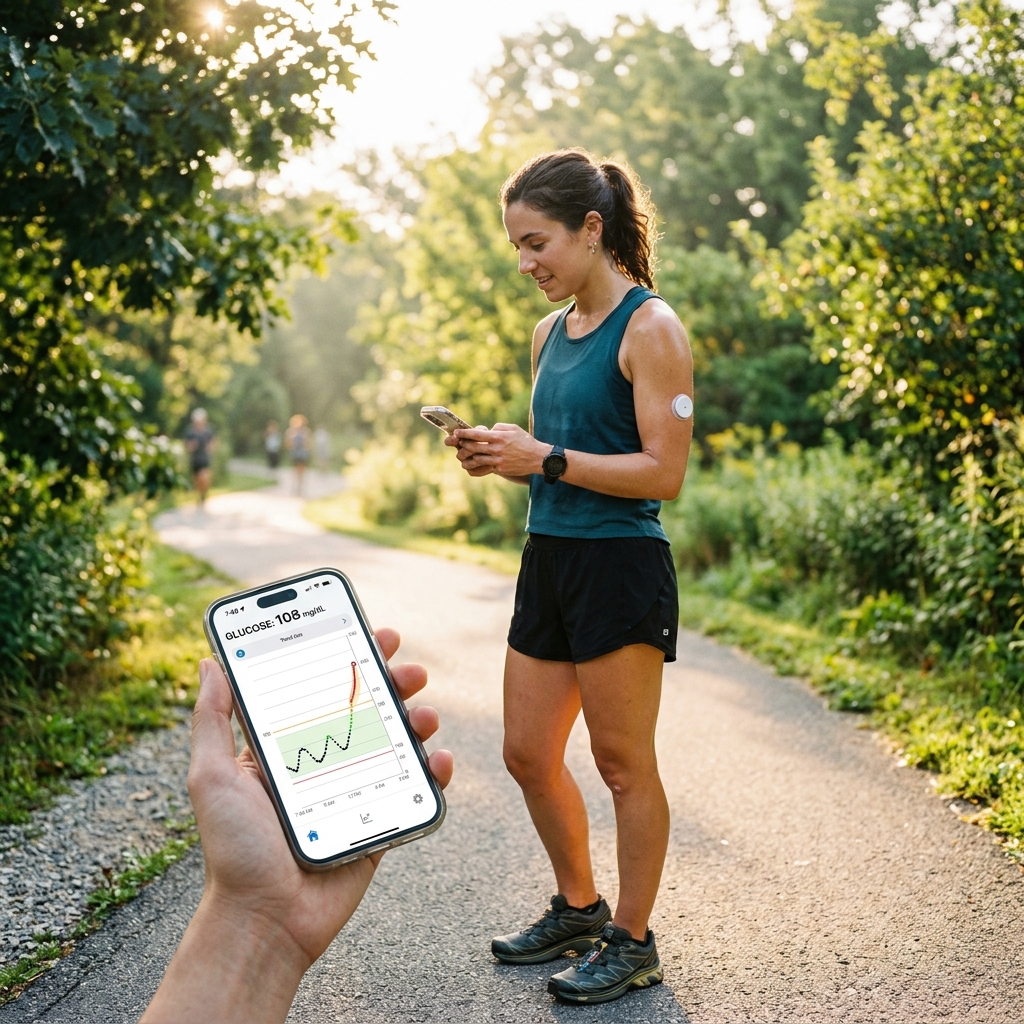
For decades, blood glucose monitoring was exclusively for people with diabetes. In 2026, that's changed completely. A growing wave of athletes, fitness enthusiasts, and biohackers are wearing continuous glucose monitors (CGMs) — not because they're sick, but because they've discovered that glucose data is the missing piece of the nutrition puzzle. Understanding how your body responds to food in real-time transforms nutrition from guesswork into precision science.
Blood Glucose Basics: What You Need to Know
What Is Blood Glucose?
Blood glucose (blood sugar) is the concentration of glucose — your body's primary energy currency — circulating in your bloodstream. When you eat carbohydrates, they're broken down into glucose, which enters your blood, triggers insulin release from your pancreas, and is shuttled into cells for energy or stored as glycogen (muscle/liver) or fat.
Normal Ranges for Healthy Adults
| Measurement | Optimal Range | Acceptable | Concern |
|---|---|---|---|
| Fasting Glucose | 70-90 mg/dL | 91-99 mg/dL | 100+ mg/dL |
| Post-Meal Peak | <120 mg/dL | 120-140 mg/dL | 140+ mg/dL |
| Average (24hr) | 80-100 mg/dL | 100-110 mg/dL | 110+ mg/dL |
| Variability (SD) | <15 mg/dL | 15-25 mg/dL | 25+ mg/dL |
Why This Matters for Fitness
Glucose is your body's fuel gauge. When glucose spikes too high after a meal, you get a rush of energy followed by a crash — brain fog, fatigue, irritability, and cravings. When glucose drops too low during exercise, you "bonk" — sudden exhaustion that ends your workout. Understanding your glucose responses lets you fuel smarter, recover faster, and perform better.
Traditional vs Continuous Glucose Monitoring
Traditional Methods
- Finger Prick Testing: A single snapshot in time. Requires pricking your finger, applying blood to a strip, and reading a meter. Gives you one data point — like checking the weather by glancing out the window once per day
- Lab Work (HbA1c): A blood test that measures your 3-month average glucose. Useful for long-term trends but tells you nothing about daily patterns, meal responses, or exercise effects
Continuous Glucose Monitors (CGMs)
A CGM is a small sensor (about the size of a 2-rupee coin) that attaches to the back of your arm and measures interstitial glucose every 1-5 minutes, sending data wirelessly to your phone. It's like having a 24/7 fuel gauge for your metabolism. You see real-time trends, meal responses, sleep patterns, and exercise effects — data that was impossible to get before.
Popular CGM Devices Compared (2026)
| Device | Wear Duration | Reading Frequency | Approx. Cost | Best For |
|---|---|---|---|---|
| Freestyle Libre 3 | 14 days | Every 1 min | $70-90/sensor | Best value, widest availability |
| Dexcom G7 | 10 days | Every 5 min | $90-120/sensor | Best app experience, Apple Watch integration |
| Dexcom Stelo | 15 days | Every 15 min | $50-70/sensor | OTC (no prescription), designed for wellness users |
| Levels + Libre | 14 days | Every 1 min | $199/month (subscription) | Best insights app, metabolic scoring |
How CGMs Actually Work
A CGM consists of:
- A tiny filament sensor inserted just under the skin (painless — you feel a light click, like a stapler)
- A transmitter sitting on top of the skin that communicates wirelessly with your phone
- An app that displays your real-time glucose levels, trends, and historical data
The sensor measures interstitial fluid glucose (the fluid between your cells), which lags behind blood glucose by about 5-15 minutes. This is why CGM readings might differ slightly from a finger prick — but for trend analysis and meal response tracking, the data is excellent.
Glucose Trends That Matter for Fitness
The Post-Meal Glucose Spike
After eating, your glucose rises. The height of the spike, how long it stays elevated, and how quickly it returns to baseline are the three metrics that matter most. Ideally, you want:
- A peak below 120 mg/dL (or below 140 at most)
- Return to baseline within 2 hours
- No "crash" below your pre-meal baseline
The Glucose Crash (Reactive Hypoglycaemia)
Some meals cause glucose to spike high and then crash below baseline — this is "reactive hypoglycaemia." It's the biochemical explanation for the 3pm energy slump, post-lunch brain fog, and sudden sweet cravings. A CGM reveals which foods trigger this pattern for your individual body.
Overnight Glucose Stability
Your glucose should be flat and stable overnight (typically 70-90 mg/dL). If it rises overnight, this could indicate poor glycogen regulation, high cortisol, or late-night eating. Monitoring this pattern can improve sleep quality dramatically.
Glucose Monitoring for Strength Training
Pre-Workout Fueling
With a CGM, you can time your pre-workout meal so that glucose is elevated — but not spiking — when you walk into the gym. The sweet spot: eat 60-90 minutes before training, choosing complex carbs + protein, and start your session when glucose is around 100-120 mg/dL and stable or gently rising.
During Training
Watch for glucose dropping below 70 mg/dL during long or intense sessions. If this happens consistently, you're either under-fueled or training too much volume in a depleted state. Intra-workout carbs (15-30g simple sugars) can maintain performance when needed.
Post-Workout Recovery Window
After intense resistance training, your muscles are highly insulin-sensitive — they'll absorb glucose efficiently without a massive insulin spike. This is the ideal time for your highest-carb meal of the day. A CGM confirms that your post-workout shake or meal produces a muted, short-lived spike compared to the same meal eaten on the couch.
Glucose Monitoring for Endurance Athletes
Bonk Prevention
The "bonk" or "hitting the wall" is what happens when glycogen stores deplete and glucose drops below ~55-60 mg/dL during prolonged exercise. With a CGM, endurance athletes can monitor their glucose in real-time and consume carbs before the bonk, not after. This is transforming marathon, cycling, and triathlon performance.
Fuel Periodisation
CGM data reveals which fueling strategies sustain glucose best during long efforts. Some athletes find gels work perfectly; others spike and crash from them. Some do better with real food, dates, or rice cakes. A CGM takes the guesswork out of race-day nutrition.
Nutrition Optimization Using CGM Data
This is where CGMs become truly powerful for non-diabetic users. By tracking your glucose response to everyday meals, you learn:
- Which foods spike YOU: Rice might spike you to 180, but pasta only goes to 120. Bread might be fine, but breakfast cereal is chaos. It's completely individual
- Meal order matters: Research shows eating vegetables and protein before carbs can reduce the glucose spike by 30-40%. A CGM lets you test this yourself
- Pairing strategies: Adding fat (avocado, olive oil) or fiber to a carb-heavy meal significantly blunts the glucose response. See it in real-time
- Stress and sleep effects: Poor sleep can increase your glucose response to the same meal by 20-30%. Visualising this on a CGM is powerfully motivating for improving sleep habits
- Pre-bed eating: Late-night snacking often causes elevated overnight glucose, which disrupts deep sleep. A CGM shows this cause-and-effect clearly
Limitations & Honest Considerations
- Cost: CGMs aren't cheap. Budget $70-200/month depending on the device and subscription. Most insurance doesn't cover CGMs for non-diabetic use (yet)
- Accuracy: CGMs measure interstitial fluid, not blood. They can be off by 10-20% in any single reading. Trust the trends, not individual numbers
- Psychological risk: Some people develop obsessive monitoring habits — anxiously checking glucose after every bite. If you have a history of disordered eating, approach CGMs with caution or skip them
- Diminishing returns: Most people learn 80% of their key insights in the first 2-4 weeks. You don't need to wear a CGM forever — a 1-2 month experiment is plenty for most fitness enthusiasts
- Not a diagnosis tool: CGMs for wellness users are not medical devices. Abnormal patterns should be discussed with your doctor, not self-diagnosed via Reddit
Integrating CGM Data with Your Fitness Stack
The real power emerges when you combine glucose data with other health metrics from wearables:
- Glucose + HRV: Track how blood sugar spikes affect your heart rate variability and next-day recovery scores
- Glucose + Sleep: Correlate overnight glucose stability with deep sleep percentage and sleep efficiency
- Glucose + Training: See which pre-workout meals produce the best training sessions — not by feel, but by data
- Glucose + Body Composition: Over time, stabilising glucose trends correlates with improved body composition and reduced visceral fat
Apps like UltraFit360 can sync your Apple Health or Health Connect data to create a comprehensive picture of how nutrition, training, sleep, and stress interact — turning isolated data streams into actionable insights.
Frequently Asked Questions
Do I need a CGM if I'm not diabetic?
Need? No. Benefit from? Potentially yes. If you're serious about optimising nutrition, understanding your metabolic health, or you're an endurance athlete who wants to nail fueling strategy, a 1-month CGM experiment is worth it. For the average gym-goer who eats reasonably well, it's interesting but not essential.
Does exercise affect glucose readings?
Yes — significantly. Intense exercise (HIIT, heavy lifting) can temporarily raise blood glucose due to cortisol and adrenaline releasing stored glycogen. This is normal and not harmful. Moderate cardio typically lowers glucose. Both patterns are educational to observe.
Is it worth the cost?
Think of it as a 1-2 month investment, not a permanent expense. Most people learn their key food responses, identify problematic meals, and develop lasting nutrition habits within 4-6 weeks. After that, you can stop wearing it. The insights stay with you.
Can I wear a CGM while exercising?
Yes. Modern CGMs are sweat-resistant and adhesive-backed. You can shower, swim (most models), and exercise with them. The Freestyle Libre and Dexcom G7 are both designed for active use. Some athletes use additional adhesive patches for extra security during intense training.
Conclusion: Data-Driven Nutrition
Blood glucose monitoring represents the next frontier of personalised nutrition. While tracking macros tells you what you're eating, a CGM tells you how your body is responding to what you're eating. That's the difference between a nutrition plan and a nutrition strategy.
You don't need to wear a CGM forever. But a 4-6 week experiment — tracking your typical meals, testing food order strategies, and observing how sleep and stress affect your metabolism — will give you nutrition insights that last a lifetime.
Connect All Your Health Data
Sync wearable data, track nutrition, and get AI-powered insights that connect the dots between food, training, sleep, and recovery — all free with UltraFit360.