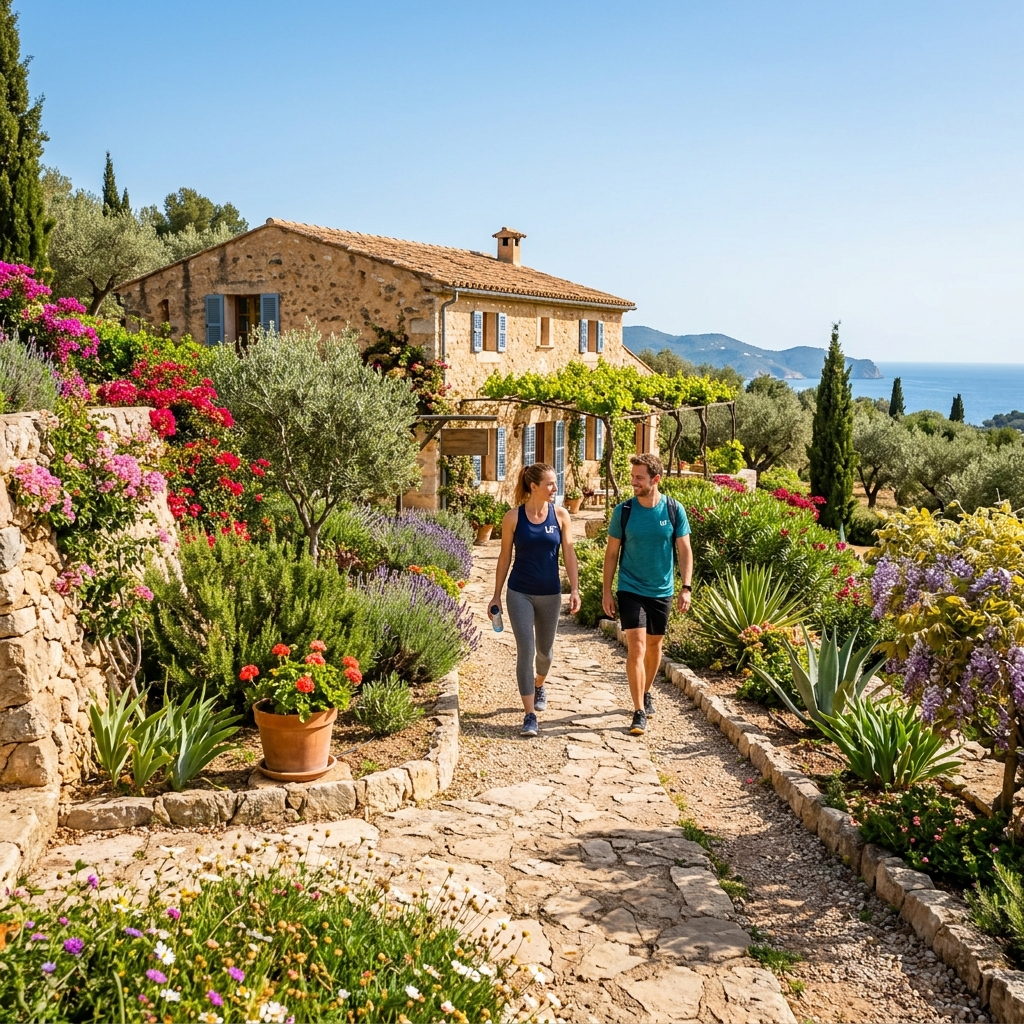
In five scattered pockets of the world, people routinely live past 90 and even 100 — not because they follow structured workout programs or track their macros obsessively, but because their entire way of life is built around movement, community, and moderation. These regions, popularized as Blue Zones by researcher Dan Buettner and his team, include Sardinia in Italy, Okinawa in Japan, Nicoya in Costa Rica, Ikaria in Greece, and Loma Linda in California. Studying them offers a fascinating, if humbling, lens on what longevity actually looks like — and what modern fitness culture might be getting wrong.
What Are Blue Zones?
The term "Blue Zone" originated from demographic research in the early 2000s, when scientists and journalists began drawing blue circles on maps to identify clusters of exceptional longevity. Buettner's team, working with National Geographic and a roster of demographers and epidemiologists, spent years identifying the lifestyle patterns shared across these populations. Their findings were published in academic journals and later in widely read books and a Netflix documentary series.
It's worth noting upfront: Blue Zones research is largely observational and epidemiological. These studies identify correlations between lifestyle factors and longer lifespans, but they do not prove that any single habit causes longevity. Genetics, socioeconomic factors, culture, and environment all play interconnected roles. That said, the overlapping patterns across five very different cultures are compelling enough to take seriously.
Movement as a Way of Life, Not a Workout
Perhaps the most striking insight from Blue Zones is what doesn't define physical activity in these communities: gyms, personal trainers, and scheduled exercise sessions are largely absent. Instead, movement is woven into the fabric of daily life in ways that are low-intensity, frequent, and functional.
- Walking everywhere: Sardinian shepherds walk hilly terrain for miles each day as a normal part of tending their flocks. Ikarian villagers climb steep paths simply to visit a neighbor or tend a garden. This incidental walking adds up to significant daily activity without anyone thinking of it as "exercise."
- Gardening: Across nearly every Blue Zone, growing food — bending, squatting, carrying, digging — provides gentle, consistent physical engagement well into old age. It also delivers fresh produce, which feeds directly into plant-forward diets.
- Manual tasks and crafts: Okinawan elders spend time on the floor, sitting and rising repeatedly in ways that engage hip mobility and core stability. Seventh-day Adventists in Loma Linda walk as a social and spiritual practice. These aren't workouts — they're just lives lived in motion.
The lesson here isn't that the gym is useless — it's that movement shouldn't exist in a two-hour isolated bubble surrounded by eight hours of sitting. Blue Zone populations stay active across the whole day, which may be more protective than a single intense session followed by prolonged inactivity.
The Role of Natural Movement Variety
Blue Zone movement tends to be varied rather than repetitive. Walking, carrying, bending, squatting, reaching, and climbing are all part of daily routines. This variety engages the body across different planes of motion and different muscle groups without the overuse patterns that come from repetitive gym-based exercise.
Modern research supports the value of this approach. Frequent low-intensity movement spread throughout the day helps regulate blood sugar, supports cardiovascular health, and maintains joint mobility in ways that a single daily workout session cannot fully replicate, especially if the rest of the day is sedentary. The concept sometimes called "non-exercise activity thermogenesis" (NEAT) — the calories and metabolic activity from everyday movement outside of formal exercise — turns out to matter quite a lot.
Practically, this suggests looking for ways to build movement into transitions: walking during phone calls, taking stairs, doing household tasks with full physical engagement rather than minimal effort, and generally treating your body as something meant to be used, not preserved.
Purpose and Mental Well-Being as Physical Factors
Blue Zones researchers consistently found that the longest-lived populations had strong senses of purpose. In Okinawa, this concept is called ikigai — roughly translated as "reason for being." In Nicoya, they speak of a plan de vida, or "life plan." Having a reason to get up in the morning appears to correlate with better health outcomes, lower rates of depression, and even reduced risk of certain diseases.
The physiological mechanisms aren't fully understood, but chronic stress is known to drive inflammation, impair sleep, and disrupt hormonal balance — all of which accelerate physical decline. A life organized around meaningful work, relationships, and contribution may buffer against those effects. It also keeps people physically active: when you have purpose, you tend to keep moving toward it.
For modern life, this doesn't mean you need a dramatic life overhaul. It can be as simple as identifying what kind of physical capability you want to maintain and why — being able to hike with your kids, garden into your 70s, play with grandchildren. Connecting movement to meaningful goals tends to make it more sustainable than chasing abstract metrics.
Social Connection and the "Moai" Effect
In Okinawa, older adults often belong to groups called moai — small, committed social circles that meet regularly, share resources, and support each other through life's challenges. Sardinian men socialize daily at the local bar or on village benches. Ikarians throw festivals and communal gatherings frequently. The social fabric of these communities is dense and consistent.
Social isolation, by contrast, is increasingly recognized as a serious health risk. Research has associated chronic loneliness with higher rates of cardiovascular disease, cognitive decline, and overall mortality. The connection to physical activity is direct: people exercise more consistently when they do it with others. Group walks, communal sport, and even the social pressure of a committed workout partner all increase adherence.
- Find a walking group, a recreational sports league, or a fitness class where you see the same people regularly.
- Treat shared physical activity — hiking with friends, cycling with family — as time well spent rather than a compromise on a "real" workout.
- Build accountability structures: telling someone your goal increases the likelihood you'll follow through.
Plant-Forward Eating and Moderation
While nutrition sits somewhat outside the pure fitness discussion, diet and movement are deeply linked in Blue Zones. Across all five regions, plant foods dominate: beans, lentils, whole grains, vegetables, and fruits make up the bulk of daily calories. Meat is typically eaten in small amounts and on an occasional basis. Processed foods and added sugars are minimal by default rather than by strict rule.
Okinawans practice a concept called hara hachi bu — eating until you're about 80 percent full rather than eating to satiety. This isn't a formal diet rule so much as a deeply ingrained cultural habit that naturally reduces caloric intake over a lifetime. Sardinians drink wine daily, but in moderation and almost always with food and in social settings — not as a health strategy, but as part of the culture.
The practical takeaway isn't to mimic any single Blue Zone diet exactly. It's to recognize that eating patterns supporting longevity tend to be largely plant-based, varied, unprocessed, and moderate — and that these qualities support the energy and physical capacity needed to stay active throughout life.
How to Apply Blue Zone Principles in a Modern Life
Most of us aren't shepherds on Sardinian hillsides. We work desk jobs, live in car-dependent suburbs, and navigate food environments stacked with hyper-processed options. But the core principles translate with some intentionality:
- Add movement to your environment: Walk or cycle for errands within reasonable distance. Stand or walk during meetings. Set a reminder to move for a few minutes every hour. The goal is reducing prolonged sedentary stretches, not just adding a workout.
- Take up an active hobby: Gardening, hiking, dancing, recreational sports, and even active volunteering all provide the kind of varied, purposeful movement that Blue Zone residents engage in naturally.
- Build a consistent social activity around movement: A weekly group hike, a regular tennis game, or a walking routine with a friend creates accountability and enjoyment together.
- Define your purpose in physical terms: What do you want to be able to do physically at 70, 80, 90? Work backward from that vision to understand what habits support it now.
- Don't let perfect be the enemy of good: Blue Zone elders didn't optimize their movement — they just moved consistently across a lifetime. Consistency and sustainability matter far more than any single intense training block.
It also helps to think of rest and recovery not as laziness but as part of the longevity equation. Blue Zone populations sleep well, maintain strong social stress buffers, and don't push their bodies to exhaustion as a default. Modern fitness culture sometimes glorifies intensity and suffering in ways that are counterproductive over decades.
What Blue Zones Can't Tell Us
It's worth sitting with the limits of this research. Blue Zone populations share not just lifestyle habits but also cultural context, community structures, local food systems, and often genetic heritage that researchers cannot easily disentangle. Attempts to "recreate" Blue Zone conditions in American cities — most notably in Albert Lea, Minnesota — have shown some success at improving community health markers, but results vary and long-term follow-through is difficult.
Longevity is complex. Genes matter. Access to healthcare matters. Economic security matters. The Blue Zone framework is a set of interesting and plausible signals, not a guaranteed formula. Treating it as a flexible source of inspiration rather than a prescription is the most honest approach.
The thread that runs through all of it — movement woven into daily life, strong social bonds, a sense of purpose, food that nourishes rather than depletes — is less about any specific technique and more about building a life where staying active is natural and rewarding. UltraFit360 is designed to help you build exactly that kind of sustainable movement practice: one that fits your life, grows with you over time, and keeps you capable and engaged for the long haul.
Transform Your Fitness Journey
Log your workouts, track your diet, and get AI coaching insights — all with UltraFit360.