💡 Key Takeaways
- Expect an immediate effect: within a minute or two of slow breathing you can feel calmer and a wearable will show an HRV spike — most useful for downshifting after hard sessions and steadying focus before fine skill work.
- A few minutes of slow diaphragmatic or coherent breathing after a session speeds the shift from training 'go' back into recovery mode; that recovery is when tendons and skills consolidate.
- This will not lengthen your recovery-limited tendons or build skill on its own — it manages your nervous system, not your connective tissue, so it is a support tool, not a program.
- Effects are real but modest and mostly acute; consistency most days matters more than long single sessions, and it never replaces sleep or medical care.
Here is what you can actually expect, and when. Sit down, breathe slowly at about six breaths a minute, and within a minute or two two things happen: you feel measurably calmer, and if you are wearing a watch, your heart-rate variability climbs during the session. That acute window is the whole value proposition for a calisthenics athlete — a tool to downshift after a brutal pull session, and to steady a buzzing nervous system before a handstand or a maximal skill attempt that demands precision.
Breath is the one automatic function you can drive on purpose. Slowing it and stretching the exhale tilts your nervous system from the sympathetic 'go' that powers a planche attempt toward the parasympathetic 'recover' side where adaptation happens. For an athlete whose progress is gated by a fresh nervous system and slow-adapting tendons, that timing lever is genuinely useful — within honest limits.
Below: the measurable timeline, a pre-skill and post-session protocol, the mechanism, and where this fits a high-frequency bodyweight schedule without overselling it.
1. What You Can Measure and Feel — and How Fast
Start with the timeline, because it sets expectations. Seconds to minutes: a physiological sigh — double inhale, long exhale, one to three times — drops acute arousal almost instantly, handy when a failed muscle-up attempt has you frustrated and tight. One to two minutes: slow, long-exhale breathing produces a felt calm and, on a wearable, a visible rise in HRV during the session. Five to ten minutes: coherent breathing at around six breaths a minute drives the largest acute HRV swing, the body's so-called resonance frequency where heart rate, blood pressure, and breath synchronize.
Now the honest ceiling. That HRV spike is a within-session effect — it shows the technique is working in the moment, not that your multi-day baseline HRV has risen. Whether regular practice durably lifts your resting nervous-system tone is plausible but far less certain, and it would build over weeks, not days. Device HRV readings are also noisy, so watch the trend across days rather than chasing a single number. For a skill athlete, the reliable, repeatable win is the acute one: a calmer, more focused nervous system on demand, before precision work and after hard efforts.
2. A Pre-Skill and Post-Session Protocol
Match the technique to the moment. Before fine skill work you want calm but alert — not over-relaxed, since explosive or balance-heavy attempts still need drive. After a session you want a full downshift into recovery. The table maps it out; scale any count down if it feels strained, and keep all breath-holds gentle.
| Technique | Pattern | Duration | When to use it |
|---|---|---|---|
| Box breathing | In 4, hold 4, out 4, hold 4 | 2-3 min | Before a handstand or precise skill attempt — calm but alert |
| Physiological sigh | Double inhale, then long slow exhale | 1-3 breaths | Reset between frustrating maximal skill attempts |
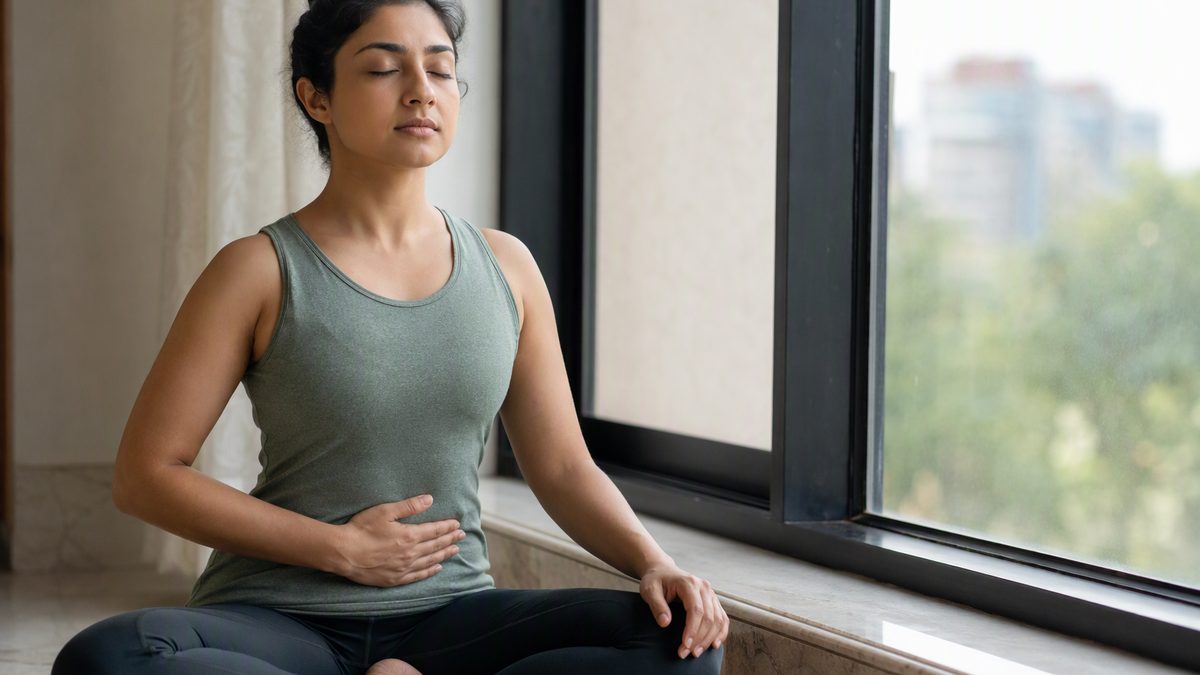
| Diaphragmatic breathing | Belly rises more than chest, slow and deep | 3-5 min | Immediately post-session, to start the recovery shift |
| Coherent breathing | In 5, out 5 (~6 breaths/min) | 5-10 min | Daily anchor; longer post-session cooldown |
| 4-7-8 | In 4, hold 7, out 8 — scale down if hard | 3-4 cycles | Pre-sleep on heavy training days |
Practical use: two or three minutes of box breathing before you chase a clean handstand push-up steadies the nervous system without dulling your output, and a few minutes of slow diaphragmatic breathing right after training helps you exit 'go' mode faster, so the recovery your tendons and skills depend on can begin. On heavy days, a couple of rounds of 4-7-8 at lights-out supports sleep — which remains where the real consolidation happens. Consistency on most days matters more than the occasional long session.
3. Why It Works on the Nervous System
The mechanism is simple and worth understanding so you do not over-ask of it. Your heart speeds slightly as you inhale and slows as you exhale — a vagus-nerve-driven rhythm. The exhale is when the parasympathetic brake is applied, so lengthening and emphasizing the out-breath increases that calming outflow to the heart. That is the entire reason 'longer exhale equals calmer' holds up. Breathe smoothly at around six breaths a minute and those oscillations synchronize and amplify, producing the biggest acute calming swing — the basis of coherent breathing.
What this does and does not touch is the key distinction for you. It regulates your nervous system: arousal, focus, the speed of your recovery downshift. It does not lengthen or strengthen the finger, wrist, and elbow tendons that gate straight-arm skills — those adapt on their own slow timeline through loading and rest, and no breathing pattern shortcuts it. So position breathing accurately: it can help you arrive at a skill session fresher and recover from it faster, which indirectly supports the consistency tendons need. It is a nervous-system tool, not a connective-tissue one. Treating it as anything more sets you up to be disappointed.
4. Fitting It Into a High-Frequency Schedule — Honestly
You train four to six days a week, often daily skill practice plus strength blocks, and you cannot afford anything that adds fatigue. Good news: slow breathing adds none. It is low-risk, low-cost, and a few focused minutes is plenty — bolt it onto warm-ups and cooldowns you already do rather than carving out separate sessions. Because the reliable effect is acute, you get the benefit each time you use it, with no need to 'load' it.
Keep the framing honest. The evidence for slow breathing is promising but modest — dependable acute rises in calm and HRV, smaller and less certain carryover to baseline, with mixed study quality. It will not make or break your planche timeline, and it is no substitute for sleep, food, and sensible deloads, which do the heavy lifting for a nervous system grinding daily skill attempts. On safety, the slow patterns are very safe; cautions apply mainly to forceful breathing and breath-holds, so keep box and 4-7-8 holds gentle and stop if any pattern brings dizziness or air hunger. If you want help building this into a repeatable routine, our guide to building fitness habits covers anchoring small daily practices. Used as a focus-and-recovery aid rather than a magic input, breathing earns its small, steady place in your training.
Calisthenics Questions, Answered Straight
Does this help my tendons or just my muscles?
Neither, really — it works on your nervous system, not your connective tissue. Slow breathing regulates arousal and speeds your recovery downshift, but it does not lengthen or strengthen the finger, wrist, and elbow tendons that gate straight-arm skills. Those adapt slowly through loading and rest, and no breathing pattern shortcuts that. Where it helps indirectly is by aiding the consistent recovery your tendons need. Treat it as a focus and recovery aid, not tendon work.
Can I train skills every day and still use this?
Yes — slow breathing adds zero fatigue, so it fits daily skill practice easily. Use a couple of minutes of box breathing before precise attempts to arrive calm but alert, and a few minutes of slow diaphragmatic breathing after to start recovering. The reliable effect is acute, so you get it each session without needing to 'load' anything. Just keep it gentle; it supports your high-frequency schedule rather than competing with it for recovery.
Will it improve my baseline HRV or just spike it during the session?
Mostly the in-session spike. Slow breathing reliably raises HRV during and just after practice, which a watch will show — that is genuine, but it is a within-session effect, not proof your multi-day baseline rose. Whether regular practice durably lifts resting tone is plausible but uncertain and would build over weeks. Device readings are noisy too, so track the trend across days, not single numbers, and value the dependable acute calm most.
Do I need this if I only train bodyweight, no weights?
You do not need it, but it can help regardless of whether you lift. The benefit has nothing to do with weights — it is about regulating your nervous system to arrive fresher at skill work and recover faster afterward. For a bodyweight athlete whose progress hinges on a fresh nervous system, that focus-and-recovery angle is exactly the use case. It is a low-cost, optional support tool, not a required part of any calisthenics program.
Disclaimer: This article is for educational purposes only and is not medical advice. Consult a qualified healthcare professional before starting any supplement, nutrition, or training protocol — especially if you are pregnant or breastfeeding, under 18, taking medication, or managing a health condition.
Scientific References & Clinical Sources
- Kiviniemi AM, et al. Daily exercise prescription on the basis of HR variability among men and women. Int J Sports Med, 2007. PMID: 17345075
- Plews DJ, et al. Training adaptation and heart rate variability in elite endurance athletes: opening the door to effective monitoring. Sports Med, 2013. PMID: 23852425
- Peake JM, et al. A Critical Review of Consumer Wearables, Mobile Applications, and Equipment for Providing Biofeedback, Monitoring Stress, and Sleep in Physically Active Populations. Front Physiol, 2018. PMID: 30002629
- Mercer K, et al. Acceptability and Utility of Wearable Activity Trackers for Health Monitoring Among Older Adults With Chronic Illness: Qualitative Study. JMIR Mhealth Uhealth, 2016. PMID: 27113645

