💡 Key Takeaways
- After a night shift, 5-10 minutes of slow breathing at about 6 breaths a minute (5 in, 5 out) helps tip you from go-mode toward the rest-and-digest state you need to sleep at 9am.
- For the hardest crash-into-bed nights, try 4-7-8 breathing scaled down (e.g. 3-5-6) for a few cycles, lying in a dark room, never while driving home.
- A single physiological sigh, a double inhale then a long slow exhale, is your fastest reset for a 3am stress spike on the floor when there is no time for anything longer.
- Breathing helps you fall asleep faster and feel calmer, but it does not replace lost sleep or fix circadian misalignment; protect the sleep window itself first.
The question most shift workers actually type is some version of this: how do I switch my brain off and sleep when I get home wired at 8am after a twelve-hour night? You finish keyed up, daylight is screaming at your body clock that it is morning, and your nervous system is still in the high-alert state the shift demanded. So you lie there.
The honest short answer: you can't out-breathe a daylight body clock entirely, but you can deliberately push your autonomic balance toward calm, and that often shaves the time it takes to drop off. Breathing is the one part of your stress physiology you can consciously steer. Slowing it down, especially lengthening the exhale, nudges the rest-and-digest side of your nervous system to take over from the fight-or-flight side that ran your shift.
Below is how to use that after nights, on the floor mid-shift, and on your changeover days, plus where it genuinely helps and where it doesn't.
1. The Post-Night-Shift Wind-Down That Actually Fits Your 8am
Here is the physiology behind the fix. Your autonomic nervous system runs on two branches. The sympathetic one raised your heart rate and alertness all night so you could function; the parasympathetic one, carried mostly by the vagus nerve, slows the heart and lets recovery and sleep begin. They are a balance, not a switch, and after a night shift yours is tilted hard toward alert. Slow breathing transiently dials the vagal, calming side back up.
The reason a long exhale matters is mechanical. Your heart naturally speeds slightly as you breathe in and slows as you breathe out, because the parasympathetic brake is applied on the out-breath. Drag the exhale out longer than the inhale and you exaggerate that braking, biasing the whole system toward calm. That is why every wind-down pattern here leans on the exhale.
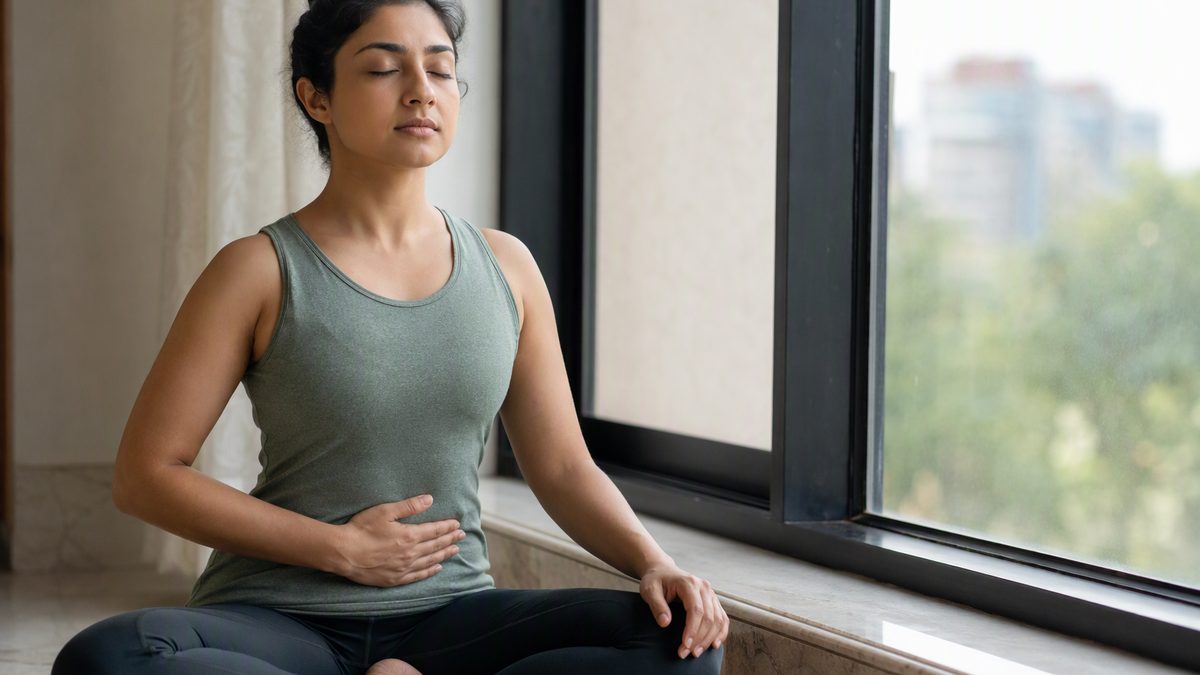
Practically: once you are home, blinds down, screens off, lie in bed and breathe slow and low into your belly. Hand on your stomach should rise more than the hand on your chest. Five to ten minutes is enough to feel the shift. You are not trying to knock yourself out by force; you are removing the alarm so sleep can arrive.
2. A Wind-Down Protocol Built Around Your Rotation
Different moments in your week need different tools. A 3am adrenaline spike on a busy floor is not the same problem as lying awake post-shift, and your day-off sleep is different again. Match the technique to the moment rather than forcing one method everywhere. The table maps real points in a rotation onto a specific pattern, with counts you can scale down if they feel strained.
| Moment in your rotation | Technique | Pattern | Dose |
|---|---|---|---|
| Home after a night, trying to sleep at ~08:00 | 4-7-8 (scaled) | Inhale 4, hold 7, exhale 8 (or 3-5-6 if that strains) | 4 cycles, repeat once if still awake |
| General pre-sleep wind-down, day or night sleep | Coherent / slow breathing | ~5s in, ~5s out (about 6 breaths/min) | 5-10 min in bed, lights off |
| Acute stress spike mid-shift (3am code, rush) | Physiological sigh | Double inhale, then long slow exhale | 1-3 breaths, then back to work |
| Decompressing in the break room | Extended exhale | Inhale 4, exhale 6-8 | 1-3 min seated |
| Day-off reset / building the habit | Coherent / slow breathing | ~5s in, ~5s out | 10-15 min, most days |
One rule that overrides the table: never do breath-holds like 4-7-8, and never do any forceful breathing, while driving home drowsy after a night. Keep all holds gentle and stop at the first sign of air hunger or dizziness.
3. Why Your HRV Spikes on the Watch During a Session
If you wear a ring or watch, you may notice your HRV reading jump during or just after a slow-breathing session. That is real, and it is the same mechanism at work. The heart-rate variability your device reports is largely a window onto autonomic balance; higher HRV generally reflects more of that calming vagal influence. Slow breathing acutely raises HRV through the exact inhale-speeds, exhale-slows effect described above, so a guided session visibly lifts the number on screen.
Be honest with yourself about what that means, though. An in-the-moment HRV bump is a within-session effect. It is not proof your multi-day baseline improved, and device HRV is noisy enough that single readings mislead, so read trends, not one night's figure. HRV tracking earned its place because autonomic balance reflects recovery readiness, which is why endurance-monitoring work built whole training systems on it, and why consumer wearables are now marketed for stress and sleep biofeedback. For you it is a useful nudge to actually do the breathing, not a scoreboard.
4. What Breathing Can't Fix on Nights
This is the part the wellness apps skip. Sleep debt is your dominant health variable, and no breathing pattern buys it back. Rotating nights blunt insulin sensitivity, raise cortisol, fragment sleep, and shift your melatonin timing; breathing helps you fall asleep faster and feel calmer, but it does not realign your body clock or replace the hours you lost. Treat it as one tool inside a bigger sleep-protection plan, not the plan itself.
That plan still matters more than any technique: blackout curtains, no caffeine within roughly six hours of your sleep window, a consistent wind-down ritual, and treating days off as real recovery rather than crash days. Breathing slots in as the on-ramp to sleep, the thing you do once the room is dark, not a substitute for the dark room. If you want the structure to make that stick, our guide to building fitness habits applies directly to anchoring a wind-down routine to your wake-time.
And keep the medical line clear. If you have a panic-disorder history, a heart or breathing condition, or uncontrolled blood pressure, get clearance before structured breathwork, especially the holds, and scale counts down. Persistent insomnia or anxiety from shift work deserves a clinician, not just a breathing app. Breathing can help in the moment without being the whole answer.
Night-Shift Breathing Questions
When do I do this on a night shift?
Use the quick tools during the shift and the longer ones at the end. A single physiological sigh resets a 3am stress spike on the floor in seconds. A minute or two of long-exhale breathing works in the break room. Save coherent breathing or scaled 4-7-8 for when you are home, blinds down, lying in bed trying to sleep at 8 or 9am. Never do breath-holds while driving home drowsy.
Does rotating shifts ruin the consistency this needs?
Not the way it ruins clock-based routines. Anchor your wind-down to the end of your main sleep-prep, not to a fixed hour. The acute calming effect shows up each session regardless of what time your night ends, so you get the immediate benefit even on a chaotic roster. Any longer-term gains build from doing it most days, so attach it to going to bed rather than to a clock time.
Can breathing offset bad sleep from working nights?
No, and it shouldn't be sold that way. Breathing can help you fall asleep faster and lower the pre-sleep wired feeling, which is genuinely useful when daylight is fighting you. But it does not replace lost hours or realign a misaligned body clock. Sleep debt remains your biggest health variable on nights, so protect the sleep window itself first and use breathing as the on-ramp into it.
I'm too keyed up to sleep after a night. What's fastest?
Lie down in a dark, cool room and start with a few rounds of scaled 4-7-8, for example inhale 3, hold 5, exhale 6, keeping the holds gentle. The long hold and long exhale push you toward the calming side fast. If holds feel uncomfortable, drop them and just breathe about 5 seconds in, 5 out for five to ten minutes. Stop if you feel any air hunger.
Disclaimer: This article is for educational purposes only and is not medical advice. Consult a qualified healthcare professional before starting any supplement, nutrition, or training protocol — especially if you are pregnant or breastfeeding, under 18, taking medication, or managing a health condition.
Scientific References & Clinical Sources
- Kiviniemi AM, et al. Daily exercise prescription on the basis of HR variability among men and women. Int J Sports Med, 2007. PMID: 17345075
- Plews DJ, et al. Training adaptation and heart rate variability in elite endurance athletes: opening the door to effective monitoring. Sports Med, 2013. PMID: 23852425
- Peake JM, et al. A Critical Review of Consumer Wearables, Mobile Applications, and Equipment for Providing Biofeedback, Monitoring Stress, and Sleep in Physically Active Populations. Front Physiol, 2018. PMID: 30002629
- Mercer K, et al. Acceptability and Utility of Wearable Activity Trackers for Health Monitoring Among Older Adults With Chronic Illness: Qualitative Study. JMIR Mhealth Uhealth, 2016. PMID: 27113645

