💡 Key Takeaways
- Breathing is a diet-neutral recovery tool: it owes nothing to protein, leucine, iron or B12, so it works the same whether you eat meat or not.
- 5-10 minutes of slow coherent breathing (about 6 breaths/min) after hard training speeds the shift from sympathetic 'go' toward parasympathetic recovery.
- A long-exhale or scaled 4-7-8 routine in bed helps you wind down and fall asleep faster on heavy training nights.
- It calms stress acutely but won't replace sleep, fueling, or your iron/B12 monitoring; treat it as a free add-on, not a fix for under-fueling.
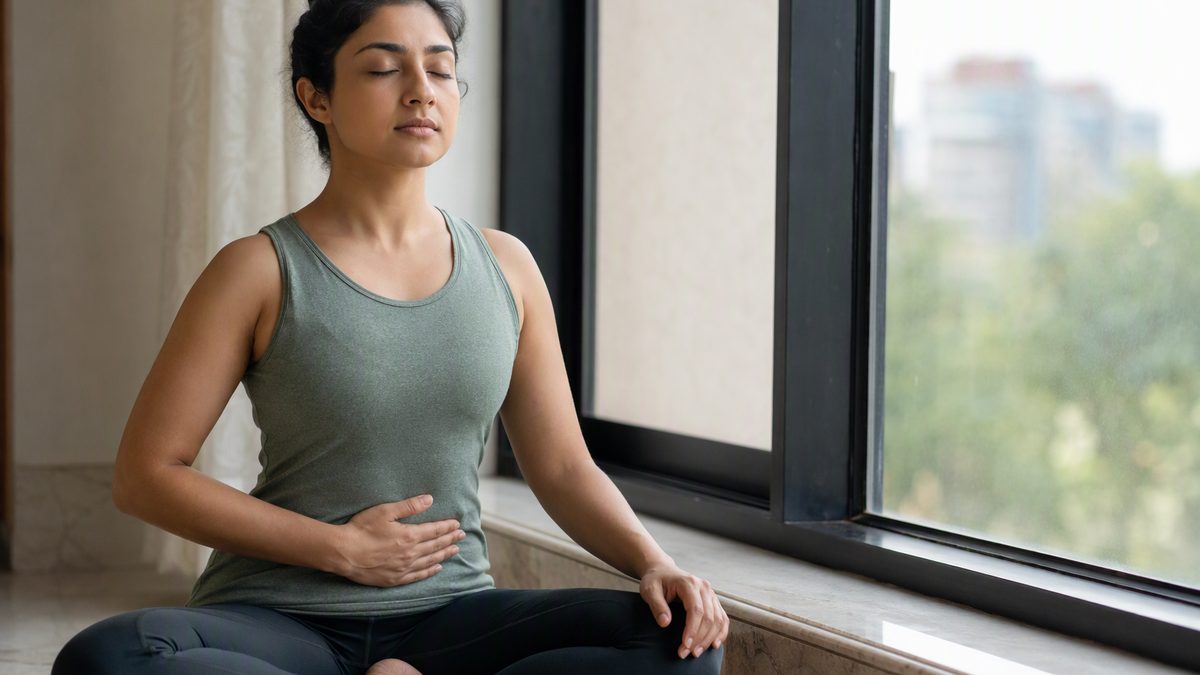
As a vegetarian athlete you spend a lot of energy on what goes in: hitting leucine thresholds from plants, watching iron and B12, choosing supplements that are actually meat-free. So here's a recovery lever that sidesteps all of it. Breathing techniques for nervous-system regulation cost nothing, contain no animal products, and don't depend on a single nutrient. The problem they solve is the one your diet can't directly touch, the wired, can't-switch-off state after hard training or a stressful day.
That state is your sympathetic, fight-or-flight system staying switched on when you'd recover better if it stepped back. Slowing your breath, and especially lengthening the exhale, nudges your autonomic balance toward the calm, rest-and-digest side carried by the vagus nerve. It's the one stress system you can steer on purpose.
This won't build muscle, fix low ferritin, or replace good fueling, and the evidence is honest about being modest. But it's a free, plant-free tool that aids recovery and sleep, and here's how to use it without overclaiming.
1. The Recovery Problem Your Diet Can't Solve
You can nail your plant-based fueling and still finish a hard session buzzing for hours. That's not a nutrition gap; it's autonomic. Your nervous system runs on two branches: the sympathetic side that drives heart rate and alertness up under stress, and the parasympathetic side, carried largely by the vagus nerve, that slows the heart and lets recovery happen. They balance against each other. Hard training and daily stress tip you toward sympathetic; recovery needs the balance to swing back.
No amount of leucine or iron flips that switch directly, but breathing does. The lever is the exhale. Your heart speeds up slightly as you breathe in and slows as you breathe out, because the parasympathetic brake is applied on the out-breath. Lengthen the exhale and you exaggerate that slowing, biasing the system toward calm. That's why every recovery and wind-down pattern here weights the out-breath.
The appeal for you specifically: this lever is completely diet-neutral. It doesn't care whether your protein came from lentils or chicken, whether your B12 is from a supplement, or what your ferritin is. It works on physiology you already have, which makes it a clean addition to a plant-based athlete's toolkit, no label-reading required.
2. A Diet-Neutral Breathing Protocol
Match the technique to the moment. After hard training you want recovery, so slow coherent or diaphragmatic breathing. Before sleep on a heavy day you want to down-shift fully, so a long-exhale or scaled 4-7-8 pattern. For an acute stress spike, the physiological sigh is fastest. The table gives concrete doses; scale any count down if it strains and keep holds gentle.
| Situation | Technique | Pattern | Dose |
|---|---|---|---|
| After a hard session | Coherent breathing | ~5s in, ~5s out (about 6 breaths/min) | 5-10 min, seated |
| General daily regulation | Coherent breathing | ~5s in, ~5s out | 10 min most days, build to 20 |
| Acute stress spike | Physiological sigh | Double inhale, long slow exhale | 1-3 breaths |
| Winding down before bed | Extended exhale | Inhale 4, exhale 6-8 | 3-5 min |
| Trouble falling asleep | 4-7-8 (scaled) | Inhale 4, hold 7, exhale 8 (or 3-5-6) | 4 cycles in bed |
Consistency beats duration. Most days at 10 minutes does more than an occasional long session. You'll feel the calming effect immediately; any longer-term shift in your baseline, if it comes at all, builds over weeks of regular practice.
3. Why This Pairs Well With a Plant-Based Athlete's Routine
There's a neat fit between breathwork and how you already operate. Plant-based athletes tend to be deliberate, kitchen-first, and process-oriented, planning meals, tracking labs, reading labels. A daily breathing practice slots into that same disciplined, no-shortcuts mindset. It's another controllable input, and unlike a supplement, there's no sourcing question, no third-party-tested certification to chase, no hidden ingredients.
It also stacks cleanly with the recovery basics that actually drive your adaptation. Sleep is where most recovery happens, and slow breathing is a reliable on-ramp into it, helping you fall asleep faster on the nights your training load spikes. Building it as a standing habit is easier when you treat it like any other trained behavior, which is exactly the framing in building fitness habits. Anchor it to something you already do daily, your evening wind-down or post-session cooldown, and it sticks. The point isn't that breathing is magic; it's that it's a free, diet-neutral piece that fits naturally into the methodical way you already manage your training and nutrition.
4. Honest Limits: What Breathing Won't Do for You
Keep this in proportion. Slow breathing reliably produces acute calm, a within-session rise in HRV, and easier pre-sleep wind-down, with modest short-term reductions in stress markers. The clearest effects are in-the-moment; durable baseline changes are smaller and less certain, and many studies are small. It's a helpful, low-risk tool, not a proven cure.
For you specifically, what it won't do matters. It won't build muscle, raise low ferritin, fix a B12 gap, or substitute for hitting your leucine targets, your nutrition work stays exactly as important, and your yearly iron and B12 labs still belong in the plan. It won't offset under-fueling, and it won't replace sleep; it's the on-ramp to sleep, not extra hours of it. If you track HRV, expect a breathing session to spike the reading, but read trends, not single noisy numbers, and don't mistake a session bump for a baseline change. On safety: keep holds gentle, stop at any dizziness or air hunger, never do forceful breathing where a faint could hurt you, and get medical clearance before structured breathwork if you have a heart or respiratory condition, uncontrolled blood pressure, or a panic-disorder history. Breathing helps everyday stress; it isn't medical care for clinical anxiety or hypertension.
Plant-Based Athlete Breathing Questions
Do vegetarians get any special benefit from this?
Not a special one, and that's actually the point. Breathing works on autonomic physiology that has nothing to do with diet, so it's completely neutral whether you eat meat or not. Unlike creatine or iron, where vegetarians can respond differently, here there's no dietary angle at all. The appeal is simply that it's a free, plant-free recovery lever that owes nothing to protein, leucine, B12 or ferritin, so it slots cleanly into a plant-based routine.
Is there anything non-vegetarian about breathing techniques?
No, and that's the cleanest thing about them. There's no product, no supplement, no capsule, no label to check, and nothing derived from animals. It's just how you breathe, so there's no certification to chase or hidden-ingredient worry of the kind you deal with on supplement shelves. For an athlete who reads every label, breathwork is a rare recovery tool with no sourcing question attached.
Will this help me build muscle or fix my iron levels?
No on both counts, and it's important to be honest about that. Breathing aids recovery and sleep by calming your nervous system, but it builds no muscle and changes no labs. Your protein and leucine targets, your iron and B12 monitoring, and your fueling all stay exactly as important. Treat breathing as a free add-on that supports recovery, not as anything that replaces the nutrition work a plant-based athlete already does.
How do I fit a breathing practice into my routine?
Anchor it to something you already do daily. A few minutes of slow coherent breathing in your post-session cooldown handles recovery, and a long-exhale or scaled 4-7-8 routine in bed helps you fall asleep on heavy nights. Aim for most days at about 10 minutes rather than rare long sessions, since consistency drives whatever modest longer-term benefit exists. It fits naturally into the deliberate, process-first way plant-based athletes already manage training.
Disclaimer: This article is for educational purposes only and is not medical advice. Consult a qualified healthcare professional before starting any supplement, nutrition, or training protocol — especially if you are pregnant or breastfeeding, under 18, taking medication, or managing a health condition.
Scientific References & Clinical Sources
- Kiviniemi AM, et al. Daily exercise prescription on the basis of HR variability among men and women. Int J Sports Med, 2007. PMID: 17345075
- Plews DJ, et al. Training adaptation and heart rate variability in elite endurance athletes: opening the door to effective monitoring. Sports Med, 2013. PMID: 23852425
- Peake JM, et al. A Critical Review of Consumer Wearables, Mobile Applications, and Equipment for Providing Biofeedback, Monitoring Stress, and Sleep in Physically Active Populations. Front Physiol, 2018. PMID: 30002629
- Mercer K, et al. Acceptability and Utility of Wearable Activity Trackers for Health Monitoring Among Older Adults With Chronic Illness: Qualitative Study. JMIR Mhealth Uhealth, 2016. PMID: 27113645

