💡 Key Takeaways
- Recovery is a fueling question first, leucine-aware protein, enough energy, and managed iron, ferritin, and B12 drive your repair, not any garment.
- Compression gives a small, mostly perceived comfort bump after hard eccentric or impact sessions and on congested days, not faster tissue repair.
- Graduated socks on long competition travel reliably cut leg swelling, the clearest-value use; check materials if you avoid wool blends.
- Protect sleep above all and get iron and B12 checked; fit firm-not-painful and remove instantly for numbness or skin color change.
The recovery problem vegetarian athletes face is rarely a gear problem. It is a fueling one: hitting leucine and total protein from plants, keeping iron and ferritin off the floor, covering B12, and getting enough overall energy to repair muscle after hard sessions. Sore, slow-to-bounce-back legs are far more often a plate issue than a missing recovery tool.
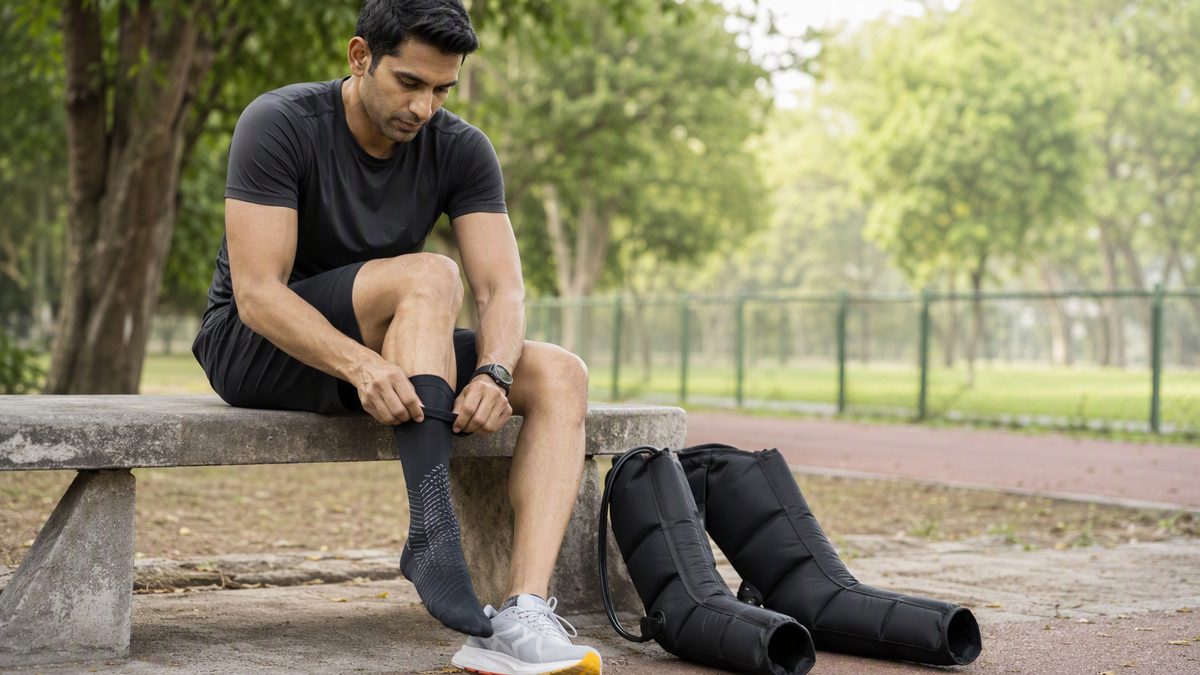
Compression garments enter that picture as a small, honest adjunct, nothing more. Worn after a hard session they may take a modest edge off how sore your muscles feel, and graduated socks help with swelling on long travel days. They do not repair tissue faster, and they certainly do not compensate for under-fueling, low iron, or thin sleep, which is exactly the trap to avoid.
This page is straight about where compression fits, how to wear it safely, and why your nutrition fundamentals, the real differentiator for plant-based athletes, outrank any garment you can pull on.
1. The Problem: Recovery Is a Fueling Question First
Vegetarian athletes build muscle and recover perfectly well, the "you can't grow without meat" noise is wrong, but the details of fueling are where the real work sits. Plant proteins digest more slowly and carry less leucine per serving, so protein has to be planned by quality and leucine, not just grams. Iron is non-heme and absorbed less efficiently, B12 needs supplementation, and creatine and carnosine stores tend to run lower without dietary meat. Get those right and recovery is strong; get them wrong and you feel chronically beaten up.
Against that backdrop, a compression garment is a minor character. It is tight, elastic wear, socks, sleeves, tights, that presses on a limb, with the performance kind graduated: tightest at the ankle, easing upward to nudge venous blood back toward the heart. The pitch is reduced swelling and a less heavy, beaten feeling after hard work.
Be clear on the actual size of that benefit. The evidence points to a small, mostly perceived reduction in soreness and fatigue, with little measurable change in muscle-damage markers. So compression may make a sore day feel slightly more comfortable; it does nothing for the protein, iron, and energy that actually drive your repair. For a plant-based athlete, that ordering matters: fix the plate, then maybe add the garment.
2. Where Compression Actually Helps, and Where It Doesn't
Used in the right spots, compression is a reasonable comfort tool. The strongest cases are after high-eccentric or high-impact sessions where soreness and swelling peak, during congested schedules, and on long travel. Here is a practical map. Pressures are textbook ranges, not a validated dose, and brands deliver them inconsistently, so treat the numbers as guidance.
| Scenario | Garment | Ankle pressure | When and how long |
|---|---|---|---|
| After heavy eccentric or impact work | Recovery tights or sleeves | ~15-25 mmHg | 2-4 hours post-session, into the evening before sleep |
| Congested back-to-back training days | Recovery socks | ~15-20 mmHg | Evenings on hard days; legs feel fresher |
| Long travel to a competition | Graduated socks | ~15-20 mmHg | During the flight or drive; cuts leg swelling |
| Low-impact, low-soreness session | Optional, minimal benefit | n/a | Skip; the upside is small |
| Overnight sleep | Remove all garments | n/a | Sleep unrestricted; recovery runs on sleep, not gear |
Two refinements. Recovery wear after a session beats wearing anything during it, the during-exercise case is mostly comfort with weak performance evidence. And remember the garment does not flush "lactic acid" or detox the muscle; lactate clears within an hour or two and was never the cause of next-day soreness, so ignore any product making that claim.
3. Fitting It Safely and Choosing Vegetarian-Friendly Gear
Fit is the whole game. Measure your limb, follow the brand's sizing chart, and aim for firm and snug, never painful, never numbing, and never anything that cuts off circulation. Graduated socks go on tightest-at-the-ankle, pulled smooth without folds or a rolled-down band that acts like a tourniquet. Pull any garment off immediately for tingling, pins-and-needles, numbness, throbbing, or skin turning pale, bluish, or markedly red.
If sourcing matters to you as a plant-based athlete, compression garments are usually synthetic textiles rather than animal-derived, but check the materials if you avoid wool or silk blends, some recovery socks use merino. That is a values check, not a safety one; the garment itself carries no dietary concern.
The medical line still applies. If you have unexplained leg swelling, a suspected clot, varicose veins, peripheral circulation issues, or fragile or broken skin, do not self-prescribe athletic compression, check with a clinician first, because external pressure can be harmful in those conditions. Separately, and more relevant to your population, get your iron, ferritin, and B12 checked periodically through your clinician, because low iron drives fatigue and poor recovery in ways no garment can touch, and it is a known watch-point for vegetarian athletes.
4. The Honest Limits: Plate, Sleep, and Soreness That Resolves Itself
Compression is a minor adjunct, and the fundamentals it sits beneath are exactly the ones plant-based athletes have to nail. Adequate protein, planned for leucine and total intake, plus enough overall energy and well-managed iron and B12, do far more for your sore legs than any garment. Under-fuel or run low on iron and you will feel wrecked no matter what you wear.
Sleep is the foundation. Most of your hormonal and tissue repair happens while you sleep, and sleep loss is tied to impaired muscle recovery and worse performance, which no sock or sleeve can buy back. So protect sleep and fueling before reaching for compression, the order is not negotiable.
Set expectations against the natural course too. Soreness from a hard or unfamiliar session peaks around 24-72 hours and fades on its own within a few days regardless of intervention, so part of any "it helped" feeling is just soreness resolving on schedule. Compression may make those days a touch more comfortable; it does not shorten the repair clock. To judge whether it helps you, track a simple 0-10 soreness rating and whether your next session feels better. For building solid fueling and recovery habits, our guide to building fitness habits is a good companion.
5. Your Plant-Based Recovery Plan
Keep the priorities straight:
- Fix fueling first, leucine-aware protein, enough total energy, managed iron, ferritin, and B12, that drives your recovery, not gear.
- Use recovery tights or socks for 2-4 hours after heavy eccentric or impact sessions, and on congested back-to-back days.
- Wear graduated socks on long competition travel to cut leg swelling, the clearest-value use.
- Fit firm-not-painful, remove for numbness or color change, and check materials if you avoid wool; clinician-first for any circulatory condition.
- Protect sleep above all; compression gives a small, mostly perceived comfort bump, not faster tissue repair.
Treat compression as a low-stakes "try it if it fits and feels good" tool, useful on your sorest days, honest about its small effect. For a vegetarian athlete the real recovery edge was never going to come from a garment; it comes from a well-built plate, monitored iron and B12, solid sleep, and sensible load. Get those right and you recover as well as anyone, with or without the socks.
Plant-Based Recovery Questions Vegetarian Athletes Ask
Will compression fix the slow recovery I blame on being vegetarian?
Almost certainly not, because slow recovery in plant-based athletes usually traces to fueling, not gear. Check that you are hitting leucine and total protein, getting enough overall energy, and keeping iron, ferritin, and B12 in range, those drive repair. Compression may make a sore day feel a little better, but it does nothing for the nutritional gaps that actually cause sluggish recovery. Fix the plate first; the garment is a minor extra.
Is the compression garment itself vegetarian?
Usually yes, most compression wear is synthetic textile, not animal-derived, so it carries no dietary concern. The exception worth checking is recovery socks that use merino wool or silk blends, which some athletes avoiding animal products prefer to skip. That is a values check on the materials list, not a safety issue. The garment's effect on your soreness is the same regardless of fabric, small and mostly about how your legs feel.
Which labs should I check, and can compression help with low iron fatigue?
Get iron, ferritin, and B12 checked periodically with your clinician, since vegetarian athletes are more prone to running low, and low iron causes fatigue and poor recovery that feels like under-recovery. Compression does nothing for that, it cannot raise your iron or energy. If you are dragging despite training and sleeping well, look at bloodwork and diet, not recovery gear. Garments are for comfort on sore days, not for fixing deficiencies.
Do vegetarians get more out of compression than meat-eaters?
No, there is no reason to expect that. Vegetarians do respond more to some interventions, like creatine, because their baseline stores are lower, but compression works on circulation and perceived soreness, which diet does not change. So expect the same small, mostly perceived benefit as anyone else. Where being vegetarian does matter for recovery is fueling, protein quality, energy, iron, and B12, and that is where your attention belongs, not on the garment.
Disclaimer: This article is for educational purposes only and is not medical advice. Consult a qualified healthcare professional before starting any supplement, nutrition, or training protocol — especially if you are pregnant or breastfeeding, under 18, taking medication, or managing a health condition.
Scientific References & Clinical Sources
- Dupuy O, et al. An Evidence-Based Approach for Choosing Post-exercise Recovery Techniques to Reduce Markers of Muscle Damage, Soreness, Fatigue, and Inflammation: A Systematic Review With Meta-Analysis. Front Physiol, 2018. PMID: 29755363
- Gill ND, et al. Effectiveness of post-match recovery strategies in rugby players. Br J Sports Med, 2006. PMID: 16505085
- Dattilo M, et al. Sleep and muscle recovery: endocrinological and molecular basis for a new and promising hypothesis. Med Hypotheses, 2011. PMID: 21550729
- Halson SL. Sleep in elite athletes and nutritional interventions to enhance sleep. Sports Med, 2014. PMID: 24791913
- Peake JM, et al. A Critical Review of Consumer Wearables, Mobile Applications, and Equipment for Providing Biofeedback, Monitoring Stress, and Sleep in Physically Active Populations. Front Physiol, 2018. PMID: 30002629

