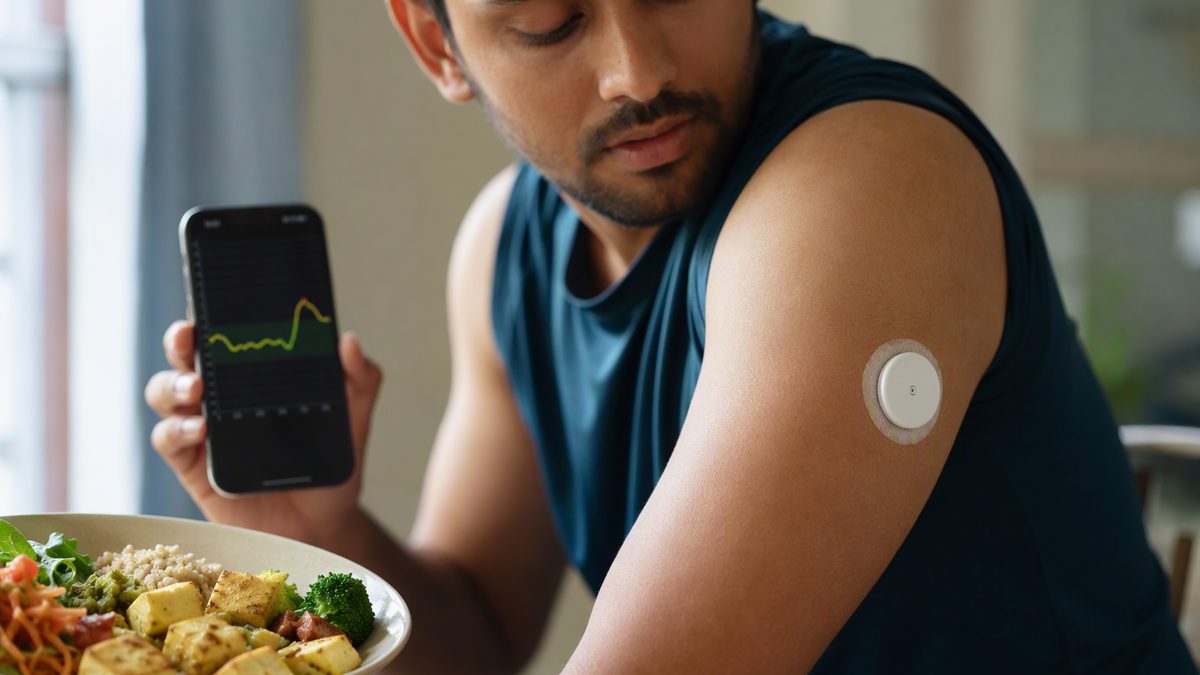
💡 Key Takeaways
- The 'flatten every spike' myth doesn't apply to healthy riders — post-meal rises into 120-160 mg/dL are normal physiology, not damage.
- Cold and altitude add noise: shivering and stress hormones can nudge glucose up, and the sensor already lags 5-15 minutes behind blood.
- Real value is narrow — spotting a downward drift on a long descent day before you bonk, and confirming mid-day carbs are landing.
- Consensus fueling stands without a sensor: ~30-60 g carbohydrate per hour on long efforts, built on a solid pre-ski meal.
Somewhere on a chairlift, a friend who just bought a continuous glucose monitor will tell you that your post-lunch chili and cornbread 'spiked' them, and that the goal is to keep the line flat so you ride better. It is a tidy story. It is also, for a healthy skier, mostly wrong.
The myth that every glucose spike is harmful and a flat curve is the target was never validated in people without diabetes. A rise after you eat carbohydrate is normal, expected physiology in everyone — your body doing its job, not a warning light. Chasing a flat line up a mountain can actually push out the exact carb-dense foods that keep you fuelled through a long descent day.
That does not mean a CGM is useless on snow. It means you have to separate the marketing from the few places the data genuinely earns its keep — which is what this page is for, including how cold and altitude quietly mess with the readings.
1. The myth: a flat line means a better ski day
Pull the claim apart. In a healthy, non-diabetic rider, post-meal glucose routinely climbs into the 120 to 160 mg/dL range and sometimes briefly higher after a big carb load, then settles back toward baseline within one to three hours. That excursion is not metabolic damage and it is not you 'becoming diabetic.' The risk that glucose research actually points to comes from the chronically elevated, poorly-cleared glucose of diabetes — not from a normal meal-to-meal bump in someone whose body clears it fine.
So the idea that you should fear the rise after fuelling for a six-hour mountain day has it backwards. Many of the foods that produce a respectable rise — rice, potatoes, oats, fruit — are also the ones giving you the glycogen you will burn on the next twenty descents. A 'flatter' option is not automatically the better one; sometimes it is just less food in the tank.
There is also a second myth worth killing on the lift: that a bigger spike than your buddy means something is wrong with you. The single most robust finding from CGM research in healthy people is that the same food moves different people very differently — identical bread, wildly different curves — shaped by your insulin sensitivity, gut microbiome, last meal, sleep and stress. A taller curve than your friend's is variation, not a diagnosis, and no single curve from a non-diagnostic wearable can tell you otherwise.
2. Cold, altitude, and why your mountain data is noisy
Before you over-read anything on a powder day, understand how much the environment skews the signal. A CGM samples interstitial fluid, not blood, with a 5 to 15 minute lag that widens whenever glucose moves fast — like during the eccentric quad hammering of a long descent. On top of that, modern consumer sensors carry real measurement error, typically expressed as a mean absolute relative difference in the high single digits to low double digits of percent, plus warm-up periods and calibration artifacts.
The mountain piles on more. Short, intense or stressful efforts — a steep technical pitch, a near-crash, racing your friends to the bottom — trigger adrenaline and cortisol that push the liver to release glucose, so your line can climb while you are working hard and eating nothing. That is a normal stress response, not a problem. Cold itself, shivering on a slow lift, and the physiological stress of altitude all add their own wiggles. Treat the curve as a rough trend line for the day, not a precise fuel gauge, and never rebuild your nutrition around one weird reading at 3,000 metres.
3. Where a CGM actually earns its place on snow
Strip away the hype and a genuine, narrow use remains for big days: catching a slow downward drift in glucose before it becomes a bonk, and confirming that the carbs you stash in your jacket are actually getting absorbed. On a backcountry tour or a dawn-to-close resort day, a sustained downtrend on the curve is a useful early nudge to eat before your legs and brain quit. But the fuelling plan itself does not need a sensor — that consensus existed long before consumer CGMs.
| Day type | Pre-ski meal (2-3 hr before) | On-snow carbs | What the CGM adds |
|---|---|---|---|
| Half-day resort | ~1-2 g/kg carbohydrate | Snack as appetite allows | Little — the day's too short to bonk |
| Full resort day (4-6+ hr) | ~1-2 g/kg carbohydrate | 30-60 g carbohydrate per hour | Confirms carbs are landing; flags drift |
| Backcountry tour | Larger mixed meal | 30-60 g/hr, toward 90 g/hr if very long | Early-warning of pre-bonk downtrend |
| Multi-day trip | Carb-forward dinners to refill glycogen | Same per-hour targets daily | Shows whether you start each day topped up |
Those carbohydrate numbers are the established endurance-fuelling guidance: roughly 30-60 g per hour for efforts beyond an hour or so, scaling toward 90 g per hour with mixed glucose-plus-fructose sources for very long, hard days. A CGM lets you personalise and verify the timing; it does not replace the plan, and most healthy riders learn their patterns in a week or two and then take the sensor off rather than paying for it all season.
4. Honest limits, altitude safety, and the après question
Keep three things straight. First, the high-quality evidence that CGM-guided eating improves health or performance in already-healthy people is thin — the strong CGM evidence is in diabetes management, and most performance claims around consumer sensors outrun the data. Second, if you have diabetes or take glucose-lowering medication, this whole biohacking frame is not for you: use a CGM only under your clinician's direction, where the numbers drive dosing and safety. Third, persistently high readings or symptoms like unrelenting thirst, frequent urination or unexplained weight loss mean a doctor and a real blood test, never a self-diagnosis from the app.
And the mountain-specific cautions a glucose curve cannot solve: altitude illness is a medical issue, not a fuelling one, and the classic après-ski combination of alcohol on top of altitude dehydration is the real performance and safety threat for tomorrow's legs — not whether your cornbread nudged your glucose to 150. Cold also blunts your thirst while you lose extra water through breathing hard in dry air, so hydration deserves more of your attention than the graph does. Use the sensor to learn a couple of fuelling habits, then go ski.
Chairlift questions about glucose and the mountain
I've heard every glucose spike is bad — is that true for skiing?
Not for a healthy rider. A rise into roughly 120-160 mg/dL after a carb-rich meal is normal physiology, and your body returns toward baseline within a few hours. The 'flatten everything' idea was never validated in non-diabetics, and chasing it can crowd out the carbs that fuel a long day. It's chronically high glucose, not a normal post-meal bump, that actually matters.
Does altitude change what my CGM shows?
It adds noise rather than a clean shift. The physiological stress of altitude, cold, shivering, and hard intense efforts can all nudge glucose upward via stress hormones — a normal response, not a problem. Combined with the sensor's built-in lag and measurement error, your high-mountain curve is best read as a rough trend, not a precise number. Don't rebuild your fuelling around a single odd reading up high.
Will a CGM stop me bonking on a long ski day?
It can give an early nudge by showing a downward drift before you fully crash, which is genuinely useful on a tour. But it doesn't fuel you — a solid pre-ski meal and roughly 30-60 g of carbohydrate per hour on long days are what prevent the bonk. The sensor verifies your carbs are landing and personalises timing; the plan works fine without one.
Can the glucose data help with my après-ski recovery?
Marginally. It might show carb-forward dinners refilling your tank for tomorrow, which is sensible. But the bigger lever après is avoiding the alcohol-plus-altitude-plus-cold dehydration spiral, which no glucose number addresses. Cold also dulls your thirst while you lose water breathing hard in dry air, so hydration and a real meal beat anything you'll read off the curve that evening.
Disclaimer: This article is for educational purposes only and is not medical advice. Consult a qualified healthcare professional before starting any supplement, nutrition, or training protocol — especially if you are pregnant or breastfeeding, under 18, taking medication, or managing a health condition.
Scientific References & Clinical Sources
- Jeukendrup AE. Nutrition for endurance sports: marathon, triathlon, and road cycling. J Sports Sci, 2011. PMID: 21916794
- Thomas DT, et al. American College of Sports Medicine Joint Position Statement: Nutrition and Athletic Performance. Med Sci Sports Exerc, 2016. PMID: 26891166
- San-Millán I, Brooks GA. Assessment of Metabolic Flexibility by Means of Measuring Blood Lactate, Fat, and Carbohydrate Oxidation Responses to Exercise in Professional Endurance Athletes and Less-Fit Individuals. Sports Med, 2018. PMID: 28623613

