💡 Key Takeaways
- A 'digital twin' for you is really a trend tracker, not a crystal ball: it reads your own HRV, resting heart rate and sleep, and it cannot validly predict your lifespan or 'biological age'.
- Your numbers must be compared to your own baseline, not a 30-year-old's, because HRV is normally lower with age and resting heart-rate norms shift.
- Aim for 7-9 hours of sleep and watch the 7-day trend; a resting heart rate sitting 5+ beats above your normal for several days is a real signal to rest or check for illness.
- If you take a beta-blocker, blood-pressure or rhythm medication, the heart-rate readings are distorted, so never let the app override your doctor.
You started tracking to stay independent, not to manage another gadget. Then the marketing arrived: a 'digital twin' that simulates your whole body, forecasts your longevity, and tells you exactly how to live longer. For an older adult who already juggles a statin, a blood-pressure pill and a slower recovery, that promise is tempting and a little intimidating.
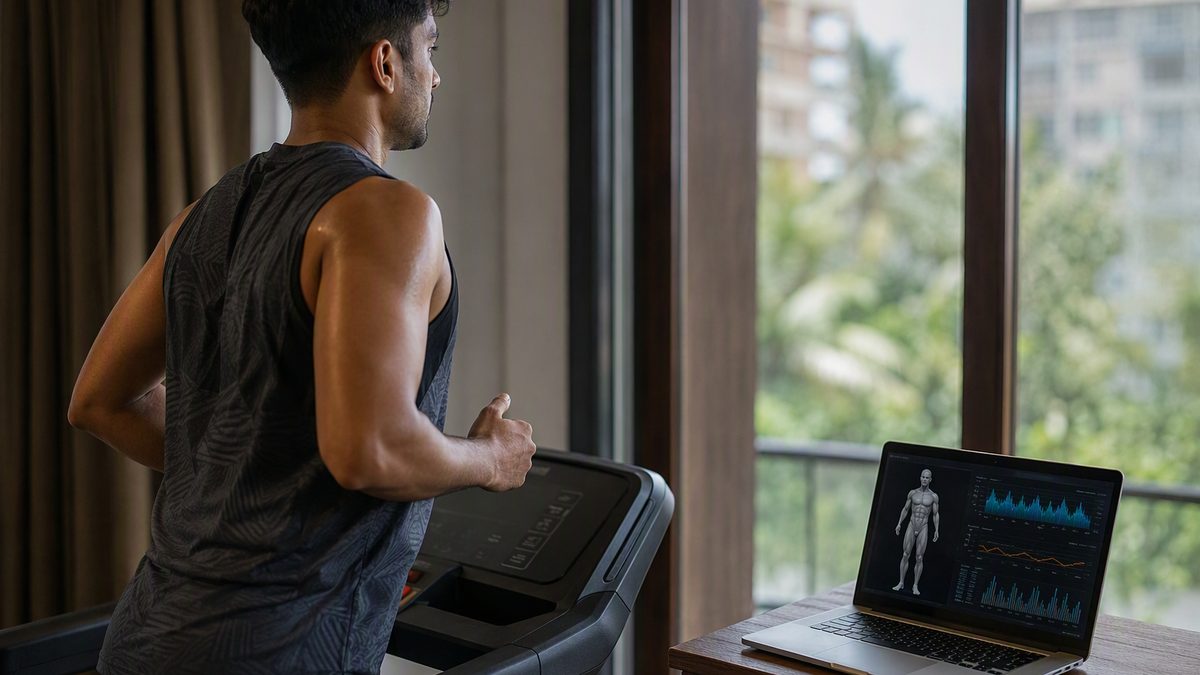
Here is the honest version. The grand simulation does not exist yet for consumers. What does exist is genuinely useful: a device that watches your heart rate, sleep and activity, learns your personal baseline, and shows you trends you would otherwise miss. Used that way, it supports the two things that matter most after 60 — staying consistent with resistance work and noticing when your body needs a rest day.
This guide separates the real tool from the hype, in plain language, for an active body that recovers a little slower than it used to.
1. The Real Problem: Slower Recovery, Marketing That Ignores Your Age
The frustration is specific. You feel recovered some mornings and flat on others, you cannot always tell why, and the apps cheerfully compare you to a generic adult who is decades younger. A glowing 'longevity score' or a 'biological age' number sounds authoritative, but for an older user it is one of the least trustworthy outputs on the screen. Long-range lifespan forecasting from a wristband is speculation, not science.
What you actually need help with is concrete: am I recovered enough to train hard today, am I sleeping enough, and is my fitness trending the right way over months? A well-set-up device answers those three questions well. It does it by learning your numbers over a couple of weeks and then flagging when you drift from your own normal — which is exactly the right approach for a body whose 'normal' is not a textbook average.
2. Why Your Baseline Beats the App's Norms After 60
This is the single most important thing to understand. The heart-rate zones, step goals and recovery scores built into most devices are calibrated to general adult populations. Resting and maximal heart-rate norms shift with age, and heart-rate variability — the beat-to-beat variation the app uses to gauge readiness — is generally lower as we get older. None of that means you are unwell. It means the population average is the wrong yardstick for you.
So ignore the absolute grade and watch the direction. Let the device record quietly for two weeks while you live normally. That becomes your personal baseline. From then on, the useful question is not 'is my HRV good?' but 'is my HRV trending up, flat, or down for me?' A resting heart rate drifting down over months usually means your aerobic fitness is improving. A resting heart rate sitting noticeably above your own normal for several mornings, especially with a poor night's sleep, is a real prompt to ease off or watch for a cold coming on.
3. A Grounded Weekly Protocol for Independent Living
You do not need five sensors. You need a small set of reliable signals, logged consistently, read as trends. Here is how to put a 'twin' to honest work — built around resistance training, balance, and the slower recovery that comes with age.
| Data you log | What it actually models | Your action this week |
|---|---|---|
| Resting / overnight heart rate | Recovery state vs. your personal baseline; months-long aerobic fitness trend | If it sits 5+ bpm above your normal for 2-3 mornings, make it a walk or mobility day |
| HRV (7-day rolling average) | Autonomic readiness for the day, age-adjusted to your own band | Trend down for several days: keep resistance work but cut the load or volume |
| Total sleep time | Your dominant nightly recovery process | Protect 7-9 hours; under 6, swap a hard session for balance and band work |
| Resistance sessions logged | Consistency against muscle and bone loss (the real adaptation driver) | Hit 2-3 strength sessions; this matters more than any score on the screen |
| Body weight | Slow trend, energy availability | Weigh weekly, same conditions; read the monthly line, not daily wobble |
Notice the device's job is to lower friction and surface trends, not to make decisions for you. The strength work itself, done consistently, is what protects muscle and bone — the score just helps you place the hard days well.
4. Your Medications, Hydration and the Limits to Respect
This is where honesty matters most. If you take a beta-blocker, another blood-pressure medication, or have an irregular rhythm such as atrial fibrillation, your heart-rate and HRV readings are distorted at the source. A beta-blocker, for example, deliberately lowers your heart rate, so the resting numbers the device celebrates or worries about no longer mean what the app thinks they mean. Every downstream 'readiness' or 'twin' number inherits that distortion. These are not medical devices, they are not FDA-cleared for the metrics they show, and they must never be used to adjust a dose or override your doctor. Bring the trends to your appointments as conversation starters, nothing more.
The medication list matters in a quieter way too. Statins, blood-pressure drugs and metformin all interact with the lab work your doctor follows, so any 'biological age' the app stitches together from partial inputs is built on shaky ground. Treat it as entertainment, not a result. Concentrating all of this — your heart data, your sleep, your weight — into one profile also raises the privacy stakes, since most consumer fitness apps are not covered by health-privacy law; check whether your data is sold before you commit.
Two more practical cautions. Thirst signaling weakens with age, so do not wait to feel thirsty — drink on a schedule, especially around exercise and warm days, regardless of what the app says. And no green readiness score clears genuine warning signs: chest pressure, breathlessness, palpitations, dizziness or a fall risk are medical questions, and a wearable cannot rule any of them out. If you are starting or restarting structured exercise on prescription medication, a quick check with your physician first is the right move. Building a steady routine matters far more than any gadget, and our guide on building fitness habits pairs well with the trends your device shows.
What Active Seniors Ask About Fitness Digital Twins
Can a digital twin really predict how long I'll live?
No. Lifespan and 'biological age' forecasts from consumer wearables are speculative and unvalidated, and they are especially unreliable for older adults whose baselines differ from the populations these models are built on. Treat any longevity number as a rough conversation starter, never a verdict. What the technology does reliably is track your own trends in sleep, resting heart rate and activity, which genuinely helps you stay consistent and notice when to rest.
Is it safe to follow these scores with my blood-pressure or heart medication?
Use them only as background information, never to change anything medical. Beta-blockers, other blood-pressure drugs and rhythm conditions like atrial fibrillation distort the heart-rate readings the app depends on, so the recovery scores built on them are unreliable for you. These devices are not medical equipment and are not cleared to guide medication. Share the trends with your doctor, but let your physician, not the app, make every clinical decision.
Am I too old for this to be worth it?
Not at all. Wearables are usable and well accepted by older adults, and the real value is the same at 70 as at 40: making self-monitoring easy and showing you trends you would otherwise miss. The key is to compare your numbers to your own baseline rather than the app's general-population norms, since HRV is naturally lower and heart-rate norms shift with age. Used that way, it supports consistency, which is what protects muscle and independence.
Will it tell me if I'm building bone and muscle?
Not directly. No wrist device measures bone density or muscle mass. What it can do is confirm you are showing up for your resistance sessions consistently and placing the hard days when you are recovered, which is exactly what drives those adaptations. Track your logged strength sessions and your resting-heart-rate trend over months. For bone density specifically, periodic clinical scans and your doctor's guidance remain the real measurement.
Disclaimer: This article is for educational purposes only and is not medical advice. Consult a qualified healthcare professional before starting any supplement, nutrition, or training protocol — especially if you are pregnant or breastfeeding, under 18, taking medication, or managing a health condition.
Scientific References & Clinical Sources
- Peake JM, et al. A Critical Review of Consumer Wearables, Mobile Applications, and Equipment for Providing Biofeedback, Monitoring Stress, and Sleep in Physically Active Populations. Front Physiol, 2018. PMID: 30002629
- Plews DJ, et al. Training adaptation and heart rate variability in elite endurance athletes: opening the door to effective monitoring. Sports Med, 2013. PMID: 23852425
- Kiviniemi AM, et al. Daily exercise prescription on the basis of HR variability among men and women. Int J Sports Med, 2007. PMID: 17345075
- Burke LE, et al. Self-monitoring in weight loss: a systematic review of the literature. J Am Diet Assoc, 2011. PMID: 21185970
- Düking P, et al. Criterion-Validity of Commercially Available Physical Activity Tracker to Estimate Step Count, Covered Distance and Energy Expenditure during Sports Conditions. Front Physiol, 2017. PMID: 29018355

