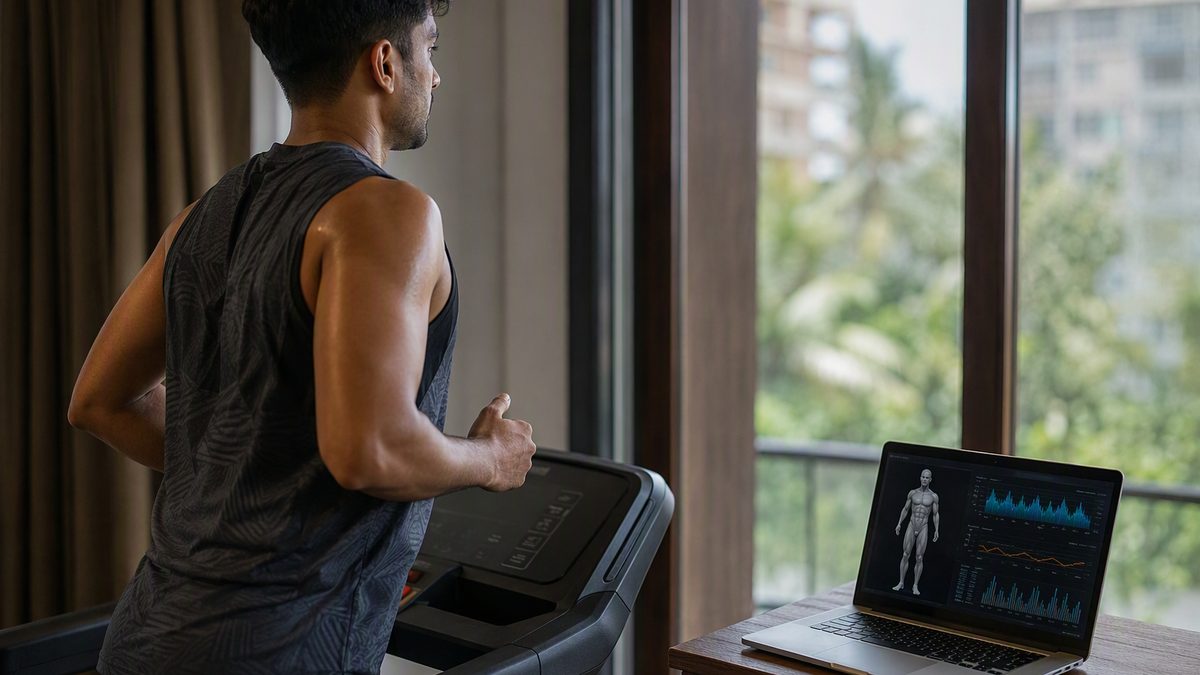
💡 Key Takeaways
- During a water cut, dehydration distorts heart rate and HRV, so your readiness and 'twin' scores become unreliable exactly when you most want to trust them.
- The honest value in camp is the multi-day HRV and resting-heart-rate trend, which flags accumulating fatigue from two-a-days and sparring damage before it tanks performance.
- No wearable simulates your body or predicts your longevity; it tracks recovery state and nudges autoregulation, nothing more.
- Read the 7-day trend over single mornings, and never let any score override medical judgment on concussion or rapid weight loss.
The question most fighters type into the search bar is blunt: does a 'digital twin' actually help my weight cut, or is it another gadget that breaks the moment I dehydrate? Short answer: during the cut itself, the scores get unreliable, because pulling water distorts the exact heart-rate and HRV inputs the model runs on. Between cuts and through fight camp, though, the underlying data is genuinely useful for managing fatigue. And no, it does not simulate your physiology or forecast your lifespan — that part is marketing.
So the right way to use it is narrow and honest. Through camp, lean on the multi-day recovery trend to manage the brutal load of two-a-days and sparring. During the water cut, expect the numbers to lie and rely on your established protocol and your team instead.
Let's break down where it helps, where it fails, and how to read it without getting fooled.
1. Does It Help My Weight Cut? The Direct Answer
Not during the cut, and you need to know why. A 'digital twin' runs on heart rate and HRV. When you pull water in the final days before weigh-in, dehydration drives resting heart rate up and suppresses HRV — not because you're unrecovered or sick, but because you're deliberately dehydrated. The readiness score reads that as alarming when it's expected. So in cut week, the device's verdict is noise; trusting it could push you to abandon a sound, rehearsed protocol because a screen turned red.
There's a sharper safety point here too. Combat athletes who load up on supplements that shift water while simultaneously cutting water set up a bad interaction — the metrics won't catch that, and neither will a 'twin'. The model has no idea you're manipulating fluid; it just inherits the distorted inputs. So during a cut, the device is a passenger, not a coach. Your weight-management plan belongs to you and your team, with medical oversight, because rapid weight loss carries real risk that no consumer score is equipped to manage. The practical rule is simple: as soon as you start manipulating water in the final days, stop reading the readiness score as anything but noise, and resume trusting it only once you have rehydrated and your numbers have had a few days to settle back toward your normal.
2. Where It Earns Its Keep: Fight Camp Fatigue
Outside the cut, the picture flips. Fight camp stacks skill work and conditioning into two-a-days, adds the inflammation load of contact, and runs for six to eight weeks. That's exactly the situation where accumulating fatigue creeps up on you and a multi-day trend can warn you before a flat, sluggish sparring session does. The energy demands are brutal — glycolytic and phosphagen-heavy work, repeated hard efforts with incomplete rest — and that load adds up in ways your motivation tends to hide from you until you stall. Read the 7-day rolling HRV trend and your resting-heart-rate trend together: when both drift the wrong way for several days — HRV down, resting heart rate up — that's a genuine recovery debt, a cue to pull intensity on conditioning so it complements sparring instead of duplicating its damage.
HRV-guided autoregulation has matched or beaten fixed plans in some studies, which fits the combat reality: a rigid camp schedule doesn't know you got rocked in sparring on Tuesday. The data gives you a reason to deload the redundant conditioning and protect the skill work that actually wins fights, rather than grinding yourself flat doing extra rounds that just duplicate the damage you already took on the mats. Just keep it in its lane — it's a fatigue gauge, not a fight IQ, and it can't see your grip endurance or your neck. For more on how data-informed coaching tools fit a serious program, our look at AI fitness coaching covers the honest scope.
3. A Camp Protocol That Survives the Cut
Here's how to use the signals through camp while accepting they go dark during the water cut. The table separates what to trust when from what to ignore.
| Data you log | What it actually models | Your action by phase |
|---|---|---|
| HRV (7-day rolling) | Autonomic fatigue from two-a-days and sparring | Camp: trend down 3+ days, cut conditioning intensity. Cut week: ignore, it's distorted |
| Resting heart rate (trend) | Recovery debt and oncoming illness | Camp: 5+ bpm over baseline means deload. Cut week: expected to rise from dehydration |
| Total sleep time | Recovery from contact and high load | Protect 7-9 hours all camp; under 6 means lighter skill, no hard rounds |
| Hydration status (manual + plan) | Fluid state the wearable can't read | Follow your team's cut/rehydration plan; the device does not manage this |
| Session log (skill vs. conditioning) | Whether conditioning complements or duplicates sparring | On suppressed-trend days, drop redundant conditioning, keep technical work |
The discipline is knowing which column to trust when. In camp, the trends guide your conditioning load. In cut week, you switch the device off as a decision-maker and run your rehearsed protocol with your team.
4. The Caveats: Concussion, Dehydration and What It Can't Forecast
Three hard limits, because this is contact sport. First, these are not medical devices. They do not assess concussion, and no readiness score tells you whether your brain has recovered from getting rocked — that's neurology, handled by qualified people, not a wrist sensor. If you've taken real head trauma, the device is irrelevant to your return-to-spar decision. Second, the dehydration distortion isn't a glitch you can tune out; it's fundamental. Any 'twin' built on heart-rate inputs will misread a cutting athlete, full stop.
Third, ignore the longevity and 'biological-age' layer entirely. There is no validated simulation of your physiology and no trustworthy lifespan forecast in a consumer device — and a fighter manipulating weight and absorbing impact is about the worst-case input for those models anyway. Use the technology for what it's good at: lowering the friction of self-monitoring and surfacing the fatigue trend through camp. Keep your team and your doctor in the loop for everything the screen can't see, which is most of what actually matters in this sport.
Fighter Questions About Digital Twins
How does this interact with my weight cut?
Badly during the cut itself. Pulling water dehydrates you, which drives resting heart rate up and suppresses HRV — the exact inputs the model runs on — so your readiness score turns red for reasons that have nothing to do with recovery. Don't let that override a rehearsed protocol. Use the device through camp to manage fatigue, then treat it as a passenger in cut week and rely on your team and your plan, with medical oversight for the rapid weight loss itself.
Will it help me in the later rounds?
Not directly — it doesn't build your gas tank, your training does. What it can do is help you arrive less fatigued by flagging accumulating recovery debt across camp, so you deload redundant conditioning before it digs a hole. Reading your HRV and resting-heart-rate trend together lets you keep the skill and conditioning work that actually carries you late, instead of grinding yourself flat. The benefit is smarter load management, not a magic endurance boost.
Should I change anything during fight camp?
Yes — lean on the multi-day trend more in camp, because that's when two-a-days and sparring stack fatigue fast. When your HRV trend drops and resting heart rate rises for several days together, cut the intensity of conditioning so it complements sparring rather than duplicating its damage. HRV-guided adjustments have matched fixed plans in research. Then, in the final cut week, stop trusting the scores and switch to your rehearsed protocol with your coaches.
Does water retention matter for my weight class with this?
It matters for your reading, not the other way around. The device cannot see or manage your fluid state — it only inherits the distorted heart-rate inputs that dehydration creates. And be careful stacking supplements that shift water on top of a cut; that interaction is a real safety issue the app won't flag. Manage water and weight with your team and medical oversight, and don't expect any consumer score to guide a process it has no insight into.
Disclaimer: This article is for educational purposes only and is not medical advice. Consult a qualified healthcare professional before starting any supplement, nutrition, or training protocol — especially if you are pregnant or breastfeeding, under 18, taking medication, or managing a health condition.
Scientific References & Clinical Sources
- Kiviniemi AM, et al. Daily exercise prescription on the basis of HR variability among men and women. Int J Sports Med, 2007. PMID: 17345075
- Plews DJ, et al. Training adaptation and heart rate variability in elite endurance athletes: opening the door to effective monitoring. Sports Med, 2013. PMID: 23852425
- Peake JM, et al. A Critical Review of Consumer Wearables, Mobile Applications, and Equipment for Providing Biofeedback, Monitoring Stress, and Sleep in Physically Active Populations. Front Physiol, 2018. PMID: 30002629
- Burke LE, et al. Self-monitoring in weight loss: a systematic review of the literature. J Am Diet Assoc, 2011. PMID: 21185970
- Schoeppe S, et al. Efficacy of interventions that use apps to improve diet, physical activity and sedentary behaviour: a systematic review. Int J Behav Nutr Phys Act, 2016. PMID: 27927218

