💡 Key Takeaways
- Read the data twice a week, not daily: a Monday baseline check and a mid-week trend look are enough to autoregulate without obsessing over single readings.
- The 7-day HRV and resting-heart-rate trend flags the chronic glycogen-depletion and overuse fatigue that mixed-modal volume creates before it becomes an injury.
- It's a load-management tool, not a body simulator — ignore the longevity and biological-age outputs and use it to decide test-versus-train.
- During the Open, expect distorted readings around max-effort weekends and prioritise sleep and carbs over chasing a green score.
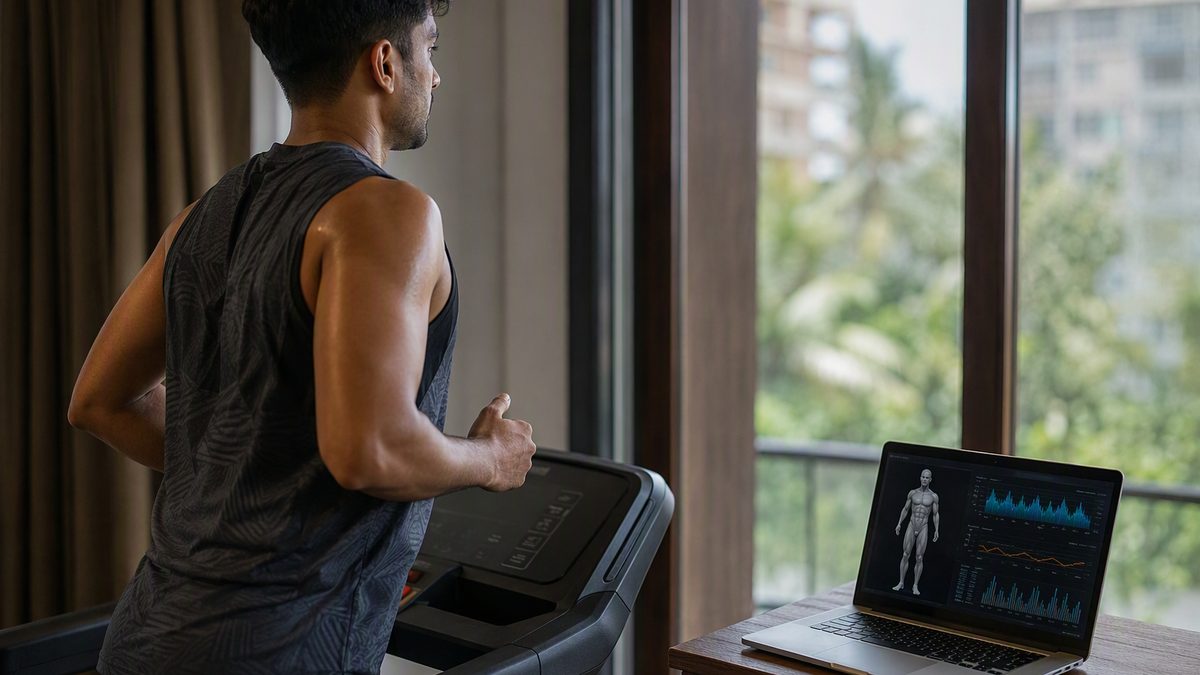
Picture your actual week: Monday strength plus a metcon, Tuesday gymnastics and an engine piece, a couple of two-a-days, Olympic lifting woven through, and a long Saturday session that leaves you wrecked. Somewhere in that 5-6 day, 90-to-120-minute grind, a 'digital twin' is supposed to fit. The question isn't whether it can simulate your physiology — it can't, no consumer device does — it's where in the week the data actually helps you make a decision.
The honest answer: it slots in at two points, Monday and mid-week, as a load-management check. CrossFit carries the highest mixed energy-system stress of any training style, with real glycogen-depletion and shoulder-wrist overuse risk. A readiness trend is genuinely useful for catching that before it bites. The longevity forecasting and 'biological age' layer? Skip it.
Here's exactly where the data goes in your week, and how to read it without letting it run your life.
1. Slotting Readiness Into a 5-6 Day Training Week
You don't need to stare at this thing daily — that's a recipe for chasing noise. Two touchpoints cover it. First, a Monday-morning check: glance at your resting-heart-rate and HRV trend against your baseline to set the week's expectation. If you're rested, plan the hard quality sessions with confidence. If the trend is already suppressed coming off a heavy weekend, build in an easier front half. Second, a mid-week look, around Wednesday or Thursday, to see whether two-a-days have dug a hole — the point where the trend tells you to back off before Saturday rather than after.
The device records overnight, so there's no ritual to maintain mid-session. The decision it informs is the big one in your sport: is today a test or a training day? The classic CrossFit mistake is treating every WOD as a max effort — turning training days into a string of unofficial tests that leave nothing in the tank for actual adaptation. A suppressed multi-day trend is your permission slip to train a piece submaximally and save the red-zone effort for when you're actually recovered. That's autoregulation, and it's where the data pays off: instead of guessing whether today's flat feeling is laziness or genuine fatigue, you have a trend that settles the argument before you load the bar.
2. Managing Two-a-Day Load and Glycogen Depletion
The mixed-modal grind has a specific failure pattern: chronic glycogen depletion from under-fuelling the volume, plus shoulder and wrist overuse from kipping and overhead work. The wearable can't see your glycogen or your wrists directly, but the systemic recovery trend it does track is a reliable early-warning system. When your HRV trend drops and resting heart rate climbs across several days, that's accumulated fatigue — often the downstream signal of doing high volume on too few carbs, since carbohydrate is what refills the muscle glycogen your metcons keep draining.
Use it to drive two decisions. One, fuel the work: a suppressed trend during a high-volume block is a prompt to check whether you're actually eating enough carbohydrate for the metcons, not just to add rest — under-fuelling the engine is the quieter, more common problem than under-resting it. Two, place the deloads: read the trend over weeks and pull volume before the overuse niggles in your shoulders become an injury that costs you a season. A nagging wrist on a green-score morning is still a nagging wrist. The data won't replace a coach's eye on your kip mechanics, but it quantifies the systemic cost your enthusiasm tends to ignore until something breaks.
3. Your Weekly Autoregulation Protocol
Here's the two-checkpoint system mapped to your training week. The wearable handles systemic readiness; you handle the fuelling and mechanics it can't measure.
| Data you log | What it actually models | Your action in the week |
|---|---|---|
| HRV (7-day rolling) | Systemic recovery from mixed-modal volume | Monday: rested means plan hard sessions. Suppressed 3+ days: train metcons submaximally |
| Resting heart rate (trend) | Recovery debt and oncoming illness | 5+ bpm over baseline mid-week: pull a two-a-day or cut its intensity |
| Total sleep time | Recovery for high weekly volume | Protect 7-9 hours; under 6 means no red-zone WOD that day |
| Carbohydrate / fuelling (manual) | Glycogen the wearable can't see | Suppressed trend in a volume block: audit carb intake before adding rest |
| Shoulder/wrist check-in (manual) | Overuse from kipping and overhead volume | Any persistent niggle: deload that pattern regardless of a green score |
Two checkpoints, five inputs, no daily obsession. The system tells you when to deload and when to send it — which, given how easy it is to red-line every session in this sport, is exactly the brake you need. Notice that recovery sits in the protocol as a planned input, not the afterthought it usually becomes until an injury forces the issue; building it into your week on purpose is the difference between a long competitive career and a stop-start one.
4. The Open, Rhabdo Awareness and What the Data Won't Do
Competition weeks need a caveat. During the Open or a local comp, you're hitting max efforts on a schedule the calendar sets, not your readiness. Expect your trend to take a hit around those weekends — that's the cost of competing, not a reason to panic or to skip a workout you've committed to. In comp season, prioritise the basics the data supports: total sleep, carbohydrate, and consistency. Don't let a red score talk you out of a scored workout, and don't let a green score talk you into an extra max effort you don't need.
Two safety notes that outrank any metric. At the extreme intensities CrossFit invites, rhabdomyolysis is a real risk — dark urine, severe swelling, or disproportionate pain after a brutal session is a medical emergency, not a recovery-score conversation. And these devices are not medical equipment; they're not diagnostic and not cleared for the metrics they show. Use the trend for load management, keep your fuelling and mechanics honest by hand, and treat the longevity and biological-age outputs as the marketing they are. Read this way, the data is a genuinely useful brake on a sport that rewards going too hard.
CrossFit Questions About Fitness Digital Twins
Will this help my Fran time or just my lifts?
Neither directly — it doesn't improve performance, it manages the load that lets performance show up. The benefit is arriving at your test sessions actually recovered, by flagging when mixed-modal volume has dug a fatigue hole. Read your HRV and resting-heart-rate trend, train metcons submaximally when it's suppressed, and save red-zone efforts for recovered days. Do that consistently and your Fran time benefits from better-placed hard work, not from anything the device measures about the workout itself.
How do I time it around two-a-days?
Check it twice a week rather than constantly. A Monday baseline read sets the week's plan, and a mid-week look tells you whether your two-a-days have over-reached you. When the trend drops and resting heart rate climbs across several days, pull a session or cut its intensity before Saturday. The device records overnight, so there's no mid-session ritual. The goal is catching accumulated fatigue early, not reacting to every single morning's number.
Does it matter during the Open?
Less than you'd think, and you should adjust your expectations. During the Open you hit max efforts on the calendar's schedule, so your readiness trend will take a hit around those weekends — that's normal, not a red flag. Don't let a low score talk you out of a scored workout you've committed to. Instead, lean on the fundamentals the data supports: protect sleep, fuel with enough carbs, and recover hard between attempts rather than chasing a green number.
What about workouts where I hit the red zone?
The device can't see intensity inside a metcon well, and that's fine — its job is the bigger picture. What you should watch for after extreme efforts is rhabdomyolysis: dark urine, severe swelling, or pain way out of proportion to the work is a medical emergency, full stop, not a recovery-score question. Use the trend to decide whether today should be a red-zone day at all, and keep medical judgment, not a wearable, in charge of warning signs after the hardest sessions.
Disclaimer: This article is for educational purposes only and is not medical advice. Consult a qualified healthcare professional before starting any supplement, nutrition, or training protocol — especially if you are pregnant or breastfeeding, under 18, taking medication, or managing a health condition.
Scientific References & Clinical Sources
- Plews DJ, et al. Training adaptation and heart rate variability in elite endurance athletes: opening the door to effective monitoring. Sports Med, 2013. PMID: 23852425
- Kiviniemi AM, et al. Daily exercise prescription on the basis of HR variability among men and women. Int J Sports Med, 2007. PMID: 17345075
- Schoeppe S, et al. Efficacy of interventions that use apps to improve diet, physical activity and sedentary behaviour: a systematic review. Int J Behav Nutr Phys Act, 2016. PMID: 27927218
- Burke LE, et al. Self-monitoring in weight loss: a systematic review of the literature. J Am Diet Assoc, 2011. PMID: 21185970
- Peake JM, et al. A Critical Review of Consumer Wearables, Mobile Applications, and Equipment for Providing Biofeedback, Monitoring Stress, and Sleep in Physically Active Populations. Front Physiol, 2018. PMID: 30002629

