💡 Key Takeaways
- A suppressed resting-heart-rate and HRV trend across weeks can be an early flag of under-fuelling and accumulated load — read it as a signal to fuel and rest more, never to restrict.
- Use the data to manage 6-10 hour rehearsal days and performance seasons; it tracks recovery state, it does not measure or judge your body's appearance.
- Ignore any calorie-burn, weight-loss, or 'biological age' output — calorie estimates are inaccurate and the framing is harmful for a population at RED-S risk.
- Read the 7-day trend, not single mornings, and treat persistent fatigue, missed periods, or stress-fracture warning signs as medical, not training, questions.
The problem is one most dancers know intimately: your body is your instrument and your aesthetic, the rehearsal days run six to ten hours, and the culture around you has long whispered that lighter is better. Into that environment arrives a 'digital twin' promising to model your physiology and optimise your body — and for a population with real RED-S and under-fuelling risk, the wrong framing of that technology is genuinely dangerous.
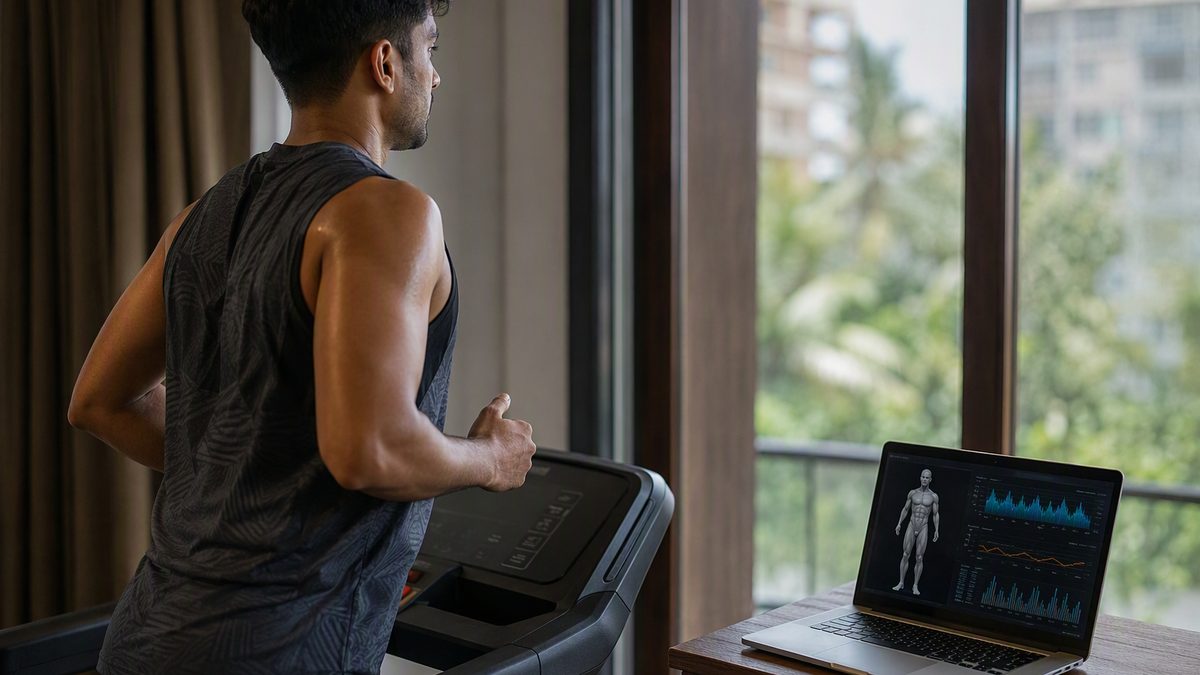
So let's reframe it deliberately. There is no validated body simulator and no trustworthy longevity forecast in any consumer device — that hype is irrelevant to you. What the underlying data can do, used carefully, is the opposite of restrictive: it can catch the fatigue and recovery patterns that signal you're not fuelling enough for your workload, and prompt you to eat and rest more.
This guide treats fuelling as performance infrastructure, not a number to shrink, and shows how the data supports a long, injury-free career rather than a smaller body.
1. The Problem: Long Days, Lean Pressure, and Recovery That Slips
Rehearsal and performance seasons stack load relentlessly. Daily classes, long rehearsals, then a run of shows — injury rates in dance rival contact sports, and the warning signs of over-reaching are easy to rationalise away when you're conditioned to push through. Add the aesthetic pressure to stay lean, and chronic under-eating becomes the quiet saboteur: it destroys recovery, blunts adaptation, and raises stress-fracture risk, all while feeling like discipline.
This is exactly where a recovery trend can help — if it's pointed in the right direction. Used to surface fatigue rather than to chase leanness, the data gives you an objective read on whether your workload and your fuelling are in balance. A resting heart rate that creeps up and an HRV trend that stays suppressed across weeks, with sleep intact, can be an early sign you're not eating enough to support what you're asking of your body. That's information you can act on by adding fuel and rest, before a stress fracture makes the decision for you.
2. Fuelling as Infrastructure: What the Trend Can Flag
Here's the mindset shift. The device does not measure how you look, and it has no business doing so. What it tracks is recovery state, and recovery is downstream of fuelling. When energy availability drops too low, the body conserves — and over weeks that can show up as a depressed HRV trend and a resting heart rate that won't settle to your normal even on rest days. Read in this direction, the data is an argument for eating more, not less. It reframes a signal you might once have read as a push to do more into the truer reading: a prompt to give your body more to work with. For a population historically pushed toward under-fuelling, that re-orientation is the entire value, and it only holds if you refuse to let the device speak about your body in any other terms.
Crucially, ignore everything the app says about calories and body composition. Consumer calorie-burn estimates carry large errors and were never reliable enough to drive intake. Any weight-loss nudge, 'biological age', or longevity score is at best unvalidated and at worst harmful framing for a dancer. Strip those screens out of your attention entirely. Strength work, by the way, won't 'bulk' you the way the old studio myth claims — it builds the stability your often-hypermobile joints need, and the data simply helps you place it on days you can recover from it. Pair the trend with how you feel in class, and keep a coach or clinician in the loop on the patterns it surfaces.
3. A Season-Long Protocol for Rehearsal and Show Weeks
Across a performance block, the goal is to keep load and fuelling balanced and catch drift early. Here's how to use the signals — read as trends, oriented toward fuelling and rest, never restriction.
| Data you log | What it actually models | Your action across the season |
|---|---|---|
| HRV (7-day rolling) | Autonomic recovery vs. accumulating rehearsal load | Suppressed for weeks with good sleep: add fuel and rest, flag it to support staff |
| Resting heart rate (trend) | Recovery and energy-availability context over weeks | Creeping up off baseline: treat as under-recovery, eat more and ease volume |
| Total sleep time | Dominant recovery process through show runs | Protect 7-9 hours; touring disruption means guard sleep first |
| Strength sessions logged | Stability work for hypermobile joints (not bulk) | Place 2 short sessions on recovered days; this protects ankles and hips |
| Calorie / weight outputs | Inaccurate and harmful framing for you | Ignore entirely; never use the app to restrict intake |
Every row points the same way: toward supporting your body through a demanding season, not shrinking it. That's the only honest use of this data for a dancer.
4. The Red Lines: RED-S, Stress Fractures and Single-Day Noise
Two patterns must never be over-ridden by a wish to keep training. Missed or irregular periods, persistent deep fatigue, recurrent stress reactions, or stress-fracture warning signs are medical situations — RED-S is serious, and a wearable is not equipped to assess it. If the recovery trend stays suppressed for weeks, that's a prompt to involve a clinician and a dietitian, not to push harder or eat less. These devices are not medical equipment and cannot diagnose anything; they flag patterns, and the response to a worrying pattern is professional support.
On the data itself, hold two cautions. Don't react to single mornings — day-to-day HRV is noisy, and the meaningful signal is the multi-day trend and your personal baseline. And remember that for menstruating dancers, cycle phase systematically shifts resting heart rate, temperature and HRV, so context matters when you read a wobble. The honest promise of this technology for you is small and specific: it lowers the friction of noticing when your body needs more, and it never, ever tells you to give it less. Used that way, it supports a long career. Used as a tool to chase leanness, it does harm. Stay firmly on the right side of that line.
Dancer Questions About Fitness Digital Twins
Will this change how my body looks on stage?
No, and that isn't its job. A wearable tracks recovery state — heart rate, HRV, sleep — not appearance, and its calorie and body-composition outputs are inaccurate and best ignored entirely. The genuinely useful thing it does is flag when your recovery is slipping, which is often a sign you need to fuel and rest more, not less. Treat fuelling as the infrastructure that keeps you performing, and never use the device as a tool to restrict.
Can I use this during performance season?
Yes, and that's when it's most useful — to protect you, not push you. Through a show run, watch the multi-day HRV and resting-heart-rate trend for signs of accumulating fatigue and under-recovery, and respond by guarding sleep and adding fuel. Touring disrupts everything, so prioritise total sleep time first. If the trend stays suppressed for weeks, that's a cue to involve support staff or a clinician, not to train through it or eat less.
Does it help with stress fractures and ankle injuries?
Indirectly, by flagging the under-recovery and possible under-fuelling that raise stress-fracture risk, and by helping you place stability-building strength work on recoverable days. It cannot detect or diagnose a stress fracture — that's a medical assessment. If you have stress-fracture warning signs, persistent fatigue, or menstrual irregularities, treat those as clinical questions for a doctor and dietitian. The data is an early prompt to seek support, never a substitute for it.
I've heard these tools push weight loss — is that true?
Many display calorie-burn estimates and weight-loss nudges, and for a dancer you should ignore that layer completely. The calorie numbers carry large errors, and any 'biological age' or weight-loss framing is unvalidated and, for a population at RED-S risk, actively harmful. Use only the recovery trend, and read it in the direction of fuelling and resting more when it's suppressed. If a tool can't be set up to hide those harmful outputs, it isn't the right tool for you.
Disclaimer: This article is for educational purposes only and is not medical advice. Consult a qualified healthcare professional before starting any supplement, nutrition, or training protocol — especially if you are pregnant or breastfeeding, under 18, taking medication, or managing a health condition.
Scientific References & Clinical Sources
- Plews DJ, et al. Training adaptation and heart rate variability in elite endurance athletes: opening the door to effective monitoring. Sports Med, 2013. PMID: 23852425
- Kiviniemi AM, et al. Daily exercise prescription on the basis of HR variability among men and women. Int J Sports Med, 2007. PMID: 17345075
- Peake JM, et al. A Critical Review of Consumer Wearables, Mobile Applications, and Equipment for Providing Biofeedback, Monitoring Stress, and Sleep in Physically Active Populations. Front Physiol, 2018. PMID: 30002629
- Burke LE, et al. Self-monitoring in weight loss: a systematic review of the literature. J Am Diet Assoc, 2011. PMID: 21185970
- Düking P, et al. Criterion-Validity of Commercially Available Physical Activity Tracker to Estimate Step Count, Covered Distance and Energy Expenditure during Sports Conditions. Front Physiol, 2017. PMID: 29018355

