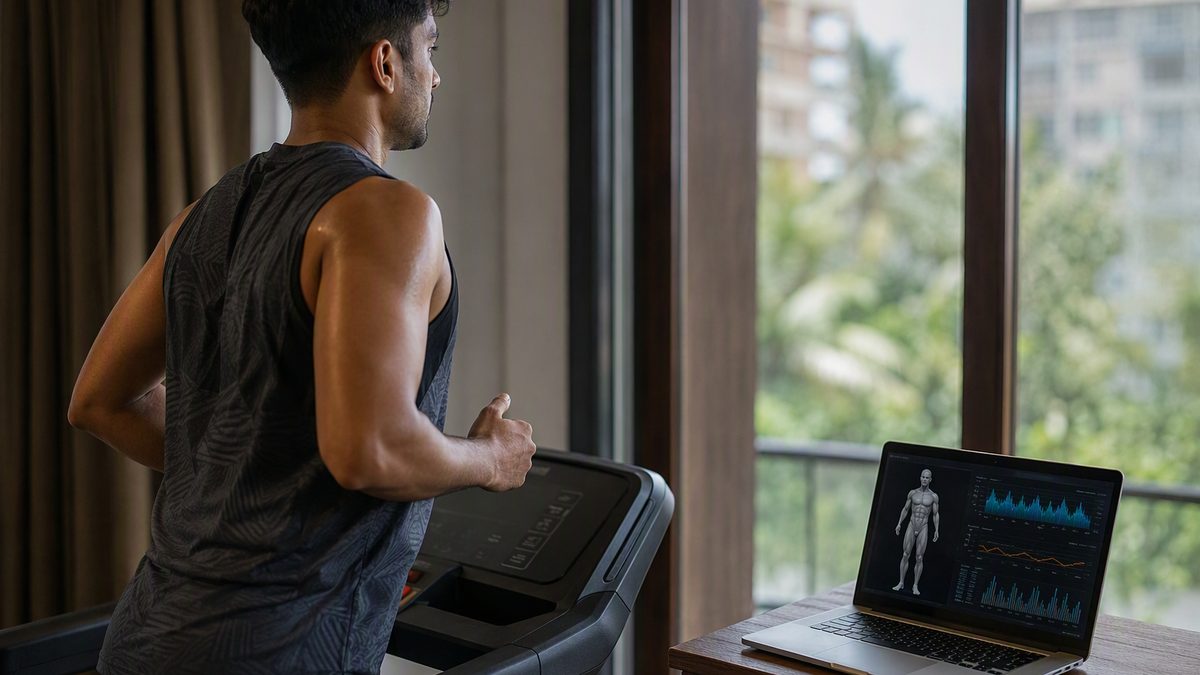
💡 Key Takeaways
- Across a race block you can expect your resting heart rate to trend down as your aerobic engine improves — a clean, weeks-long signal that the threshold work is landing.
- The 7-day HRV trend helps balance the run-plus-strength load that makes HYROX uniquely fatiguing, flagging when compromised-running sessions need to be eased.
- It tracks recovery and fitness trends, not a simulation of your race — ignore the longevity and biological-age outputs entirely.
- Read trends over single mornings, test race-day fuelling in training, and treat the device as a load gauge, not a substitute for a race plan.
Start with what you can actually measure and when. Log a consistent set of signals across a race block and the trends tell a real story: over weeks, your resting heart rate should drift down as your aerobic engine sharpens, and your HRV trend gives you a running read on whether the run-plus-strength load is sustainable or quietly burying you. That's genuinely useful for a sport that sits at threshold for over an hour and punishes you for training stations fresh when the race demands them pre-fatigued.
What you won't get is a simulation of your race or a forecast of your longevity. No consumer 'digital twin' models your HYROX time, your VO2max response, or your lifespan with validated accuracy — that layer is marketing. The honest tool underneath is a recovery and fitness trend tracker, and for a hybrid athlete juggling running, sleds, and carries on one recovery budget, that's worth having.
Here's the data you can read, the timeline to expect it on, and how to use it across a block.
1. The Timeline: What Trends Tell You Across a Race Block
Expectations on a clear timeline. The first couple of weeks of logging mostly build your baseline — a single HRV reading is noisy and tells you little. By around two weeks you have a personal normal worth reading. From there, two trends matter to a HYROX athlete. First, resting heart rate over weeks: as your aerobic base improves across a block, a downward drift is one of the cleanest signals that your threshold and long-run work is paying off. It's slow, it's quiet, and it's reliable in a way the day-to-day numbers aren't.
Second, the 7-day rolling HRV trend, which is your sustainability gauge. HYROX stacks a running engine on top of loaded functional strength, and the recovery cost is easy to underestimate when you're 'mostly running'. When the HRV trend drops and holds down for several days, that's accumulated load — your cue to ease the compromised-running sessions or pull a station block before it becomes an injury. Anchor decisions to that trend, never a single suppressed morning, which is usually just last night's sleep or a hard day talking.
2. Balancing the Run-Plus-Strength Load
The defining HYROX demand is running on tired legs after sleds, lunges and carries — and training that demand means deliberately fatiguing yourself, then doing quality work anyway. That's productive, but it's also exactly the load profile that over-reaches athletes who don't manage it. This is where the trend earns its place: it quantifies the systemic cost of all that compromised-running and station-endurance work, so you can tell the difference between productive fatigue and a hole you're digging.
There is a specific trap here: training stations fresh, when the race demands them pre-fatigued, so you arrive on race day strong at sleds you have only ever pushed with fresh legs. The fix is deliberate pre-fatigue work, and that work is costly, which is exactly why the trend matters for separating productive overload from a hole. Use it to make the call most HYROX athletes get wrong — when to insert a recovery block instead of racing or testing every weekend. A trend that keeps sliding across a heavy block is telling you the run-plus-strength volume has outrun your recovery, and that no amount of grit fixes under-recovery. It won't measure your sled technique or your roxzone transitions; those you drill. What it does is keep your enthusiasm honest about the cumulative toll, which in a sport this fatiguing is a genuinely useful brake. For a wider view of where data-driven training is heading, our roundup of modern fitness trends puts it in context.
3. A Race-Block Protocol for Hybrid Training
Here's how to put the measurable signals to work across a block, with the race-day fuelling piece tracked by hand because the wearable can't taste-test your gels.
| Data you log | What it actually models | Your action across the block |
|---|---|---|
| Resting heart rate (trend) | Aerobic-base improvement over weeks | Downward drift confirms the engine work is landing; spikes mean rest or illness |
| HRV (7-day rolling) | Sustainability of run-plus-strength load | Suppressed 3+ days: ease compromised-running sessions or pull a station block |
| Total sleep time | Recovery for high threshold volume | Protect 7-9 hours; under 6 means no quality compromised-running that day |
| Training load / sessions | Whether you're recovering between race-pace efforts | Trend sliding across a block: insert a recovery week, don't race every weekend |
| Race-day fuelling (manual) | GI tolerance the wearable can't see | Test gels and electrolytes in long sessions; never debut anything on race day |
The wearable manages systemic readiness; your own logs manage fuelling and technique. Together that's an honest system for a sport where the load adds up faster than most athletes admit.
4. Race Week, GI Distress and What the Data Won't Forecast
Race week is where people misuse this data. A taper deliberately reduces load, and your readiness trend may bounce around as you freshen — don't read a green or red score as a prediction of your finish time. Lean instead on what the data has told you across the whole block, prioritise sleep and carbohydrate going in, and trust your preparation. The device can confirm you're rested; it cannot simulate the 8km of running and eight stations ahead of you.
Two practical caveats. GI distress from poorly tested fuelling wrecks races, and no wearable warns you about it — that's why you rehearse your gels and electrolytes in long sessions, not on the start line. And indoor HYROX venues can run hot, so manage heat and hydration with a real plan, not a metric. Finally, ignore the longevity and biological-age outputs completely; they're unvalidated, and a hybrid athlete's data is no exception. These are not medical devices. Use the trends as a load gauge across your block, keep your fuelling honest, and let your race plan, not a readiness score, carry you through the last 2km when everything is heavy.
HYROX Questions About Fitness Digital Twins
Will this help my compromised running off the sled?
Not by measuring it — the device can't see how your legs feel after a sled push. What it does is manage the load behind that skill. Compromised-running sessions are deliberately fatiguing, and the HRV trend tells you when you've accumulated enough fatigue that pushing more becomes counterproductive. Use it to decide when those sessions stay quality and when they need easing, so you train the skill fresh enough to actually improve it rather than just grinding tired.
How do I use it in race week?
Mostly to confirm you're freshening up, not to predict your time. A taper reduces load, so your readiness trend may wobble as you recover — don't read that as a forecast of your finish. Rely on what the data showed across the whole block, prioritise sleep and carbohydrate, and trust your preparation. The device confirms recovery; it can't simulate the race. Keep race-day fuelling exactly as you rehearsed it in training, with nothing new on the start line.
Does it improve my roxzone transitions?
No — transitions are a skill you drill, and the wearable has no insight into them. Its value is upstream: by managing your recovery across the block, it helps you arrive at sessions fresh enough to practise transitions and stations with quality rather than through a fog of fatigue. Track the trend to place your hard work well, then put the actual transition practice in on those recovered days. The data sets up good training; it doesn't coach the technique.
What about the last 2km when everything is heavy?
That's built in training and pacing, not measured by a device. Across a block, the wearable helps in two ways: the downward resting-heart-rate trend confirms your aerobic engine is improving, and the HRV trend keeps you from over-reaching so your hard sessions stay productive. But the late-race grind comes from well-placed threshold work and a tested fuelling plan. Use the data as a load gauge to support that training, and ignore any longevity or biological-age numbers entirely.
Disclaimer: This article is for educational purposes only and is not medical advice. Consult a qualified healthcare professional before starting any supplement, nutrition, or training protocol — especially if you are pregnant or breastfeeding, under 18, taking medication, or managing a health condition.
Scientific References & Clinical Sources
- Plews DJ, et al. Training adaptation and heart rate variability in elite endurance athletes: opening the door to effective monitoring. Sports Med, 2013. PMID: 23852425
- Kiviniemi AM, et al. Daily exercise prescription on the basis of HR variability among men and women. Int J Sports Med, 2007. PMID: 17345075
- Peake JM, et al. A Critical Review of Consumer Wearables, Mobile Applications, and Equipment for Providing Biofeedback, Monitoring Stress, and Sleep in Physically Active Populations. Front Physiol, 2018. PMID: 30002629
- Schoeppe S, et al. Efficacy of interventions that use apps to improve diet, physical activity and sedentary behaviour: a systematic review. Int J Behav Nutr Phys Act, 2016. PMID: 27927218
- Burke LE, et al. Self-monitoring in weight loss: a systematic review of the literature. J Am Diet Assoc, 2011. PMID: 21185970

