💡 Key Takeaways
- The myth that a 'digital twin' models your metabolism is false — it tracks heart-rate, HRV and sleep trends, and knows nothing about your ketosis or carb intake.
- During keto-adaptation weeks, expect a temporary dip in recovery scores; that's the transition and electrolyte shifts, not the device passing judgment on your diet.
- Electrolyte loss is the central issue: low sodium, potassium and magnesium can disturb heart rate and sleep, so manage minerals before blaming a low score.
- Read the 7-day trend, not single mornings, and remember calorie and 'biological age' outputs are inaccurate or unvalidated and irrelevant to low-carb performance.
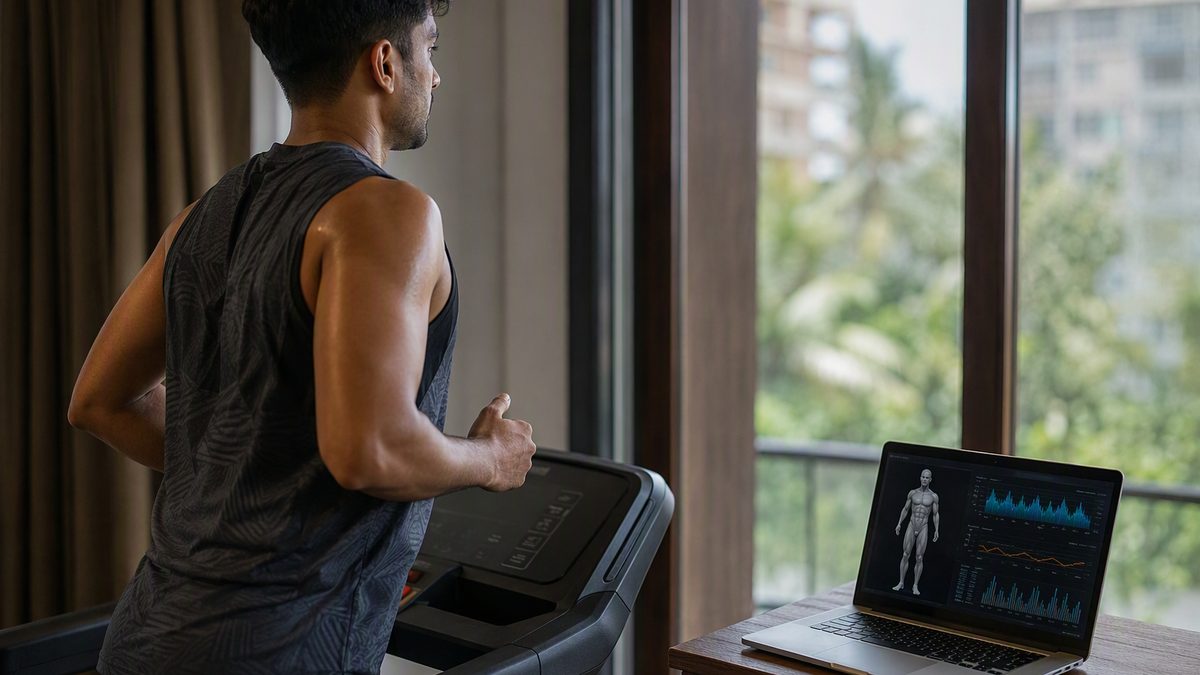
Here's a myth worth dismantling: that a 'digital twin' understands your ketogenic metabolism — that it knows you're fat-adapted, tracks your ketones, and tailors its forecasts to a low-carb engine. It does none of that. A consumer 'twin' is a model built from heart rate, HRV, sleep and activity. It has no idea whether you ate 30 grams of carbs or 300. Believing otherwise leads keto dieters to over-interpret their scores and blame the protocol for what are really adaptation and electrolyte effects.
The reality is more useful once you accept it. The device doesn't model your diet, but its recovery trends still mean something — provided you read them through a low-carb lens, accounting for the adaptation window and the mineral losses that come with keeping carbs low. The whole-body simulation and longevity forecast some apps imply simply don't exist for consumers.
This guide replaces the myth with a practical read: how adaptation and electrolytes skew your data, and how to use the trends without being misled.
1. The Myth: 'My Twin Knows I'm Fat-Adapted'
The marketing implies a model that mirrors your physiology, and that's where keto dieters go wrong. The device measures autonomic and cardiovascular signals — it cannot see your blood ketones, your glycogen status, or your carbohydrate intake. There is no published, validated whole-body simulation for consumers, and certainly none that adjusts its physiology engine because you went low-carb. Today's 'twins' deliver descriptive state estimation — readiness, sleep, activity trends — plus rule-based nudges, not a metabolic model of a fat-adapted athlete.
Why does the myth matter? Because if you believe the device understands your diet, you'll read a suppressed readiness score as a verdict on keto itself. It isn't. The score reflects heart rate and HRV, which are influenced by sleep, stress, training load, hydration, and — critically for you — electrolyte balance. The honest framing is that the 'twin' is a generic recovery tracker you happen to be running on a low-carb body. Read it that way and it's useful. Read it as a metabolic oracle and it'll mislead you on every adaptation week. The same caution applies to the top-end of performance: keto blunts glycolytic, high-intensity output for many people, so don't expect PR-level sprint or heavy-glycolytic numbers and don't blame a recovery score when they don't come — that's the fuel system, not the tracker.
2. Adaptation Weeks and the Electrolyte Reality
Two low-carb realities distort your data, and naming them defuses the myth. First, the keto-adaptation window. When you cut carbs, glycolytic top-end output dips while your body shifts toward fat for fuel, and during those weeks training can feel flat and recovery scores can sag. That's the transition, not the protocol failing — and a generic readiness model doesn't know to expect it. Don't deload your whole program because the adaptation window dragged your numbers down temporarily.
Second, and more important, electrolytes. Low-carb eating reduces insulin-driven fluid retention, so you carry less water and flush more sodium, potassium and magnesium than a higher-carb athlete does. That lower water storage is itself worth understanding, because it means your body weight and your recovery feel can swing for fluid reasons that have nothing to do with fat, fitness, or fatigue — and a generic readiness model reads none of that context. Those minerals matter for heart rhythm, blood pressure regulation and sleep quality — exactly the systems your wearable measures. So 'keto-flu' symptoms, poor sleep, and a cratering recovery score are frequently an electrolyte problem masquerading as under-recovery. Before you conclude you're overtrained, check your mineral intake. And watch for hidden carbs in flavored electrolyte or supplement products that can quietly undermine the diet you're tracking around. The data is a prompt to investigate electrolytes first, not a diagnosis.
3. A Low-Carb Protocol for Reading the Trends
Here's how to use the signals through a low-carb lens, with electrolytes and adaptation accounted for. The wearable handles recovery trends; you manage the minerals and carb-status it can't see.
| Data you log | What it actually models | Your action through a low-carb lens |
|---|---|---|
| HRV (7-day rolling) | Autonomic recovery; sensitive to electrolyte balance | Suppressed without hard training: check sodium/potassium/magnesium before deloading |
| Resting heart rate (trend) | Recovery and hydration status over days | Elevated with cramps or poor sleep: likely minerals, not overtraining |
| Total sleep time | Recovery, degraded by low electrolytes | Aim 7-9 hours; restless sleep early in keto often eases with magnesium and sodium |
| Adaptation-week flag (manual) | The transition the device can't detect | Expect a temporary score dip the first few weeks; don't overhaul your program |
| Carb / ketosis status (manual) | What the wearable is completely blind to | Track separately; watch hidden carbs in flavored electrolyte products |
The split keeps you honest. The device shows recovery direction; your own notes on electrolytes, adaptation and carb status supply the context it fundamentally lacks.
4. Trends Over Noise, and Where Medical Oversight Belongs
Read the rolling trend, never a single morning. Day-to-day HRV is noisy, and a generic model that flips its advice on one low reading is overfitting noise — doubly misleading on keto, where a single rough night might just be a low-electrolyte evening. Anchor to your 7-day trend and personal baseline, and use the data to autoregulate: ease up when the trend is genuinely suppressed for several days, push quality work when it returns to normal. That much is well supported, regardless of your diet.
Two limits to respect. Ignore the calorie and 'biological age' outputs — calorie estimates carry large errors, and longevity scores are unvalidated and irrelevant to whether your low-carb training is working. And the bigger one: if you follow keto for a medical reason such as epilepsy or diabetes, electrolyte and metabolic management belongs under clinician oversight, not a wearable. These are not medical devices; they don't diagnose, and they must never guide medication or override medical advice. Used as a recovery-trend tracker read through a low-carb lens, the technology is genuinely helpful. Used as a metabolic oracle, it's a myth that'll have you blaming keto for a magnesium deficit.
Keto Questions About Fitness Digital Twins
Will using this kick me out of ketosis?
No — a wearable is a passive tracker of heart rate, HRV and sleep, and it has no effect on your metabolism or your ketosis. It also can't detect whether you're in ketosis, which is the flip side worth knowing: the device is blind to your carb intake entirely. Track ketosis separately if it matters to you, and watch for hidden carbs in flavored electrolyte or supplement products, since those are far more likely to disrupt ketosis than any tracking app.
Does the data work without carbs to interpret it?
The recovery trends work the same way regardless of your diet, because they're built on heart rate, HRV and sleep, not carbohydrate intake. What changes is the context you bring. On keto you read a suppressed score with electrolytes and the adaptation window in mind first, rather than assuming overtraining. The device doesn't 'know' you're low-carb, so you supply that lens. Read the multi-day trend, check your minerals, and the data stays useful without any carb input at all.
How does it interact with my fasting windows?
It doesn't interact with them so much as quietly reflect them. Fasting and low-carb eating can both affect resting heart rate, HRV and sleep, so a readiness score may read differently on a fasted morning without anything being wrong. Treat that as expected context, not a problem. Anchor decisions to the rolling trend rather than a single fasted reading, and remember the device can't see your eating window any more than it can see your ketones.
Why am I cramping, and is this related to the data?
Cramping on keto is most often an electrolyte issue — low sodium, potassium or magnesium from reduced fluid retention — and that same imbalance can drag down the recovery scores your wearable shows. So yes, they're connected, but the device is reflecting the problem, not causing it. Address the minerals first. If cramps are severe, persistent, or you follow keto for a medical condition like diabetes or epilepsy, that's a clinician's domain, not a wearable's.
Disclaimer: This article is for educational purposes only and is not medical advice. Consult a qualified healthcare professional before starting any supplement, nutrition, or training protocol — especially if you are pregnant or breastfeeding, under 18, taking medication, or managing a health condition.
Scientific References & Clinical Sources
- Plews DJ, et al. Training adaptation and heart rate variability in elite endurance athletes: opening the door to effective monitoring. Sports Med, 2013. PMID: 23852425
- Kiviniemi AM, et al. Daily exercise prescription on the basis of HR variability among men and women. Int J Sports Med, 2007. PMID: 17345075
- Peake JM, et al. A Critical Review of Consumer Wearables, Mobile Applications, and Equipment for Providing Biofeedback, Monitoring Stress, and Sleep in Physically Active Populations. Front Physiol, 2018. PMID: 30002629
- Burke LE, et al. Self-monitoring in weight loss: a systematic review of the literature. J Am Diet Assoc, 2011. PMID: 21185970
- Düking P, et al. Criterion-Validity of Commercially Available Physical Activity Tracker to Estimate Step Count, Covered Distance and Energy Expenditure during Sports Conditions. Front Physiol, 2017. PMID: 29018355

