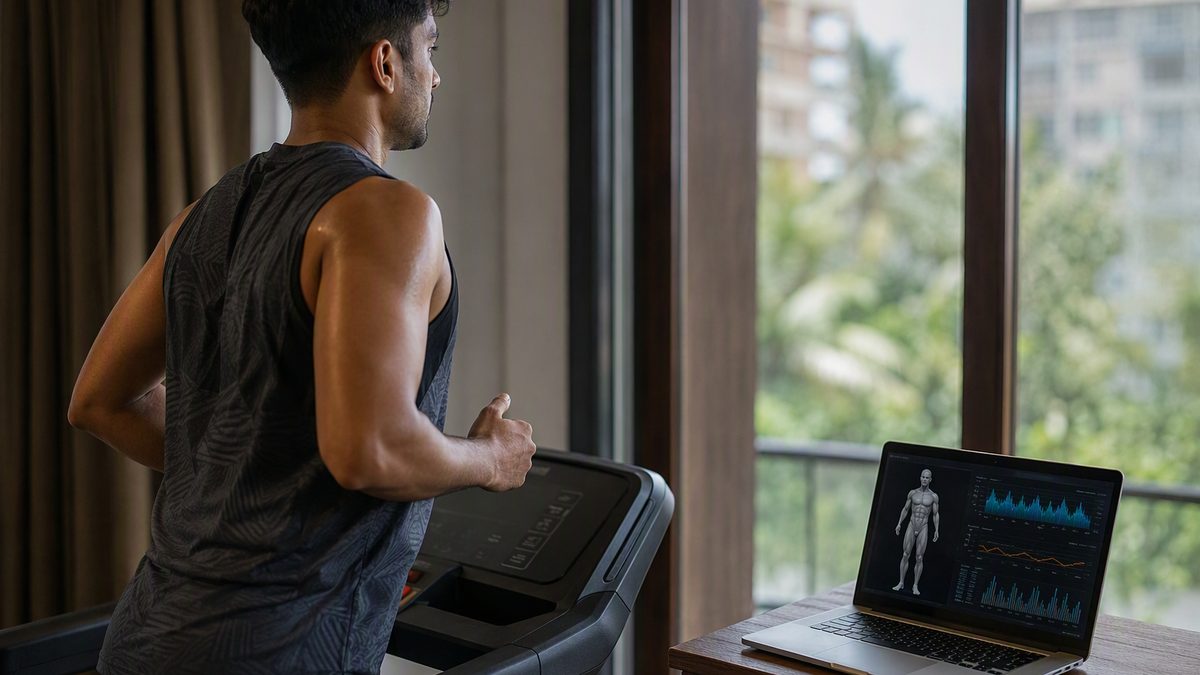
💡 Key Takeaways
- A consumer 'digital twin' is mostly a wearable plus a readiness score plus an app — its real win for you is easier self-monitoring, the behavior with the best evidence.
- Sitting all day blunts your metabolism even if you train; use the tool's movement nudges, not as proof one workout cancels the chair.
- Trust step and resting-HR trends; treat the calorie burn and sleep-stage breakdown your watch shows as rough estimates.
- Read your 7-day HRV and resting-HR trends, not single readings, to decide whether to push the evening session after a stressful workday.
The question that probably brought you here: 'does any of this digital-twin stuff actually help someone who sits at a desk all day?' Straight answer — the futuristic part doesn't, but the boring part does. There's no validated model that simulates your physiology or forecasts your longevity from a wrist sensor. What genuinely helps is that the same gadget makes self-monitoring easy, and self-monitoring is the single most reliable driver of better health behaviors.
That distinction is the whole game for a desk-bound professional. You don't need a crystal ball. You need a tool that catches your 3pm slump pattern, reminds you to break up eight hours of sitting, and tells you honestly whether you're recovered enough for tonight's gym session.
This guide answers what these tools really do for your 9-to-6, and where to ignore the marketing.
1. Straight Answer for the Desk-Bound
Three sentences. No consumer 'digital twin' validly simulates your body or predicts your lifespan — those claims are aspirational marketing built on a familiar wearable-plus-app stack. What the stack does well, and what's backed by evidence, is descriptive: it tracks your activity, sleep, and recovery trends and nudges your behavior. The benefit you can actually bank is better consistency and adherence through easier self-monitoring.
That's not a downgrade for an office worker — it's the right tool for your actual problem. App-based interventions that embed proven behavior-change techniques produce small-to-moderate improvements in diet, physical activity, and sedentary behavior. Building self-regulation skills like goal-setting and self-monitoring is what makes those changes stick. The 'twin' is a friendlier dashboard for those mechanisms, not a new biology. Expect modest, real gains — not a simulated you.
2. Does Sitting All Day Cancel My Training?
This is the question desk workers actually google, so here's the honest version. Long sedentary bouts blunt insulin sensitivity and fat-handling enzyme activity even in people who exercise regularly. One gym session does not fully offset eight to ten hours in a chair. That's not a reason to despair — it's a reason to use the tool for what it's good at: breaking up the sitting.
- Movement snacks: let the device prompt short walks or stand breaks across the workday; the cumulative trend matters more than any single bout.
- Step trend, not step trophy: aim for a rising daily-step baseline over weeks rather than obsessing over hitting a round number once.
- The 3pm slump: log it for a couple weeks and you'll often find it tracks short sleep the night before, not just lunch — fixable once you see the pattern.
The win here is awareness plus a nudge, which is exactly what the evidence supports. None of this offsets sitting by itself, but the cumulative effect of breaking up long sedentary stretches is where the real metabolic benefit lives, and a device that prompts you is a low-effort way to make it happen day after day. If you want to build these into lasting routines, our piece on building fitness habits covers the self-regulation side in depth.
3. The Signals Worth Watching Around a 9-to-6
You don't need every metric your watch can produce. Pick a few reliable ones and check them consistently — consistency beats sensor count. Read the rolling trend and your personal baseline, never a single morning number, because day-to-day HRV is noisy and the multi-day average is what actually means something.
| Signal | How to read it | Desk-worker action |
|---|---|---|
| HRV trend | 7-day rolling average vs baseline | Suppressed after a stressful week: make tonight's session easy |
| Resting heart rate | Multi-week direction | Drifting down: fitness improving; spiking: stress, illness, or poor sleep |
| Total sleep time | Hours/night, target 7-9 | Under 7h repeatedly: address screen-time-driven late bedtimes first |
| Daily steps | Weekly baseline | Rising trend: sitting is being broken up; flat: schedule walk breaks |
Notice what's missing: a calorie target. Energy-expenditure estimates from wrist devices carry large errors, so don't run your eating decisions off that number. A typical desk day moves your body very little, which is exactly when those calorie estimates tend to mislead — set your eating from sensible portions and how your weekly weight trends, not from a burn figure that thinks your afternoon meeting was a workout.
4. What to Ignore, and What to Keep Private
Two things deserve skepticism. First, the sleep-stage breakdown — those deep-versus-light percentages aren't validated to lab standards, so treat them as estimates and focus on total sleep time and consistent bed and wake times, which wearables measure well. Second, any 'biological age' or longevity readout is the most speculative output of all; long-horizon predictions from consumer data exceed what current models can support. Don't let a number rattle you or inflate you.
Privacy deserves a hard look too. Most consumer fitness products aren't covered by HIPAA, so your heart rate, sleep, location, and any labs are governed by a company policy, not health-privacy law. Before centralizing everything, check who owns the data, whether it's sold or used to train the vendor's models, and your export and deletion rights. And remember these tools are explicitly not medical devices — persistent desk-related pain, or anything that worries you, belongs with a clinician, not an app.
5. The Longevity Pitch vs What Actually Helps a Desk Worker
The word 'longevity' is doing a lot of marketing work in this category, so let's be plain about it. A consumer device cannot validly forecast how long you'll live or assign a trustworthy biological age — those numbers are the least supported output it produces. What genuinely moves the needle for someone with a sedentary job is unglamorous and well established: moving more often through the day, getting enough sleep, training consistently, and doing it for years. A tool helps only insofar as it makes those behaviors easier to sustain.
That's actually good news, because it means you don't need a premium 'twin' subscription to get the benefit. The active ingredient is self-monitoring and the feedback loop it creates — seeing your step trend climb, noticing your resting heart rate drift down over months, catching a bad-sleep streak early. Those reinforce the habit, and habit is what compounds. Set two or three simple targets, let the app track them honestly, and ignore the lifespan theatre. If a number ever makes you anxious rather than informed, that's a sign to step back from the dashboard and just keep moving. The compounding comes from the routine you keep, not the readout you glance at — and that is true whether or not the app calls itself a digital twin.
Desk Workers' Digital-Twin FAQs
Does sitting all day really cancel out my workouts?
Not entirely, but it works against you. Long sedentary bouts blunt insulin sensitivity and fat metabolism even in regular exercisers, so one session doesn't fully offset eight hours in a chair. The fix is breaking up the sitting with frequent short movement, which a wearable can prompt. Use the tool to raise your daily-step baseline and add stand breaks, not as evidence that the gym alone solves the desk problem.
When should I take this around a 9-6 schedule?
The most useful reads are first thing — your overnight HRV and resting-heart-rate trend tell you how recovered you are before the day starts. Glance at the rolling trend, not a single number, to decide whether an evening session should be hard or easy. During the day, let movement reminders break up sitting. There's no magic timing; consistency of logging and acting on the trend matters far more.
Why am I exhausted at 3pm, and can the data explain it?
Often, yes. Log your sleep and afternoon energy for a couple of weeks and the slump frequently lines up with short or poor sleep the night before, not just lunch. Wearables measure total sleep time and timing reasonably well, so use that signal. The data won't fix it for you, but seeing the pattern makes the cause obvious — usually late screen-driven bedtimes that are very fixable.
Should I trust the biological-age or longevity score?
Treat it as entertainment, not a verdict. Long-horizon longevity and biological-age predictions from consumer wearable data are the most speculative outputs these tools produce and aren't validated. They can swing on noisy inputs. Use the tool for what's grounded — activity, sleep, and recovery trends that prompt better daily decisions — and ignore any precise lifespan claim. For real longevity, the boring basics of movement, sleep, and consistency still win.
Disclaimer: This article is for educational purposes only and is not medical advice. Consult a qualified healthcare professional before starting any supplement, nutrition, or training protocol — especially if you are pregnant or breastfeeding, under 18, taking medication, or managing a health condition.
Scientific References & Clinical Sources
- Schoeppe S, et al. Efficacy of interventions that use apps to improve diet, physical activity and sedentary behaviour: a systematic review. Int J Behav Nutr Phys Act, 2016. PMID: 27927218
- Burke LE, et al. Self-monitoring in weight loss: a systematic review of the literature. J Am Diet Assoc, 2011. PMID: 21185970
- Teixeira PJ, et al. Successful behavior change in obesity interventions in adults: a systematic review of self-regulation mediators. Obes Rev, 2015. PMID: 25907778
- Peake JM, et al. A Critical Review of Consumer Wearables, Mobile Applications, and Equipment for Providing Biofeedback, Monitoring Stress, and Sleep in Physically Active Populations. Front Physiol, 2018. PMID: 30002629
- Plews DJ, et al. Training adaptation and heart rate variability in elite endurance athletes: opening the door to effective monitoring. Sports Med, 2013. PMID: 23852425

