💡 Key Takeaways
- A digital twin is a data dashboard, not a body simulator — it can't predict your potential or your future, and any app claiming to is overselling.
- Food and 8-10 hours of sleep build a growing athlete far more than any app. A wearable that helps you see your sleep trend is the real win, not the recovery 'score'.
- Your data is sensitive and you're a minor. Loop in a parent before signing up, share the minimum, and check whether the app sells data — most aren't covered by health-privacy law.
- These tools aren't medical devices. Growth-plate pain, fatigue that won't lift, or anything clinical is a doctor conversation, not a metric to train through.
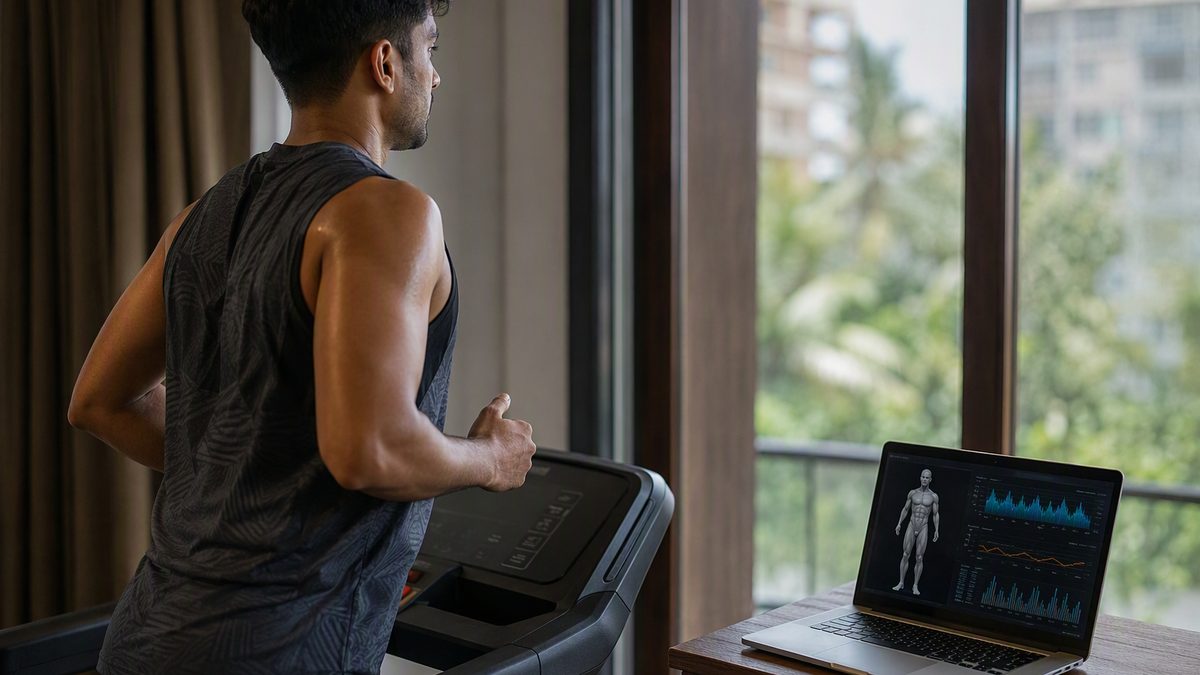
You have probably seen the ads: an app that builds a 'digital twin' of your body, models how you'll respond to training, and forecasts your athletic future. The honest answer to whether that's real is no — not the way it's marketed. There is no validated app that simulates a whole human body, let alone a growing teenage one, and nobody can predict your potential from a wrist sensor. What these tools actually do is much smaller, and much more useful when you understand it.
A digital twin today is really a dashboard: it gathers data from a wearable and your sleep, shows you trends, and nudges you. For a young athlete who's still growing, training hard, and getting hammered with supplement and gadget marketing, the smart move is knowing exactly what helps and what's hype. This guide answers the questions teen athletes actually type into Google — starting with whether you even need this, and why your parents should be part of the decision.
1. Do You Even Need a Digital Twin at Your Age?
Straight answer: no, you don't need one, and you definitely don't need it more than food and sleep. The honest order of what builds a teenage athlete goes meals first, then 8-10 hours of sleep a night — which almost no teen actually gets — then consistent training, and only then any kind of tracking gadget. Your body at your age already adapts fast, with naturally elevated anabolic hormones and high energy needs to fuel growth. No app improves on that. The biggest mistake young athletes make is copying adult influencer routines and gadget stacks while skipping the basics those adults take for granted.
So where does a data tool fit? It can be genuinely helpful for one thing: making your sleep visible. Most teens badly underestimate how little they sleep, and a wearable that shows you a total-sleep trend can be the nudge that gets you to bed earlier — which matters more for your growth and your sport than any recovery score. That's the real, modest value: self-monitoring makes the basics easier to stick to. Just don't let a dashboard convince you that a fancy metric matters more than the dinner plate and the alarm clock. The habit side of this is covered well in the fitness habits guide.
2. What the App Can Actually Measure (and What It's Faking)
It helps to know which numbers to trust. The signals with decent footing are heart-rate and step trends, and total sleep time — your device measures those reasonably well, and the trend over a week or two tells you something real. The numbers to treat with a big pinch of salt are calorie burn and sleep-stage breakdowns. Energy-expenditure estimates carry large errors across devices, and the 'you got 90 minutes of deep sleep' style readouts often aren't validated against proper lab sleep studies — read them as rough guesses, not facts.
The 'readiness' or 'recovery' score most apps show is built mainly from HRV (the tiny variation between heartbeats), resting heart rate, and sleep. It's a reasonable summary of your recent recovery, but it's a black box — companies rarely publish how accurate their scores are, and the same body can produce different scores on different brands. Read the trend, never a single day, because day-to-day HRV is naturally noisy. And be very skeptical of anything claiming to calculate your 'biological age' or predict your athletic ceiling. Those are guesses dressed up as science, and at your age, with your body still changing year to year, they're especially meaningless.
3. A Food-First Setup for a Student Athlete
If you and a parent decide a wearable is worth it, keep it simple and keep food and sleep on top. The setup below is a starting point, not a prescription — and the point of the table isn't the gadget, it's protecting the basics that actually build you.
| Priority | What it looks like | What to track (if anything) | Why it ranks here |
|---|---|---|---|
| 1. Food first | Three meals plus snacks around practice; protein at each | Nothing fancy — just eat enough, every day | Growth + training both need fuel; no app replaces it |
| 2. Sleep | Aim 8-10 hours, consistent bed and wake times | Total sleep time trend on a wearable | The one metric worth tracking; most teens fall short |
| 3. Consistent training | Coach-directed practice and games | Subjective soreness/energy check-in, 1-10 | Your coach's plan beats any algorithm's |
| 4. Recovery trends | Resting HR and HRV from a ring or strap | 7-day rolling trend, not single readings | Optional context; useful only if basics are handled |
Notice food and sleep sit above the gadget, and that's deliberate. A reading that says your recovery is low after a tournament weekend should send you toward more food and an earlier bedtime, not toward skipping meals or buying a supplement. If you're hiding your tracking or your eating from your parents and coach, that's a red flag worth fixing — the people steering your training should see what you see.
4. Why Your Parents and Coach Need to Be in the Loop
This is the part the ads skip. You're a minor, and a digital twin collects an unusually sensitive pile of data: continuous heart rate, your location tagged to every workout, sleep, body metrics, and sometimes more. Most consumer fitness apps are not covered by health-privacy law like HIPAA, so whether your data is protected, sold, shared with advertisers, or used to train the company's systems comes down to the privacy policy — not the law. Concentrating all of that into one profile, for a young person, is a real privacy decision, not a small one.
That's why a parent should be part of signing up. Before you create an account, the questions to ask together are: who owns the data, is it sold or shared, can we export and delete it later, and what happens to the location data. Share the minimum the app needs to give you a useful sleep and recovery trend, and skip the features that hoover up extra information. Looping in your coach matters too — they see your growth, your fixture load, and warning signs an algorithm can't, like growth-plate pain that you should never train through. The goal isn't secrecy from the adults around you; it's making a smart, informed choice with them.
5. Where Tracking Stops and a Doctor Starts
Last, and most important: these tools are not medical devices. They're not diagnostic, they're not cleared to flag illness or injury, and they should never be used to decide anything medical. A recovery score can't see a stress reaction in a growing bone, can't diagnose why you're unusually tired for weeks, and can't tell you whether knee or heel pain during a growth spurt is the kind you must stop for. Those are doctor questions. Conditions like Osgood-Schlatter and Sever's are common in growing athletes, and pain near a growth plate is a medical flag, full stop — not a number to push through because the app showed green.
Keep the tool in its lane and it can genuinely help: it makes your sleep visible, nudges better habits, and builds self-monitoring skills that serve you for life. Keep food on the plate, hit your sleep, train under your coach's plan, and let a wearable be a quiet helper — not the boss of your training and definitely not your doctor. Anything that feels off in your body beats anything that shows up on a screen.
Teen Athlete Questions About Digital Twins
Is a digital twin safe and appropriate for my age?
The tracking itself is low-risk, but the data isn't trivial — as a minor, your continuous health and location data is sensitive, and most apps aren't covered by health-privacy law. The safest move is to set it up with a parent, share the minimum, and check whether the company sells or shares data. The bigger point: you don't need it. Food and 8-10 hours of sleep build you far more than any app, so let a wearable be a helper, not the focus.
Will a digital twin or wearable stunt my growth?
No — a wearable is just a sensor and an app; it can't affect your growth at all. The thing that actually supports growth is fuel and sleep, and that's exactly where these tools can help, by making your sleep trend visible so you go to bed earlier. The real risk to a growing athlete isn't a gadget; it's under-eating, under-sleeping, or training through growth-plate pain. Use the tool to protect the basics, not to chase a fancy score.
Do I even need this if I eat well and sleep enough?
Honestly, no. If you're already eating enough and getting 8-10 hours of sleep, you've handled the two things that matter most for a teenage athlete — far more than any data model offers. A wearable can add a little useful context, like confirming your sleep is on track, but it's optional. Anyone telling you that you need a 'digital twin' to reach your potential is selling something. The basics, done consistently, beat the gadget every time.
Should my parents and coach know I'm using this?
Yes, absolutely. You're a minor sharing sensitive health and location data, so a parent should help you sign up, check the privacy policy, and decide what to share. Your coach should know too — they see your fixture load, your growth, and warning signs an app can't, and they direct your training. Hiding your tracking or your eating from the adults guiding you is a red flag. The smart approach is making this decision with them, not around them.
Disclaimer: This article is for educational purposes only and is not medical advice. Consult a qualified healthcare professional before starting any supplement, nutrition, or training protocol — especially if you are pregnant or breastfeeding, under 18, taking medication, or managing a health condition.
Scientific References & Clinical Sources
- Burke LE, et al. Self-monitoring in weight loss: a systematic review of the literature. J Am Diet Assoc, 2011. PMID: 21185970
- Schoeppe S, et al. Efficacy of interventions that use apps to improve diet, physical activity and sedentary behaviour: a systematic review. Int J Behav Nutr Phys Act, 2016. PMID: 27927218
- Peake JM, et al. A Critical Review of Consumer Wearables, Mobile Applications, and Equipment for Providing Biofeedback, Monitoring Stress, and Sleep in Physically Active Populations. Front Physiol, 2018. PMID: 30002629
- Plews DJ, et al. Training adaptation and heart rate variability in elite endurance athletes: opening the door to effective monitoring. Sports Med, 2013. PMID: 23852425

