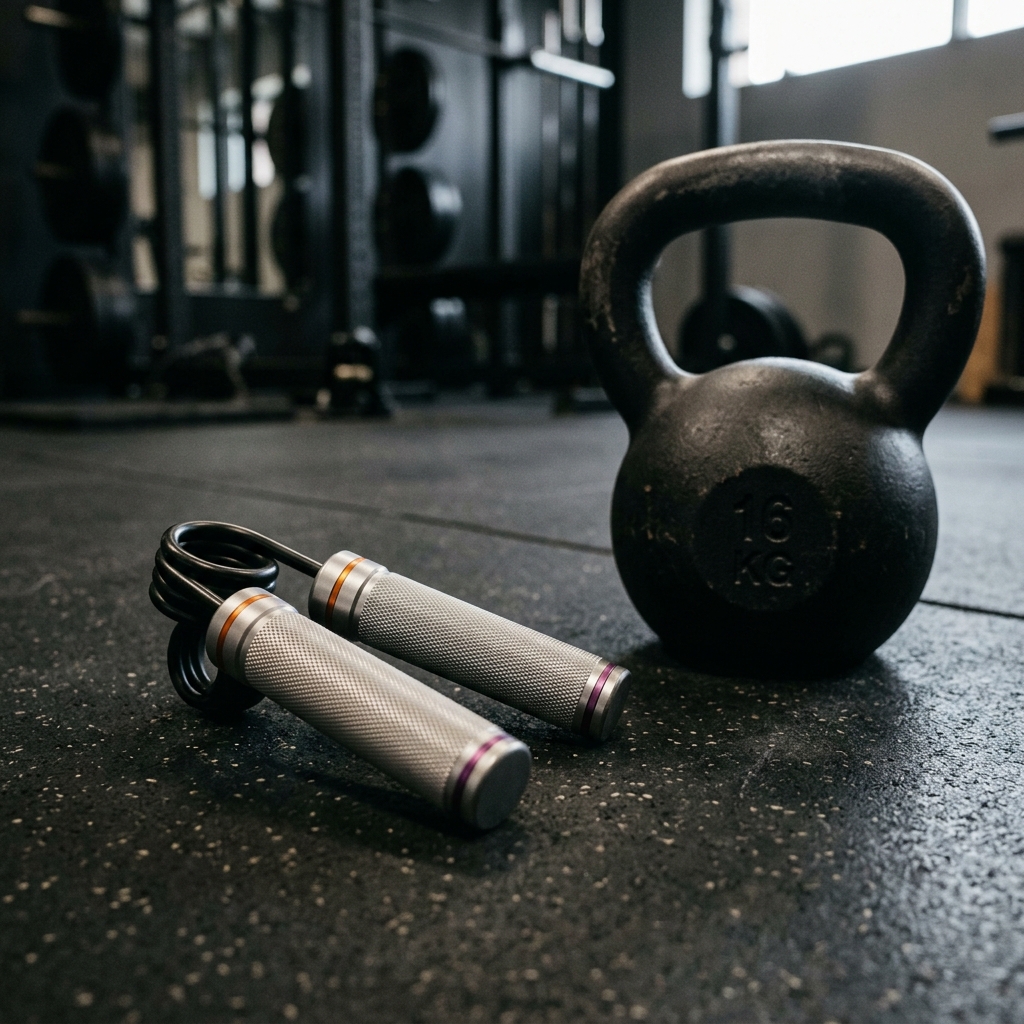
Your handshake may reveal more about your future health than a blood panel. Research spanning decades and hundreds of thousands of participants consistently shows that grip strength — the force your hand and forearm can generate against resistance — tracks closely with all-cause mortality, cardiovascular disease risk, cognitive decline, and the ability to live independently into old age. It is one of the few simple, low-cost measures that doctors and researchers now treat as a genuine window into how your body is aging. The good news: grip strength is highly trainable at any age, and the habits that build it also build the kind of durable, functional strength that keeps you capable for decades.
Why Grip Strength Predicts Health and Longevity
Grip strength is what researchers call a biomarker of aging — a measurable variable that reflects the cumulative state of your physiology rather than just one isolated system. When scientists follow large populations over years or decades, people with weaker grip strength consistently show higher rates of early death, heart disease, stroke, diabetes complications, and dementia, even after controlling for age, body weight, and lifestyle habits.
The reason grip tracks so many outcomes is that it is a proxy for overall skeletal muscle mass and quality. Your hands are downstream of the same hormonal environment, nutritional status, nervous system function, and connective tissue integrity that governs every other muscle in your body. A weak grip often signals that muscle mass has eroded more broadly — a condition called sarcopenia — which carries cascading consequences for metabolism, bone density, fall risk, and recovery from illness or surgery.
Grip strength is also strongly associated with independence in daily life. The ability to open a jar, carry groceries, hold onto a railing, or get up from the floor without assistance depends directly on hand and forearm force production. Longitudinal studies on older adults repeatedly show that those who maintain grip strength preserve functional independence far longer than those who allow it to decline unchecked.
Understanding What You Are Actually Training
Grip strength is not one thing — it encompasses several overlapping capacities that can each be targeted:
- Crushing strength: Closing the fingers against resistance, as in squeezing a handle or a barbell. This is what a standard hand dynamometer measures.
- Supporting strength: Maintaining an isometric hold for duration — dead hangs, farmer carries, and holding the top of a deadlift all train this quality.
- Pinching strength: Thumb opposition to fingers, relevant for picking up plates, turning keys, and controlling tools.
- Wrist stability: The ability to maintain wrist alignment under load protects joints and transmits force efficiently through the kinetic chain.
Most people's grip weakness shows up first in supporting strength — they can squeeze reasonably hard but cannot hold on under sustained tension. That is the quality most connected to real-world function and the one most neglected in conventional gym training.
The Core Training Methods
The most effective grip training is not performed with tiny squeeze toys while watching television. It is built through loaded, progressive, compound movements that place genuine demand on the hand and forearm under meaningful systemic stress.
Farmer's carries are arguably the highest-value grip exercise available. Pick up a heavy dumbbell, kettlebell, or trap bar, and walk. The combination of load, time under tension, and postural demand taxes the grip, the forearms, the traps, and the core simultaneously. Start with a load you can carry for 30 to 40 meters without your form collapsing. Progress by increasing weight, distance, or both. Single-arm carries add lateral stability demands and expose asymmetries.
Dead hangs build supporting strength in a pure, joint-friendly way. Simply hang from a pull-up bar with a full grip — thumbs wrapped around — and hold. Start with whatever duration you can manage with good shoulder position (packed, not shrugged), and add time progressively. Dead hangs also decompress the spine, improve shoulder mobility, and build the tendon and connective tissue resilience that prevents injury. Two to four sets accumulated across a session is enough stimulus for most people.
Deadlifts (conventional, Romanian, or trap bar) place a heavy, sustained demand on grip every time you pull. If the bar never slips, you are not overloading the grip — use double overhand grip without straps as often as possible, reserving straps for max-effort sets where grip would be the limiting factor before the target muscles are trained adequately. The goal is for grip strength to keep pace with your pulling strength over time.
Thick-grip training amplifies grip demand by increasing handle diameter. A standard barbell is roughly 28–29mm. Wrapping it with a thick grip sleeve or training with a 2-inch diameter handle forces the hand to work harder to maintain purchase. Thick-bar deadlifts, rows, and curls all become dramatically more grip-demanding. Even a few sets per week with a thicker implement drives rapid adaptation.
Barbell or dumbbell rows and pull-up variations also accumulate significant grip work as a byproduct. If your programming includes pulling movements — which it should — your grip is already receiving training stimulus. The dedicated exercises above are additions that amplify and target what compound pulling begins.
Progression That Actually Works
Grip strength responds to training like any other physical quality: it requires progressive overload over time, adequate recovery, and enough variation to continue adapting. The most common mistake is treating grip work as an afterthought — a few sets tacked on at the end of a session with no intentional progression from week to week.
A practical approach:
- Start each week with a baseline — total farmer carry distance, dead hang hold time, or deadlift weight with double overhand grip.
- Add a small amount each week or every two weeks. For carries, this might be 5–10% more load or 10 more meters. For dead hangs, it might be 5 additional seconds.
- Rotate implements every four to six weeks. Switch from dumbbells to kettlebells, from standard bar to thick grip, from bilateral to unilateral carries. This prevents accommodation and builds broader capacity.
- Train grip two to three times per week. It recovers faster than large muscle groups but still needs rest between sessions to adapt.
Tendon and connective tissue adaptation lags behind muscular adaptation. Ramp up load gradually, especially if you are new to carrying heavy or hanging frequently. Finger pulley and wrist injuries from jumping ahead too fast are real and slow to heal.
Everyday Carryover You Will Notice
Grip strength training produces returns that show up far outside the gym. People who systematically build this quality consistently report:
- Easier time opening jars, carrying bags, and handling tools without fatigue
- More confidence on stairs, ladders, and uneven terrain where holding on matters
- Improved performance in other lifts — pulls, rows, and overhead pressing all benefit when the hands are no longer the weak link
- Reduced elbow and shoulder pain, partly because grip training builds forearm and wrist resilience that stabilizes the joint stack
- Better endurance in recreational activities — rock climbing, paddling, racket sports, and cycling all have grip endurance components
For older adults specifically, the carryover to fall prevention is significant. The ability to grab a railing quickly, catch yourself on a doorframe, or control a descent requires fast, strong grip response. Training it is one of the most direct ways to reduce fall risk and maintain the reflexive control that protects against injury.
Integrating Grip Work Into Your Training Week
You do not need a separate grip-training day. The most time-efficient approach is to embed grip work into your existing sessions and let compound lifts carry most of the load:
- Finish every lower-body or full-body session with one farmer carry variation — two to four sets, heavy, focusing on duration or distance.
- Add dead hangs to your warm-up or between sets of pressing work. They take less than two minutes and double as shoulder health maintenance.
- Default to double overhand grip on all deadlift and row work unless the weight is genuinely above your grip capacity.
- Once per week, use a thick grip sleeve or fat grip attachment on at least one pulling exercise.
This approach adds minimal time to your sessions — often less than ten minutes per week of dedicated grip work — while producing compounding improvements over months and years. The most important variable is consistency. A small amount of grip training done reliably across years builds the kind of strength that still shows up at seventy and eighty, when it matters most.
Grip Strength Is a Long Game
Most physical qualities peak and then decline if not maintained. Grip strength is no exception, but it is also unusually responsive to training at ages when other qualities have become harder to build. Studies on adults well into their sixties and seventies show meaningful grip strength gains from progressive resistance training, with real improvements in functional independence and quality of life measures. It is never too late to start, and it is never too early to treat this quality with the seriousness it deserves.
The research does not suggest that grip strength is magic — it is a marker, not a cause, of the underlying physiological health that drives longevity. But training it with intention develops the muscle mass, connective tissue integrity, and neuromuscular coordination that collectively support a long, capable life. Every carry, every hang, every maximal pull with your hands fully engaged is an investment in the version of yourself that is still strong, independent, and functional decades from now.
Track your farmer carry loads, dead hang times, and pulling strength week over week in UltraFit360 — watching those numbers climb is one of the most motivating feedback loops in training, and it puts a concrete, measurable face on the kind of long-term progress that actually matters.
Transform Your Fitness Journey
Log your workouts, track your diet, and get AI coaching insights — all with UltraFit360.