💡 Key Takeaways
- Get clinician clearance before resuming training and before adding any supplement, including probiotics, especially while breastfeeding.
- Constipation and sluggish digestion are common early postpartum; gradual fiber, fluids, and gentle movement help more than any pill.
- Breastfeeding adds roughly 400-500 kcal/day plus higher fluid needs, so this is about eating enough, not eating less.
- Build the basics first: varied plants toward ~25-38 g fiber a day, a fermented food when it sits well, and steady hydration.
The early months after birth come with a quiet set of gut complaints almost nobody warns you about: stubborn constipation, bloating, a digestion that feels half a step behind, all while you are running on fragmented sleep and, for many, breastfeeding around the clock. It is uncomfortable, and it is common.
Here is the reassuring frame. These symptoms usually reflect ordinary postpartum recovery — slower gut motility, healing tissue, dehydration from feeding, and a diet that gets squeezed when a baby runs the schedule — not a microbiome that needs fixing with expensive products. The most effective, lowest-risk levers are food-first and gentle: gradually more fiber, enough fluid, varied whole foods, and movement as your body allows.
One rule sits above everything that follows. Get your clinician's clearance before resuming structured training and before adding any supplement, including probiotics, particularly while breastfeeding. With that in place, let's work through the gut issues that actually show up in these months.
1. The Postpartum Gut Reality No One Warns You About
Several things converge on your digestion at once after birth. Gut motility often slows in the early weeks, so constipation and bloating are extremely common. If you are breastfeeding, fluid is being routed into milk production, and mild dehydration alone can harden things up. Meals become whatever you can grab one-handed, which usually means less fiber and less variety than before. None of this means your gut is broken — it means your whole system is recovering and under-resourced.
Why give the gut any attention at all when you have a newborn? Because it is the machinery that turns food into the energy you are desperately short of, and a meaningful share of your immune defense lines the gut wall at a time when you cannot afford to be sick. Supporting digestion is really about supporting recovery and resilience, not chasing a wellness ideal.
What this page deliberately is not: a weight-loss plan. The postpartum body needs fuel to heal and, if nursing, to feed a baby. The goal here is comfortable digestion and steady energy, and any conversation about body composition belongs with your clinician on your timeline, not as pressure from an article.
2. Why Fiber and Fluids Come First
The single most useful intervention for early-postpartum gut complaints is also the simplest: gradually rebuild fiber while drinking enough. Fiber adds bulk and feeds the bacteria that keep the gut lining healthy; fluid lets that fiber do its job instead of compounding constipation. The two only work together.
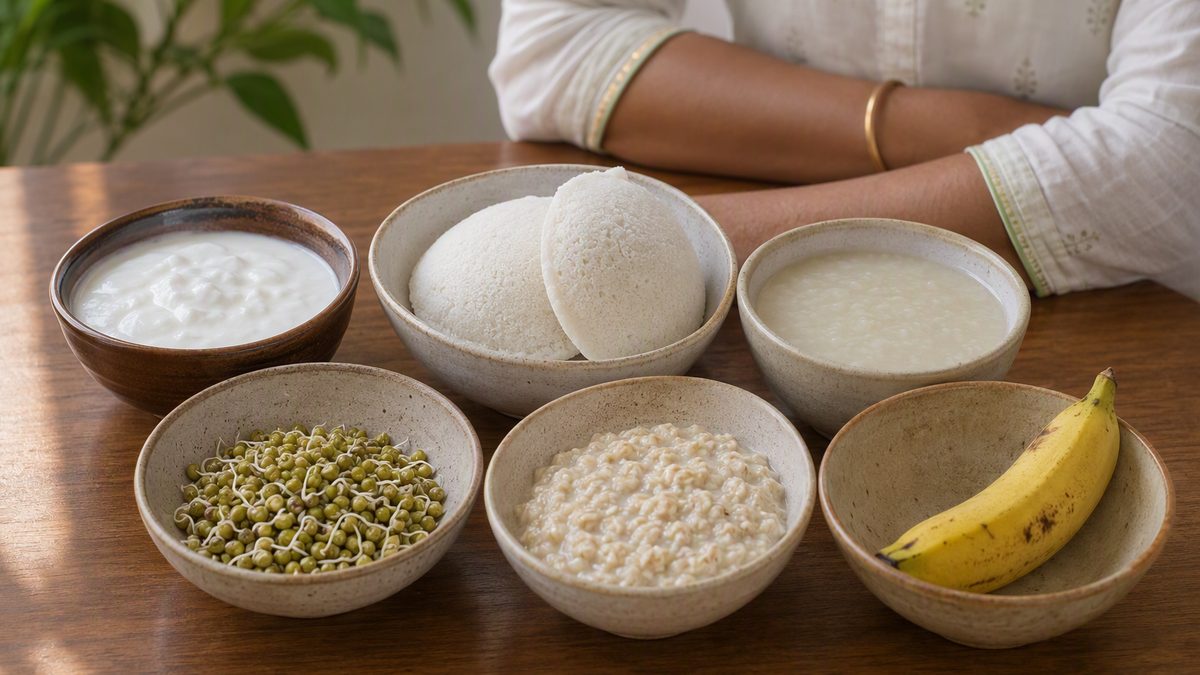
Variety is the other half. A wide range of plant foods feeds a more diverse microbiome, and those bacteria ferment fiber into short-chain fatty acids that nourish the gut lining and support its barrier. Useful, unpressured targets to drift toward as appetite and routine allow: somewhere around 25-38 g of fiber a day and a spread of different plant types across the week. Fermented foods like yogurt, kefir, sauerkraut, or kimchi add live microbes and may modestly help diversity — introduce them when your stomach tolerates them.
Go gradually, and that is not a throwaway caution. Jumping fiber up quickly on an already-sensitive postpartum gut causes more bloating, not less. Add a serving every few days, keep fluids up, and let your system adapt. If symptoms are severe, persistent, or include pain or bleeding, that is a flag to check with your clinician rather than to eat more bran.
3. Fueling Around Breastfeeding and Broken Sleep
If you are nursing, the headline number is that breastfeeding adds roughly 400-500 kcal a day to your needs, along with higher fluid demands and easily depleted nutrients like iron and vitamin D. That reframes the whole plan: this is about eating enough and well, not restricting. An under-fueled, under-hydrated postpartum body has a harder gut, lower energy, and slower recovery. Here is a gentle daily framework to anchor the basics.
| Lever | Gentle target | How it fits new-mom life |
|---|---|---|
| Fiber | Build toward ~25-38 g/day, gradually | Oats, fruit, beans, whole grains in one-handed snacks. |
| Plant variety | Several different plants daily | Frozen veg, berries, nuts, and seeds keep with no prep. |
| Fermented food | 1 serving/day if tolerated | Yogurt or kefir during a feed; easy and hands-free. |
| Fluid | Drink to thirst, plus a glass at each feed | Keep a bottle wherever you nurse. |
| Extra energy (if nursing) | ~400-500 kcal above baseline | Nutrient-dense snacks, not skipped meals. |
On four hours of broken sleep, do not aim for perfect — aim for present and consistent. A boring, repeatable pattern of fiber, protein, fluid, and easy fermented foods beats an ambitious plan you cannot sustain with a newborn. Build the habit small; building fitness habits that survive chaos matters more right now than optimizing anything.
4. Where Supplements and Probiotics Honestly Stand
It is tempting to reach for a probiotic when your gut feels off and you are exhausted. Be cautious here, on two grounds. First, the evidence: even in healthy athletes, probiotic benefits are modest, strain-specific, and frequently oversold, with effects that do not transfer from one strain to another. "A probiotic" is not a reliable category. Second, and more important for you: anything you take can matter while breastfeeding, so supplement choices in this window should be made with clinical guidance rather than off a shelf or a forum recommendation.
The honest hierarchy is the opposite of how the market is arranged. The strongest, safest, best-supported levers for your gut right now are mundane and free: varied whole foods, adequate fiber introduced gradually, enough fluid, fermented foods you tolerate, and gentle movement as you are cleared for it. Pills sit far below all of that, and at-home microbiome test kits are not validated for guiding postpartum decisions and are not worth the cost or worry.
If you have a specific medical reason to consider a probiotic — or any supplement — bring it to your clinician or a dietitian who knows your history and your feeding status. That is not red tape; it is the genuinely safest path while another person depends on what you take in.
5. Your Gentle First-Month Checklist
Small, sustainable, and clearance-gated.
- Get clinician clearance before structured training and before any supplement, especially while breastfeeding.
- Rebuild fiber gradually toward a comfortable everyday level, paired with steady fluids.
- Eat enough — if nursing, that is roughly 400-500 kcal above your old baseline, from nutrient-dense food, not restriction.
- Add one tolerated fermented food a day and keep plant variety up with low-effort frozen and pantry options.
- Treat persistent pain, bleeding, or severe symptoms as a reason to call your clinician, not to push through.
There is no race here and no scale target driving this. The aim is comfortable digestion, steadier energy, and a body that recovers — built from food and patience, on a timeline that respects what you have just been through.
What New Moms Ask About Gut Health
Is it safe to work on gut health while breastfeeding?
The food-first parts — varied whole foods, gradually more fiber, fermented foods you tolerate, and good hydration — are generally appropriate and supportive while nursing, since breastfeeding raises both your energy and fluid needs. Supplements are a different matter: probiotics and other products should be cleared with your clinician while breastfeeding, because anything you take can be relevant. When in doubt, lead with food and ask your clinician about anything in a bottle.
When can I start training again after delivery?
That is a clinician decision, not an article one. Recovery timelines vary widely depending on your delivery, healing, and whether issues like diastasis recti or pelvic-floor weakness are present. Get individual clearance before resuming structured exercise, and expect to rebuild core and pelvic-floor function before loading. Gentle movement, once cleared, also supports digestion and regularity, which is a nice bonus while you ease back in.
Will changing my diet affect my milk supply?
The main risk to supply from diet is under-eating and under-drinking, not adding fiber or fermented foods. Breastfeeding increases your needs by roughly 400-500 kcal a day plus more fluid, so this plan is about eating enough and well, never restricting. Keep meals nutrient-dense and stay hydrated. If you have specific concerns about supply or any supplement, raise them with your clinician or a lactation-aware dietitian.
How do I look after my gut on four hours of sleep?
Aim for consistent, not perfect. Sleep deprivation is real and you cannot out-eat it, so keep the plan small and repeatable: a fiber-and-protein snack you can eat one-handed, a fermented food during a feed, and a water bottle wherever you nurse. Gentle movement when you are cleared helps digestion. Be kind about the gaps — steady basics over weeks matter far more than any single perfect day.
Disclaimer: This article is for educational purposes only and is not medical advice. Consult a qualified healthcare professional before starting any supplement, nutrition, or training protocol — especially if you are pregnant or breastfeeding, under 18, taking medication, or managing a health condition.
Scientific References & Clinical Sources
- Thomas DT, et al. American College of Sports Medicine Joint Position Statement: Nutrition and Athletic Performance. Med Sci Sports Exerc, 2016. PMID: 26891166
- Jeukendrup AE. Nutrition for endurance sports: marathon, triathlon, and road cycling. J Sports Sci, 2011. PMID: 21916794

