💡 Key Takeaways
- HRV biofeedback is not magic — it is slow breathing at about 6 breaths a minute that reliably calms you in the moment, with modest, gradual benefits to your nervous-system balance over weeks.
- Your watch's morning HRV reading is a trend tool, not a scoreboard; a single low number after bad sleep or a couple of drinks is the alcohol or fatigue talking, not a verdict on your fitness.
- For a returning trainee, the bigger payoff is HRV-guided pacing: place your one or two hard sessions on recovered days and you avoid the week-one mistake of going too hard, too soon.
- Don't compare your number to a 25-year-old's — HRV is individual and falls with age and stress; track only your own 7-day rolling average.
Starting again in your forties comes with a head full of half-truths. A friend swears his Whoop strap transformed his training; a podcast says breathing at six breaths a minute rewires your stress response; the watch you were gifted flashes a red 'low recovery' that ruins your morning. It is easy to believe HRV is either a miracle metric or marketing noise.
It is neither. Heart rate variability — the tiny beat-to-beat changes in your heart rhythm — is a genuine window onto how recovered your nervous system is. HRV biofeedback, breathing slowly while you watch that rhythm swing, is a real and low-risk way to practise calming down. But the effects are modest, the numbers are widely misread, and the marketing oversells both. For a beginner over 40, separating the signal from the hype is the whole game.
This guide takes the common beliefs one at a time, shows what the evidence actually supports, and turns it into a simple routine that protects you from the classic early-comeback mistakes.
1. The Myths a Returning 40-Something Believes
Start with the biggest one: "a higher HRV number means I'm fitter and healthier than the next person." False. HRV is hugely individual — driven by age, genetics, and baseline fitness — and is simply not comparable between two people. Your reading next to your gym buddy's tells you nothing. Only your own trend over time means anything.
Second myth: "the spike I get during a breathing session proves my baseline improved." That spike is a within-session effect — slow breathing reliably drives HRV up while you do it, then it settles. A lasting lift in your resting baseline, if it comes at all, builds slowly over weeks and stays small. Third: "the morning HRV reading and HRV breathing are the same thing." They are not. One passively reads your autonomic state to guide decisions; the other actively trains it with slow breathing. And fourth, the one that derails beginners most: "a low reading means I'm unfit and should panic." Usually it means you slept badly, drank wine, are fighting a bug, or measured inconsistently — alcohol alone is often the single biggest overnight HRV suppressor. The number is honest about your inputs; it is not a grade.
2. What the Evidence Honestly Supports
So what is actually true? Two things, both useful, neither dramatic. HRV biofeedback reliably produces an acute rise in HRV and a feeling of calm during and just after a session, and regular practice shows promise for easing stress, anxiety, and blood pressure. But many trials are small and mixed in quality, and the strongest data are for that in-the-moment change rather than big permanent shifts. Treat it as a low-risk, promising self-regulation skill — worth ten minutes, not a cure.
The second truth is more relevant to you as a trainee. HRV-guided training — letting your morning trend decide whether today is hard or easy — has matched or modestly beaten fixed pre-planned programs in several studies, largely by concentrating hard sessions on recovered days and avoiding hard work on flat ones. The benefit is real but modest, and clearest in endurance-style training. For someone over 40 with poorer sleep and more life stress than a younger trainee, that autoregulation is genuinely valuable: it is a brake against the week-one enthusiasm that ends in injury. If you want a wider view of how these tools fit a sensible plan, our guide to building fitness habits puts consistency first — which still beats any metric.
3. A No-Panic Protocol for the First Months
Measure consistently or don't bother measuring. Same time on waking, same position every day, before caffeine — mixing seated and lying readings, or testing after coffee, is the top cause of noisy data that scares beginners. Then keep the breathing practice separate from that baseline reading. Here is a starting structure built for 3-4 training days a week.
| Element | How to do it | Dose | Purpose |
|---|---|---|---|
| Morning HRV reading | Same time, same posture, before coffee, relaxed breathing | 1-2 min daily | Build a clean 7-day trend |
| Resonance breathing | ~6 breaths/min (5 sec in, 5 sec out, no hold) | 10 min, most days | Practise calming; manage life stress |
| Normal/high-trend day | Run your planned strength or harder cardio session | 1-2 hard days/week | Adapt on recovered days |
| Low-trend day | Swap intensity for an easy walk, mobility, or rest | As flagged | Avoid the over-doing-it injury |
| Context check | Note alcohol, sleep, stress before reacting to a number | 10 sec | Don't deload over a glass of wine |
Three to four sessions a week is realistic with work and family, and that is the point: place your two harder sessions where your trend says you are ready, keep the rest genuinely easy, and let ten minutes of breathing handle the stress that wrecks midlife sleep. Soreness is not a metric here — chase the trend, not the burn.
4. Avoiding the Classic Comeback Mistakes
The biggest trap at 40-plus is training like you did at 22. Your muscles may take load again quickly, but connective tissue adapts slower, sleep is poorer, and stress is higher — so a metric that says "ease off today" is doing you a favour, not coddling you. The second trap is the opposite: program-hopping and over-reacting to every red reading. One low day is noise. A trend sliding down for a week, especially without an obvious cause like a cold or a big night, is a real cue to back off.
Keep the honesty going on what this is not. HRV biofeedback can help you manage everyday stress; it cannot treat clinical anxiety or high blood pressure, and you should never stop a prescribed medication because breathing settles you. If you have been mostly sedentary for years or take medication, a quick medical check before ramping up is wise. Use the data as a humble guide — it points to when to push and when to rest — and let the basics of sleep, protein, and showing up most days do the heavy lifting. That combination, not the gadget, is what turns a restart into lasting progress.
What Beginners Over 40 Ask About HRV
Is it too late at my age for HRV training to do anything?
No. The slow-breathing practice works at any age because it taps physiology everyone has — a longer, smoother breath cycle drives the calming side of your nervous system. And HRV-guided pacing is arguably more useful over 40, because your recovery is slower and less predictable than a younger trainee's. Just be realistic: the breathing effect is modest and mostly felt in the moment, with small gains building over weeks.
Why is my HRV number lower than my younger gym partner's?
Because HRV is individual and falls with age, fitness differences, and genetics — it is simply not comparable between two people. A lower number does not mean you are less healthy or that they are training better. Ignore the side-by-side entirely. The only meaningful comparison is your own 7-day rolling average against itself over time, watched for direction rather than single values.
My watch shows a red 'low recovery' — should I skip my workout?
Check the context first. Alcohol, a short night, stress, or a coming cold suppress HRV, and that is the input talking, not a deep problem. One low day is noise; don't panic-deload over it. If you genuinely slept badly or drank, swap the hard session for an easy walk and move on. Only a trend sliding down for several days without an obvious cause is a real reason to back off and recover.
Do I need a chest strap, or is my wrist watch good enough?
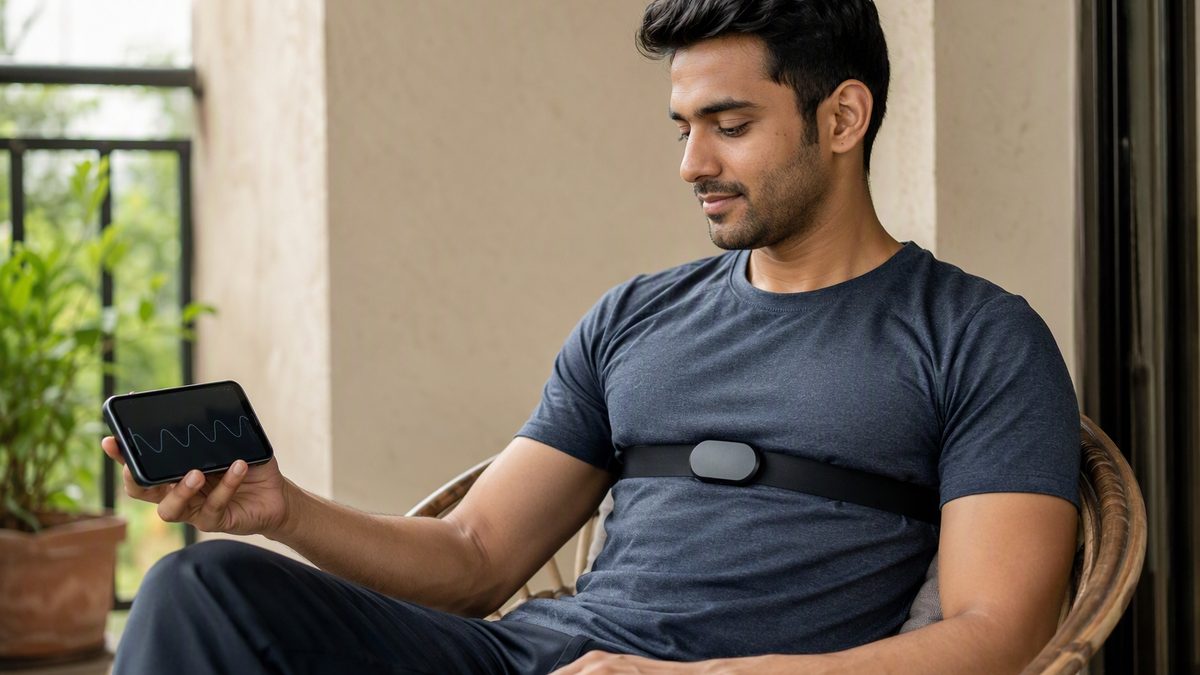
For a beginner, your wrist or a ring is good enough to track your own trend, which is all you need. A chest strap measures the heart-beat interval more directly and is the reference standard if you get serious later. Whatever you use, stick to one device and don't compare numbers across gadgets — they read differently. Consistency of measurement matters far more than the sensor's badge.
Disclaimer: This article is for educational purposes only and is not medical advice. Consult a qualified healthcare professional before starting any supplement, nutrition, or training protocol — especially if you are pregnant or breastfeeding, under 18, taking medication, or managing a health condition.
Scientific References & Clinical Sources
- Kiviniemi AM, et al. Daily exercise prescription on the basis of HR variability among men and women. Int J Sports Med, 2007. PMID: 17345075
- Plews DJ, et al. Training adaptation and heart rate variability in elite endurance athletes: opening the door to effective monitoring. Sports Med, 2013. PMID: 23852425
- Peake JM, et al. A Critical Review of Consumer Wearables, Mobile Applications, and Equipment for Providing Biofeedback, Monitoring Stress, and Sleep in Physically Active Populations. Front Physiol, 2018. PMID: 30002629
- Düking P, et al. Criterion-Validity of Commercially Available Physical Activity Tracker to Estimate Step Count, Covered Distance and Energy Expenditure during Sports Conditions. Front Physiol, 2017. PMID: 29018355

