💡 Key Takeaways
- HRV biofeedback is slow paced breathing at about 6 breaths per minute that actively trains vagal tone; it differs from passively reading your watch's morning HRV score.
- A 10-minute session, roughly 5 seconds in and 5 seconds out, reliably calms you and lifts HRV in the moment, a low-cost reset for desk stress and the 3pm slump.
- Lasting changes to your baseline, if they happen, are modest and build over weeks, so practice most days rather than chasing a one-off spike on the screen.
- Read your seven-day HRV trend, not single mornings, since alcohol, a short night, caffeine, and a late meal all move the number independently of how you trained.
The question people google at their desk usually sounds like this: "Can a breathing exercise actually do anything about work stress, or is that wellness fluff?" Short answer in three sentences. HRV biofeedback, slow breathing at around six breaths a minute while you watch your heart rhythm respond, reliably lowers tension and raises HRV during and just after the session. With regular practice it shows promise for reducing stress and blood pressure, though the lasting effects are modest and honest research is still thin. For someone wedged between back-to-back meetings, a low-risk ten-minute reset that works on the nervous system is worth doing right.
It helps to know there are two different HRV tools, because they get blurred constantly. One is this active breathing practice; the other is simply reading the morning HRV number your smartwatch already shows. This page answers the questions a desk worker actually types, keeps the science honest, and gives you a routine that survives a 9-to-6.
1. Can Breathing Slowly Really Move My Stress? The Short Answer
Yes, in the moment, and here is why it is not just vibes. Your heart speeds slightly when you inhale and slows when you exhale, a vagally mediated effect called respiratory sinus arrhythmia. Breathe at around six breaths a minute and the rhythms of heart rate, breathing, and blood pressure line up at your resonance frequency, producing the biggest heart-rate swing per breath and the largest acute rise in HRV. That resonance effect is the lever HRV biofeedback pulls to nudge your nervous system toward its calmer, parasympathetic side.
What that buys a desk worker is a deliberate off-ramp from the low-grade fight-or-flight state that meetings, deadlines, and a flooded inbox keep simmering. The acute effect is real and reliable: HRV biofeedback consistently raises HRV and self-reported calm during and right after a session. Stay skeptical of the durable claim, though. Many trials are small and of mixed quality, and the most consistent data is for the within-session change, not a large permanent shift in baseline.
So the honest framing: treat HRV biofeedback as a low-risk, promising self-regulation tool, the breathing equivalent of standing up to reset your posture. It is not a cure for clinical anxiety or a replacement for fixing what actually generates your stress, and it does not undo the metabolic cost of sitting all day.
2. Reading the Number Versus Training It: Don't Confuse Them
The two HRV tools do opposite things, and conflating them leads to bad decisions. Passive HRV monitoring is the morning readiness score your watch or ring shows; it measures your autonomic state so you can judge how recovered you are, changing nothing in the moment (PMID 23852425, PMID 17345075). HRV biofeedback is active: you breathe slowly while watching live feedback to deliberately drive HRV up and train vagal control of the heart over weeks. One is a thermometer you read; the other is exercise you do.
This distinction saves you from a classic trap. When you do a breathing session and your HRV jumps, that is a within-session effect, not proof your multi-day baseline improved. Any lasting lift in resting vagal tone, if it comes, accrues slowly over weeks of practice. Chasing the on-screen spike as a permanent gain is the most common misread, and it leads people to quit when the baseline does not leap overnight.
A practical consequence: never run your slow paced breathing during a baseline HRV measurement. Paced breathing inflates the reading, so if you want a clean morning number to track, take it with relaxed normal breathing and keep the biofeedback session separate. Mixing the two corrupts the very trend you are watching.
3. A 10-Minute Routine That Survives a 9-to-6
The routine fits gaps in a workday rather than demanding them. Breathe smoothly at about six breaths a minute, roughly five seconds in and five seconds out with no breath-hold, following a pacer on your phone. Aim for ten minutes, once or twice a day, on most days. Consistency matters more than length, so a short session you actually do beats a long one you skip. Over a few weeks you can refine toward your personal resonance frequency, usually between 4.5 and 6.5 breaths a minute.
| Time of day | Breathing pace | Length | What it targets |
|---|---|---|---|
| Before logging on | ~6 breaths/min (5s in, 5s out) | 10 min | A calm autonomic start to the day |
| The 3pm slump | ~6 breaths/min | 5-10 min | Resets focus without more caffeine |
| After a stressful meeting | ~6 breaths/min | 5 min | Down-shifts an acute stress spike |
| Wind-down before bed | 5.5 breaths/min if refined | 10-15 min | Eases sleep onset after screen time |
One realistic caution for the afternoon slump. Breathing can take the edge off, but if you are crashing at 3pm because you skipped lunch or slept badly, it will not fix the root cause; food, movement, and sleep do. Use it as a reset, not a patch over habits generating the fatigue. Pairing it with a real lunch and a short walk works far better than either alone.
4. Tracking Your Trend Without Obsessing Over One Morning
If you also want to track HRV, do it like a trend, not a daily verdict. Single readings are noisy; HRV swings widely from posture, breathing, hydration, and measurement error, so watch the rolling seven-day average and its direction rather than reacting to one low morning (PMID 23852425). The most-used metric is rMSSD because it is dominated by vagal activity and stays stable over short recordings, and absolute values are individual, so your number is not comparable to a colleague's or a population normal.
Standardize the measurement or it is just noise: same time daily, same posture, before caffeine and before the day's stress, ideally before you get out of bed, with relaxed normal breathing. Inconsistent timing or posture is the leading cause of misleading data. An overnight average from a ring or chest strap smooths the variability a single morning spot-check carries, which suits a desk worker who would rather skip a manual reading each day.
Read context before meaning. Alcohol is often the single biggest acute HRV suppressor, so a low number after a couple of evening drinks reflects the wine, not your stress level. A short night, caffeine, a late meal, or a stressful week all dent it too. A drop after a bad night is your body responding to the night, so interpret HRV alongside how you feel and your resting heart rate.
5. Devices, Accuracy, and When Stress Needs More Than Breathing
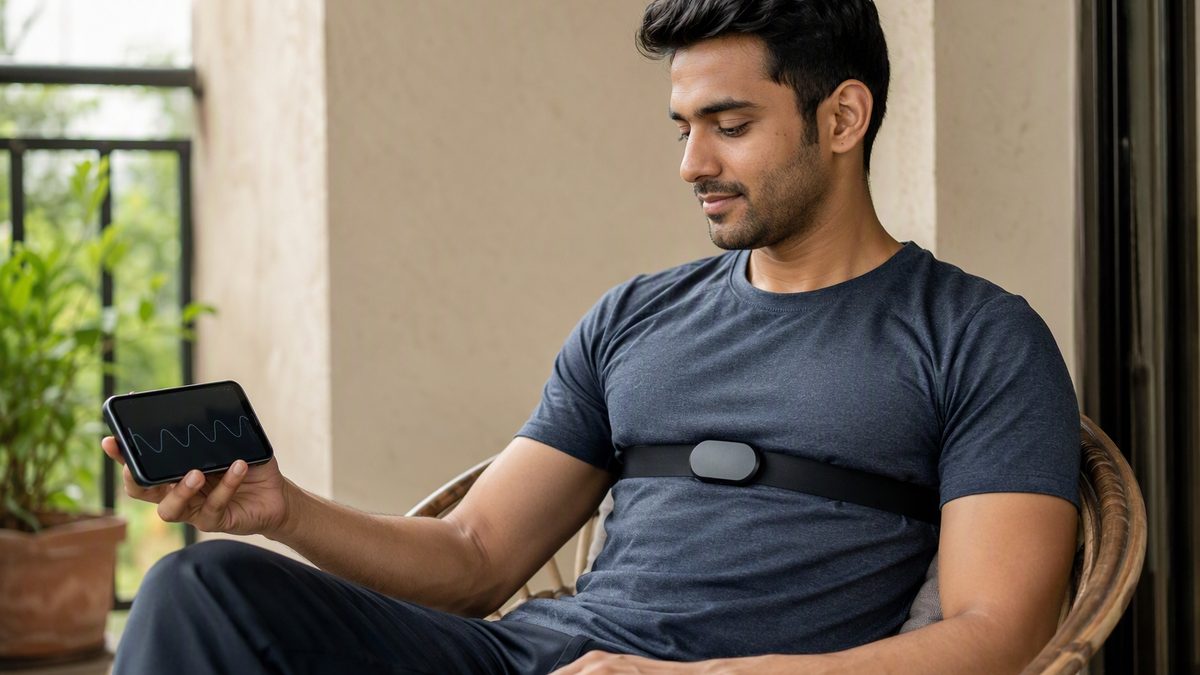
Match the device to the task. For biofeedback you want a chest-strap ECG, the reference standard, because it captures the R-R interval directly and gives clean beat-to-beat feedback. Wrist optical HRV is fine at rest or overnight when still but degrades with motion, and rings sit in between. Treat consumer HRV tech as good for your relative trend, not precise absolute values, and remember that stress and readiness scores are approximate, not clinical, so do not compare numbers across devices (PMID 30002629, PMID 29018355).
It is worth naming what these scores can and cannot tell you. They are a decent nudge to look closer at your sleep and stress, but the calorie figures are often substantially off, and the sleep and recovery scores are estimates, not diagnoses (PMID 30002629, PMID 29018355). Use them to spot a pattern, then weigh that against how your week felt rather than letting one low score dictate your mood.
Finally, the boundary that matters most for stress. HRV biofeedback can help you manage everyday tension, but clinical anxiety, persistent high blood pressure, or any diagnosed condition needs professional evaluation, and wearable HRV is a screening prompt, not a diagnosis. Do not stop prescribed medication because breathing helps in the moment. If stress is affecting your sleep, mood, or health beyond what a ten-minute reset touches, talk to a clinician rather than adding another breathing session.
What Desk Workers Ask About HRV Biofeedback
Can a 10-minute breathing session actually reduce my work stress?
In the moment, yes. HRV biofeedback reliably raises HRV and lowers self-reported tension during and just after a session, so a ten-minute reset is a genuine, low-risk tool for acute desk stress and the afternoon slump. With regular practice it shows promise for reducing stress and blood pressure too, though those lasting effects are modest. Treat it as a reset between meetings, not a cure for what generates your stress.
When should I do this around a 9-to-6 schedule?
Anchor it to natural breaks, not a fixed clock time. A ten-minute session before you log on sets a calm tone, a short one after a stressful meeting down-shifts an acute spike, and one in the late afternoon resets focus without more caffeine. A pre-bed session can ease sleep onset after screen time. Consistency matters more than length, so pick the slots you will actually keep and do short sessions reliably.
Is the breathing the same as just checking my watch's HRV score?
No, they are opposite tools. Checking your watch's HRV is passive monitoring: you read your autonomic state and change nothing in the moment. HRV biofeedback is active, where you breathe slowly at around six breaths a minute while watching live feedback to deliberately raise HRV and train vagal tone over weeks. Also, never do the slow breathing during a baseline measurement, because it inflates the reading and corrupts the morning trend.
Why is my HRV low even when I did not exercise hard?
Because HRV is moved by far more than training. Alcohol is often the single biggest acute suppressor, and a short night, caffeine, a late meal, dehydration, or a stressful week all push it down independently of exercise. A desk worker's low reading frequently reflects sleep and stress, not training fatigue. Read the seven-day trend rather than one morning, weigh it against how you feel, and standardize the measurement so timing and posture are not adding noise.
Disclaimer: This article is for educational purposes only and is not medical advice. Consult a qualified healthcare professional before starting any supplement, nutrition, or training protocol — especially if you are pregnant or breastfeeding, under 18, taking medication, or managing a health condition.
Scientific References & Clinical Sources
- Plews DJ, et al. Training adaptation and heart rate variability in elite endurance athletes: opening the door to effective monitoring. Sports Med, 2013. PMID: 23852425
- Kiviniemi AM, et al. Daily exercise prescription on the basis of HR variability among men and women. Int J Sports Med, 2007. PMID: 17345075
- Peake JM, et al. A Critical Review of Consumer Wearables, Mobile Applications, and Equipment for Providing Biofeedback, Monitoring Stress, and Sleep in Physically Active Populations. Front Physiol, 2018. PMID: 30002629
- Düking P, et al. Criterion-Validity of Commercially Available Physical Activity Tracker to Estimate Step Count, Covered Distance and Energy Expenditure during Sports Conditions. Front Physiol, 2017. PMID: 29018355

