💡 Key Takeaways
- HRV biofeedback is gentle slow breathing at about 6 breaths per minute that calms your nervous system in the moment; it asks nothing of your core or pelvic floor and needs no clinician clearance to simply breathe.
- On fragmented newborn sleep, your morning HRV will swing widely and read low, which reflects the broken nights, not a verdict on you, so do not chase the number.
- A 5-10 minute session during a nap window reliably lowers tension and lifts HRV briefly; lasting change is modest and builds slowly, so consistency beats long sessions.
- Breathing practice is a stress tool, not a recovery test or a weight-loss tactic; clear loaded training and any HRV-guided plan with your clinician first.
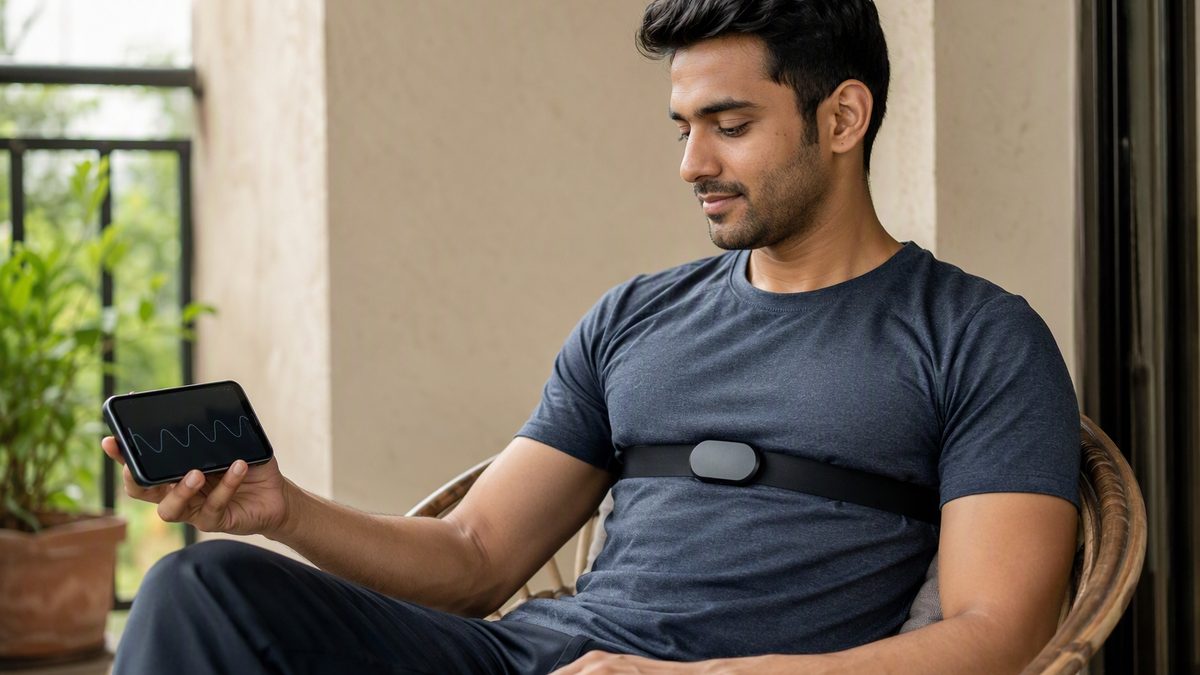
The hardest recovery problem in early motherhood is not a muscle. It is a nervous system running on four broken hours of sleep, stretched between feeds, and rarely given a moment to down-shift. That low-grade, always-on tension is exactly what HRV biofeedback is built to ease. Breathing slowly at around six breaths a minute while you watch your heart rhythm respond reliably calms you and lifts HRV during the session, and it asks nothing of a healing core or pelvic floor. You can do it lying next to a sleeping baby.
Be honest up front: the lasting effects are modest, the research is still thin, and it is a stress-regulation tool, not a treatment. But it is low-risk, free, and it fits the fifteen-minute gaps a newborn leaves. This page starts with the real problem, fragmented sleep and frayed nerves, then shows how to use breathing gently, how to read HRV honestly when your nights are chaos, and where your clinician has to lead.
1. The Real Problem: A Frazzled Nervous System on Broken Sleep
Start with what is actually happening physiologically. The autonomic nervous system has two branches: the sympathetic side raises heart rate and dominates under stress, and the parasympathetic side, carried largely by the vagus nerve, slows the heart and drives recovery. Broken sleep, the constant vigilance of a newborn, and postpartum hormonal swings all keep the sympathetic side elevated. HRV, the beat-to-beat variation between heartbeats, largely reflects the vagal side, which is why it reads low when you are stretched thin.
That is the gap HRV biofeedback addresses. Breathing slowly while watching live feedback pushes your system toward the parasympathetic, recovery side, training a down-shift you can call on. The practice reliably produces an acute rise in HRV and a sense of calm during and just after a session, and shows promise for reducing stress with regular practice (PMID 30002629). For a sleep-deprived new mom, that on-demand calm is the point, far more than any number on a screen. Keep expectations grounded, though: durable effects are generally modest and many trials are small, so this is a low-risk, promising self-regulation tool, not a fix for postpartum anxiety or depression. If your low mood, intrusive worry, or sleeplessness goes beyond ordinary new-parent exhaustion, that is a conversation for your clinician.
2. Gentle Resonance Breathing in a Nap Window
The practice is about as gentle as exercise gets, the whole appeal in early postpartum. Breathe smoothly at about six breaths a minute, roughly five seconds in and five seconds out with no breath-hold and no forceful effort, following a pacer on your phone while watching your heart-rate wave if you have a strap. There is no bracing, no load, and no impact, so it does not depend on core or pelvic-floor recovery the way lifting or running does. You can simply breathe.
| Moment | Breathing pace | Length | Why it fits |
|---|---|---|---|
| Start of a nap window | ~6 breaths/min (5s in, 5s out) | 5-10 min | Resets a frazzled system without using the whole nap |
| During a feed, seated | ~6 breaths/min | 5 min | Turns a routine moment into a calm one |
| After a hard night | ~6 breaths/min | 5 min | Eases acute stress when sleep was broken |
| Before your own sleep | 5.5 breaths/min if it feels natural | 10 min | Helps you fall asleep faster in a short window |
Aim for short sessions most days rather than long ones occasionally; consistency matters more than duration and your time is scarce. The HRV rise you may see during the session is a within-session effect, not proof your baseline jumped, and any lasting shift builds slowly over weeks if it comes at all. Do this for the calm and the few minutes of rest, not to win at a metric; if a long session feels like one more demand, a five-minute version still counts.
3. Why Your HRV Reads Low Right Now (And That's Okay)
If you have started glancing at the morning HRV on a watch or ring, brace for low and erratic numbers, and know it is not a referendum on you. Single readings are noisy at the best of times, swinging with posture, breathing, hydration, and measurement error, and broken newborn sleep amplifies all of it. Pregnancy also shifted your physiology: resting heart rate and respiratory rate rise substantially as normal physiology, making any pre-baby baseline and the device's readiness scores unreliable until things resettle.
So read direction, gently, not daily verdicts. If you track at all, watch the rolling seven-day trend rather than reacting to one low morning, and standardize the read at a similar time and posture with relaxed normal breathing, never during your paced-breathing practice, which would inflate it. Absolute values are individual, so your number is not comparable to a friend's; only your own trend means anything (PMID 23852425). Interpret it alongside how you actually feel, not in place of it.
A low reading after a 3am feeding marathon reflects the night, not a problem to solve, and it is not a reason to feel you are failing. Once your cycle returns, menstrual-cycle phase also affects HRV, often suppressing it in the luteal phase, one more reason a single number tells you little.
4. Breastfeeding, Loaded Training, and Clinician Clearance
Here is the reassuring part and the careful part together. The breathing practice involves no supplements, no substances, and no physical load, so it carries no breastfeeding concern; you are simply breathing slowly. That makes it one of the few recovery tools you can adopt without weighing it against milk supply. Where clearance genuinely matters is the rest of your return to exercise: rebuilding core and pelvic-floor function before loading, and resuming lifting or running, should follow your clinician's or physio's guidance, because relaxin-related joint laxity and diastasis recti can persist for months.
If you ever consider HRV-guided training, where your morning HRV decides whether to push a hard session, treat that as a later-stage tool and clear it with your clinician first. On fragmented sleep your HRV rarely gives a clean green light, so let energy, mood, and clearance guide loaded training, not a noisy number. There is no need to rush back to pre-pregnancy programming.
One thing this page will never do is frame any of this as a weight-loss tactic. Your nutritional needs are elevated if you are breastfeeding, adding roughly 400 to 500 calories a day, and crash dieting now is the opposite of recovery. Breathing is for calm and resilience, not for shrinking. Fuel yourself, sleep when you can, and let the rest follow.
5. Honest Limits and When to Call Your Clinician
Keep the promises small and true. HRV biofeedback can take the edge off everyday stress and give your nervous system a few minutes of rest, which is a real, worthwhile thing on no sleep. It is not a treatment for postpartum depression or anxiety, not a substitute for sleep, and not a recovery test you can pass or fail. Wearable HRV data is a screening prompt, not a diagnosis, and should never override what your body and your clinician tell you.
Devices are worth a quick word. For gentle home use a wrist or ring is fine for an overnight trend when you are still, while a chest strap gives cleaner numbers, but none are clinical instruments, and readiness scores are approximate, not medical (PMID 30002629, PMID 29018355). Do not compare numbers across devices or against anyone else's. The trend, read loosely, is all a new mom needs, if she wants data at all.
Finally, the lines that mean call someone. Persistent low mood, intrusive thoughts, or anxiety that does not lift, along with any palpitations, chest pain, breathlessness, or unexplained persistent low HRV, warrant a clinician promptly, not a longer breathing session. Building a sustainable rhythm in these months is its own win, and our guide to building fitness habits helps make even five gentle minutes stick. You are recovering from something enormous; gentle is not falling behind.
What New Moms Ask About HRV Biofeedback
Is HRV biofeedback safe while breastfeeding?
Yes. The practice is simply slow, gentle breathing at about six breaths a minute, with no supplements, substances, or physical load, so it carries no breastfeeding concern and will not affect your milk supply. The postpartum cautions apply to loaded training and core or pelvic-floor work, which need your clinician's guidance, not to breathing slowly beside the baby.
When can I start after delivery?
You can start the breathing practice essentially whenever you feel up to it, since it asks nothing of your healing core or pelvic floor; it is just calm, slow breathing. Returning to exercise, lifting, or running is the part that needs clinician clearance, because joint laxity and abdominal separation can persist for months. So separate the two: gentle breathing for stress now, and loaded training only once your clinician or pelvic-health physio has cleared you.
How do I train on four hours of broken sleep?
On broken sleep the priority is recovery and stress relief, not hard training. HRV biofeedback fits because it takes five minutes, needs no energy reserves, and rests your nervous system. Expect your HRV to read low and erratic, which reflects the nights, not failure. Use short breathing sessions during nap windows or feeds, let your clinician and how you feel guide any loaded exercise, and never treat exhaustion as laziness. Sleep, when it comes, outranks all.
Why is my HRV so low right now?
Because fragmented sleep, ongoing stress, and the lingering shifts of pregnancy and postpartum all suppress it, and single readings are noisy on top of that. Resting heart rate and breathing rate rise in pregnancy as normal physiology and take time to resettle, making old baselines and readiness scores unreliable. A low number reflects your nights, not your worth. Read the loose seven-day trend if you track at all, and do not chase it.
Disclaimer: This article is for educational purposes only and is not medical advice. Consult a qualified healthcare professional before starting any supplement, nutrition, or training protocol — especially if you are pregnant or breastfeeding, under 18, taking medication, or managing a health condition.
Scientific References & Clinical Sources
- Peake JM, et al. A Critical Review of Consumer Wearables, Mobile Applications, and Equipment for Providing Biofeedback, Monitoring Stress, and Sleep in Physically Active Populations. Front Physiol, 2018. PMID: 30002629
- Plews DJ, et al. Training adaptation and heart rate variability in elite endurance athletes: opening the door to effective monitoring. Sports Med, 2013. PMID: 23852425
- Düking P, et al. Criterion-Validity of Commercially Available Physical Activity Tracker to Estimate Step Count, Covered Distance and Energy Expenditure during Sports Conditions. Front Physiol, 2017. PMID: 29018355
- Kiviniemi AM, et al. Daily exercise prescription on the basis of HR variability among men and women. Int J Sports Med, 2007. PMID: 17345075

