💡 Key Takeaways
- HRV biofeedback is resonance breathing at about 6 breaths a minute for 10-20 minutes; it acutely raises HRV and calms you, independent of what's on your plate.
- A persistently low or jumpy HRV trend can flag a problem worth investigating, low iron or ferritin and under-fueling are realistic vegetarian-relevant confounders, so check labs rather than blaming training.
- Your HRV is yours alone and not comparable to a meat-eating training partner's; track only your own 7-day trend, not a population norm.
- Breathing trains calm but doesn't fix a nutrient gap; sleep, adequate energy, and monitored iron/B12 do far more for your recovery than any HRV metric.
Here's a problem vegetarian athletes hit that the HRV apps never mention. You train hard, eat carefully, and still your morning HRV trend sits stubbornly low or bounces around, and the app keeps nagging you to rest. You start wondering if your training is too much, when the real driver might be sitting in your bloodwork, not your program.
HRV reflects your autonomic balance, and it gets dragged down by plenty of non-training inputs. For a plant-based athlete, two are worth flagging: low iron or ferritin, which is more common when you eat only non-heme iron with lower absorption, and quietly low energy availability if your meal planning slips. Neither is a reason to deload, both are reasons to check.
This page covers the active practice, HRV biofeedback as a stress skill, and then the more important diagnostic angle for you: reading your HRV trend in the context of the confounders that actually move it, so you don't mistake a nutrition issue for overtraining.
1. The Problem: Mistaking a Diet-Driven Low Reading for Overtraining
The trap is treating every low HRV morning as a training verdict. HRV is the beat-to-beat variation between heartbeats, a window onto whether your rest-and-digest or fight-or-flight side is dominating, and it's strongly moved by things that have nothing to do with your workout. Read in isolation, a string of low readings looks like overtraining and pushes you to cut work you might not need to cut.
For a vegetarian athlete, two diet-linked inputs deserve specific attention. First, iron: plant iron is non-heme and less readily absorbed, so low ferritin and even mild iron deficiency are more common, and they show up as fatigue, sluggish recovery and poor adaptation that can coincide with a depressed HRV trend. Second, energy availability: if your protein-and-calorie planning slips, especially on busy weeks, chronic under-fueling stresses the system and can suppress HRV alongside stalling performance.
Neither is fixed by breathing or by deloading. They're fixed by looking, checking iron, ferritin and B12 with your clinician on a sensible schedule, and shoring up energy intake. The HRV trend is doing its job here: it's a screening prompt that says something is off, not a diagnosis that says the something is your training. The skill is reading it in context rather than reflexively backing off.
2. What HRV Biofeedback Trains, and What It Doesn't
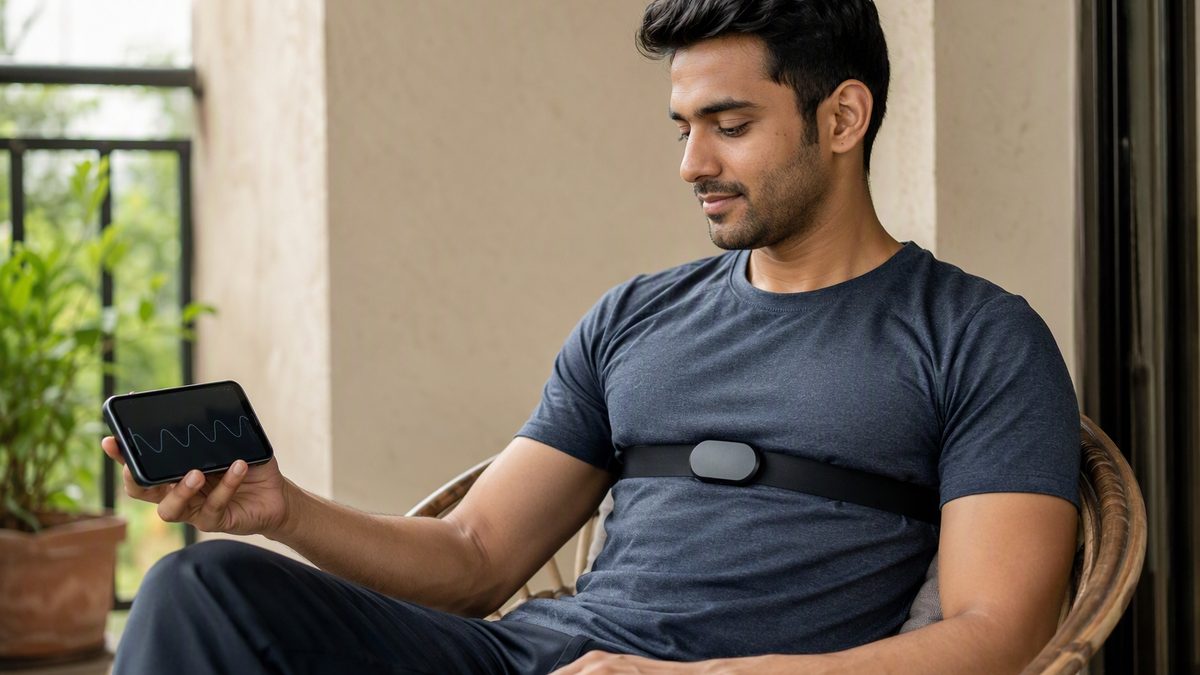
Now the active tool, which works the same regardless of your diet. HRV biofeedback means breathing slowly at about six breaths a minute while watching live heart-rate feedback, deliberately driving your heart rate to swing up and down with each breath to train vagal control. The mechanism: your heart speeds slightly on the inhale and slows on the exhale, and near six breaths a minute those swings sync with your breathing and blood pressure at your resonance frequency and amplify, producing the largest acute HRV rise.
Practically, breathe smoothly, roughly five seconds in and five out with no breath-hold, ideally with a pacer, for ten to twenty minutes once or twice a day, refining toward your own resonance pace over a few weeks. The honest payoff: a reliable acute calm and HRV bump during and just after each session, with promise for easing stress over regular practice but modest, mixed evidence for lasting baseline change. It's a low-risk self-regulation skill.
What it explicitly does not do is fill a nutrient gap. A breathing session cannot raise low ferritin, replace missing B12, which a vegetarian diet genuinely requires supplementing, or undo under-fueling. So use biofeedback for stress management on its own merits, and keep it firmly separate in your head from the nutrition work that actually drives your recovery. Confusing the two, breathing harder to fix a problem that's really dietary, is the mistake to avoid.
3. Reading Your Trend Around the Confounders That Move It
Because so much moves HRV, a routine for reading it in context matters more for you than the breathing itself. Standardize the measurement, same time on waking, same body position, before caffeine, with relaxed breathing, and use an overnight ring or chest-strap average to cut single-reading noise. Then judge the seven-day rolling trend and its direction, never one number. The table sorts likely causes so you respond to the right one.
| What you see | Likely driver | Right response |
|---|---|---|
| One low morning after a hard session | Normal acute training fatigue | Easy day, expect it to rebound |
| Low reading after wine with dinner | Alcohol (a major acute suppressor) | Ignore as a training signal |
| Trend low and jumpy for weeks, tired | Possible low iron/ferritin or under-fueling | Check labs and energy intake with a clinician |
| Low with poor or short sleep | Sleep debt | Prioritize sleep before changing training |
| Spike during a breathing session | Within-session resonance effect | Don't read it as a recovered baseline |
Remember your absolute numbers are personal. rMSSD varies hugely by age, genetics and fitness, so your HRV isn't comparable to a meat-eating training partner's, and a lower number doesn't mean your diet is failing you, plenty of plant-based athletes have strong HRV trends. Track your own line over time, read it next to resting heart rate and how you feel, and don't compare across devices either. For building a steady habit around all this, our guide to building fitness habits is a useful companion.
4. The Honest Hierarchy: Labs and Fuel Before Breathing Metrics
Put the tools in order. For a vegetarian athlete chasing recovery, the basics outrank any HRV gadgetry: adequate energy, hitting your protein and leucine targets from plants, monitored iron and B12, and sleep. Those move your recovery and, downstream, your HRV trend far more than a breathing protocol does. HRV biofeedback is a worthwhile add-on for stress, not a substitute for getting nutrition right.
Keep the device line honest too. For HRV a chest-strap ECG is the accurate reference; wrist and ring optical sensors are fine resting and overnight but noisier in motion, and their recovery scores are approximate, not clinical. So use any device for your own relative trend, not as a verdict, and let a persistently low trend prompt a blood panel rather than a self-diagnosis.
The medical line is firm. HRV biofeedback and tracking are self-regulation and training tools, not medical care. Iron deficiency, persistent unexplained fatigue, palpitations, chest pain or breathlessness need a clinician, and B12 status genuinely warrants attention on a meat-free diet, none of that is something to breathe away. Use biofeedback to manage everyday stress, use your labs and your plate to manage recovery, and don't let a wearable override either your bloodwork or your doctor.
Plant-Based HRV Questions Vegetarian Athletes Ask
Why is my HRV trend low even though I train and eat carefully?
HRV is moved by far more than training. For a vegetarian athlete, two diet-linked culprits are worth checking: low iron or ferritin, more common with non-heme plant iron, and quietly low energy availability if meal planning slips. Both can depress your HRV trend and recovery without your workouts being the problem. A persistently low, jumpy trend with fatigue is a prompt to check labs and fueling with a clinician, not to deload.
Does a vegetarian diet make my HRV lower than a meat-eater's?
Not inherently, and the comparison itself is the mistake. Absolute HRV varies hugely by age, genetics and fitness and isn't comparable person to person, so a lower number than a meat-eating partner says nothing about your diet. Plenty of plant-based athletes have strong HRV trends. What matters is your own trend over time. If yours is sliding, look at iron, B12, energy and sleep rather than blaming vegetarianism in the abstract.
Can HRV biofeedback breathing fix my low ferritin or B12?
No, and it's important to keep these separate. Resonance breathing trains your nervous system and produces acute calm and a higher in-session HRV, but it cannot raise iron stores or replace B12, which a vegetarian diet genuinely needs supplemented. If your HRV trend is low because of a nutrient gap, the fix is in your bloodwork and on your plate. Use breathing for stress, and labs plus food for the actual nutritional driver.
Which labs should I watch if my HRV keeps dipping?
Talk to your clinician, but for a vegetarian athlete the usual suspects are iron and ferritin and vitamin B12, since plant diets carry higher risk of low ferritin and require B12 supplementation. Low energy availability is the other thing to rule out. None of these is diagnosed by a wearable, which only screens, so use a persistently low HRV trend as a reason to get proper bloodwork rather than as the diagnosis itself.
Disclaimer: This article is for educational purposes only and is not medical advice. Consult a qualified healthcare professional before starting any supplement, nutrition, or training protocol — especially if you are pregnant or breastfeeding, under 18, taking medication, or managing a health condition.
Scientific References & Clinical Sources
- Plews DJ, et al. Training adaptation and heart rate variability in elite endurance athletes: opening the door to effective monitoring. Sports Med, 2013. PMID: 23852425
- Kiviniemi AM, et al. Daily exercise prescription on the basis of HR variability among men and women. Int J Sports Med, 2007. PMID: 17345075
- Peake JM, et al. A Critical Review of Consumer Wearables, Mobile Applications, and Equipment for Providing Biofeedback, Monitoring Stress, and Sleep in Physically Active Populations. Front Physiol, 2018. PMID: 30002629
- Düking P, et al. Criterion-Validity of Commercially Available Physical Activity Tracker to Estimate Step Count, Covered Distance and Energy Expenditure during Sports Conditions. Front Physiol, 2017. PMID: 29018355

