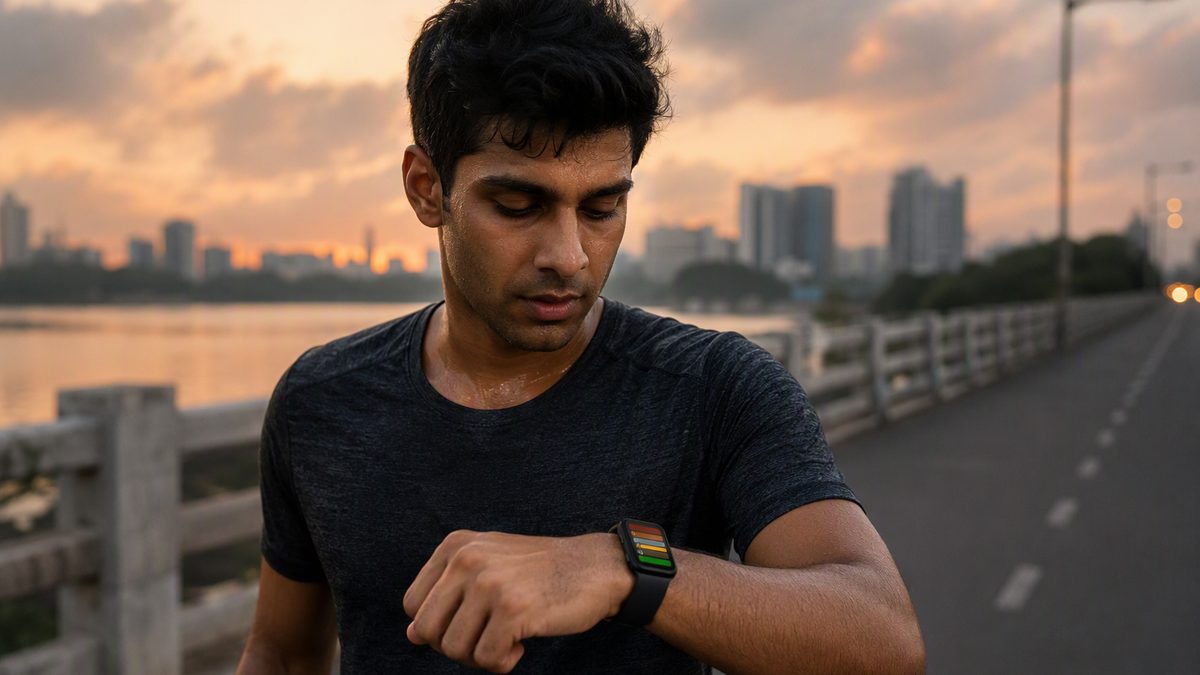
💡 Key Takeaways
- Make a default rule: short hotel sessions live in Zone 4-5 for stimulus, recovery and travel days cap at the top of Zone 2 — same rule in any time zone.
- Your premium watch's 220-age zones are likely a dozen beats off; reset them with 207 minus 0.7 times your age, or a threshold test at your next physical.
- Stress, alcohol, poor sleep, and jet lag all push heart rate up for the same effort — so a high zone on a bad day is often a fatigue signal, not lost fitness.
- Strap up for the hard 25-minute sessions where zone precision pays; the wrist watch is fine for steady easy work and daily trend tracking.
Tuesday: a 6am call, then a flight, then a hotel gym at an hour your body insists is the middle of the night. Wednesday: client dinner, two glasses of wine, a 5am wake-up. In a week like that, training has to run on rules, not willpower — and zone tracking is what turns 'I have 25 minutes' into 'I know exactly what those 25 minutes should do.'
The whole point of zones is to stop guessing. A heart rate band tells you whether a session is genuinely easy or genuinely hard, so a short hard effort actually delivers a stimulus and an easy day actually recovers you instead of quietly adding stress to an already-cortisol-soaked schedule.
Here's how to wire zones into your real week: where they slot into a travel-heavy schedule, the device choices that matter, the formula fix most people miss, and the single metric worth watching when sleep and time zones pile up.
1. Slotting Zones Into a 60-Hour Travel Week
Start from your constraint: time is short and unpredictable, so your zone plan has to be a default, not a daily decision. The rule is simple. When you only have 20-30 minutes and feel decent, make it a high-intensity session in Zone 4-5 — that upper-zone interval work develops top-end aerobic and anaerobic capacity that easy volume alone can't touch, which is exactly the high-return-per-minute trade you need. When you're traveling, jet-lagged, or sleep-short, make it an easy Zone 1-2 session and cap the heart rate there.
That cap is doing real work. On a chronically stressed, sleep-disrupted system, forcing every session hard just deepens the hole. The discipline to stay at or below the top of Zone 2 on easy days — slowing the treadmill, easing the bike — is the main payoff of wearing the device. The decision rule writes itself: feel good and have time, go hard in the upper zones; feel wrecked or in transit, stay easy and capped. No deliberation at 5am in a strange city. The table below maps this to the situations your week actually throws at you.
2. Your Travel Zone Defaults
This playbook uses real numbers from the 207-minus-0.7-times-age estimate for a 48-year-old (about 174 bpm max). Recalculate for your age, and if you've done a threshold test, anchor to that instead. Each row is a default you can run without thinking.
| Situation | Target zone | Beats per minute (max 174) | Duration | Purpose |
|---|---|---|---|---|
| Good day, short window | Zone 4-5 intervals | 139-174 | 20-25 min | Max stimulus per minute |
| Steady aerobic day | Zone 2 | 104-122 | 30-40 min | Aerobic base, low stress |
| Travel / jet-lag day | Zone 1-2, capped | 87-122 | 20-30 min | Movement without load |
| Morning after a client dinner | Zone 1-2, capped | 87-122 | 20-30 min | Easy; sleep was hit |
| Poor-sleep streak | Full rest | n/a | 0 min | Recover, don't train |
Two load-bearing rules. First, keep hard days in the upper zones and easy days strictly capped — the grey-zone middle (Zone 3) feels productive but is too hard to recover from and too soft to drive adaptation, so most busy people accidentally water down both ends by living there. Second, after alcohol or a bad night, default to capped easy rather than skipping entirely or grinding hard; the dinner already taxed your recovery.
3. Device Choice and the Formula Fix
You likely own a premium wearable — Oura, Whoop, Garmin, an Apple Watch. The wrist sensors read blood flow with an optical light: convenient, fine at rest and during steady easy work, and good for daily resting-heart-rate and HRV trends. But they lag sudden changes by seconds and can lock onto your cadence, so during the hard Zone 4-5 intervals — precisely where you want accurate feedback — the number is often wrong or slow. For those sessions, a chest strap, which reads the heart's electrical signal directly, is the better tool and the practical gold standard. Pair one to the watch you already wear; it's a small kit upgrade for the days that matter.
Then fix the anchor. Most devices default your zones to 220 minus age, which is off by roughly plus or minus 10 to 12 beats and drifts worse with age. Reset them using 207 minus 0.7 times your age, or — better — get a threshold-based zone test, which pins boundaries to where your body actually shifts gears rather than to a population average. Your annual executive physical is a natural moment to do this. If you ever do only one upgrade to your zones, replace the age formula with a threshold anchor; everything downstream gets more accurate. Our guide to the best fitness apps can help you pick a platform that handles both.
4. The One Metric to Watch When Sleep and Time Zones Pile Up
You asked which single metric to track — make it your heart rate's behavior over time, read two ways. Day to day, watch your morning resting heart rate and HRV trend from the wearable you already own; a multi-day rise in resting heart rate or a falling HRV signals accumulated stress, and that's your cue to default the next session to capped easy or full rest. Within a workout, watch how fast you go at a fixed easy heart rate over the weeks — going faster at the same heart rate is direct, motivating evidence that your fitness is climbing despite the chaos.
Read those numbers with context, because your lifestyle distorts them. Heat, dehydration, caffeine, psychological stress, poor sleep, jet lag, and altitude all push heart rate up for the same effort — so on a stressed, under-slept day a normal session lands a zone higher and reads 'harder' than it mechanically is. Don't mistake that for lost fitness; cross-check with perceived effort and pace before reacting. And when the trend turns sour or you're simply wiped, the right move is rest, not an easy session and certainly not stacking stimulants over sleep debt to push through. Treat your device data as your own relative trend, not a precise cross-brand truth — and remember no zone session offsets a chronic sleep deficit.
Zone Questions From the Road
What's the minimum effective zone session when I travel?
It depends on how you feel. With 20-25 minutes and decent energy, do Zone 4-5 intervals — upper-zone work delivers the most fitness per minute, ideal when time is short. If you're jet-lagged or sleep-short, switch to a capped easy Zone 1-2 session for 20-30 minutes instead, which adds movement without piling stress on a taxed system. Make it a default rule so you're not deciding at 5am: feel good go hard, feel wrecked go easy.
Does alcohol at client dinners ruin my zone training?
It works against it rather than ruining everything. Alcohol disrupts sleep and dehydrates you, and both push your heart rate up for the same effort — so the morning after, a session will read a zone higher than it really is. The smart move is a capped easy Zone 1-2 session, not a hard one, since your recovery was already hit. Don't read the elevated heart rate as lost fitness; it's a temporary confounder, and the bigger lever is protecting sleep.
Can I keep zone training consistent across time zones?
Yes, because it runs on rules, not a fixed clock. Your zones are tied to your own heart rate, so they travel with you. Anchor the routine to how you feel rather than local time: hard upper-zone session on a good day, capped easy session when jet-lagged. Watch your morning resting-heart-rate trend to know when to downshift to rest, and use a daylight easy walk on arrival to help reset your body clock to the new zone faster.
What single metric should I watch?
Your heart rate's trend, read two ways. Day to day, track morning resting heart rate and HRV from your wearable — a multi-day rise or falling HRV means take it easy or rest. Across weeks, track your pace at a fixed easy heart rate; going faster at the same heart rate is direct proof of improving fitness. Read both with context, since stress, alcohol, heat, and poor sleep temporarily inflate the numbers without meaning you've lost fitness.
Disclaimer: This article is for educational purposes only and is not medical advice. Consult a qualified healthcare professional before starting any supplement, nutrition, or training protocol — especially if you are pregnant or breastfeeding, under 18, taking medication, or managing a health condition.
Scientific References & Clinical Sources
- Gellish RL, et al. Longitudinal modeling of the relationship between age and maximal heart rate. Med Sci Sports Exerc, 2007. PMID: 17468581
- Karvonen MJ, Kentala E, Mustala O. The effects of training on heart rate; a longitudinal study. Ann Med Exp Biol Fenn, 1957. PMID: 13470504
- Buchheit M, Laursen PB. High-intensity interval training, solutions to the programming puzzle: Part I: cardiopulmonary emphasis. Sports Med, 2013. PMID: 23539308
- Peake JM, et al. A Critical Review of Consumer Wearables, Mobile Applications, and Equipment for Providing Biofeedback, Monitoring Stress, and Sleep in Physically Active Populations. Front Physiol, 2018. PMID: 30002629
- Düking P, et al. Criterion-Validity of Commercially Available Physical Activity Tracker to Estimate Step Count, Covered Distance and Energy Expenditure during Sports Conditions. Front Physiol, 2017. PMID: 29018355

