💡 Key Takeaways
- On skill days your average heart rate should stay low (Zone 1-2) — high zone time means you turned practice into a metcon and fried the fresh nervous system skills need.
- Wrist optical lags real changes by seconds and can lock onto rep cadence, so it badly misreads short explosive sets — a chest strap is the better tool there.
- Expect your resting heart rate to drift down over weeks of conditioning; that falling resting HR is real aerobic progress and shifts your personalized zones.
- Heart rate is a poor guide for short max-effort skill attempts because it responds slowly — use perceived effort and rest-to-recovery there, not a zone band.
Here's what you can actually measure once you strap on a monitor, and when each number means something. On a true skill day — handstand, planche, front-lever work — your average heart rate should sit low, mostly Zone 1-2, with brief spikes during hard attempts. If your skill session is logging long stretches in Zone 3-4, that's data telling you you've turned practice into conditioning and blunted the fresh nervous system that straight-arm skills demand.
On a conditioning day, the story flips: you want real time in the upper zones to build the engine. Zone tracking lets you see, not guess, which kind of day you actually trained.
One honest caveat up front, because it's load-bearing for you: heart rate responds slowly and your wrist sensor lags during short explosive sets, so for max-effort skill attempts the watch is the wrong tool. This guide shows what the numbers tell you, when to trust them, and how to set zones that move as your conditioning improves.
1. What Your Heart Rate Reveals on Skill vs Conditioning Days
Track a week and a clear pattern emerges. Pure skill practice — slow negatives, holds, low-rep ladders with full rest — should keep your average heart rate in Zone 1-2, because the limiter is neural freshness and tendon load, not your aerobic engine. Long stretches in Zone 3 on a skill day are a red flag: you've shortened rest, chased reps, and converted practice into a half-hearted metcon. That's exactly the mistake that grinds skills down instead of building them, because precision work needs a fresh nervous system.
Conditioning days are the opposite. A bodyweight circuit — burpees, explosive pull-ups, jump-squat supersets — should drive real, measurable time in Zone 4-5, and that upper-zone interval work develops top-end aerobic and anaerobic capacity that low-intensity volume can't. The data also catches a sneaky problem: high-rep straight-arm and pulling sets can spike heart rate well into Zone 4 without you feeling 'cardio' tired, so a session you thought was easy on your tendons was actually a systemic load. Reading the trace keeps you honest about how hard a given day really was.
2. Your Zone Chart and the Skill-Day Cap
This chart uses the 207-minus-0.7-times-age estimate for a 28-year-old (about 187 bpm max). Recalculate for your age. Since calisthenics athletes often have low resting heart rates, the Karvonen reserve method — which folds in your resting HR — will personalize these boundaries better than flat percent-of-max; many watches let you switch to percent-of-reserve zones.
| Zone | % of max HR | Beats per minute (max 187) | Trains | Use on a calisthenics day |
|---|---|---|---|---|
| Zone 1 | 50-60% | 94-112 | Recovery, warm-up | Mobility, between skill sets |
| Zone 2 | 60-70% | 112-131 | Aerobic base | Skill-day average target |
| Zone 3 | 70-80% | 131-150 | Tempo (grey zone) | Avoid drifting here on skill days |
| Zone 4 | 80-90% | 150-168 | Threshold | Conditioning circuits |
| Zone 5 | 90-100% | 168-187 | VO2max, anaerobic | Short explosive intervals |
The practical rule: on skill days, treat the top of Zone 2 (about 131 bpm here) as a soft cap for your working average — if you're parked above it, you're resting too little between attempts. On conditioning days, deliberately spend time in Zone 4-5. And update both your max and your resting heart rate every couple of months, because as your engine improves your resting HR falls and your reserve-based zones shift with it.
3. Why Your Wrist Misreads Sets — and When to Strap Up
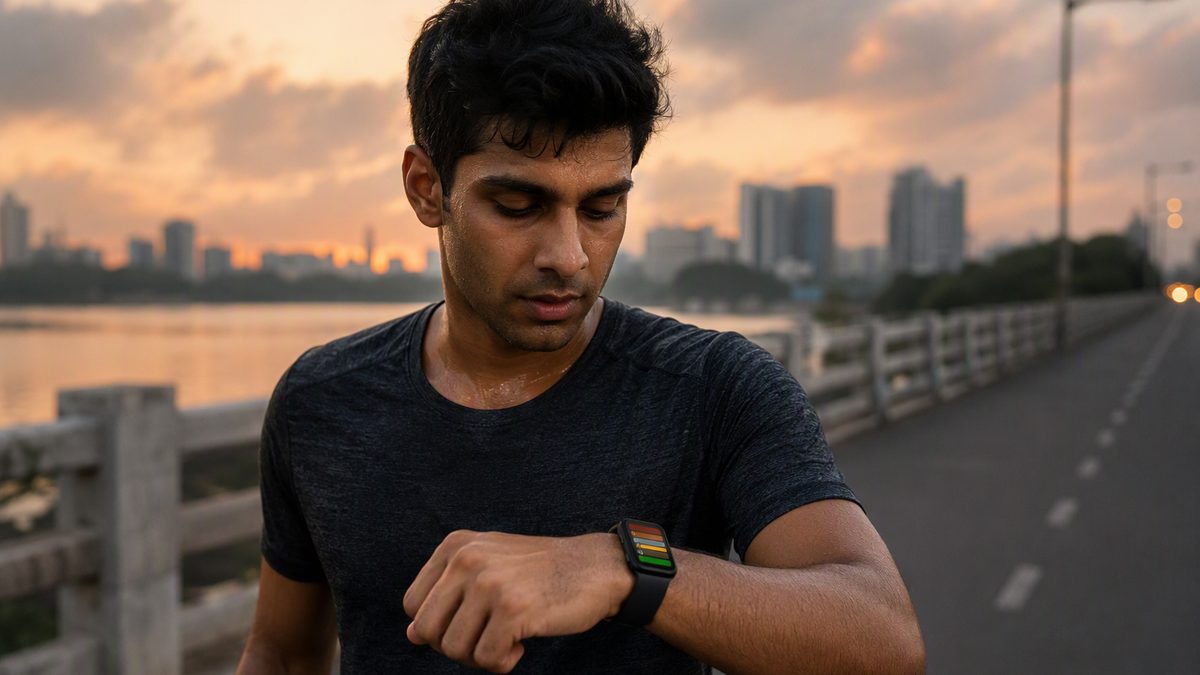
Your watch reads heart rate from the wrist using a green optical light that senses blood flow. That's convenient, and it's fine for steady, low-intensity work. But two failure modes hit calisthenics hard. First, optical heart rate lags sudden changes by several seconds to tens of seconds, so the start of an explosive set and the recovery between attempts are exactly when the number is least trustworthy. Second, the sensor can lock onto a repeating cadence and drift toward your movement rate rather than your true heart rate — and gripping a bar or rings flexes the wrist and disrupts the optical signal further.
The fix isn't to abandon the watch; it's to match the tool to the job. For steady conditioning and daily resting-heart-rate trends, the wrist is fine. For interval conditioning where you want accurate Zone 4-5 feedback, a chest strap — which reads the heart's electrical signal directly and is the practical gold standard — is the better choice. And accept the limit honestly: for short, maximal skill attempts, heart rate responds too slowly to guide anything. There, your real metrics are rest quality, rep speed, and perceived effort, not a zone band. Cold outdoor sessions make optical worse too, since cold drops surface blood flow — warm up and snug the band before you trust it.
4. Tendon Reality and the Numbers Over Time
The most useful long-game metric is simple: at a fixed easy heart rate, are you covering more work — more reps, faster pace, longer holds — than a month ago? That's direct evidence your aerobic base is improving, and it's the trend worth tracking rather than any single day's readout. A falling resting heart rate over the weeks tells the same story from the other side. Treat these as your own relative trends; consumer devices vary in accuracy and aren't precise or interchangeable across brands, so don't compare your numbers to a training partner's watch.
One thing heart rate will not show you is the tissue that actually limits calisthenics progress: your tendons and connective tissue adapt far slower than muscle, and a low, comfortable heart rate during heavy straight-arm work can completely mask building elbow or wrist overuse. The monitor manages systemic fatigue, not local tendon load — so keep your skill-day discipline (genuine rest, no grey-zone creep) and program deloads regardless of what the heart rate says. If you want help structuring those skill and conditioning blocks, our guide to AI fitness coaching is a useful next step. And read the daily numbers in context: heat, poor sleep, caffeine, and stress all push heart rate up for the same effort, so a high-reading day isn't automatically lost fitness.
Zone Questions From the Bar and Rings
Can I track skills every day with a heart rate monitor?
You can wear one, but use it as a discipline check, not a skill guide. On skill days your working average should stay in Zone 1-2; if it drifts into Zone 3-4, you're cutting rest and turning practice into conditioning, which dulls the fresh nervous system skills need. For the actual max-effort attempts, heart rate responds too slowly to be useful — judge those by rep speed, rest quality, and perceived effort instead, and keep daily skill volume sustainable.
Why is my watch's heart rate wrong during pull-up sets?
Two reasons. Wrist optical sensors lag sudden changes by seconds, so the start and end of a short set read late, and they can lock onto your rep cadence and report that instead of your true heart rate. Gripping the bar also flexes the wrist and disrupts the optical signal. For steady conditioning the watch is fine, but for interval work where you want accurate upper-zone feedback, a chest strap reading the heart's electrical signal is far more reliable.
Does heart rate tracking help tendons or just the aerobic side?
Mostly the aerobic and systemic side — it manages overall fatigue, not local tendon load. A low, comfortable heart rate during heavy straight-arm work can completely hide building elbow or wrist overuse, because tendons adapt far slower than muscle and don't show up in a heart rate trace. Use the monitor to keep skill days fresh and conditioning days honest, but program tendon prep and deloads independently, regardless of what the heart rate says.
Do I need zone tracking if I don't lift weights?
It's optional but genuinely useful. Even without barbells, you have a clear split between low-intensity skill practice and high-intensity conditioning, and the monitor stops you blurring them — the most common mistake that stalls progress. It also gives you an honest long-term metric: more work at the same easy heart rate over weeks means your engine is improving. Skip it for max skill attempts, where heart rate lags too much to be a useful guide.
Disclaimer: This article is for educational purposes only and is not medical advice. Consult a qualified healthcare professional before starting any supplement, nutrition, or training protocol — especially if you are pregnant or breastfeeding, under 18, taking medication, or managing a health condition.
Scientific References & Clinical Sources
- Gellish RL, et al. Longitudinal modeling of the relationship between age and maximal heart rate. Med Sci Sports Exerc, 2007. PMID: 17468581
- Karvonen MJ, Kentala E, Mustala O. The effects of training on heart rate; a longitudinal study. Ann Med Exp Biol Fenn, 1957. PMID: 13470504
- Buchheit M, Laursen PB. High-intensity interval training, solutions to the programming puzzle: Part I: cardiopulmonary emphasis. Sports Med, 2013. PMID: 23539308
- Peake JM, et al. A Critical Review of Consumer Wearables, Mobile Applications, and Equipment for Providing Biofeedback, Monitoring Stress, and Sleep in Physically Active Populations. Front Physiol, 2018. PMID: 30002629
- Buchheit M, Laursen PB. High-intensity interval training, solutions to the programming puzzle. Part II: anaerobic energy, neuromuscular load and practical applications. Sports Med, 2013. PMID: 23832851

