💡 Key Takeaways
- Two easy Zone 2 sessions plus one short hard session a week add conditioning and health without stealing recovery from your lifting.
- Set zones off 207-minus-0.7-times-age or a threshold test, not 220-minus-age, which can be off by 10-12 bpm.
- Your wrist watch is fine for steady cardio and resting heart rate; it's least reliable on hard intervals, where it lags and locks onto cadence.
- The talk test beats fussing over the exact band: full sentences means easy, a few words means hard.
Picture your actual week. You lift three to five evenings, maybe a push-pull-legs split or an upper-lower, 45 to 75 minutes a session, fitting it around work and a gym that's packed at 6pm. Cardio, if it happens at all, is a five-minute treadmill warm-up you tolerate and forget. That's the real schedule heart-rate zones have to fit, and the good news is they fit it cleanly without forcing you to become a runner.
Zone tracking sorts your effort into intensity bands, most commonly a five-zone scale, so that when you do cardio it's deliberately easy or deliberately hard rather than the aimless moderate slog most lifters default to. Done right, a small amount of well-placed conditioning improves your recovery between sessions, your work capacity in the gym, and your long-term health, none of which your lifting alone fully covers.
Below: where easy and hard cardio actually slot into a lifting week, how to set zones that are yours, the five-zone model in lifter terms, whether your watch is accurate enough, and how to read progress without overthinking it.
1. Where Cardio Slots Into a Lifting Week
The whole challenge is fitting conditioning around lifting without stealing the recovery your lifts need, and zones make that easy by keeping most of it genuinely light. A simple template that survives a busy week: two easy Zone 2 sessions of 20-30 minutes, placed on rest days or after a lighter lifting day, plus one short hard session of 10-15 minutes once a week. The easy work is so light it barely touches your recovery budget; the one hard session gives you a top-end stimulus your lifting rarely provides.
Placement matters more than people think. Don't stack a hard cardio session right before legs, where it'll blunt your strength, or right after a brutal session, where it deepens the hole. Easy Zone 2 is far more forgiving and can go almost anywhere, even on the same day as lifting if you keep it conversational. The single biggest mistake recreational lifters make with cardio is doing it all at one moderate intensity, too hard to recover from and too easy to build much, so it just adds fatigue. Splitting it into mostly-easy plus a little genuinely-hard is what makes a small dose pay off. For keeping a routine like this alive through busy stretches, our guide to building fitness habits is worth a read.
2. Setting Zones That Fit You, Not a Formula
Your watch builds its zones on an estimated maximum heart rate, usually via 220-minus-age, and that's the weak link. The formula overestimates max in younger adults and underestimates it in older ones, with about 10-12 bpm of individual scatter either way. Build five bands on a wrong max and your 'easy' cap can sit high enough that your easy days never actually feel easy.
Two fixes. First, swap to 207 minus 0.7 times age, which fits real data across ages much better, and enter it in your watch settings. Second, when you're ready, a hard sustained test gives a threshold-based anchor that ties your boundaries to where your body actually changes gears rather than to your age. Set your resting heart rate too, and choose %HRR (heart-rate reserve) bands if offered, since folding in your resting rate personalizes the zones and shifts them correctly as your resting heart rate falls with fitness. Honestly, though, for a recreational lifter the talk test does most of the job: full sentences means you're in the easy band, only a few words at a time means you're hard. Use the watch for the numbers and the talk test as the gut check; they should agree, and when they don't, trust how you feel over a lagging device.
3. The Five-Zone Model in Lifter Terms
Here's the conventional five-zone model with how each band fits cardio around lifting. The percentages are standard anchors, not exact law.
| Zone | % of HRmax | How it feels | Use it for |
|---|---|---|---|
| Zone 1 | 50-60% | Very light, easy chat | Warm-ups, cooldowns, recovery walks |
| Zone 2 | 60-70% | Comfortable, full sentences | Your two easy conditioning sessions |
| Zone 3 | 70-80% | Working, short sentences | The middle to mostly avoid |
| Zone 4 | 80-90% | Hard, a few words | Your one weekly hard session |
| Zone 5 | 90-100% | Very hard, can't talk | Short intervals within that session |
The pattern to aim for is most of your cardio time easy in Zone 1-2, a small slice genuinely hard in Zone 4-5, and Zone 3 mostly left alone. Zone 3 is the trap because it feels productive, so your easy sessions creep up into it and your hard session settles down into it, and you end up with one moderate intensity that's tired without being effective. Keep the easy easy and the hard hard, and that small amount of conditioning will actually do something for your engine and recovery.
4. Is Your Wrist Watch Accurate Enough at the Gym?
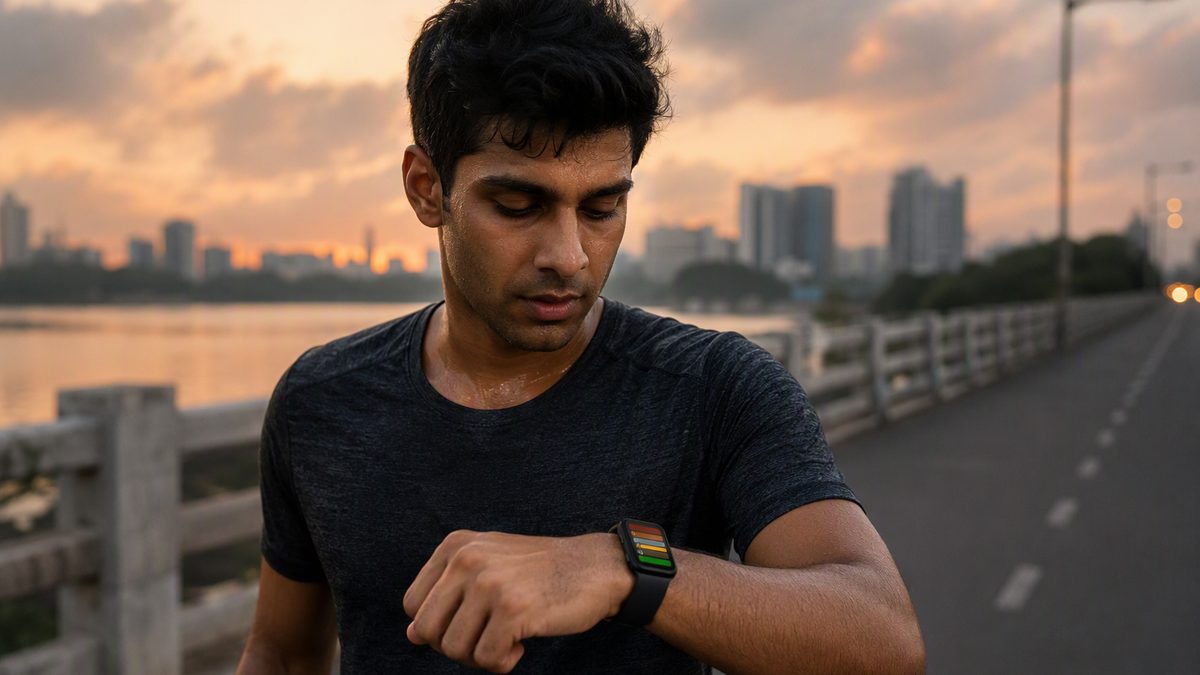
For what you need, mostly yes. Wrist watches read heart rate optically through the skin, which is convenient and generally fine at rest and during steady, easy cardio, exactly your two Zone 2 sessions. It's least reliable on hard, fast efforts: optical heart rate lags sudden changes by several seconds to tens of seconds and, during running, can lock onto your step cadence and drift toward your step rate. So on your one hard interval session, the band you most want is the one the wrist reads worst. If you start caring about precision there, a chest strap reads the heart's electrical signal and is far more accurate on hard efforts.
A few practical notes for the gym. Snug the band a finger-width above the wrist bone, and warm cold hands, since cold reduces the blood flow it reads. Gripping heavy dumbbells or a bar tenses the forearm and can disrupt the reading mid-set, so don't trust a heart-rate number during a lift; it's neither accurate nor meaningful there. Ignore one ugly reading rather than reacting to it. And treat the calorie figure as a loose estimate at best, since consumer trackers' energy numbers are often well off. The metric to genuinely trust is resting heart rate measured calmly in the morning, where the watch is accurate and the trend tracks your fitness.
5. Reading Progress Without Overthinking It
Keep the progress signals simple and you'll stay consistent, which for a recreational lifter beats any clever metric. Two trends are worth watching. Resting heart rate tends to fall as your conditioning improves, so a gradual drop over weeks is real evidence the easy cardio is working, while a multi-day spike usually flags poor sleep, stress, or a bug, a useful cue to take an easier day. And pace at a fixed easy heart rate is the cleanest progress gauge there is: if your usual Zone 2 walk or row gets faster at the same comfortable heart rate a month later, your engine genuinely grew. That matters far more than the exact number on any single session.
Two things will mislead you if you let them. First, heart rate runs higher for the same effort on stressful days, after poor sleep, with too much pre-workout caffeine, when dehydrated, or in a hot gym, so a normal session landing a zone higher than usual is almost always a confounder, not lost fitness; check how it feels before reading into it. Second, don't fall into chasing zones, obsessively forcing your heart rate into a target band on a day the device is lagging or you're just having an off day. The point of zones is the easy/hard split across your week, not hitting a perfect number in any one session. Let effort and feel lead, use the bands as a guardrail, and the basics, consistent lifting, enough sleep, enough protein, still outrank any wearable for actually building the physique and strength you're after.
What Recreational Lifters Ask About Heart Rate Zones
How much cardio do I need, and which zones, as someone who mainly lifts?
Not much: two easy Zone 2 sessions of 20-30 minutes plus one short hard session a week covers conditioning and health without stealing recovery from your lifting. Keep most of it genuinely easy, where you can hold a conversation, and make the one hard session actually hard. The common mistake is doing all your cardio at one moderate intensity, which just adds fatigue. The mostly-easy plus a little hard split is what makes a small dose worthwhile.
Will doing cardio in these zones hurt my gains?
Not if you keep most of it easy and place it sensibly. Easy Zone 2 work barely touches your recovery budget and won't interfere with hypertrophy or strength, and it improves the conditioning that helps you recover between sessions. The thing to avoid is hard cardio right before or after a heavy session, especially legs, where it can blunt performance and deepen fatigue. Put your one hard session away from your toughest lifting day, keep the rest light, and your gains are safe.
Is my wrist watch accurate enough for this?
For general fitness, yes. Optical wrist sensing is reliable at rest and during steady, easy cardio, which is most of what you'll do, and resting heart rate measured in the morning is accurate and worth tracking. It's least accurate on hard intervals, where it lags and can lock onto your step rate, and during lifting, where gripping the bar disrupts it. If you get serious about interval precision, a chest strap is better, but for easy conditioning and trends, the watch you have is enough.
Why is my heart rate higher than normal in the same workout?
Almost always a confounder, not lost fitness. Stress, poor sleep, too much pre-workout caffeine, dehydration, or a hot gym all push heart rate up for the same effort, so a familiar session can land a zone higher on a rough day. Cross-check with how it actually feels before worrying. If the effort feels normal but the number looks high, trust the feel and carry on easy. A single high day means little; a multi-day resting spike is the one worth noting.
Disclaimer: This article is for educational purposes only and is not medical advice. Consult a qualified healthcare professional before starting any supplement, nutrition, or training protocol — especially if you are pregnant or breastfeeding, under 18, taking medication, or managing a health condition.
Scientific References & Clinical Sources
- Gellish RL, et al. Longitudinal modeling of the relationship between age and maximal heart rate. Med Sci Sports Exerc, 2007. PMID: 17468581
- Karvonen MJ, Kentala E, Mustala O. The effects of training on heart rate; a longitudinal study. Ann Med Exp Biol Fenn, 1957. PMID: 13470504
- Peake JM, et al. A Critical Review of Consumer Wearables, Mobile Applications, and Equipment for Providing Biofeedback, Monitoring Stress, and Sleep in Physically Active Populations. Front Physiol, 2018. PMID: 30002629
- Düking P, et al. Criterion-Validity of Commercially Available Physical Activity Tracker to Estimate Step Count, Covered Distance and Energy Expenditure during Sports Conditions. Front Physiol, 2017. PMID: 29018355
- Williams PT, Thompson PD. Relationship of walking and running LISS to cardiovascular risk factors. Arterioscler Thromb Vasc Biol, 2013. PMID: 23559628

