💡 Key Takeaways
- A sudden creep in your resting and exercise heart rate can be an early flag for low iron or ferritin — common in plant-based athletes — not a sign you lost fitness.
- Set zones from heart-rate reserve using your own resting HR, and re-check resting HR regularly; it falls with fitness and rises with iron deficiency.
- Use a chest strap for interval days where wrist optical lags, and keep roughly 80% of weekly time easy in Zone 1-2.
- Cross-check a high zone against perceived effort and pace before blaming training — then check ferritin and B12 with your clinician if the trend persists.
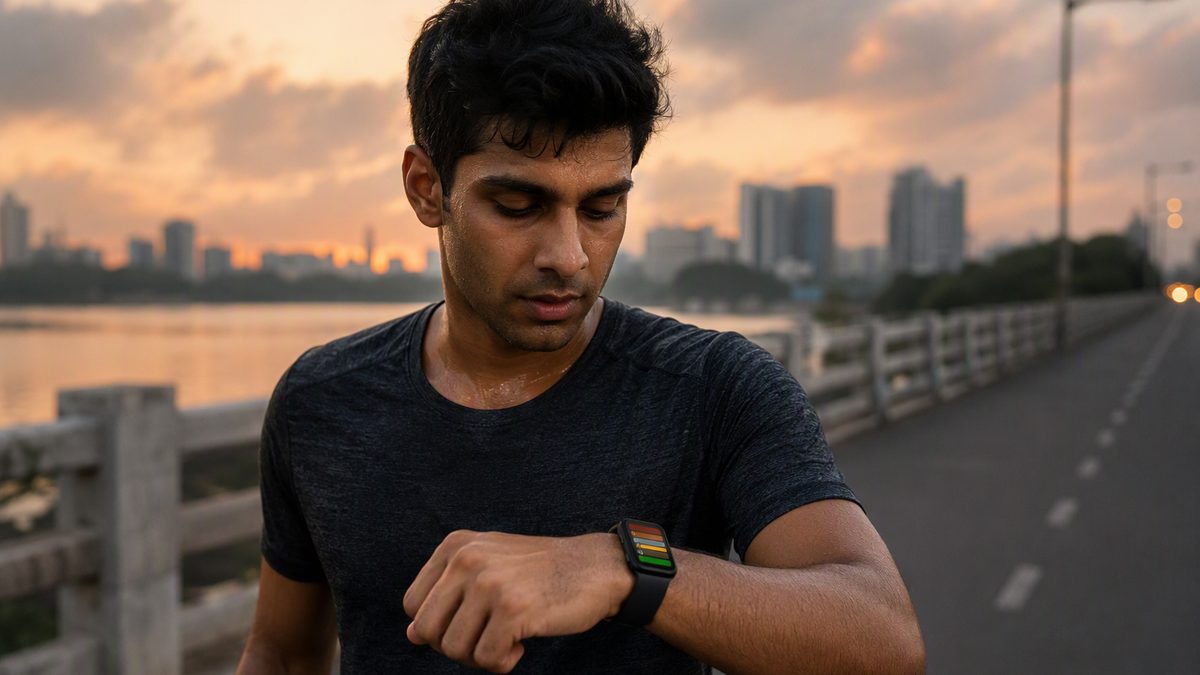
There is a specific frustration plant-based athletes hit with heart-rate tracking: the easy runs that used to sit comfortably in Zone 2 start creeping into Zone 3, your resting heart rate ticks up a few beats, and everything feels harder than the pace suggests. The instinct is to assume you have lost fitness or overtrained. Sometimes that is true. But for vegetarian athletes, one common and fixable cause is low iron — and your wearable is one of the first places it shows up.
Iron carries oxygen in your blood. When stores run low, your heart compensates by beating faster to deliver the same oxygen, so your heart rate rises for any given effort and your zones drift upward. That makes heart-rate tracking genuinely useful for you, but only if you read it correctly. This guide covers how to set accurate zones, how to tell an iron problem from a training problem, and which labs to check before you change a single workout.
1. The Problem: Why Your Easy Runs Suddenly Feel Hard
Picture a steady block of training where your Zone 2 pace held a comfortable heart rate for weeks. Then, over a couple of weeks, the same pace starts pulling your heart rate higher, you feel unusually winded on hills, and your resting heart rate in the morning has crept up. Plenty of things can do this — heat, poor sleep, accumulated fatigue, stress — and all of them deserve a look. But vegetarian athletes carry an extra suspect, because plant-based diets supply iron in the non-heme form, which is absorbed far less efficiently than the heme iron in meat.
Low iron, and specifically depleted ferritin (your iron stores), reduces your blood's oxygen-carrying capacity. Your cardiovascular system answers by raising heart rate to compensate, so submaximal heart rate rises and your zones shift up. The training has not changed; the oxygen logistics have. This is exactly the kind of pattern a wearable catches early — a rising resting heart rate plus elevated exercise heart rate for known paces is a quiet alarm worth investigating before you conclude you are simply unfit or need to train harder, which would only dig the hole deeper.
2. Setting Zones That Reveal the Trend
To use heart rate as an early-warning system, your zones have to be accurate and your baseline has to be tracked. Skip 220-minus-age, whose individual scatter runs plus or minus 10-12 bpm. Use 207 minus 0.7 times age if you cannot field-test, or better, build heart-rate-reserve zones from your measured resting heart rate using the Karvonen method: target equals max minus resting, times intensity, plus resting. Because it includes resting heart rate, this method both individualises your zones and makes them sensitive to exactly the changes you want to catch.
| Zone | %HRmax | Example bpm (max 190) | Primary use |
|---|---|---|---|
| Zone 1 recovery | 50-60% | 95-114 | Active recovery, warm-up |
| Zone 2 aerobic base | 60-70% | 114-133 | Easy base, fat oxidation |
| Zone 3 tempo | 70-80% | 133-152 | Grey zone, use sparingly |
| Zone 4 threshold | 80-90% | 152-171 | Lactate tolerance intervals |
| Zone 5 VO2 | 90-100% | 171-190 | Short VO2 intervals |
The key habit is logging your morning resting heart rate consistently — same conditions, before coffee. A resting heart rate trending up several beats over a week or two, when training load has not increased, is your signal to look closer. Re-measure it every few weeks regardless, because as fitness improves it falls and your heart-rate-reserve zones should shift down to match. The building fitness habits guide has practical tips for making that daily check stick.
3. Iron, Ferritin and the Labs Plant-Based Athletes Should Watch
If the heart-rate trend points to a possible iron issue, the next step is the lab, not a guess. The relevant markers are ferritin (your iron stores, the earliest to drop), serum iron and transferrin saturation, plus hemoglobin and B12 — the last of which requires supplementation on most plant-based diets and, when low, causes its own fatigue and exercise intolerance. Ask your clinician to run these as a yearly baseline and again if your wearable flags a sustained heart-rate climb with no training explanation. Do not self-diagnose or megadose iron from a high heart rate alone; too much iron is harmful, and only bloodwork tells you whether you are actually low.
Diet-wise, the levers are well established: pair non-heme iron sources (lentils, tofu, fortified grains, dark leafy greens) with vitamin C to boost absorption, and keep tea or coffee away from iron-rich meals since they inhibit it. The point for this guide is the loop: your wearable surfaces the trend, your bloodwork confirms the cause, and your diet or supplementation (under clinical guidance) fixes it. When iron stores recover, the satisfying confirmation is your heart rate settling back into its old zones at the same paces — direct, measurable evidence the problem was logistics, not fitness.
4. Reading High Readings: Iron vs Everything Else
Before you pin a high zone on iron, rule out the ordinary confounders, because many of them raise heart rate too. Heat and humidity, dehydration, caffeine, psychological stress, poor sleep and illness all push heart rate up for a given effort, so the same pace lands in a higher zone on a hot, stressed or under-slept day. The way to separate a transient cause from a real problem is to cross-check: compare the elevated heart rate against your perceived effort and your pace. If the run feels normal and your pace is fine despite the high number, it is probably a temporary confounder.
An iron problem looks different. It persists across days regardless of weather or sleep, it comes with a genuinely harder feel and worse pace at the same heart rate, and it often pairs with general fatigue, breathlessness and a rising resting heart rate. One bad reading is never the iron alarm — optical sensors drop out and lock onto cadence, producing spurious single numbers. It is the sustained two-week trend, confirmed by how you feel and supported by labs, that matters. Train by feel and pace on confounded days; investigate only when the pattern holds.
5. Building the Aerobic Base That Iron Supports
With accurate zones and your iron status handled, the actual training is the same proven shape as for any endurance athlete: weight your week toward easy. Roughly 80% of your training time should sit in Zone 1-2, below your first threshold, with about 20% in the hard Zone 4-5 work that builds top-end capacity, and relatively little in the Zone 3 grey zone most amateurs accidentally live in. Zone tracking is the enforcement mechanism — on easy days, cap your heart rate at the top of Zone 2 and back off when you exceed it, slowing or walking hills rather than letting the run drift hard.
This matters doubly for a plant-based athlete whose oxygen delivery you are actively managing. A strong aerobic base built on genuinely easy volume improves the efficiency of every system that iron feeds, and it gives you a clean baseline against which an iron dip is obvious. Watch the long-term marker: pace at a fixed easy heart rate. When you run faster at the same Zone 2 bpm over weeks, your aerobic engine is improving and your iron status is supporting it. When that trend reverses without a training reason, you know where to look first.
Plant-Based Questions About Heart Rate Zones
Why is my heart rate suddenly higher at the same pace?
Many things raise heart rate for a given effort — heat, dehydration, poor sleep, stress and illness — so first cross-check against your perceived effort and pace on a normal day. For vegetarian athletes there is an extra suspect: low iron reduces oxygen-carrying capacity, forcing your heart to beat faster, which shows up as elevated resting and exercise heart rate over a week or two. If the trend persists with worse pace and general fatigue, ask your clinician to check ferritin and related labs.
Can my wearable detect low iron?
Not directly, but it can flag the pattern early. A sustained rise in your resting heart rate and elevated exercise heart rate at known paces, with no increase in training load, is the kind of trend that low iron produces. That is a prompt to get bloodwork, not a diagnosis — only labs (ferritin, hemoglobin, B12) confirm iron status. Never megadose iron based on heart rate alone; excess iron is harmful. Use the wearable as an early-warning trend, your clinician for the actual answer.
Which labs should I check yearly as a vegetarian athlete?
Ask your clinician about ferritin (iron stores, the earliest marker to drop), serum iron and transferrin saturation, hemoglobin, and vitamin B12, which most plant-based athletes need to supplement. Low B12 causes its own fatigue and exercise intolerance. Run these as a yearly baseline and repeat them if your wearable flags a sustained heart-rate climb without a training explanation. Pair non-heme iron foods with vitamin C and keep coffee or tea away from those meals to improve absorption.
How do I set accurate heart rate zones?
Avoid 220-minus-age — its scatter is plus or minus 10-12 bpm. Use 207 minus 0.7 times age if you cannot test, or better, build heart-rate-reserve zones from your measured resting heart rate using the Karvonen method. Best of all, anchor zones to a threshold field test. Log your morning resting heart rate consistently and re-measure every few weeks; it falls with fitness and rises with iron deficiency, which makes heart-rate-reserve zones especially useful for spotting a problem early.
Disclaimer: This article is for educational purposes only and is not medical advice. Consult a qualified healthcare professional before starting any supplement, nutrition, or training protocol — especially if you are pregnant or breastfeeding, under 18, taking medication, or managing a health condition.
Scientific References & Clinical Sources
- Gellish RL, et al. Longitudinal modeling of the relationship between age and maximal heart rate. Med Sci Sports Exerc, 2007. PMID: 17468581
- Karvonen MJ, Kentala E, Mustala O. The effects of training on heart rate; a longitudinal study. Ann Med Exp Biol Fenn, 1957. PMID: 13470504
- Peake JM, et al. A Critical Review of Consumer Wearables, Mobile Applications, and Equipment for Providing Biofeedback, Monitoring Stress, and Sleep in Physically Active Populations. Front Physiol, 2018. PMID: 30002629
- Williams PT, Thompson PD. Relationship of walking and running LISS to cardiovascular risk factors. Arterioscler Thromb Vasc Biol, 2013. PMID: 23559628
- Buchheit M, Laursen PB. High-intensity interval training, solutions to the programming puzzle: Part I: cardiopulmonary emphasis. Sports Med, 2013. PMID: 23539308

