💡 Key Takeaways
- High protein supports strength gains, not bulk; hitting 1.6-2.2 g/kg on plants builds muscle that improves, not wrecks, your strength-to-weight ratio.
- Expect strength to climb on a skill within 4-8 weeks if you clear ~2-3 g leucine per meal and keep training the skill.
- Soy leads for plant leucine; anchor meals with tofu, tempeh, edamame, and a soy/pea shake, pairing legumes with grains otherwise.
- Protein feeds the muscle that drives skills, but tendons adapt on their own slow clock; don't expect a supplement to rush straight-arm work.
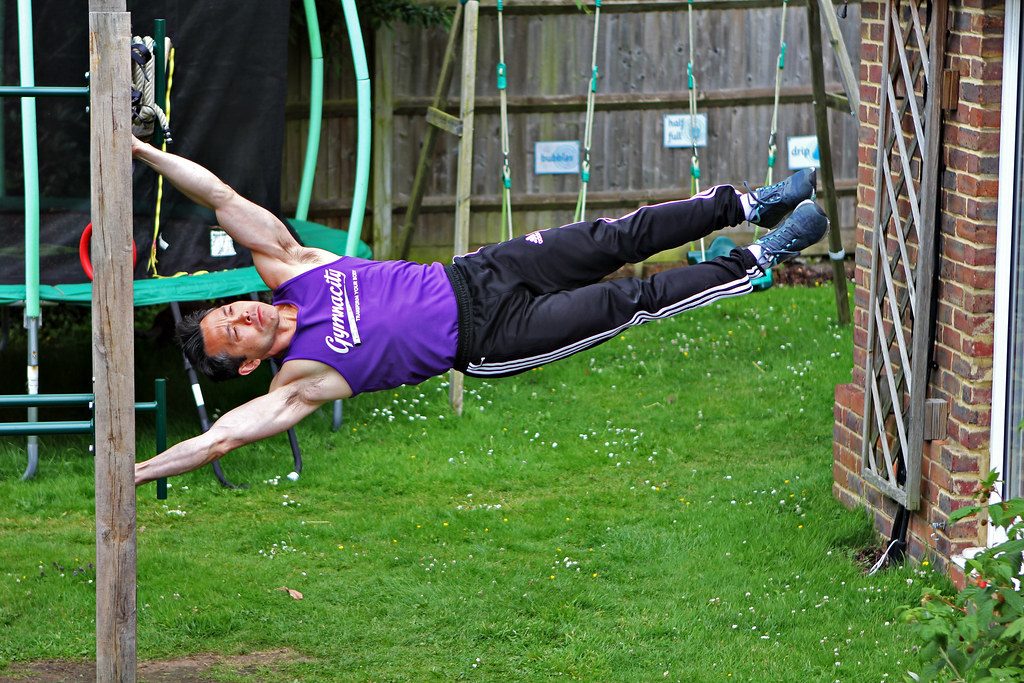
Here's what you can actually measure on a well-built vegetarian high-protein diet, and roughly when. In the first two to four weeks, nothing dramatic shows on the bar because there is no bar, just steadier energy through long skill sessions and faster recovery between them. By weeks four to eight, the payoff appears where it counts for you: an extra clean rep on weighted pull-ups, a longer tuck-to-straddle hold, a planche lean you can sustain a beat longer. That's added contractile muscle improving your output per kilo.
What you won't measure is a leverage-wrecking weight gain, because high protein doesn't 'bulk' you; it supports the strength gains your training drives. The fear that plant protein can't do this is the myth worth dropping. When total protein and per-meal leucine are met, plant-based eating builds muscle and strength on par with omnivorous diets.
This guide gives you the timeline, the per-meal protocol that clears the leucine threshold on plants, the science behind it, and the tendon reality no diet can shortcut.
1. What You'll Feel and Measure, Week by Week
Calisthenics progress is slow and discrete, so set the right expectations and you won't bail on the diet too early.
- Weeks 1-2: Recovery and energy first. Long skill sessions feel less draining, and you bounce back faster between high-volume pulling days. No visible strength jump yet, this is the supply line filling.
- Weeks 3-4: Better quality reps late in a session as recovery between sets improves. You can practice a skill fresher for longer, which is itself a stimulus.
- Weeks 4-8: Measurable strength on a tracked skill, an extra weighted pull-up rep, a couple more seconds of a lever hold, a deeper planche lean held cleanly. This is new contractile tissue showing up as output.
- Months 2-3: For novices, roughly 0.25-0.5 kg of muscle a month is realistic; trained athletes gain slower. Critically, that muscle is added where it helps your lines, not as dead weight, because you're training skills, not chasing size.
The throughline: protein amplifies your training, it doesn't replace it. Hit the numbers and keep practicing the skill, and the curve above is what you can expect. Miss the protein and the same training stalls.
2. The Per-Meal Protocol That Clears the Leucine Threshold on Plants
Your daily target is 1.6-2.2 g/kg, the same as any trained athlete, and as a vegetarian you lean toward the upper end to offset plant protein's lower quality per gram. The bigger lever for you is per-meal leucine, because that's what fully switches on muscle building each sitting, and plant sources carry less of it. So each meal runs a slightly larger dose, around 0.4 g/kg or 30-40 g, weighted toward soy.
| Your bodyweight | Daily protein (upper-end) | Per-meal dose | Plant anchor (approx. leucine) |
|---|---|---|---|
| 60 kg (132 lb) | 120-130 g | 30-34 g | 200 g tofu + edamame (~2.5 g leu) |
| 70 kg (154 lb) | 140-150 g | 34-38 g | 150 g tempeh + lentils (~2.8 g leu) |
| 75 kg (165 lb) | 150-160 g | 36-40 g | Soy/pea shake 40 g in soy milk (~3.2 g leu) |
| 80 kg (176 lb) | 160-176 g | 38-42 g | Greek yogurt 25 g + edamame (~3.2 g leu) |
| Every meal | 3-4 meals across the day | ~0.4 g/kg | Blend soy + pea, or legume + grain |
Lean on soy because it's the highest-leucine, complete plant protein, your practical anchor. When a meal has no soy, dairy, or eggs, pair a legume with a grain (lentils with rice, hummus with bread) so the amino acids round out. You don't need a perfect combination at every meal; variety across the day handles completeness. A soy or pea shake is the easy way to top up a skill day when appetite is low.
If you blend powders, a small trick raises quality: pea protein is naturally lysine-rich while rice protein is not, so a pea-and-rice blend, or soy on its own, gives a more complete amino-acid profile than a single weaker isolate. It's the same logic as pairing legumes with grains, just in a scoop.
3. Why Higher Protein Improves Your Ratio Instead of Wrecking It
Your core fear is sound logic pointed at the wrong target: every extra kilo taxes every skill, so more food sounds like sabotage. But high protein doesn't add fat mass or balloon your bodyweight. It supplies the raw material your training uses to build a small amount of contractile muscle, the tissue that produces force. Force per kilo is exactly your strength-to-weight ratio, so done right, protein nudges the numerator up faster than the denominator.
The mechanism behind the leucine emphasis: each meal needs to clear a leucine threshold (about 2-3 g) to fully trigger muscle building, and plant proteins carry less leucine per gram, which is why you dose slightly higher and lean on soy. Soy produced a muscle-building response between whey and casein in controlled work, confirming plant protein genuinely drives the process. Hit the threshold, train the skill, and you build precisely the muscle that helps. Overshoot calories massively and you'd gain fat, but that's a calorie decision, not a protein one. Keep calories near maintenance and high protein is how you get stronger without getting heavier in the way that matters.
4. Tendons, Daily Skill Work, and the Nutrients Plants Miss
One honest limit: tendons and connective tissue adapt on a slower clock than muscle, and no protein dose rushes straight-arm work like planche or front lever. Adequate protein supplies collagen's building blocks and supports the tissue, but elbow and wrist resilience comes mostly from progressive, patient loading and from not grinding maximal skill attempts every day. Use the diet to recover better between sessions; use deloads and sane progression to keep tendons healthy. The diet is a tailwind, not a shortcut.
On daily skill practice: you can train skills most days on this protocol because better recovery is the point, but program intensity, not just nutrition. Keep maximal attempts away from back-to-back days and the steady amino acid supply helps you show up fresher.
Finally, the vegetarian nutrient checklist, easy to forget when your supplement pantry is minimal: take a B12 supplement (around 250 mcg daily), pair plant iron (lentils, tofu, fortified cereal) with vitamin C, get zinc from legumes, soy, nuts and seeds, and add an algae-based omega-3. Creatine is also low on meat-free diets, so 3-5 g/day of monohydrate is a cheap, evidence-backed add for the strength and power your skills demand.
Calisthenics Questions About Eating Vegetarian for Strength
Will eating more plant protein hurt my strength-to-weight ratio?
No, if you keep calories near maintenance. High protein doesn't add fat; it supplies material to build a little contractile muscle, the tissue that makes force. Force per kilo is your ratio, so it usually improves. Weight gain that hurts leverage comes from a calorie surplus, not from protein itself. Hit 1.6-2.2 g/kg, train your skills, and keep calories controlled, and you get stronger without getting heavier where it counts.
Does this help my tendons or just my muscles?
Mostly your muscles. Protein supplies collagen's building blocks and supports connective tissue, but tendons adapt on a much slower clock than muscle, and no diet rushes straight-arm work like planche or front lever. Tendon resilience comes from patient, progressive loading and avoiding daily maximal attempts. Use the diet to recover better between sessions, and use smart programming and deloads to keep your elbows and wrists healthy.
Can I train skills every day on a high-protein vegetarian diet?
Often yes, because better recovery is the whole point, but manage intensity, not just food. The steady amino acid supply from hitting your per-meal protein helps you show up fresher for daily practice. Still, keep maximal skill attempts off back-to-back days and program deloads. The diet supports frequent training; it doesn't license grinding every session to failure, which is what actually injures tendons.
Do I need this if I only train bodyweight and don't lift weights?
Yes. Your body can't tell whether the load came from a barbell or your own weight, it responds to the stimulus and uses dietary protein to adapt. Weighted pull-ups, levers, and planche work are real resistance training. Hit 1.6-2.2 g/kg from plants, clear the leucine threshold each meal, and you'll recover and build the muscle that drives your skills, no barbell required.
Disclaimer: This article is for educational purposes only and is not medical advice. Consult a qualified healthcare professional before starting any supplement, nutrition, or training protocol — especially if you are pregnant or breastfeeding, under 18, taking medication, or managing a health condition.
Scientific References & Clinical Sources
- Morton RW, et al. A systematic review, meta-analysis and meta-regression of the effect of protein supplementation on resistance training-induced gains in muscle mass and strength in healthy adults. Br J Sports Med, 2018. PMID: 28698222
- Gorissen SH, et al. Protein content and amino acid composition of commercially available plant-based protein isolates. Amino Acids, 2018. PMID: 30167963
- Tang JE, et al. Ingestion of whey hydrolysate, casein, or soy protein isolate: effects on mixed muscle protein synthesis at rest and following resistance exercise in young men. J Appl Physiol, 2009. PMID: 19589961
- Phillips SM, Van Loon LJ. Dietary protein for athletes: from requirements to optimum adaptation. J Sports Sci, 2011. PMID: 22150425
- Thomas DT, et al. American College of Sports Medicine Joint Position Statement: Nutrition and Athletic Performance. Med Sci Sports Exerc, 2016. PMID: 26891166

