💡 Key Takeaways
- A 5am practice almost always lands in your fasting window — fasted swimming is fine for aerobic work but can flatten hard sprint sets
- Muscle retention comes from ~1.6-2.2 g/kg protein plus dryland training, not from the fast itself
- Spread protein across 3-4 feedings in your window (~20-40 g); a tight window plus doubles makes shortfalls easy
- If a fasted session tanks your sprint quality, eat before it — training quality is what actually protects muscle
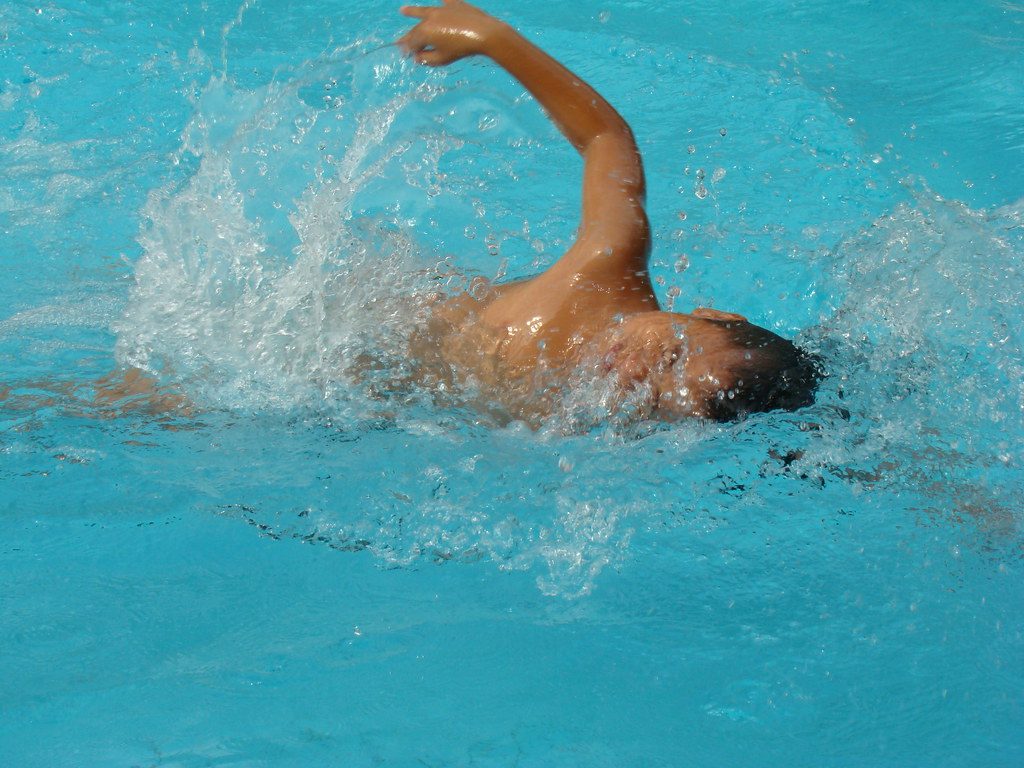
The conflict shows up at 5am. Your practice starts before sunrise, and if you are running a 16:8 fasting window that closes in the evening, you are diving in fully fasted — no breakfast, low glycogen, and a hard sprint set waiting at the bottom of the warm-up. For easy aerobic yardage that is usually fine. For a max-effort 50 set or a heavy dryland session, plenty of swimmers feel the power simply is not there.
That gap is the whole problem with fasting for a swimmer: the schedule that is supposed to control your eating ends up controlling your fueling, and a compressed window plus doubles makes it genuinely hard to land enough protein to hold muscle. Fasting will not protect your lats and shoulders on its own — it never did. Protein and training do. Here is the problem in detail, the fix, and the honest truth about fasted swimming.
1. The problem: a fasting window that fights your 5am slot
Swimming stacks two demands that fasting struggles with. First, the early slot: morning practice arrives after an overnight fast, and a 16:8 window that runs noon-to-8pm means you also skip the pre-practice meal entirely. Second, doubles: a competitive swimmer's afternoon session starts on whatever the morning left behind, and a narrow window leaves little room to refuel between them.
Now layer the muscle question on top. Holding upper-body power-endurance through thousands of strokes depends on keeping muscle, and keeping muscle depends on total daily protein. When the window narrows, protein is the first thing to slip — you simply run out of meals to put it in. That is the real disadvantage of fasting here, and it gets worse the tighter the window goes.
None of this means swimmers cannot fast. It means the fast is a timing tool that can quietly starve the two things protecting your muscle — fuel around hard sessions and enough daily protein. Manage those and a wider window works. Ignore them and you lose speed and lean mass at once.
2. Why protein and dryland, not the fast, hold your muscle
Be clear about what is actually doing the work. Fasting helps fat loss mainly by capping calories, not through any special metabolic effect — matched for calories and protein, it performs like ordinary calorie restriction. So the fast is not the muscle mechanism. Two other levers are.
- Daily protein. Aim for roughly 1.6-2.2 g per kg of bodyweight per day to retain muscle. If you are dieting down for a meet, push toward the higher end — under a deficit, lean athletes need more protein, not less, to protect lean mass. The compressed window does not lower this target; it just makes you fit it into fewer hours.
- Resistance training. Your dryland work is the anabolic signal that keeps muscle sensitized to protein for a day or two afterward. Skip it and protein alone will not hold your power.
There is a rate issue too. A tight window makes it easy to slide into too steep a deficit, which sheds muscle fast. Keep any weight loss modest — around 0.5-0.7% of bodyweight per week — with protein high and dryland in place. Aggressive fasting plus low protein is the worst combination for a swimmer's lean mass, and it shows up as fading sprint splits before it shows up on the scale.
3. Fueling protein around 5am practice and doubles
The fix is to choose a window that respects your training, then distribute protein deliberately inside it. This example assumes a 16:8 window for a swimmer training mornings — shift the clock to match your pool slot.
| Time | Session / action | Protein |
|---|---|---|
| 5:00-6:30am | Morning practice (fasted, or small pre-fuel if sprint/quality focus) | 0 g fasted, or ~10-15 g if fed |
| ~8:00am (window opens) | Post-practice breakfast within ~2 h of finishing | ~30-40 g |
| ~12:00pm | Lunch (pre-fuel if afternoon double) | ~25-35 g |
| ~3:30pm | After second session / snack | ~20-30 g |
| ~7:30pm (near close) | Dinner doubling as pre-sleep feeding (slower protein, ~30-40 g) | ~30-40 g |
Two honest refinements. Because you train at the end of a fast, a feeding within a couple of hours of finishing is sensible — the strict 30-minute window is a myth, but a fasted morning earns an earlier meal. And scheduling the window to close near bedtime lets dinner double as a pre-sleep protein feeding, which supports overnight recovery. For doubles days especially, pre-fueling the second session usually beats swimming it on fumes.
4. Mistakes swimmers make, and the fasted-pool truth
A few traps come up again and again for swimmers trying to fast.
Assuming the pool means no hydration needs. You sweat hard in the water; it is just invisible. Fasting does not mean restricting fluids — drink throughout your fast and around every session.
Letting OMAD or a tiny window crush distribution. One meal a day makes both your protein total and its spread collapse, and it is the worst pattern for holding swimming muscle. Choose 16:8 over OMAD if you fast at all.
Training every hard set fasted on principle. Here is the truth on fasted swimming: low-to-moderate aerobic work is generally fine fasted, but high-intensity sprint sets and heavy dryland often suffer when glycogen and pre-fuel are low. The acute 'fasted burns more fat' effect is real in the moment but does not translate into better body composition over time — matched for calories, fed and fasted training produce similar results. So choose fasted or fed by how the session feels, not for a fat-loss edge. If a fasted sprint set is consistently flat, eat before it.
If you are dieting into taper, watch your splits as the early-warning system: falling sprint quality plus a fast-dropping scale means back off the deficit and raise protein before you lose more than fat.
Pool-deck questions
How do I fit intermittent fasting around 5am practice?
Your morning slot usually lands inside the fast, which is fine for aerobic work. Open your window with a 30-40 g protein breakfast within a couple of hours of finishing, then spread the rest across lunch, an afternoon feeding, and a dinner that closes the window near bedtime. On doubles days, pre-fuel the second session rather than swimming it fasted. The key is hitting your daily protein despite the tight window.
Will fasting help my 50 free or just cost me power?
Fasting does nothing for your 50 directly — sprint power comes from training and being fueled, not from a fasting clock. In fact, a hard sprint set swum fully fasted often feels flat because glycogen and pre-fuel are low. For quality sprint work, train inside your fed window or take a small pre-fuel. Save fasted sessions for easy aerobic yardage where the dip does not matter.
Do I really sweat in the pool, and does fasting change hydration?
You sweat plenty in hard swim sets — the water just hides it. Fasting never means restricting fluids; water is encouraged throughout your fast. Keep a bottle on deck, drink between sets, and treat doubles and long sessions as the heavy-sweat training they are. Dehydration on top of a fasted morning is how you feel wrecked by the main set, so hydrate independently of your eating window.
Does extra eating in a short window change my feel in the water?
Holding muscle on adequate protein will not bloat you or change your body position in the water — lean mass is dense and useful for stroke power. What does affect feel is under-fueling: too steep a deficit from a tight window erodes muscle and saps speed. Keep weight loss to about 0.5-0.7% per week with protein high, and your feel for the water tracks your training, not your meal timing.
Disclaimer: This article is for educational purposes only and is not medical advice. Consult a qualified healthcare professional before starting any supplement, nutrition, or training protocol — especially if you are pregnant or breastfeeding, under 18, taking medication, or managing a health condition.
Scientific References & Clinical Sources
- Morton RW, et al. A systematic review, meta-analysis and meta-regression of the effect of protein supplementation on resistance training-induced gains in muscle mass and strength in healthy adults. Br J Sports Med, 2018. PMID: 28698222
- Phillips SM, Van Loon LJ. Dietary protein for athletes: from requirements to optimum adaptation. J Sports Sci, 2011. PMID: 22150425
- Helms ER, et al. Evidence-based recommendations for natural bodybuilding contest preparation: nutrition and supplementation. J Int Soc Sports Nutr, 2014. PMID: 24864135
- Schoenfeld BJ, et al. Body composition changes associated with fasted versus non-fasted aerobic exercise. J Int Soc Sports Nutr, 2014. PMID: 25429252
- Trommelen J, van Loon LJ. Pre-sleep protein ingestion to improve the skeletal muscle adaptive response to exercise training. Nutrients, 2016. PMID: 27916799
Set your targets with the free calorie and macro calculator, then build a day of meals with the meal plan generator.

