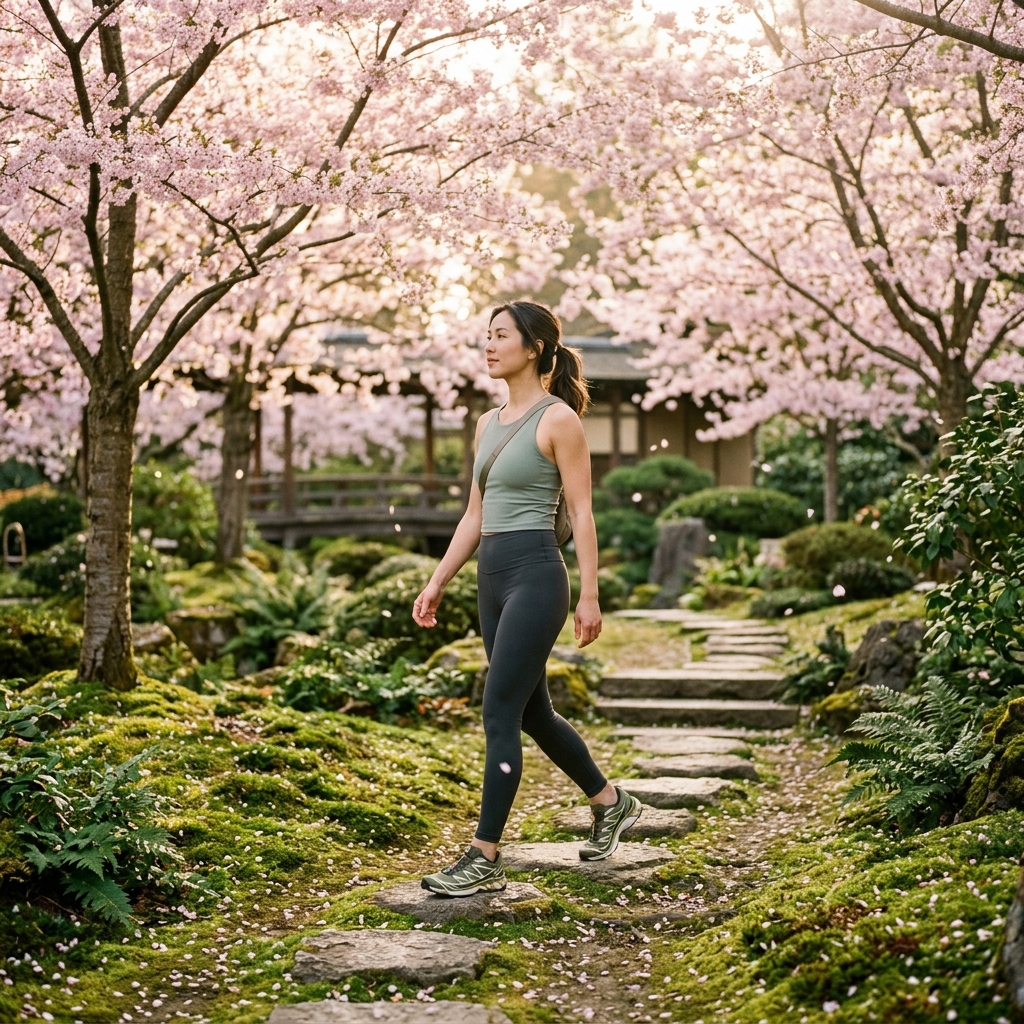
In a world obsessed with high-intensity training, crushing PRs, and "earning" rest days, the hottest fitness trend of 2026 is… walking. But not just any walking. Japanese walking — a structured, mindful approach to walking rooted in Japanese wellness culture — has seen a staggering 2,986% increase in search interest over the past year. Its viral offshoot, the 6-6-6 Walking Challenge, has taken social media by storm. Here's everything you need to know.
What Is Japanese Walking?
Japanese walking is a disciplined approach to walking that emphasises posture, breath, pacing, and presence. It draws from several Japanese wellness traditions:
- Shinrin-yoku (森林浴) — "Forest bathing," the practice of immersing yourself in nature for stress reduction
- Kinhin (経行) — Walking meditation practiced in Zen Buddhism between seated meditation periods
- Rojiura aruki (路地裏歩き) — Intentional urban walking through back streets and quiet neighbourhoods
The modern "Japanese walking" movement synthesises these into a fitness practice: walking with deliberate posture, controlled breathing, and a specific cadence, typically for 30-60 minutes per session. It's the ultimate form of LISS (Low-Intensity Steady State) cardio.
2026 Science: Shinrin-yoku & Zone 0 Recovery
In 2026, we’ve shifted from "no pain, no gain" to **Zone 0 Recovery**. Japanese walking provides a stimulus so low that it actually assists yours active recovery scores by improving lymphatic drainage and reducing peripheral resistance. This is scientifically amplified through **Shinrin-yoku** (forest bathing)—where exposure to phytoncides released by trees further lowers yours systemic inflammation.
Proprioceptive Gait Dynamics
Most walking is mindless. Japanese walking emphasizes **Gait Dynamics**—the specific way yours foot interacts with the floor. By focusing on a heel-to-midfoot-to-toe roll, you strengthen the intrinsics of the foot, which translates to better stability in yours walking yoga practice and heavy lifting sessions alike.
The 6-6-6 Walking Challenge Explained
The 6-6-6 Challenge is the viral format that introduced Japanese walking to the mainstream fitness world. The rules are simple:
- 6 days per week — Walk every day except one rest day
- 6,000 steps minimum — A deliberate, achievable step target
- 6 weeks commitment — Long enough for habit formation and measurable results
What makes this different from "just walking 6,000 steps"? The Japanese walking framework adds three critical layers:
- Posture Protocol: Walk tall — crown of head reaching toward the sky, shoulders relaxed and back, core gently engaged, arms swinging naturally
- Breath Synchronisation: Inhale for 4 steps, exhale for 4 steps (the "4-4 breath"). This puts your nervous system into a calm, regulated state
- No Distractions: No phone scrolling, no podcasts, no music. Just you, your breath, and your environment. This is what makes it meditation in motion
The Science: Why Walking Works Better Than You Think
Zone 2 Cardiovascular Benefits
Japanese walking typically places you in Zone 2 heart rate territory (60-70% of max HR). This is the fat-oxidation sweet spot — the intensity at which your body preferentially burns fat for fuel while building mitochondrial density. A 2025 study in Medicine & Science in Sports & Exercise found that consistent Zone 2 exercise improved VO2 max by 8-12% in previously sedentary adults over 12 weeks.
Cortisol Reduction
The mindful, breath-focused nature of Japanese walking significantly lowers cortisol — the stress hormone that, when chronically elevated, promotes belly fat storage, disrupts sleep, and impairs recovery. A 2024 meta-analysis found that walking in natural environments reduced salivary cortisol by 16% more than indoor treadmill walking.
Longevity Benefits
Japanese walking aligns with the lifestyle patterns observed in Blue Zones — regions with the world's highest concentrations of centenarians. In Okinawa, daily walking is a cultural norm, and researchers attribute much of their exceptional longevity to consistent, low-intensity daily movement rather than structured exercise.
Mental Health & Cognitive Function
Walking stimulates hippocampal neurogenesis — the growth of new brain cells in the region responsible for memory and learning. A Stanford study found that walking increased creative output by an average of 60% compared to sitting. The no-distraction rule in Japanese walking amplifies this by keeping your brain in a default-mode network state, which is when creativity and problem-solving thrive.
Japanese Walking vs Regular Walking vs Running
| Factor | Japanese Walking | Regular Walking | Running |
|---|---|---|---|
| Pace | Moderate, intentional | Casual, variable | Fast |
| HR Zone | Zone 2 (fat burning) | Zone 1-2 | Zone 3-5 |
| Joint Impact | Very low | Very low | Moderate-high |
| Mindfulness | Core component | Optional | Rarely included |
| Recovery Friendly | Excellent | Good | Taxing on recovery |
| Sustainability | Extremely sustainable | Very sustainable | Varies (injury risk) |
How to Start: Your Japanese Walking Protocol
Step 1: Prepare
- Wear comfortable, supportive walking shoes (cushioned, not minimalist for beginners)
- Dress for the weather — layers work well
- Leave your headphones at home (or in your pocket for safety)
- Plan a route — 20-40 minutes is ideal for beginners
Step 2: Posture Check
Before you take your first step, stand tall and run through this checklist:
- Imagine a string pulling the crown of your head toward the sky
- Relax your shoulders down and slightly back
- Engage your core gently — think "bracing for a light push," not crunching
- Soften your knees — never lock them
- Weight evenly distributed across both feet
Step 3: Walk with the 4-4 Breath
Begin walking at a brisk but conversational pace. Synchronise your breathing: inhale through your nose for 4 steps, exhale through your mouth for 4 steps. If 4-4 feels too short, try 6-6. Find a rhythm that feels natural and sustainable.
Step 4: Stay Present
This is the hardest part. When your mind wanders to your to-do list or a work problem (and it will), gently redirect your attention back to your breath, your steps, or the environment around you. Notice temperatures, sounds, and textures. This is active mindfulness.
Japanese Walking Workout Routines
The Commuter (20 minutes)
Perfect for morning walks before work. 5-minute warm-up at casual pace → 10 minutes of focused 4-4 breathing walk at brisk pace → 5-minute cool-down. Keep posture engaged throughout.
The Explorer (45 minutes)
Your weekend long walk. Choose a route through nature if possible. Alternate between brisk 4-4 walking and slower, observation-focused walking every 10 minutes. Include at least one stop to stand still, close your eyes, and take 10 deep breaths.
The Recovery Walk (30 minutes)
Used on rest days between heavy training. Walk at an easy pace — this should feel effortless. Focus on deep belly breathing rather than the 4-4 count. Keep heart rate below 60% of max. Think of this as active recovery for both body and mind.
Tracking Your Progress
Japanese walking is best measured not just by steps, but by consistency and subjective well-being. Track these metrics using a wearable or the UltraFit360 app:
- Daily step count — Are you hitting 6,000+ on walking days?
- Average heart rate during walks — Staying in Zone 2?
- Resting heart rate trend — Should decrease over 6 weeks
- Sleep quality — Evening walks often improve sleep metrics
- Subjective stress levels — Rate your stress 1-10 before and after each walk
- HRV trend — HRV should gradually increase, signalling better recovery
Frequently Asked Questions
Is 6,000 steps enough? I thought it was 10,000.
The "10,000 steps" target was a marketing campaign, not a scientific recommendation. Research from 2023 (JAMA Internal Medicine) showed that health benefits plateau around 7,000-8,000 steps per day for most adults. Starting at 6,000 is achievable and motivating — you can always increase later.
Can I listen to music or podcasts?
The traditional practice says no — the point is presence. However, if you're transitioning from regular walks, start with one distraction-free walk per week and build from there. The mental benefits come from the mindfulness component.
What shoes should I wear?
Any comfortable walking shoe with good cushioning and arch support. Running shoes work well. Avoid flip-flops, flat minimalist shoes (for beginners), or dress shoes. Your feet will thank you.
Can I do Japanese walking on a treadmill?
You can practice the posture and breathing on a treadmill, but you lose the nature-immersion and environmental mindfulness benefits. Outdoor walking is strongly preferred. If treadmill is your only option, set a slight incline (2-3%) and avoid screens.
Conclusion: The Simplest Upgrade to Your Fitness
In a fitness culture that worships complexity, Japanese walking is a radical return to simplicity. No equipment, no gym, no app required — just good posture, intentional breathing, and 30 minutes of your day. The science supports it, the trend validates it, and your body and mind will reward you for it.
Start the 6-6-6 Challenge this week. Six days, six thousand steps, six weeks. Your only competition is yesterday's version of yourself.
Track Your Walking Journey
Sync your step data, monitor heart rate zones, and get weekly AI coaching reports — all free with UltraFit360.