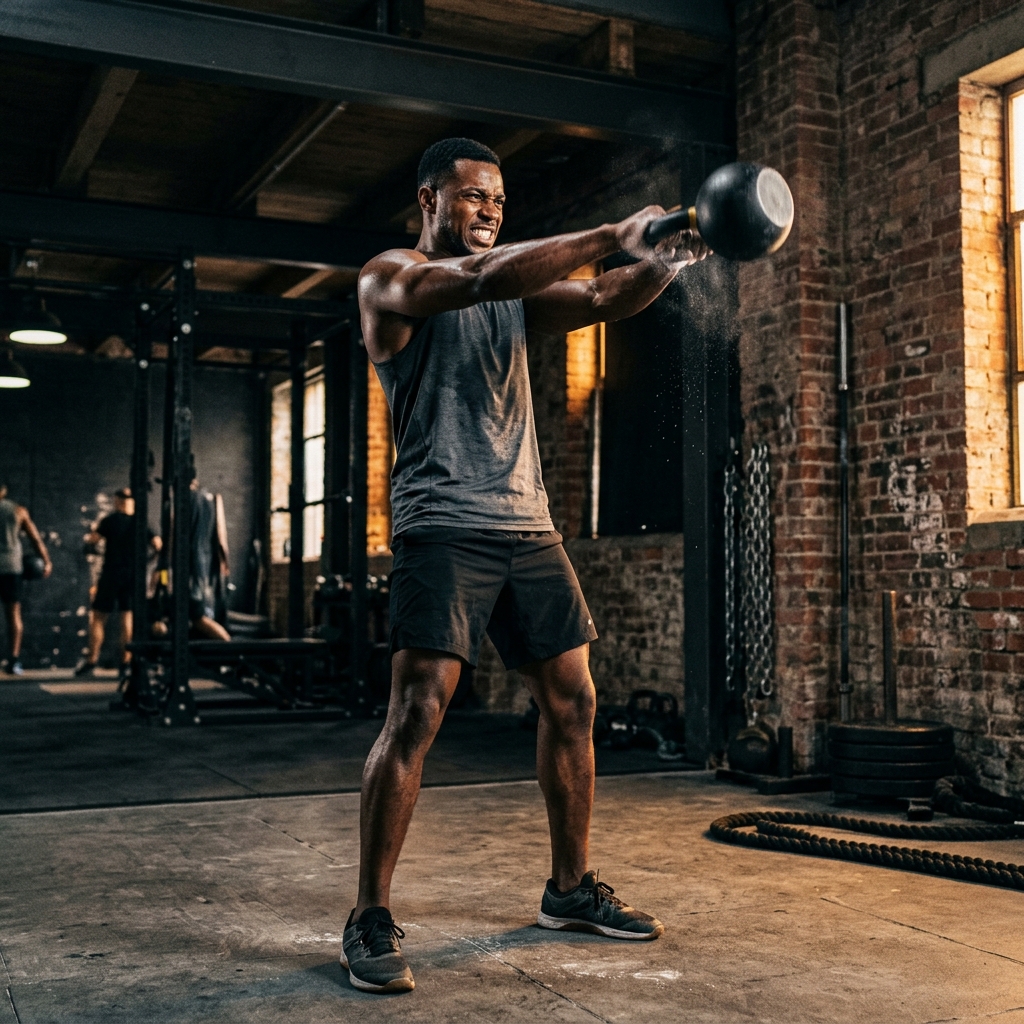
If you could only own one piece of fitness equipment for the rest of your life, a strong case could be made for the kettlebell. In an age of sprawling home gyms and subscription boutique studios, the kettlebell remains the most effective tool per square foot ever created. It builds strength, power, endurance, and flexibility — sometimes all within a single exercise. This is your definitive guide to mastering it.
Why Kettlebells? The ROI Argument
The kettlebell's secret weapon is its offset centre of gravity. Unlike a dumbbell where the weight is evenly distributed, a kettlebell's mass sits below the handle, creating an unstable load that forces your stabiliser muscles, grip, and core to work overtime on every repetition.
This means every kettlebell exercise is, by nature, a compound, full-body movement. A kettlebell swing isn't just a hip exercise — it's a posterior chain developer, a cardio conditioner, and a core strengthener that anchors yours strength training fundamentals.
2026 Science: Ballistic Power vs. Grinds
In 2026, we categorize kettlebell movements into two distinct groups: **Ballistics** and **Grinds**. Ballistics (swings, cleans, snatches) prioritize rate of force development and eccentric absorption. Grinds (presses, squats, get-ups) focus on mechanical tension. Mastering both is the secret to total body recomposition. This is the heart of yours progressive overload strategy.
Cross-Body Unilateral Stability
Because the kettlebell is often used with one hand, it creates **Cross-Body Unilateral Stability**. Every time you press or squat a bell on one side, yours opposite obliques and spinal erectors must fire to prevent rotation. This "anti-rotation" strength is more functional for real-world movement than traditional barbell work.
Selecting Your First Kettlebell
| Experience Level | Women | Men |
|---|---|---|
| Complete Beginner | 8 kg (18 lb) | 12 kg (26 lb) |
| Some Gym Experience | 12 kg (26 lb) | 16 kg (35 lb) |
| Experienced Lifter | 16 kg (35 lb) | 24 kg (53 lb) |
| Advanced/Athlete | 20-24 kg | 32 kg+ |
Material matters: Cast iron kettlebells are the gold standard — durable, consistent, and well-balanced. Avoid vinyl-coated kettlebells (the coating peels) and adjustable kettlebells (compromised handle ergonomics). Expect to pay $1-2 per pound for quality cast iron.
10 Essential Kettlebell Exercises
1. Kettlebell Swing (The King)
The most important kettlebell exercise. Stand with feet shoulder-width apart, hinge at the hips, and explosively drive the bell forward using your glutes and hamstrings. The arms are levers, not lifters. The bell should float to chest height at the top. Muscles worked: Glutes, hamstrings, core, lats, shoulders. Sets/Reps: 5 × 15-20.
2. Goblet Squat
Hold the kettlebell by the horns at chest level and squat deep. The front-loaded position forces an upright torso and teaches excellent squat mechanics. This is one of the best exercises for building leg strength and mobility simultaneously. Sets/Reps: 4 × 10-12.
3. Turkish Get-Up
The ultimate full-body exercise. Lying on the ground with the kettlebell pressed overhead in one arm, stand up through a precise sequence of movements while keeping the bell locked out above you. This builds shoulder stability, core strength, hip mobility, and total body awareness. Sets/Reps: 3 × 1-2 per side (slow and controlled).
4. Kettlebell Clean
A powerful pulling movement that takes the bell from the floor to the "rack" position at your shoulder in one fluid motion. The key is keeping the bell close to your body and "catching" it softly at the top — not smashing it against your forearm. Sets/Reps: 4 × 8 per side.
5. Kettlebell Press
From the rack position, press the bell overhead to full lockout. The offset load challenges your core and obliques far more than a barbell or dumbbell press. This builds real-world pressing strength. Sets/Reps: 4 × 6-8 per side.
6. Kettlebell Snatch
The "Tsar of Kettlebell exercises." In one explosive motion, take the bell from between your legs to overhead lockout. This is the most technically demanding exercise on the list and the most rewarding. It builds explosive power, grip endurance, and cardiovascular conditioning. Sets/Reps: 5 × 5-8 per side.
7. Racked Carry (Loaded Walk)
Hold the kettlebell in the rack position on one side and walk for distance or time. This is an anti-lateral flexion exercise — your core must resist being pulled to one side. It builds functional core strength and trunk stability. Sets: 3-4 × 30-40m per side.
8. Kettlebell Windmill
With the kettlebell locked out overhead, hinge sideways at the hip while keeping eyes on the bell. This combines shoulder stability with hamstring flexibility and oblique strength. Sets/Reps: 3 × 5 per side.
9. Kettlebell Lunge
Hold the bell in a goblet or rack position and perform forward, reverse, or lateral lunges. The offset load challenges balance and single-leg stability. Sets/Reps: 3 × 8-10 per leg.
10. Farmer's Carry
Hold a heavy kettlebell in each hand and walk with tall posture for distance. This builds grip strength, trap strength, core stability, and mental toughness. Simple, brutally effective. Sets: 4 × 40-50m.
Kettlebell vs Dumbbell vs Barbell
| Factor | Kettlebell | Dumbbell | Barbell |
|---|---|---|---|
| Best For | Power, conditioning, functional strength | Isolation work, hypertrophy | Max strength, progressive overload |
| Space Required | Minimal (2m × 2m) | Small (with rack) | Large (rack, bench, platform) |
| Cost | $30-100 per bell | $50-200 per pair | $200-1000+ (full setup) |
| Cardio Integration | Excellent (swings, snatches) | Limited | Limited |
| Learning Curve | Moderate (swing technique) | Low | High (squat, deadlift form) |
Safety & Common Mistakes
- Using your arms to swing: The swing is a HIP exercise. Your arms are along for the ride. Power comes from the hip hinge
- Rounding your back: Maintain a neutral spine throughout every movement. If your lower back rounds during swings, the bell is too heavy
- Smashing your forearm on cleans: The bell should arc around your hand, not flip over and slam your wrist. Practice the "punch through" technique
- Going too heavy too soon: Master the movement pattern with a lighter bell before progressing. Ego lifting with kettlebells is a fast track to injury
- Neglecting the Turkish Get-Up: It's tempting to skip because it's slow and methodical, but it's the single best exercise for joint health and body awareness
Beginner 4-Week Program
Week 1-2: Foundation (3 sessions/week, 20 min)
Day A: Goblet Squat 3×10, Deadlift 3×10, Farmer's Carry 3×30m
Day B: Swing 5×10, Press 3×8/side, Racked Carry 3×30m/side
Day C: Turkish Get-Up 5×1/side, Goblet Squat 3×10, Swing 3×15
Week 3-4: Build (3-4 sessions/week, 25-30 min)
Day A: Swing 5×15, Goblet Squat 4×10, Windmill 3×5/side, Lunge 3×8/side
Day B: Clean 4×8/side, Press 4×6/side, Racked Carry 4×40m/side, Turkish Get-Up 3×1/side
Day C: Swing 10×10 (EMOM — 1 set every minute on the minute), Farmer's Carry 4×40m
Day D (optional): Turkish Get-Up 5×1/side, Snatch Practice 5×3/side (light bell)
Frequently Asked Questions
Can kettlebells build muscle?
Yes, especially for beginners and intermediates. Movements like goblet squats, presses, and Turkish get-ups provide enough mechanical tension for hypertrophy. For advanced lifters, kettlebells are best used for conditioning and as a complement to barbell training.
How much space do I need?
About 2m × 2m (6ft × 6ft) is enough for most exercises. Farmer's carries need a hallway or path. You can do a full kettlebell workout in a living room, garage, or park.
Can women use kettlebells?
Absolutely. Kettlebells are gender-neutral. Many elite female athletes train primarily with kettlebells. Start with the weights listed in the selection guide above and progress when you can complete all prescribed reps with good form.
Should I wear gloves?
No. Gloves reduce proprioceptive feedback and can actually make your grip worse. If calluses are a concern, use chalk (liquid chalk works best indoors) and maintain your calluses with a pumice stone.
Conclusion: One Bell, Unlimited Potential
A single kettlebell, a 2m square of floor space, and 20-30 minutes is all you need for a training stimulus that rivals anything a commercial gym can offer. The kettlebell doesn't just build strength — it builds resilient, functional, real-world capable strength that transfers to sports, daily life, and longevity.
Start with the foundation program above, master the swing first, respect the Turkish Get-Up, and let the kettlebell teach you what your body can really do.
Track Your Kettlebell Workouts
Log sets, track PRs, and get AI-powered coaching insights — all free with UltraFit360.