💡 Key Takeaways
- Flat hard sessions are often a fueling problem, not a cardio-choice problem – low iron/ferritin and too few carbs hit HIIT quality first; check labs before blaming the protocol.
- Run mostly easy LISS for aerobic-base volume plus 1-3 short HIIT sessions a week; the polarized mix beats either style alone for all-round fitness.
- Fuel by style: easy LISS runs largely on fat and needs little extra, while hard intervals lean on muscle glycogen, so eat carbs around HIIT to hold output.
- Neither style is a fat-loss shortcut – energy balance decides it – and under-fueling on a high-volume plant diet quietly wrecks both iron status and adaptation.
The pattern is familiar to a lot of plant-based athletes. Your easy sessions feel fine, but the hard intervals fall apart – the power's not there, the legs feel hollow, and you wonder if your diet is the problem. Often it is, but not in the way people assume. The issue usually isn't "plants can't fuel cardio"; it's that a vegetarian diet makes it easier to run low on iron and to under-carb the exact sessions that need carbs most. Fix the fueling and the cardio choice gets much simpler.
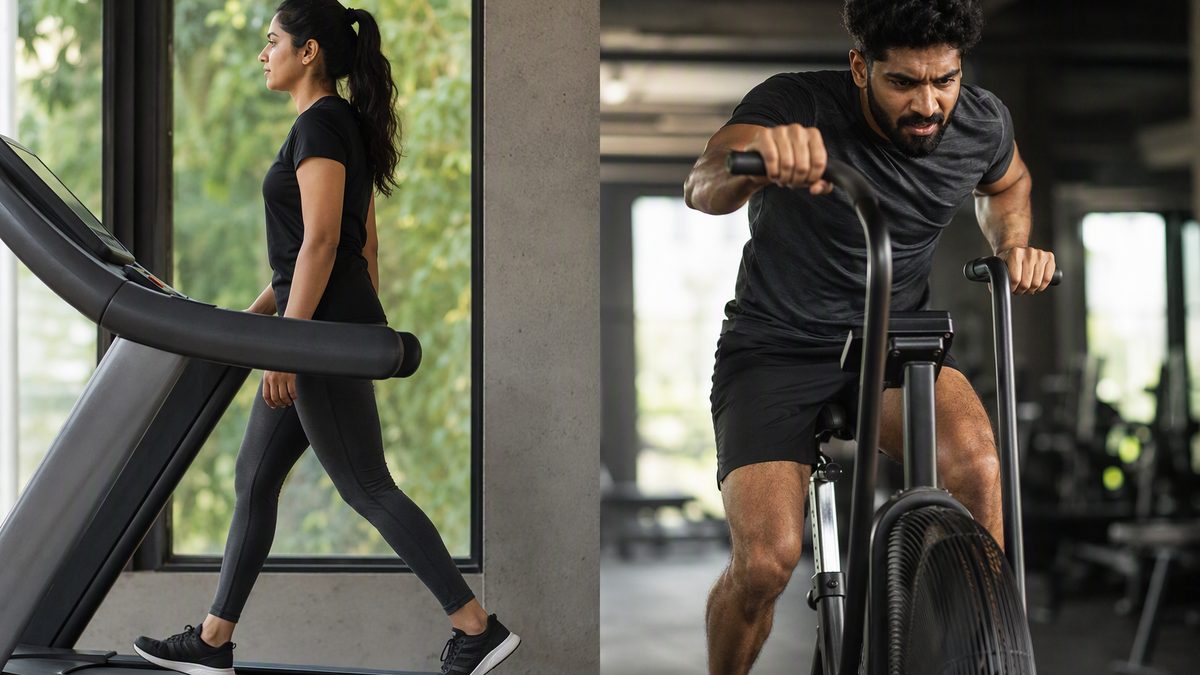
LISS – easy, steady, conversational-pace cardio – and HIIT – short near-maximal intervals with recovery between – aren't rivals, and neither is a fat-loss shortcut. They solve different problems and, importantly for you, they run on different fuel. Easy work is largely fat-powered and forgiving; hard intervals burn through muscle glycogen and expose any iron or carb shortfall fast. This guide fixes the under-fueling that sabotages your hard days, then builds a polarized plan that uses easy volume and a small dose of intensity for what each does best.
1. The Energy Dip Is Usually Fueling, Not the Protocol
Before blaming LISS or HIIT, rule out the two plant-based culprits. First, iron: vegetarian diets supply non-heme iron, which absorbs less efficiently than the heme iron in meat, so low ferritin is common in plant-based athletes and it shows up exactly as flat, heavy hard sessions and poor interval output. Get ferritin and iron studies checked yearly, and pair iron-rich plant foods with vitamin C to boost absorption. Second, carbohydrate timing: hard intervals draw heavily on muscle glycogen, and if you're eating mostly fat and fibre without enough fuel around the session, the intensity simply isn't available.
This matters for the comparison because the two styles expose fueling differently. Easy LISS runs largely on fat, so it's forgiving – you can do it slightly under-fueled and still get the aerobic-base benefit. Hard HIIT is the opposite: it's glycogen-hungry and unforgiving, so any iron or carb shortfall lands on your interval quality first. If your easy work feels fine but your hard sessions collapse, that's a fueling signal, not a verdict on HIIT. Sort the labs and the carbs, and you'll often find both styles work exactly as advertised. The cardio choice is the small lever here; what you put on your plate is the big one.
2. Why You Still Want Both Styles
With fueling handled, the case for a mix is straightforward. Easy LISS volume builds the aerobic base – mitochondrial density, capillary networks, fat-oxidation capacity – through accumulated easy minutes, and that base improves how well you use the fat your plant diet supplies in abundance. It recovers easily, so you can do it most days, stacking sustainable weekly volume at almost no fatigue cost. That's the engine that carries your endurance and your durability.
Hard HIIT does something easy work can't: it raises VO2max time-efficiently and lifts top-end capacity, which matters whether you race or just want higher fitness for its own sake – and higher cardiorespiratory fitness tracks with better long-term health outcomes. But it carries a recovery cost (about 48 hours between hard sessions) that caps it at two to three quality sessions a week. So the smart structure is polarized: most cardio easy for base and recovery, a small dose hard for the top end. For fat loss specifically, don't expect either to be magic – the research finds them broadly comparable, energy balance decides the result, and on a high-fibre plant diet it's actually easy to drift into under-eating, which sabotages adaptation more than any cardio choice. Fuel enough, then let the mix do its job.
3. Your Weekly Plant-Fueled LISS and HIIT Plan
The week is polarized – mostly easy, a small slice hard – with fueling matched to each session's demand. Scale HR figures to your tested max. Carb targets below are framed simply because the principle, not a gram count, is what matters.
| Session | Effort | Plant fueling around it | Weekly dose |
|---|---|---|---|
| Easy LISS | 50-65% max HR, RPE 3-4, conversational | Minimal extra; normal meals are enough | Most sessions; can do most days |
| HIIT 4x4 | 4 x 4 min at ~90% max HR / 3 min easy | Carb-containing meal 1-3 h before (oats, fruit, rice) | 1-2 per week |
| Sprint intervals | 4-6 x 30 s hard / 2-3 min easy | Pre-fuel carbs; protein-rich plant meal after | 1 per week, off HIIT days |
| Long easy day | 45-60+ min easy | Iron-rich meal with vitamin C nearby | 1 per week |
Keep hard sessions to one to three weekly with 48 hours between, and never back-to-back. Around your hard days, prioritize a leucine-adequate plant protein source (soy, or a well-dosed plant blend) in the post-session meal so recovery isn't the bottleneck – plant proteins digest slower and carry less leucine per serving, so a slightly larger serving helps. On easy LISS days, normal meals cover it; the easy work's low fuel cost is part of why it's so sustainable on any diet.
4. Labs, Recovery and Keeping Perspective
Track the things that actually limit plant-based athletes. Yearly bloodwork for ferritin, iron, B12 and vitamin D catches the shortfalls that quietly drain your hard sessions long before you'd guess the cause – B12 in particular requires supplementation on a vegetarian diet, and low iron is a leading reason interval power disappears. Treat a stretch of flat HIIT sessions plus an elevated resting heart rate or suppressed HRV trend as a prompt to check both recovery and labs, and to swap a planned hard day for easy LISS, which is always the lower-cost fallback.
Keep the big picture honest. The cardio-style debate is real but small next to fueling and consistency: for fat loss, neither LISS nor HIIT beats getting energy balance and adherence right, and the under-fueling trap is genuinely easier to fall into on a filling, high-fibre plant diet. So don't chase a perfect protocol while eating too little to support it. Build most of your week as easy LISS volume you can sustain, add a couple of well-fueled hard sessions for the top end, check your labs once a year, and source any supplements certified vegetarian and third-party tested. That stack – fuel, base, a little intensity, and monitoring – out-performs obsessing over which cardio style is theoretically superior.
Plant-Based Cardio Questions
Why do my hard intervals feel flat on a vegetarian diet?
Usually fueling, not the cardio style. Hard intervals run on muscle glycogen, so too few carbs around the session leaves the intensity unavailable. Low iron is the other big culprit – vegetarian diets supply less-absorbable non-heme iron, and low ferritin shows up exactly as flat, heavy hard sessions. Get ferritin checked, pair iron-rich foods with vitamin C, and eat a carb-containing meal before HIIT. Easy LISS feels fine because it runs mostly on fat, which is more forgiving.
Do I need both LISS and HIIT, or can I pick one?
Both serve you. Easy LISS builds the aerobic base and improves how well you use the fat your plant diet supplies, and it recovers easily so you can do it most days. HIIT raises VO2max time-efficiently but caps at two or three sessions a week due to its recovery cost. The polarized mix – mostly easy with a small hard dose – beats either alone for all-round fitness. For fat loss they're broadly comparable anyway, so let adherence and fueling guide how much of each you do.
How do I hit recovery targets after hard sessions without meat?
Prioritize a leucine-adequate plant protein after hard intervals – soy foods or a well-dosed plant protein blend work well – and eat a slightly larger serving since plant proteins digest slower and carry less leucine per gram than animal sources. Pair it with carbs to refill glycogen for the next hard day. On easy LISS days, normal meals cover recovery fine. The goal is enough total protein and carbohydrate across the day, not a single perfect post-workout shake.
Which labs should I check, and how often?
At least yearly, check ferritin and iron studies, B12, and vitamin D – the nutrients most likely to run low on a vegetarian diet and most likely to sabotage your hard sessions. Low iron in particular drains interval power long before you'd suspect it. B12 needs supplementation on a meat-free diet. If your hard sessions stay flat despite good fueling, that's a reason to test sooner. Bring results to a clinician, and choose any supplements that are certified vegetarian and third-party tested.
Disclaimer: This article is for educational purposes only and is not medical advice. Consult a qualified healthcare professional before starting any supplement, nutrition, or training protocol — especially if you are pregnant or breastfeeding, under 18, taking medication, or managing a health condition.
Scientific References & Clinical Sources
- Keating SE, et al. A systematic review and meta-analysis of HIIT versus continuous training for fat loss. Obes Rev, 2017. PMID: 28401638
- Viana RB, et al. Is interval training useful for weight loss? A systematic review and meta-analysis. Br J Sports Med, 2019. PMID: 30765340
- Tabata I, et al. Effects of moderate-intensity endurance and high-intensity intermittent training on anaerobic capacity and VO2max. Med Sci Sports Exerc, 1996. PMID: 8897392
- Joyner MJ, Coyle EF. Endurance exercise performance: the physiology of champions. J Physiol, 2008. PMID: 17901124
- Mandsager K, et al. Association of Cardiorespiratory Fitness With Long-term Mortality Among Adults Undergoing Exercise Treadmill Testing. JAMA Netw Open, 2018. PMID: 30646252

