For decades, the "fitness lifestyle" has been synonymous with a very specific, and frankly boring, menu: plain chicken breast, steamed broccoli, and brown rice. This "Tupperware culture" has created a massive barrier for millions of people who love their cultural foods but feel they have to abandon them to achieve their fitness goals. The message was clear: if you want to be fit, you have to eat like a bodybuilder in 1995.
In 2026, we’re tearing down those barriers. With the integration of AI-powered vision and deep nutritional databases, we now know that sustainable health doesn't require cultural erasure. You can track your macros, hit your protein targets, and maintain your muscle while still enjoying the rotis, dals, curries, and regional staples that define your identity. Today, we’re demystifying "Macro Tracking for Real Life" and showing you how to balance your plate without losing your soul.
The Anatomy of a Staple: Beyond the Mystery
The biggest hurdle in tracking traditional meals is the complexity of the ingredients. A roti isn't just "carbs"; it's a specific amount of whole wheat flour, water, and perhaps a touch of oil. A dal isn't just "protein"; it's a blend of legumes, spices, and tempering. When you break these down, they are remarkably healthy, balanced foods that have sustained civilizations for millennia.
Roti Breakdown (Approx. 35g)
- Calories: 100-110 kcal
- Carbohydrates: 18g-22g
- Protein: 3g-4g
- Fat: 0.5g-2g (depending on ghee/oil)
Yellow Dal Breakdown (1 cup cooked)
- Calories: 180-220 kcal
- Carbohydrates: 25g-35g
- Protein: 12g-15g
- Fat: 4g-8g (depending on the "tadka" or tempering)
Portion Awareness: Small Shifts, Big Results
Macro tracking isn't about restriction; it's about awareness. Once you know the numbers, you can make intelligent adjustments that allow you to stay within your daily targets while still participating in family meals.
If your goal is fat loss, the "Traditional Plateau" often comes from a plate that is 70% carbohydrates (large portions of rice or multiple rotis) and only 10% protein. By simply shifting the ratio—having one less roti and serving yourself an extra bowl of dal or a side of lean protein—you can drastically improve the thermic effect of the meal and keep your muscle mass protected.
AI to the Rescue: Photo-Based Meal Logging
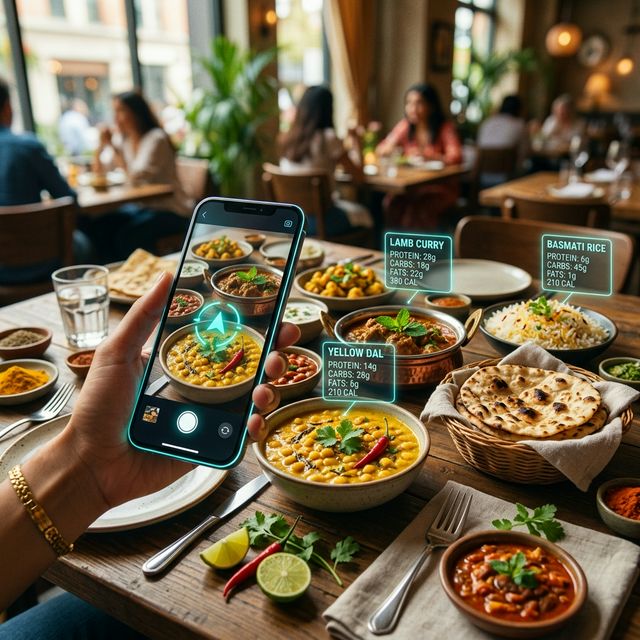
One of the most revolutionary features of UltraFit360 is the Photo Meal Logger. Gone are the days of manually searching for every individual spice in your curry. By simply taking a photo of your plate, our trained AI models can identify regional dishes, estimate portion sizes, and break down the likely macro-composition based on traditional recipes.
This "invisible tracking" removes the friction that leads to burnout. It allows you to be present at the dinner table rather than buried in a spreadsheet. The AI learns your specific "serving size" over time, making your logs increasingly accurate without any extra effort on your part. Learn more in our deep dive into AI meal logging.
2026 Strategy: Metabolic Flexibility
In 2026, we don't just track numbers; we track Metabolic Flexibility. This is your body's ability to switch between burning carbs and fat efficiently. By tracking yours macros for fat loss accurately, you "prime" yours metabolism to handle occasional high-carb cultural feasts without setting back yours progress.
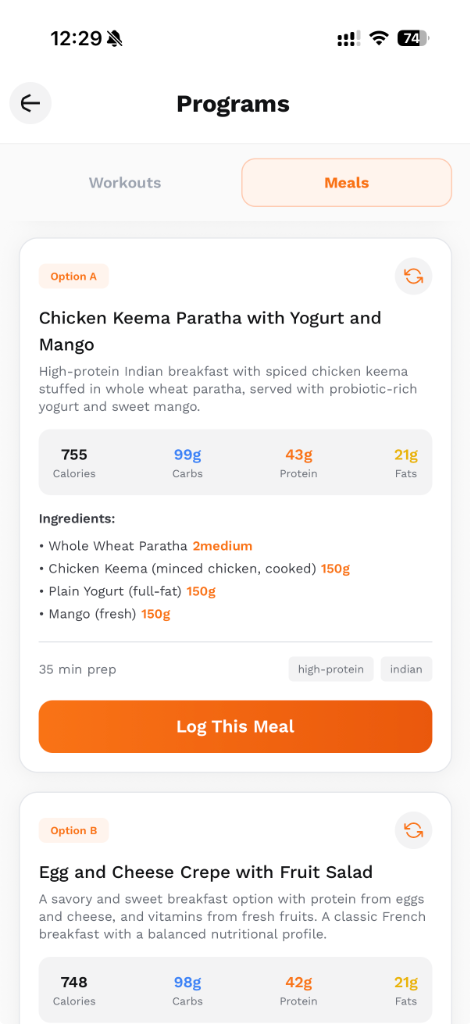
The app provides balanced meal options like 'Chicken Keema Paratha'—tracking macros while honoring your culture.
| Meal Component | Traditional Serving | The "UltraFit" Adjustment |
|---|---|---|
| Carbohydrate Staple | 3-4 Rotis or 2 cups Rice | 1-2 Rotis or 1 cup Rice |
| Legumes / Lentils | 1 small bowl | 2 large bowls (doubling the protein) |
| Vegetables (Sabzi) | Side portion | Half of the plate (Fibermaxxing!) |
| Healthy Fats | Generous oil/ghee in everything | Measured ghee on top; dry-roast rotis |
| Lean Protein | Often missing or minimal | Add 150g Paneer, Soya, or Chicken |
The Balanced Thali Framework
Think of your plate as a pie chart. For optimal muscle preservation and fat loss, aim for this "Real Life" distribution:
- 50% Non-Starchy Vegetables: Spinach, okra, cauliflower, or a fresh salad. This provides volume and fiber.
- 25% High-Protein Source: Dal, paneer, eggs, lean meat, or Greek yogurt (Raita).
- 25% Complex Carbohydrates: Roti, brown rice, or millets.
This structure ensures you get the taste and comfort of your cultural foods while hitting the "sweet spot" of nutritional science.
Common Myths About Traditional Foods
- Myth: "White rice is evil." Rice is a clean, gluten-free carb. The issue is usually the quantity and what you eat it with. Pair it with high fiber and protein to blunt the insulin spike.
- Myth: "Ghee is bad for your heart." Ghee is a source of healthy fats and fat-soluble vitamins (A, D, E, K). Use it in moderation as a flavor enhancer rather than a frying medium.
- Myth: "You can't get enough protein as a vegetarian." Between dals, chickpeas, paneer, and modern additions like whey or soy chunks, hitting 120g+ of protein on a traditional diet is entirely possible.
2026 Lifestyle: Social Eating Protocols
Sustainability in nutrition means winning the "social game." In 2026, we use Social Eating Protocols—pre-loading with yours high-protein snacks before a family dinner, and using fiber as yours "metabolic shield." This ensures you can enjoy a wedding feast or a Sunday lunch while keeping yours blood glucose stable.
Conclusion: Sustainability is the Only Way
At the end of the day, any diet you can't see yourself doing for five years is a waste of time. By embracing your cultural foods and using modern tracking tools like our nutrition fundamentals guide suggests, you aren't just "losing weight"—you're building a sustainable lifestyle.
Log your next meal with the UltraFit360 AI, and see for yourself how your favorites fit into your fitness journey. Health isn't a destination; it's a way of living that honors where you came from as much as where you're going.
Your Culture, Your Macros
Use UltraFit360 to scan your meals and get instant macro breakdowns. No more guessing, just results.