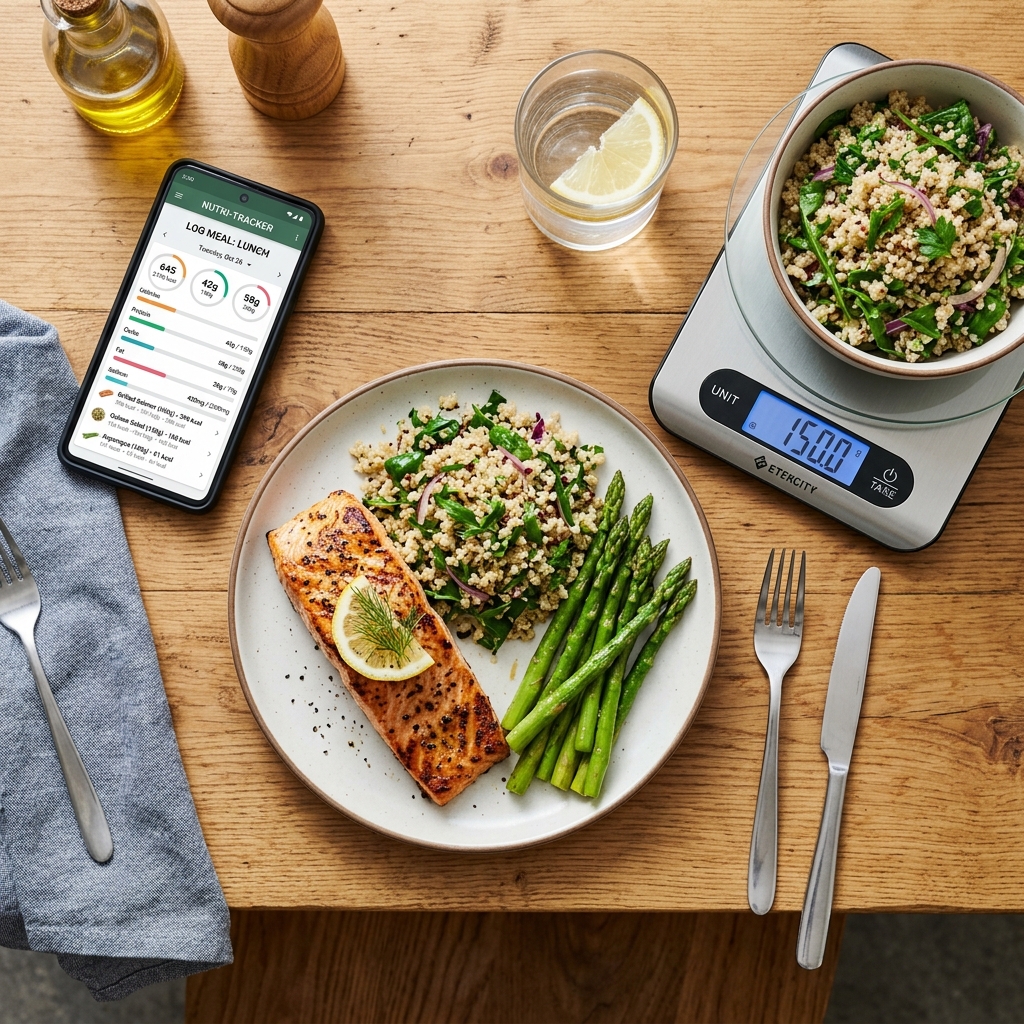
You can't build a house without knowing the blueprint. Similarly, you can't achieve your fitness goals without understanding macronutrients. Whether you want to build muscle, lose fat, or optimize performance, the three macronutrients — protein, carbohydrates, and fat — are the foundation. This guide breaks down what they do, how much you need, and how to distribute them for your specific goal.
The Three Macronutrients Explained
Protein (4 calories per gram)
Protein is made of amino acids, the building blocks of muscle tissue. When you lift weights, you create micro-tears in muscle fibers. Protein repairs these tears, making them larger and stronger. Without adequate protein, your body can't build or maintain muscle.
- Primary function: Muscle growth and repair, enzyme production, hormone synthesis
- Sources: Chicken, fish, eggs, beef, Greek yogurt, cottage cheese, whey protein, legumes, tofu
- Thermic effect: 20-30% of calories from protein are burned digesting it (highest of all macros)
- Satiety: Protein is most filling, reducing hunger and food cravings
Carbohydrates (4 calories per gram)
Carbs are your primary fuel source. They're broken down into glucose, which your muscles and brain use for energy. During high-intensity exercise, carbs are your preferred fuel.
- Primary function: Energy production, muscle glycogen storage, brain function
- Types: Simple (glucose, sugar) vs Complex (oats, rice, sweet potatoes, vegetables)
- Glycemic Index: How quickly carbs raise blood sugar. Lower GI carbs (oats, brown rice) are better for steady energy and fat loss
- Fiber: Indigestible carbs that slow digestion, stabilize blood sugar, and feed gut bacteria
- Performance: Adequate carbs fuel your workouts; low carbs reduce workout intensity
Fats (9 calories per gram)
Fat is the most calorie-dense macro but is essential for hormone production, vitamin absorption, and cellular function. Despite the "fat makes you fat" myth, dietary fat doesn't automatically become body fat.
- Primary function: Hormone production (testosterone, estrogen), vitamin absorption (A, D, E, K), brain and nervous system health
- Types: Saturated (butter, coconut oil), Unsaturated (olive oil, nuts, avocado), Omega-3 (fatty fish, flax)
- Satiety: Very filling; fats slow digestion and suppress appetite hormones
- Inflammation: Omega-3 fats reduce inflammation; excess omega-6 increases inflammation
Calorie Balance Is Still the Foundation
Before discussing macro distribution, understand this: you cannot build muscle in a caloric deficit, and you cannot lose fat in a surplus. Total calories determine your body composition. Macros optimize how you achieve it, but calories are the foundation.
Caloric Surplus (Building Phase)
To build muscle, eat 300-500 calories above maintenance. This provides energy for workouts and materials to build new tissue.
Caloric Deficit (Fat Loss Phase)
To lose fat, eat 300-500 calories below maintenance. This forces your body to use stored energy (fat).
Maintenance (Recomposition Phase)
Eat at maintenance calories (advanced athletes can build muscle and lose fat simultaneously when training hard and eating adequate protein).
Optimal Macro Ratios for Your Goal
Goal: Muscle Building (Hypertrophy)
Caloric surplus: +300-500 calories above maintenance
Macro targets (% of total calories):
- Protein: 30-35% (1g per lb of bodyweight minimum)
- Carbs: 45-50% (fuel your workouts, replenish glycogen)
- Fats: 20-25% (ensure hormone production)
Example (3,000 cal/day, 200 lb person):
- Protein: 225-240g (30-32%)
- Carbs: 375-450g (50-60%)
- Fats: 65-85g (20-25%)
Goal: Fat Loss
Caloric deficit: -300-500 calories below maintenance
Macro targets:
- Protein: 35-40% (preserve muscle during deficit, high satiety)
- Carbs: 35-45% (still fuel workouts, but lower volume)
- Fats: 20-25% (keep hormones healthy)
Example (2,000 cal/day, 200 lb person):
- Protein: 200-225g (40%)
- Carbs: 200-250g (40-50%)
- Fats: 45-55g (20-25%)
Why higher protein in deficit? Because high protein preserves muscle mass, increases satiety (you feel fuller), and has a higher thermic effect (costs more energy to digest).
Goal: Athletic Performance
Caloric balance: Maintenance or slight surplus (depending on if building or cutting)
Macro targets:
- Protein: 25-30%
- Carbs: 50-60% (fuel for high-intensity sports)
- Fats: 15-20%
Why high carbs? Athletes need glucose for intense efforts. Glycogen depletion is a limiting factor in performance.
Protein Deep Dive: The Most Important Macro for Fitness
Protein Requirements by Goal
- Sedentary: 0.6g per lb (minimal need)
- General fitness: 0.8g per lb (basic muscle maintenance)
- Strength/hypertrophy: 1.0-1.2g per lb (optimal for muscle growth)
- Extreme caloric deficit: 1.2-1.5g per lb (maximal muscle preservation)
Optimal Protein Distribution
It's not just total protein — timing and distribution matter.
- Frequency: Spread protein across 3-4 meals (20-40g per meal)
- Post-workout: 30-40g protein within 2 hours after training to optimize muscle protein synthesis
- Leucine content: Leucine (an amino acid in protein) triggers muscle growth. Aim for 2-3g leucine per meal
Best Protein Sources
- Animal-based (complete proteins, all amino acids): Chicken breast (165g/100g), Greek yogurt (100g/100g), Salmon (220g/100g), Eggs (130g/100g), Lean beef (260g/100g)
- Plant-based: Lentils (25g/cup), Chickpeas (15g/cup), Tofu (15-20g/100g), Tempeh (20g/100g) — combine with complementary proteins for complete amino acid profiles
- Supplements: Whey protein powder (20-25g per scoop), Casein (slow-digesting, good before bed)
Carbohydrate Timing: When Carbs Matter Most
Pre-Workout (1-2 hours before)
Eat 30-60g of fast-digesting carbs to fuel your workout. Examples: banana with oats, rice cakes, white rice.
Post-Workout (Within 1-2 hours)
Eat 40-80g of carbs (depending on workout intensity) to replenish muscle glycogen. Pair with protein for optimal recovery.
Rest Days
You need fewer carbs on rest days since glycogen demands are lower. Reduce carbs by 50-100g compared to training days.
Low Carb Days vs High Carb Days
Some athletes use carb cycling: high carbs on training days, moderate carbs on rest days. This can optimize performance while maintaining fat loss.
Fat: Not Just Calorie Density
Minimum Fat Intake
Don't go below 0.3g per lb of bodyweight. Below this, testosterone drops, energy crashes, and hormones dysregulate.
Omega-3 Ratio
Aim for a 1:3 to 1:5 ratio of omega-3 to omega-6 fats. Most people eat way too much omega-6 (from seed oils, processed food) and not enough omega-3 (from fatty fish, flax, chia).
Best Fat Sources
- Omega-3 rich: Salmon, sardines, mackerel, walnuts, ground flax, chia seeds
- Whole food fats: Avocado, olive oil, nuts, seeds, egg yolks, coconut oil
- Avoid: Vegetable oil, soybean oil, seed oils used in most processed foods (high omega-6, inflammatory)
Practical Implementation: Sample Days
Muscle Building Day (3,000 cal, 200 lb person)
- Breakfast: 3 eggs, 2 pieces toast with butter, orange juice = 450 cal | 20g P, 45g C, 18g F
- Snack: Greek yogurt with granola = 250 cal | 20g P, 30g C, 4g F
- Lunch: 8 oz chicken, 2 cups rice, vegetables = 800 cal | 60g P, 100g C, 12g F
- Pre-workout: Banana with peanut butter = 300 cal | 10g P, 40g C, 10g F
- Post-workout shake: Whey protein, oats, honey = 400 cal | 40g P, 60g C, 5g F
- Dinner: 8 oz salmon, sweet potato, asparagus = 600 cal | 50g P, 60g C, 18g F
- Totals: 3,000 cal | 200g P, 335g C, 67g F
Fat Loss Day (2,000 cal, 180 lb person)
- Breakfast: Egg white omelet (3 whites + 1 whole), oatmeal, berries = 300 cal | 25g P, 40g C, 4g F
- Snack: Protein shake with almond milk = 150 cal | 25g P, 10g C, 4g F
- Lunch: 6 oz chicken breast, brown rice, broccoli = 500 cal | 50g P, 50g C, 6g F
- Snack: Apple with almond butter = 200 cal | 8g P, 25g C, 8g F
- Dinner: 6 oz lean beef, sweet potato, green salad = 550 cal | 60g P, 50g C, 8g F
- Totals: 1,700 cal | 168g P, 175g C, 30g F
The Bottom Line
Macronutrients are not equally important:
- Protein: Most important for fitness goals; prioritize hitting your target
- Calories: Second most important; determines if you build or lose
- Carbs and Fats: Adjust based on personal preference and performance; as long as you hit protein and calories, flexibility here doesn't matter much
Don't obsess over hitting 35% carbs vs 40% carbs. Hit your protein target, stay within calories, distribute carbs and fats based on how you feel, and adjust based on results.
Track Your Macros with AI
Getting your macros right is essential for results. UltraFit360 tracks protein, carbs, and fat automatically from photos of your meals, helping you hit your targets without obsessive counting.