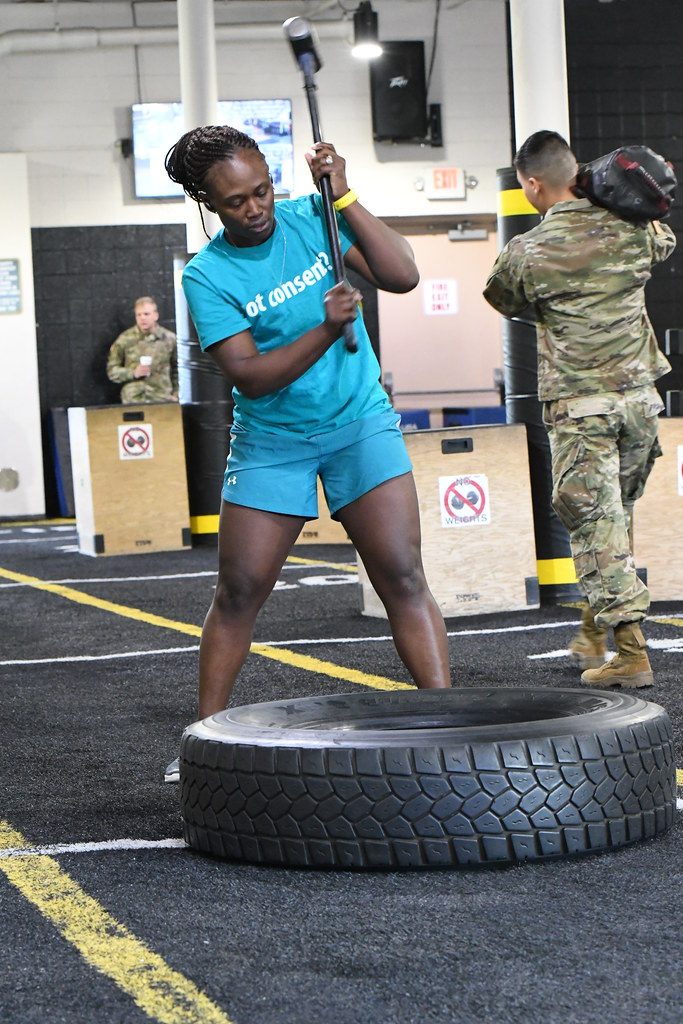
💡 Key Takeaways
- Expect a small, mostly-felt drop in leg soreness after sled- and lunge-heavy sessions — not faster recovery of your run or a better race time.
- Massage does not improve compromised running off the sled; that comes from training on pre-fatigued legs.
- Block soreness peaks 24-72 hours out and fades on its own, so judge any massage against that timeline.
- In race week, use a gun as light overnight comfort between sessions — never as a substitute for tapering, sleep, and carb loading.
Here is the measurable picture. After a session loaded with walking lunges, sled pushes, and pre-fatigued running, your quads and glutes will be sore for the next two to three days. Work them with a massage gun afterward and you may rate that soreness a point or two lower. That is the honest, trackable upside — a small change in how sore you feel, not a faster return of running performance and not a better finish time.
Your race sits at threshold for over an hour, mixing an 8km run with eight strength-endurance stations, so your legs take a relentless eccentric and lactate-spiking beating. It is natural to want a tool that speeds recovery between hard sessions. Of the popular recovery methods, massage is one of the more consistent for easing how sore and fatigued you feel — but that benefit is modest, it lives in perception, and it does nothing for the parts that decide your race.
This guide gives you the timeline of what to expect, where massage fits a block and race week, and why it cannot do the job your run training does.
1. The Soreness Timeline After Sled-and-Lunge Sessions
The signature HYROX soreness comes from the eccentric load of sled work, lunges, wall balls, and running on already-trashed legs. Track it across a block and the curve repeats: soreness appears several hours after the session, peaks somewhere between 24 and 72 hours later, then resolves on its own within a few days. Nothing you do to the muscle changes that arc by much.
What massage can do, applied for a few minutes after one of these sessions, is take a small amount off how sore those days feel. The reliable signal in the research is on perceived soreness — your own rating — rather than on blood markers of muscle damage, which barely shift. For a data-minded racer this is the key distinction: log soreness on a 0-10 scale and you may see a modest difference with massage; log anything objective and you likely will not. The practical risk is attributing the natural day-three fade to the gun. If your soreness was always going to clear by day four, a session that smoothed days two and three was comfort, not accelerated recovery. Sometimes that comfort is worth it in a heavy block; sometimes it is not — and it is never lactic-acid 'flushing', which is a myth, since lactate clears on its own within an hour or two and never caused the soreness.
2. Why It Won't Fix Compromised Running
The defining HYROX skill is running well on legs already cooked by a station — the compromised running that separates finishing times. It is tempting to hope a recovery tool helps there, but the evidence does not support it. Massage's direct effect on running performance is small at best; its honest contribution is recovery comfort between sessions, not measurable speed. So a few minutes with a gun will not make your post-sled 1km splits faster on race day.
What actually improves compromised running is training it directly: running off the sled, off lunges, off wall balls, repeatedly, until your legs learn to clear lactate and hold form while fatigued. That is a training adaptation, not a recovery-tool effect. There is also a subtle caution worth knowing for any racer chasing every recovery edge — aggressively suppressing the post-exercise stress response can blunt adaptation over time, as routine cold-water immersion does. Typical massage is far milder and does not raise the same concern, but the lesson holds: feeling less sore is not the same as adapting better. Use massage as a comfort tool while your run training does the real work. To structure that training load and recovery against your race calendar, the tools in our fitness apps guide can help you plan it.
3. Block Training and Race-Week Massage Plan
Use massage where leg soreness is highest in a block, and in race week treat it as light overnight comfort only. The table maps it. Durations are practical guidance — there is no precise validated recovery dose — so the value is in placement, not in chasing an optimal number.
| Type | When to use it | Strength of the evidence |
|---|---|---|
| Massage gun on quads, glutes, calves, light pressure (~1-2 min per area) | The evening after a sled-, lunge-, or long-run-heavy session that left your legs sore | Modest — small reduction in perceived soreness |
| Light massage-gun or self-massage | Overnight in race week between taper sessions, for comfort and travel-leg relief | Practical — comfort more than measured recovery |
| Professional sports massage (30-60 min) | Occasionally mid-block, for a deeper reset or to assess a nagging area | Modest — perceived-soreness and relaxation benefit |
| Deep work the day before a race, or to improve running | Avoid — train compromised running; deep work can blunt readiness | No support for performance; deep pre-race work risky |
Glide slowly over the muscle belly, keep pressure moderate, and stay off the spine, knees, and shins. Indoor venues run hot — manage hydration and tested race fueling separately, as massage does nothing for either.
4. HYROX Mistakes a Massage Gun Won't Solve
- Training stations fresh. If you never pre-fatigue your running, no recovery tool fixes your race-day legs. Train compromised running on purpose.
- Racing every weekend without recovery blocks. Massage cannot rescue chronic under-recovery. Schedule real down weeks.
- Untested race-day fueling. A gun does nothing for GI distress. Rehearse gels and electrolytes in training, not on race day.
- Skimping on sleep. Most recovery happens asleep; seven to nine hours outranks any recovery tool, especially in a heavy block.
- Crediting the gun for natural fading. Soreness clears on its own in a few days. Do not ramp load just because you feel less sore.
5. The Metrics Worth Tracking Across a Block
You already live by numbers — run splits, sled times, station paces — so judge recovery the same way and keep massage in its narrow lane. The only thing a gun can move on your dashboard is a morning soreness rating, and even that shifts only slightly. The metrics that actually tell you whether a block is building or breaking you are different: how your compromised-running splits trend when you test them fresh versus fatigued, whether your legs feel heavy on easy days, and your sleep, resting heart rate, and HRV read as week-to-week trends rather than single numbers. Read those wearable signals as direction of travel, since consumer devices vary in accuracy.
If you want a clean answer on whether massage helps you specifically, run a small self-test: after your highest-soreness sessions, rate soreness 0 to 10 each morning, using the gun on some and skipping it on others, across a few weeks. A consistent point or two lower on the massage days, plus a next session that feels better, means it earns a spot as a comfort tool. No difference means your time and money go elsewhere. Either way, the hierarchy holds: trained compromised running, fueling for your hour-plus race demand, and sleep drive your result. Massage is the small extra at the bottom of the list — useful for getting through a heavy block in slightly more comfort, never a number that moves your finish time.
What HYROX Racers Ask About Massage
Will massage help my compromised running off the sled?
No, not in a measurable way. Massage's direct effect on running performance is small at best, so it will not make your post-station splits faster on race day. Compromised running improves through training it directly — running repeatedly off sleds, lunges, and wall balls until your legs hold form while fatigued. Massage's only real benefit is a small reduction in how sore you feel after these sessions, which is recovery comfort between training days, not race-day speed.
How do I use massage in race week?
Keep it light and purely for comfort. In race week your performance comes from tapering, sleeping well, and carb loading — not from a recovery tool. A few minutes with a gun on sore legs, or a light self-massage in the evening, may help them feel slightly fresher. Do not introduce deep, aggressive work you have not used in training, and never let massage distract from the taper, sleep, and tested fueling that actually decide your time.
Does massage improve my roxzone transitions?
No. Transitions are about pacing, efficiency, and trained fatigue tolerance, none of which a rubdown affects. Massage does not boost performance during the race in any reliable way. Its value is entirely post-session, as a small, mostly-felt reduction in soreness that may help you string hard training days together. Sharpen your roxzone by practicing transitions under fatigue in training, and treat massage strictly as a recovery comfort, not a racing aid.
What about the last 2km when everything feels heavy — can massage help?
Not during the race. The heaviness in the final stretch comes from accumulated fatigue and lactate, and the fix is energy-system training and pacing, not a recovery tool — and massage does not 'flush' lactate, which clears on its own anyway. After the race, a few minutes with a gun may make your sore legs feel slightly better over the next couple of days. Build your finish through compromised-running and threshold work, and keep massage in the recovery toolkit only.
Disclaimer: This article is for educational purposes only and is not medical advice. Consult a qualified healthcare professional before starting any supplement, nutrition, or training protocol — especially if you are pregnant or breastfeeding, under 18, taking medication, or managing a health condition.
Scientific References & Clinical Sources
- Dupuy O, et al. An Evidence-Based Approach for Choosing Post-exercise Recovery Techniques to Reduce Markers of Muscle Damage, Soreness, Fatigue, and Inflammation: A Systematic Review With Meta-Analysis. Front Physiol, 2018. PMID: 29755363
- Gill ND, et al. Effectiveness of post-match recovery strategies in rugby players. Br J Sports Med, 2006. PMID: 16505085
- Roberts LA, et al. Cold water immersion dampens post-exercise muscle adaptations with resistance training. J Physiol, 2015. PMID: 26174323
- Dattilo M, et al. Sleep and muscle recovery: endocrinological and molecular basis for a new and promising hypothesis. Med Hypotheses, 2011. PMID: 21550729
- Peake JM, et al. A Critical Review of Consumer Wearables, Mobile Applications, and Equipment for Providing Biofeedback, Monitoring Stress, and Sleep in Physically Active Populations. Front Physiol, 2018. PMID: 30002629
Want a plan built around your training history? UltraFit360's free AI workout planner creates and adjusts programs for you.

