💡 Key Takeaways
- Get your provider's clearance first, and use a prenatal/postnatal-trained therapist for hands-on work in the early months.
- Massage can ease tense shoulders and neck and help you wind down and sleep, but it does not speed tissue healing or 'fix' core or pelvic-floor recovery.
- Its honest benefit is modest and mostly about how you feel; sleep, nutrition, and clinician-guided rehab do the real recovery work.
- Light self-massage with a gun, roughly 1-2 minutes per area on shoulders, upper back, and calves, fits nap windows once you are cleared.
The body that carries a newborn around all day is tense in places it never used to be: shoulders rounded over feeds, an aching upper back, a neck stiff from looking down. Add fragmented sleep and a body still healing, and the appeal of a massage is obvious — you want something, anything, to feel a little better. That wish is reasonable, and massage can offer some honest relief. But it has limits worth knowing before you spend tired energy or money on it.
First and non-negotiable: clear any massage with your provider before booking, and in the early months use a therapist trained in prenatal and postnatal work. Your delivery, healing, and any complications shape what is appropriate, and only your clinician knows that picture.
With that in place, here is the straight version — what massage genuinely does for a tired, healing body, what it does not, and how to use it gently around a nap-window life without any pressure to bounce back.
1. The Real Problem: A Tense, Sleep-Short Body That's Still Healing
Three things stack against recovery in this season. Your sleep is broken, often badly, and sleep is where most real recovery happens — so the foundation everyone leans on is the one you have least of. Your body is still rebuilding: relaxin-related joint laxity can linger for months, and abdominal separation affects how well you can brace and hold yourself up. And the physical work of new motherhood — carrying, feeding, rocking — loads your neck, shoulders, and upper back in a sustained, repetitive way that leaves them genuinely tense and sore.
Into that, massage offers a believable kind of relief: easing that built-up muscular tension and helping a wired, exhausted nervous system settle. That is a real and reasonable thing to want, and it is where massage can honestly help. What it cannot do is rebuild your core, restore your pelvic floor, or speed the deeper tissue healing your body is working through on its own timeline.
So set the goal honestly. This is not about weight loss and not about fitness. It is about feeling a little less tense and a little more like yourself, layered on top of the rest, nutrition, and clinician-guided rehab that actually drive recovery. Used that way, it earns a small, genuine place.
2. What Massage Honestly Does — and What It Won't — Right Now
The credible benefits are modest and worth having. Among recovery techniques, massage is one of the more consistent for reducing perceived muscle soreness and tension, and it tends to shift you toward a calmer, parasympathetic state that lowers stress and can help you fall asleep. For a new mom running on fragmented sleep, that wind-down effect — used in the evening — may be the single most useful thing it offers. The relief is real even though it lives mostly in how you feel rather than in measurable structural change.
Now the honest limits, because overclaiming helps no one here. Massage does not flush out toxins or lactic acid, it does not 'break up' scar tissue or adhesions in any verifiable way, it does not lengthen muscles or realign anything, and it does not meaningfully speed the true repair of postpartum tissue. It is not a treatment for diastasis recti or pelvic-floor weakness — those need clinician-guided rehab, not a massage.
The framing that keeps you safe: massage may help you feel less tense, more relaxed, and a bit more comfortable, which is a fine reason to use it. It is a comfort aid, not a healing accelerator and not a substitute for the rehab and rest your body actually needs to recover from birth.
3. A Gentle Self-Massage Routine for Nap Windows
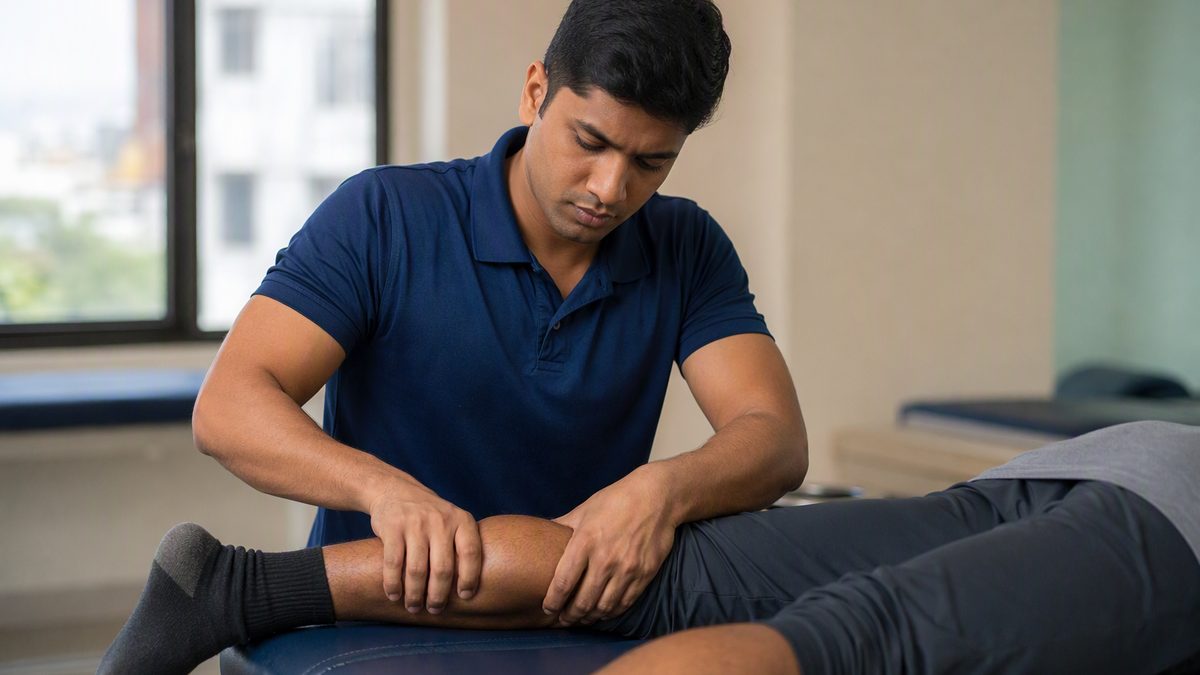
Once your provider has cleared you, light self-massage with a percussion gun is a practical way to ease tension in the minutes a nap buys you. It reproduces much of the perceived benefit of hands-on work in a convenient, low-cost form, which suits a life with no spare time or money. This page is about percussion and professional massage; rolling on a foam roller is covered separately as self-myofascial work.
Keep it gentle and safe. Glide over the muscle belly with moderate-to-light pressure for a short bout, and stay off bone, joints, the spine, and the front and sides of the neck and throat. Keep deeper or firmer work for a trained therapist, and stop if anything feels wrong rather than just tense.
| Area | When | Time per side | Pressure note |
|---|---|---|---|
| Upper traps / shoulders | After feeds or carrying | 1-2 min | Light-moderate, avoid the neck |
| Upper back | Evening wind-down | 1-2 min | Moderate, off the spine |
| Calves | Pre-sleep | 1-2 min | Light, avoid the Achilles |
| Forearms | After lots of carrying/holding | 1-2 min | Light, avoid the wrist |
| Professional session | When cleared, prenatal/postnatal-trained | 30-60 min | For a thorough, tailored session |
More is not better, and this is not the place to push. The perceived benefit plateaus, and over-aggressive percussion can leave you more sore or bruised — the opposite of what you need. If you are breastfeeding, gentle self-massage is generally fine, but hydrate well, since feeding raises your fluid needs.
4. Recovering on Broken Sleep — Where Massage Really Fits
Here is the part that matters most. Massage is a minor adjunct, and the real foundation of recovery is the thing postpartum life disrupts most: sleep. Much hormonal and tissue recovery happens during sleep, and sleep loss is linked to impaired recovery — so the most valuable thing you can do is protect whatever sleep you can claim. Nap when the baby naps, accept help, and treat broken nights as a real reason to scale everything back, not to push through.
Within that, massage earns one clear role: its relaxation, parasympathetic effect can support sleep onset, which is arguably its most useful indirect contribution to your recovery. A few minutes of gentle self-massage in the evening that helps you drop off faster is worth more, in this season, than any soreness benefit. Pair it with adequate nutrition and overall energy — feeding demands and healing both raise your needs — and you have covered the levers that genuinely move the needle.
And let go of any pressure to bounce back on a schedule. The point of all this is to feel a bit steadier and more comfortable, which supports your wellbeing and energy for your baby far more than any number on a scale. There is no clock here, and no version of recovery where rest is the wrong call. If you want gentle structure as you rebuild, our guide to building durable fitness habits keeps the bar realistic.
5. When to Pause, and When to Call Your Clinician
Some signals mean stop self-treating and check in. Sharp or localized pain, swelling, a change in postpartum bleeding, pain or heaviness in the pelvic floor, leg pain or swelling, fever, or anything that feels wrong rather than simply tense are reasons to contact your provider or a pelvic-floor physiotherapist — not to keep massaging the area. Massage is never the answer to a possible medical problem.
Respect the contraindications, which carry extra weight postpartum. Do not massage acutely injured or inflamed tissue, recent surgical sites, or a cesarean scar without clinician guidance. Get clearance first if you have any clotting concern or are on blood thinners — postpartum clot risk is a real medical consideration, and massage could be unsafe in that context. When in doubt, ask your clinician before any treatment.
For tracking, a wearable can show your sleep and resting heart rate trends, which can be a small reassurance when you have little else to go on — just read the multi-day pattern, not one number, since consumer devices vary in accuracy. Above all, keep massage in proportion: a gentle, optional comfort tool that helps you wind down, sitting on top of clinician-guided rehab, real rest, and good nutrition. Those come first, every time, and skipping the massage on a hard day costs you nothing.
Postpartum Questions About Massage
Is massage safe while breastfeeding?
Gentle massage is generally compatible with breastfeeding once your provider has cleared you, since it is not a hard physical stress. Stay well hydrated, because feeding raises your fluid needs, and use a prenatal/postnatal-trained therapist for hands-on work in the early months. Follow your clinician's individual guidance based on your delivery and healing. Keep self-massage light and gentle, and stop and check in if anything feels wrong rather than simply tense.
Will massage help my core or pelvic floor recover after birth?
No, not directly. Abdominal separation and pelvic-floor recovery need clinician-guided rehabilitation, not massage. Massage does not rebuild core strength, restore pelvic-floor function, or speed the deeper tissue healing of birth in any large way. It can ease muscular tension in your shoulders, neck, and back and help you relax, which is worth having. But for core and pelvic-floor work, see your provider or a pelvic-floor physiotherapist for proper, tailored rehab.
When can I start massage after delivery?
Only after your provider clears you, and the right timing depends on your delivery and healing — it differs between a six-week and a six-month point, and between vaginal and cesarean births. There is no universal date. In the early months, use a therapist trained in postnatal work, avoid recent surgical sites and a cesarean scar without guidance, and start gently. If anything feels wrong, stop and check with your clinician before continuing.
Can a massage help me recover on four hours of broken sleep?
Not as a substitute for sleep, which is where most recovery actually happens. What massage can do is help you wind down and fall asleep faster through its relaxing effect, which is genuinely useful when rest is scarce — so a few gentle minutes in the evening may help you make the most of the sleep you can get. But protecting sleep itself, napping when you can, and accepting help matter far more than any session.
Disclaimer: This article is for educational purposes only and is not medical advice. Consult a qualified healthcare professional before starting any supplement, nutrition, or training protocol — especially if you are pregnant or breastfeeding, under 18, taking medication, or managing a health condition.
Scientific References & Clinical Sources
- Dupuy O, et al. An Evidence-Based Approach for Choosing Post-exercise Recovery Techniques to Reduce Markers of Muscle Damage, Soreness, Fatigue, and Inflammation: A Systematic Review With Meta-Analysis. Front Physiol, 2018. PMID: 29755363
- Dattilo M, et al. Sleep and muscle recovery: endocrinological and molecular basis for a new and promising hypothesis. Med Hypotheses, 2011. PMID: 21550729
- Halson SL. Sleep in elite athletes and nutritional interventions to enhance sleep. Sports Med, 2014. PMID: 24791913
- Fullagar HH, et al. Sleep and athletic performance: the effects of sleep loss on exercise performance. Sports Med, 2015. PMID: 25315456
- Peake JM, et al. A Critical Review of Consumer Wearables, Mobile Applications, and Equipment for Providing Biofeedback, Monitoring Stress, and Sleep in Physically Active Populations. Front Physiol, 2018. PMID: 30002629

