💡 Key Takeaways
- Massage gives a modest, real reduction in how sore and tired you feel after leg day or a hard session, not a boost to your lifts.
- A massage gun for roughly 1-2 minutes per muscle matches hands-on work for everyday recovery and costs far less than weekly sessions.
- Skip the myths: massage does not flush lactic acid, melt fat, or break up scar tissue, and soreness fades on its own in a few days.
- Buy the cheap reliable tool over the premium one, and fix sleep and protein first — those outrank any massage for results.
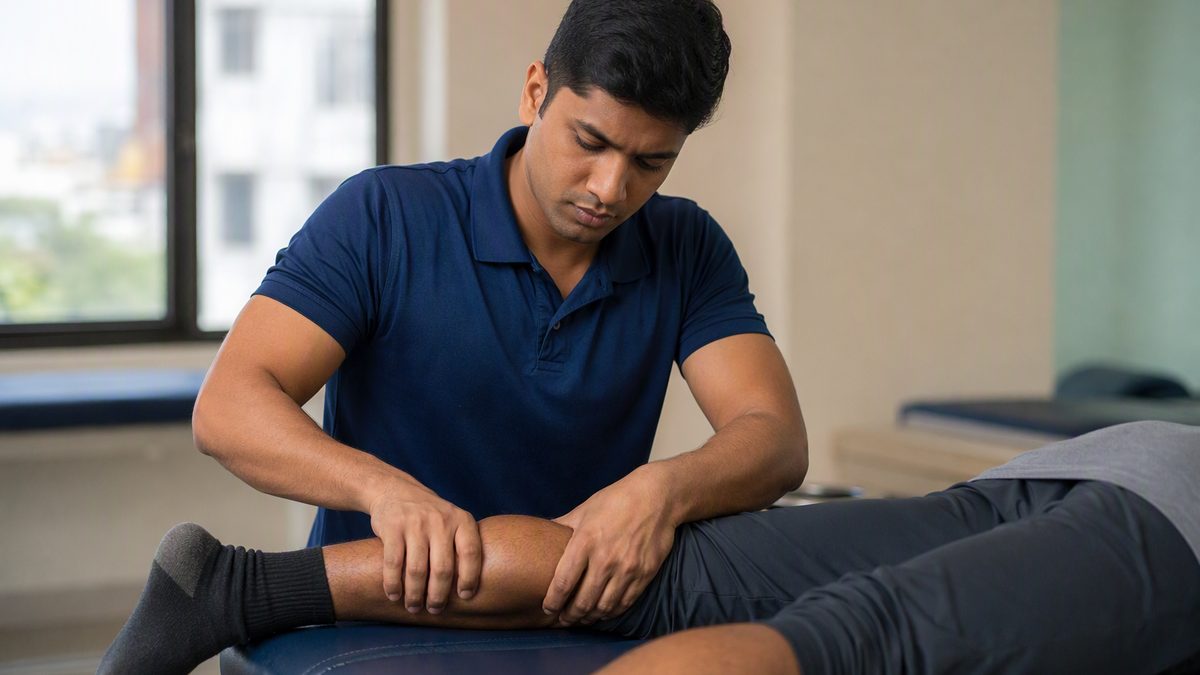
Picture a normal lifting week: push on Monday, pull on Wednesday, legs on Friday, maybe an upper session on the weekend, all squeezed around work and life. Leg day leaves you waddling for two days, your upper back tightens up, and you wonder whether a massage or one of those percussion guns everyone owns would actually help you recover and show up fresher. The short version: yes, a little — and knowing exactly where it fits keeps you from overspending on it.
Massage is a genuine but minor recovery adjunct, best slotted into the gaps your training week already has.
This page maps it to a real schedule — where a gun fits after each session, where an occasional professional visit earns its keep, the honest size of the payoff, and why the basics you already know about beat any recovery gadget for the results you actually see in the mirror.
1. Where Massage Slots Into a Push-Pull-Legs Week
The cleanest place for self-massage is in the hours after your hardest sessions and on rest days between them — that is both the most-studied recovery window and where the perceived-soreness benefit shows up. So after leg day, a couple of minutes on your quads and glutes that evening or the next day fits naturally. After a heavy pull session, the lats and upper back. The point is to use it as needed when you are sore, not to bolt a rigid daily ritual onto an already busy week.
Pre-sleep is the other reliable slot. Massage tends to shift you toward a calmer state, so a few minutes before bed can help you wind down and fall asleep — which, for someone juggling evening sessions and a 9-to-5, may be its most useful contribution. The relaxation effect is real even when the soreness benefit is modest.
One scheduling rule worth keeping: do not do deep, aggressive work right before a session where you want to lift heavy or hard. Heavy deep-tissue work can leave you transiently tender and loose, which can take the edge off your performance. Light, brief work before training is fine; save the deeper sessions for after or on rest days. Match the frequency to your week — more during a hard high-volume block, almost none in a light or deload week.
2. The Gun vs the Professional: Your Cost-Effective Setup
For the everyday lifter, a percussion massage gun is the sensible default. It reproduces much of the perceived recovery and soreness benefit of hands-on massage, you can use it on demand at home, and over time it is far cheaper than booking repeated sessions. An occasional professional visit still earns its place — for a proper assessment or a stubborn niggle — but for routine soreness and maintenance, the gun covers it. This page is about percussion and professional massage; rolling on a foam roller is a separate self-myofascial topic.
Use it correctly: glide over the muscle belly with moderate pressure for a short bout, and keep off bone, joints, the spine, the neck, nerves, and anything acutely injured. Here is how it maps to a typical split.
| Session | Target muscles | Time per side | When |
|---|---|---|---|
| Leg day | Quads, glutes, calves | 1-2 min each | That evening or next day |
| Pull day | Lats, upper back, biceps | 1-2 min each | Post-session or rest day |
| Push day | Chest, shoulders, triceps | 1-2 min each | Post-session or pre-sleep |
| Any sore evening | Whatever feels worst | 1-2 min each | Pre-sleep wind-down |
| Recurring niggle | See a professional | 30-60 min session | For assessment, occasionally |
On buying: do not assume the premium device is meaningfully better. Higher price does not guarantee a larger evidence-based benefit, and the perceived effect plateaus regardless of how fancy the tool is. A reliable mid-range gun does the job. More is not better — over-aggressive percussion can leave you more sore or bruised.
3. The Honest Payoff — and the Myths You Can Ignore
Sized correctly, the benefit is worth having but small. Among recovery techniques, massage is one of the more consistent performers for reducing perceived soreness and fatigue across markers of muscle damage. So after a hard session you will likely feel less wrecked. But the effect is modest and lives in how you feel, not in measurable strength or muscle gains — direct performance benefits are small at best. Massage will not add to your lifts or build muscle faster.
The expectation that keeps you grounded: soreness from a hard or new session appears within hours, peaks around 24 to 72 hours later, and clears on its own within a few days regardless of what you do. So a lot of the 'the gun fixed my legs' feeling is just DOMS fading on schedule. Massage may make those days more comfortable — it is not shortening the repair timeline by much.
And ignore the gym-myth list entirely. Massage does not flush lactic acid (that clears on its own within an hour or two and is not what makes you sore later), it does not melt fat, it does not break up scar tissue or adhesions in any verifiable way, and it does not lengthen muscles or remove toxins. The credible mechanisms are a calming, parasympathetic shift and reduced pain perception. Smaller than the hype, but real — and a fine reason to use it.
4. What Actually Moves the Needle for an Everyday Lifter
Here is the part most recovery-gadget marketing skips. As a recreational lifter, your progress is limited far more by consistency, sleep, and protein than by any recovery tool, and you are the population most research is actually built on — the basics work for you precisely as advertised. Sleep is the foundation: most hormonal and tissue recovery happens there, sleep loss is linked to worse recovery and performance, and adults generally need about 7 to 9 hours. No massage compensates for chronically short nights.
So the priority order is simple and worth respecting. Sleep, adequate protein and overall energy, and showing up consistently come first. Then sensible load management. Then — a long way down the list — recovery extras like massage. Buying five supplements and a premium massage gun instead of fixing your sleep is the classic recreational-lifter mistake, and it is an expensive way to stall.
None of which means skip the gun. It is a pleasant, cheap, genuinely useful tool for taking the edge off soreness and helping you wind down — just keep it in its lane as a comfort aid on top of the fundamentals, not a substitute for them. The relaxation effect helping you sleep better is arguably the most valuable thing it does. If staying consistent is your real challenge, our guide to building durable fitness habits is worth more to your results than any device.
5. When to See a Pro Instead of Reaching for the Gun
Self-massage handles ordinary soreness and maintenance. But step up to a qualified professional when pain is persistent, sharp, localized, or worsening, when something recurs no matter what you do and you want a proper assessment, or when there is swelling or loss of function. A therapist provides evaluation and tailored treatment that a device simply cannot. Persistent or red-flag symptoms call for a clinician, not just more self-massage.
Some things are an outright stop. Do not massage acutely injured or inflamed tissue, a fresh strain, or anything you suspect is more than ordinary soreness. Get clearance from a clinician first if you are on blood thinners, have a clotting concern, or any medical condition where massage warrants caution. When in doubt, ask before treating.
The everyday rule for a recreational lifter: use the gun freely for normal post-session soreness and pre-sleep wind-down, see a pro occasionally for assessment or a stubborn problem, and never treat self-massage as a way to push through a pain that is telling you something is wrong. Sharp, lasting, or worsening pain is information — listen to it, get it looked at, and let the tool stay in its comfort-aid role where it genuinely helps.
Everyday Lifter Questions About Massage
Should I use a massage gun on rest days too?
Yes, rest days are a good slot. The perceived-soreness benefit shows up in the hours and day after hard sessions, so using the gun on a rest day to manage residual soreness and stiffness fits well, especially after leg day. A few minutes per sore muscle is plenty. Match frequency to your training load — more during a hard block, little in a light week — and treat it as a comfort tool used as needed, not a daily obligation.
When will I see results from adding massage to my routine?
You will feel a modest difference in soreness within a day or two of using it, but you will not see results in the mirror from massage itself — it does not build muscle or add to your lifts. The visible results come from consistent training, adequate protein, and sleep. Massage is a comfort aid that can help you recover feeling fresher and sleep better, which supports your training indirectly. Keep your expectations on feel, not physique.
Is the cheap massage gun as good as the expensive one?
For most lifters, yes. Higher price does not guarantee a larger evidence-based benefit, and the perceived effect plateaus regardless of how premium the device is. A reliable mid-range gun delivers the same modest soreness and relaxation benefit as a pricey one. Spend the difference on the things that actually drive results — good food and a setup that helps you sleep. The gun is a nice-to-have, not a place to chase top-end features.
Does massage flush lactic acid or burn fat?
Neither. Lactate clears through your normal metabolism within an hour or two of training and is not the cause of next-day soreness, which comes from muscle damage and inflammation. Massage does not detoxify muscle and does not melt or burn fat — those claims are myths. What it credibly does is calm your nervous system and reduce how sore you feel. Useful for comfort and wind-down, but not a weight-loss or detox tool in any sense.
Disclaimer: This article is for educational purposes only and is not medical advice. Consult a qualified healthcare professional before starting any supplement, nutrition, or training protocol — especially if you are pregnant or breastfeeding, under 18, taking medication, or managing a health condition.
Scientific References & Clinical Sources
- Dupuy O, et al. An Evidence-Based Approach for Choosing Post-exercise Recovery Techniques to Reduce Markers of Muscle Damage, Soreness, Fatigue, and Inflammation: A Systematic Review With Meta-Analysis. Front Physiol, 2018. PMID: 29755363
- Dattilo M, et al. Sleep and muscle recovery: endocrinological and molecular basis for a new and promising hypothesis. Med Hypotheses, 2011. PMID: 21550729
- Fullagar HH, et al. Sleep and athletic performance: the effects of sleep loss on exercise performance. Sports Med, 2015. PMID: 25315456
- Halson SL. Sleep in elite athletes and nutritional interventions to enhance sleep. Sports Med, 2014. PMID: 24791913
- Peake JM, et al. A Critical Review of Consumer Wearables, Mobile Applications, and Equipment for Providing Biofeedback, Monitoring Stress, and Sleep in Physically Active Populations. Front Physiol, 2018. PMID: 30002629

