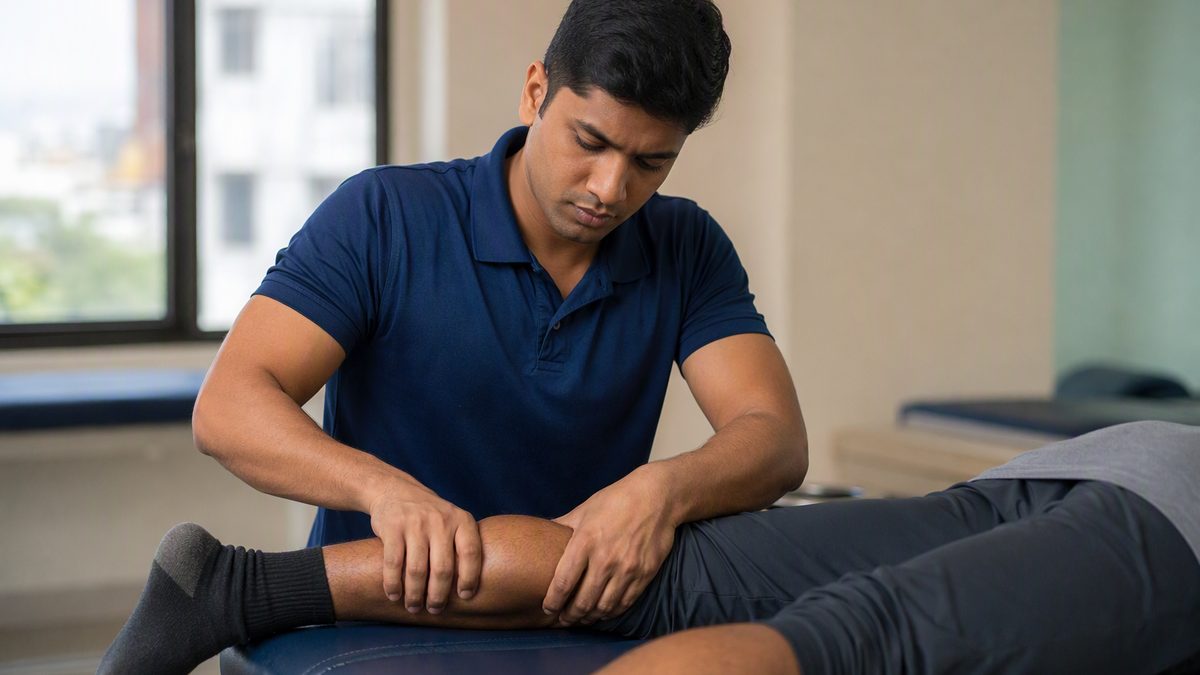
💡 Key Takeaways
- Massage doesn't flush lactic acid, that cleared in an hour or two and never caused your day-two burn; quad DOMS comes from eccentric muscle damage.
- The real benefit is modest and perceived, less sore, less fatigued, more relaxed legs, not faster tissue repair or a strength boost.
- A massage gun (1-2 min per quad, hamstring, calf, off bone and joints) beats booking nightly resort sessions: portable, on-demand, cheaper.
- Skip deep work the morning before a big ride day and on any crash injury or swelling; protect sleep and hydration first, especially at altitude.
Plenty of riders believe a hard rubdown after a punishing descent day 'flushes the lactic acid' out of their trashed quads and resets them for tomorrow. It is a tidy story, and it is wrong. The lactate from your day on snow cleared on its own within an hour or two, and it was never what made your legs scream on day two.
What actually torches your quads is eccentric load, your muscles lengthening under control through every turn and absorbed bump, and the muscle damage and delayed soreness that follow. Massage can't flush that away, because there's nothing to flush. What it can do is more modest and more honest, and still worth knowing before you book a session or pull out the gun après.
This page takes the flush myth apart, explains what massage genuinely does for post-ski legs, shows you how to use a gun between ride days, and flags where altitude and crashes change the rules.
1. The Myth: "Massage Flushes the Lactic Acid Out"
The belief is everywhere in lift lines: ride hard, get your legs worked over, and the 'acid' and 'toxins' get pushed out so you're fresh tomorrow. Take it apart piece by piece. Lactate produced while you ski is cleared by normal metabolism within roughly an hour or two, long before you're back at the lodge, and it is not the cause of delayed-onset muscle soreness. Your day-two burn comes from exercise-induced muscle damage and inflammation, not lingering acid.
So massage does not detoxify your quads or remove waste, because the premise is false. It also doesn't break up scar tissue you can verify, lengthen your muscles, or speed the true repair timeline of the damage in any large way. The honest mechanism is different and quieter: massage shifts you toward a parasympathetic, relaxed state and reduces how sore and fatigued your legs feel, partly because touch itself dials down pain perception.
That matters because of how DOMS behaves on a ski trip. Soreness from a big eccentric day shows up within hours, peaks around 24 to 72 hours later, and resolves on its own within a few days no matter what you do. Part of any 'the massage fixed it' impression is just soreness fading on schedule. Massage may make those days feel modestly more comfortable, not erase them.
2. What Massage Really Does for Post-Ski Legs
Strip away the myth and there's a real, if modest, benefit. Among post-exercise recovery techniques, massage is one of the more consistent performers for cutting perceived muscle soreness and fatigue. The effect is strongest on how your legs feel rather than on big objective changes in performance or blood markers, and the direct boost to strength, power, or sprint times is small at best. For a sport where the goal is to keep riding comfortably day after day, the feel-better effect is exactly the useful one.
The relaxation side earns its keep too. After a full send of a descent day, the parasympathetic down-shift from a session or some gun work can take the edge off and help you wind down toward sleep, which on a trip is the resource doing most of your actual recovering.
Set expectations against the soreness timeline so you're not fooled. If you work your quads après on day one, the worst soreness still arrives on day two or three, because that's the natural course. Massage isn't failing when that happens, it was never going to abolish the damage. It's there to make the sore days a bit more bearable while your legs repair on their own clock.
3. Gun Work and Sessions Across a Ski Trip
A short, intense trip rewards a simple plan over guesswork, and the dosing below is practical consensus rather than a trial-derived prescription.
| Trip day | Leg status | Tool | Dose / placement |
|---|---|---|---|
| Day 1 evening (après) | Hit hard, soreness coming | Massage gun | 1-2 min per quad, hamstring, calf; moderate pressure |
| Day 2 (soreness building) | Stiff, tender | Massage gun | 1-2 min per sore area, glide over muscle belly |
| Day 3 (peak DOMS) | Most sore | Gun, or pro session if off-snow | Short gun passes, or 30-60 min therapist if available |
| Pre-sleep, any night | Wired, hard to settle | Massage gun | 1-2 min light per area for relaxation, not intensity |
| Morning before riding | About to ski hard | Light only | Brief, gentle; skip deep work before peak-effort days |
Two rules keep this safe and useful. Glide the gun over the muscle belly of quads, hamstrings, and calves with moderate pressure for one to two minutes each, and stay off the shin bone, knees, the spine, and the front of the neck. And skip deep, aggressive work the morning before a big riding day, the transient tenderness and looseness can blunt the leg drive you want on the first hard pitch.
4. Massage Guns vs. Booking a Mountain-Town Session
On a trip, a percussion massage gun usually wins on practicality. It delivers a similar perceived-soreness and relaxation benefit to hands-on work for everyday use, and it's self-administered, portable in your gear bag, on-demand après, and far cheaper than booking resort massages every night. For routine post-ski leg maintenance, it covers the use case well.
Booked sessions still have a place. A skilled therapist can assess and treat a specific problem in a way a gun can't, so save professional work for when something feels like more than ordinary soreness, or for a once-a-trip thorough session if you value it. Don't expect the pricier option to deliver a bigger evidence-based effect, though, higher cost doesn't buy more recovery here.
Match your frequency to the load rather than hammering your legs nightly. More is not better, the perceived benefit plateaus, and over-aggressive deep work can leave you more sore or even bruised, which is the opposite of what you want mid-trip. Lean on the gun during the hard back-to-back days and barely touch it on easy ones.
5. Altitude, Crashes, and When to Skip Massage
Mountains change the math, and some situations are off-limits. First, the hard contraindication: never work acutely injured, swollen, or inflamed tissue. After a crash, sharp or localized pain, swelling, or loss of function is medical territory, not a knot to gun out, and altitude illness is a clinician's problem, not a recovery one. If you bruise easily, are on blood thinners, or have a clotting concern, get clearance before any deep work.
Altitude also reshapes recovery priorities. It raises your fluid needs and tends to degrade sleep, the exact resource doing most of your repair, while cold blunts thirst as you keep losing water through your breath. Stack après alcohol on top and you sabotage the sleep and hydration that matter far more than any rubdown. Massage is a comfort layer on top of those fundamentals, not a replacement for them.
Judge whether it's helping by the right signals: a simple 0-10 soreness rating, how fresh your legs feel, your sleep quality, and whether the next ride day feels better. If those trend the right way, the modest benefit is real for you. If pain is sharp, worsening, or paired with swelling, that's a stop-and-assess flag, not a cue for more gun work.
Slope-Side Massage Questions Riders Actually Ask
Does a massage really flush the lactic acid out of my legs?
No. The lactate from your ski day cleared on its own within an hour or two and was never what made you sore. Your day-two quad burn is muscle damage from eccentric load, not lingering acid, so there's nothing for massage to flush. What it can honestly do is make your legs feel less sore and fatigued and help you relax, which is useful, just not detox.
How do I prep my legs for opening week with massage?
Massage won't prevent opening-week DOMS, the real fix is eccentric leg training in the off-season so your quads arrive prepared. During the trip, a massage gun on sore quads, hamstrings, and calves for a minute or two each can make the inevitable soreness more bearable. Just don't expect it to stop day two from being the rough one; that's the natural course of the damage.
Does altitude change how I should use massage?
Massage itself works the same, but altitude raises your fluid needs and degrades sleep, the resource doing most of your recovery, while cold hides your thirst. So prioritize deliberate hydration, protected sleep, and easing off après alcohol over any rubdown. Treat gun work or a session as a comfort layer on top of those fundamentals. And remember altitude illness is medical, not something to massage through.
Should I get a massage or just use my gun on a ski trip?
For routine post-ski leg soreness and relaxation, the gun is usually the better call, similar perceived benefit, portable in your gear bag, on-demand après, and far cheaper than nightly resort sessions. Save a professional session for when something feels like more than ordinary soreness and you want a real assessment, or for one thorough treatment if you enjoy it. Higher price doesn't buy more recovery.
Disclaimer: This article is for educational purposes only and is not medical advice. Consult a qualified healthcare professional before starting any supplement, nutrition, or training protocol — especially if you are pregnant or breastfeeding, under 18, taking medication, or managing a health condition.
Scientific References & Clinical Sources
- Dupuy O, et al. An Evidence-Based Approach for Choosing Post-exercise Recovery Techniques to Reduce Markers of Muscle Damage, Soreness, Fatigue, and Inflammation: A Systematic Review With Meta-Analysis. Front Physiol, 2018. PMID: 29755363
- Gill ND, et al. Effectiveness of post-match recovery strategies in rugby players. Br J Sports Med, 2006. PMID: 16505085
- Dattilo M, et al. Sleep and muscle recovery: endocrinological and molecular basis for a new and promising hypothesis. Med Hypotheses, 2011. PMID: 21550729
- Thun E, et al. Sleep, circadian rhythms, and athletic performance. Sleep Med Rev, 2015. PMID: 25553531
- Peake JM, et al. A Critical Review of Consumer Wearables, Mobile Applications, and Equipment for Providing Biofeedback, Monitoring Stress, and Sleep in Physically Active Populations. Front Physiol, 2018. PMID: 30002629

