💡 Key Takeaways
- Massage is a modest, feel-better tool for perceived soreness and relaxation, not a tissue-repair or performance booster; your plate drives recovery.
- It's completely diet-neutral, no ingredients, no interaction with iron, B12, or leucine, so it can't help or harm your plant-based fueling.
- It doesn't flush lactic acid or detox anything; DOMS peaks at 24-72h and fades on its own, massage just makes those days a bit more comfortable.
- Use a gun 1-2 min per sore muscle matched to load; keep sleep, energy, protein/leucine, and iron/B12 labs as the real recovery levers.
You already manage recovery carefully on plants, hitting leucine thresholds, watching iron and B12, building protein from legumes, soy, and seitan rather than meat. So when soreness piles up in a hard block, it's tempting to wonder whether a recovery tool like massage is doing real work or just feeling nice. The honest problem to solve is knowing where massage genuinely helps so you don't over-rely on it or dismiss it.
Massage fits a narrow, real slot: it makes sore muscles feel less battered and helps you relax, which is useful after hard sessions. Crucially for you, it's diet-neutral, it doesn't interact with your eating at all, so it neither helps nor harms your plant-based fueling. It's a comfort layer that sits entirely outside the kitchen.
This page covers why your plate, not a rubdown, drives recovery, what massage actually does about soreness, how to dose a gun around training, and where it stays firmly behind the nutrition work that defines a vegetarian athlete.
1. The Problem: Soreness Stacks, but Recovery Starts on Your Plate
Hard training blocks leave you sore, and the appeal of a quick recovery fix is obvious. But as a vegetarian athlete you already know recovery is mostly a nutrition and sleep problem, hitting enough total protein and leucine from plants, keeping energy adequate, staying on top of iron and B12. That work is what repairs the muscle damage behind your soreness. Massage doesn't touch any of it.
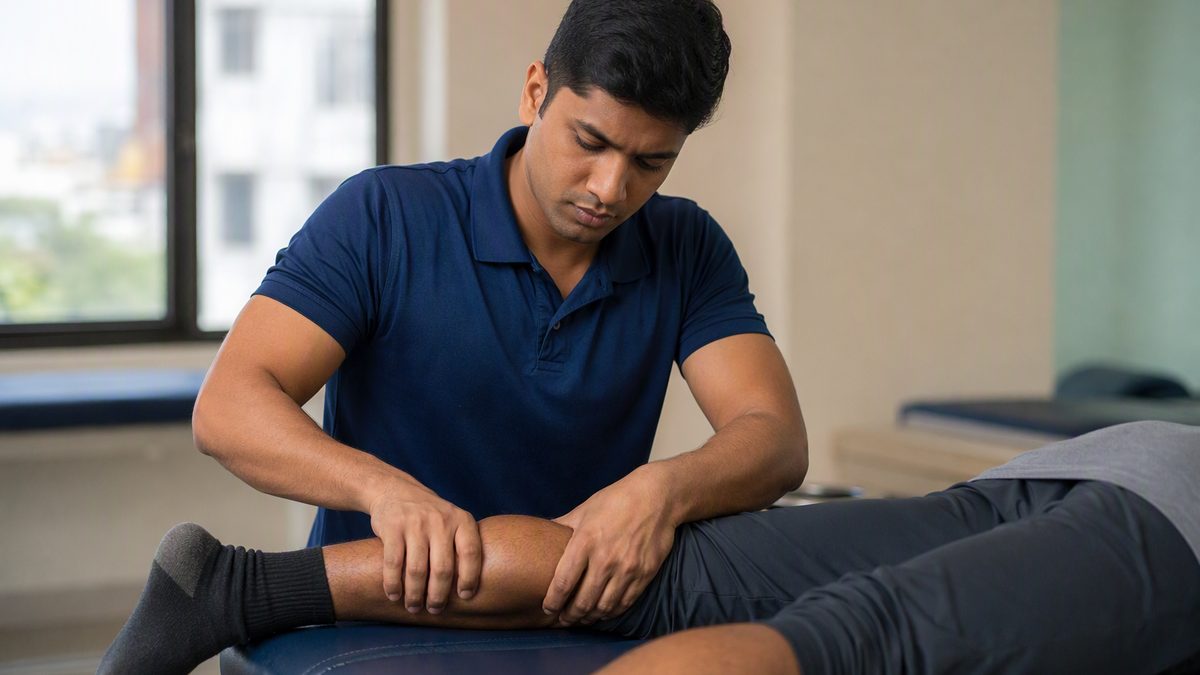
Where massage does fit is the comfort side. Among post-exercise recovery techniques, it's one of the more consistent at reducing perceived muscle soreness and fatigue, so it can make a sore block feel less brutal. The benefit is real but modest, and it's about how you feel, not about repairing tissue faster or boosting performance, your strength, power, and pace won't measurably change from a session.
The reason this matters for you specifically: it would be a mistake to let a feel-good recovery tool distract from the plate, which is your actual differentiator. So slot massage as a small comfort add-on, useful on sore days, and keep your attention on the leucine math, the iron and B12 labs, and the sleep that genuinely drive your recovery.
2. What Massage Does About Soreness (and the Myths to Skip)
The credible mechanisms are modest and worth stating plainly. Massage shifts your nervous system toward a parasympathetic, relaxed state, which can ease perceived stress and help sleep onset, and it reduces the perception of soreness partly because touch itself dials down pain. So sore legs feel looser and less tender, even when the underlying tissue hasn't changed much. That feel-better effect is genuine and useful on its own.
Now the myths, which matter because plant-based spaces attract a lot of 'detox' talk. Massage does not flush lactic acid or remove toxins, that lactate cleared on its own within an hour or two and was never what made you sore, which is muscle damage instead. It does not break up scar tissue you can verify, lengthen muscles, melt fat, or detoxify anything. If a device or therapist promises to 'cleanse' or 'repair' your muscles, that's overselling.
Set your expectations against the soreness timeline so you read it honestly. Delayed soreness peaks around 24 to 72 hours after a hard session and resolves on its own within a few days no matter what you do. Part of any 'the massage fixed it' impression is just soreness fading on schedule. Massage may make those days feel modestly more comfortable, not change the repair clock.
3. Dosing a Gun Around Your Training Week
Massage is simplest to use as a percussion gun, dosed lightly and matched to how hard your week is. The numbers below are practical consensus, since trials haven't fixed an exact optimal time-point.
| Training context | Tool | Dose / placement | Timing |
|---|---|---|---|
| After a hard or high-soreness session | Massage gun | 1-2 min per sore muscle (muscle belly) | Hours after, or pre-sleep |
| Pre-sleep on a sore night | Massage gun | 1-2 min light per area | In the wind-down before bed |
| Congested high-load block | Gun, or occasional pro session | Short passes; 30-60 min therapist if wanted | On a lighter day |
| Pre-competition | Light only | Brief, gentle passes | Avoid deep work near event |
| Light / deload week | Minimal | As needed only | Skip if not sore |
Two rules. Match frequency to load, lean on the gun in congested blocks and barely use it in light weeks, since the benefit plateaus and over-aggressive deep work just adds soreness. And glide the gun over the muscle belly of the sore large muscles for one to two minutes each at moderate pressure, staying off bone, joints, the spine, and the neck.
4. Diet-Neutral by Design: Why It Doesn't Touch Your Fueling
One thing vegetarian athletes appreciate about massage: it's completely diet-neutral. Unlike supplements, where you have to check whether the product is vegetarian or hides animal-derived ingredients, massage has no ingredient list and no interaction with your eating at all. It won't affect your iron or B12 status, your leucine intake, or anything on your plate. It's purely a physical comfort tool.
That's freeing, because it means you can use it without adding to your nutrition admin. But it cuts both ways: precisely because it sits outside your fueling, it can't compensate for any gap in it. If your protein or leucine is short, or your iron or ferritin is low, no amount of massage helps, those are kitchen and lab problems. Massage is layered on top of sound nutrition, never a substitute for it.
So treat it as the easy, optional part of your recovery stack and keep your real effort on the plate. The leucine targets, the yearly iron and B12 checks, the adequate energy, those define your recovery as a vegetarian athlete. Building the habits that keep that nutrition consistent matters far more than any rubdown, and our guide to building fitness habits is a good companion for that side.
5. Keeping Massage Behind Sleep and Nutrition
Rank your recovery levers correctly and massage stays where it belongs. Sleep is the foundational tool, most of your hormonal and tissue recovery happens during sleep, and adults generally need about seven to nine hours, more under heavy training. Adequate energy and the plant-protein and micronutrient work to repair muscle damage matter far more than any session. Massage's best indirect contribution is helping you settle toward that sleep through its relaxation effect.
Respect the safety lines too. Never work acutely injured, swollen, or inflamed tissue, that's a stop-and-assess situation, not a knot to gun out. Get clearance first if you're on blood thinners or have a clotting concern. And know the difference between training soreness, which eases as you warm up and is massage-appropriate, and sharp, localized, or worsening pain, which points to injury and needs clinical input, not more massage.
Judge whether it's helping with simple signals: rate soreness 0-10, note your sleep quality, and watch whether the next session feels better. If a professional session is ever warranted for a real assessment, a gun is fine for routine maintenance the rest of the time, with the higher-cost option offering no bigger evidence-based benefit. For you, the honest verdict is 'a small, diet-neutral comfort tool, well behind the plate and the pillow.'
Plant-Based Recovery Questions Vegetarian Athletes Ask
Is massage vegetarian-friendly, like, are there ingredients to check?
Massage has no ingredients to check, which makes it one of the easier parts of a vegetarian recovery routine. Unlike supplements, where you have to verify the product is vegetarian and free of animal-derived additives, hands-on or gun massage is purely physical and diet-neutral. The only thing to watch is the oil a therapist uses if you care about its source, but the technique itself involves nothing you'd need to vet.
Does massage help my plant-based recovery or is it just placebo?
It's not just placebo, but the effect is modest and specific. Massage reliably reduces how sore and fatigued you feel and helps you relax, partly because touch dials down pain perception. What it doesn't do is repair muscle faster or replace the nutrition that actually drives your recovery. So it's a real comfort tool sitting on top of your fueling, not a substitute for hitting your protein, leucine, iron, and B12 targets.
Can a massage make up for low iron or protein in my diet?
No, and this is the key point for vegetarian athletes. Massage is completely outside your nutrition, so it can't compensate for low ferritin, short protein, or missed leucine, those are kitchen and lab problems with kitchen and lab solutions. If you're under-recovering, check your fueling and your yearly iron and B12 labs first. Massage only adds a little comfort once the nutrition is actually handled.
How often should I bother with a massage gun?
Match it to your training load. During congested, high-soreness blocks, a minute or two on each sore muscle after hard sessions or before sleep is plenty; in light weeks, skip it. More isn't better, the benefit plateaus and over-aggressive deep work just leaves you sorer. Keep it to the muscle belly of large muscles, off bone and joints, and treat it as the optional, easy part of your recovery, not the main event.
Disclaimer: This article is for educational purposes only and is not medical advice. Consult a qualified healthcare professional before starting any supplement, nutrition, or training protocol — especially if you are pregnant or breastfeeding, under 18, taking medication, or managing a health condition.
Scientific References & Clinical Sources
- Dupuy O, et al. An Evidence-Based Approach for Choosing Post-exercise Recovery Techniques to Reduce Markers of Muscle Damage, Soreness, Fatigue, and Inflammation: A Systematic Review With Meta-Analysis. Front Physiol, 2018. PMID: 29755363
- Gill ND, et al. Effectiveness of post-match recovery strategies in rugby players. Br J Sports Med, 2006. PMID: 16505085
- Dattilo M, et al. Sleep and muscle recovery: endocrinological and molecular basis for a new and promising hypothesis. Med Hypotheses, 2011. PMID: 21550729
- Halson SL. Sleep in elite athletes and nutritional interventions to enhance sleep. Sports Med, 2014. PMID: 24791913
- Peake JM, et al. A Critical Review of Consumer Wearables, Mobile Applications, and Equipment for Providing Biofeedback, Monitoring Stress, and Sleep in Physically Active Populations. Front Physiol, 2018. PMID: 30002629

