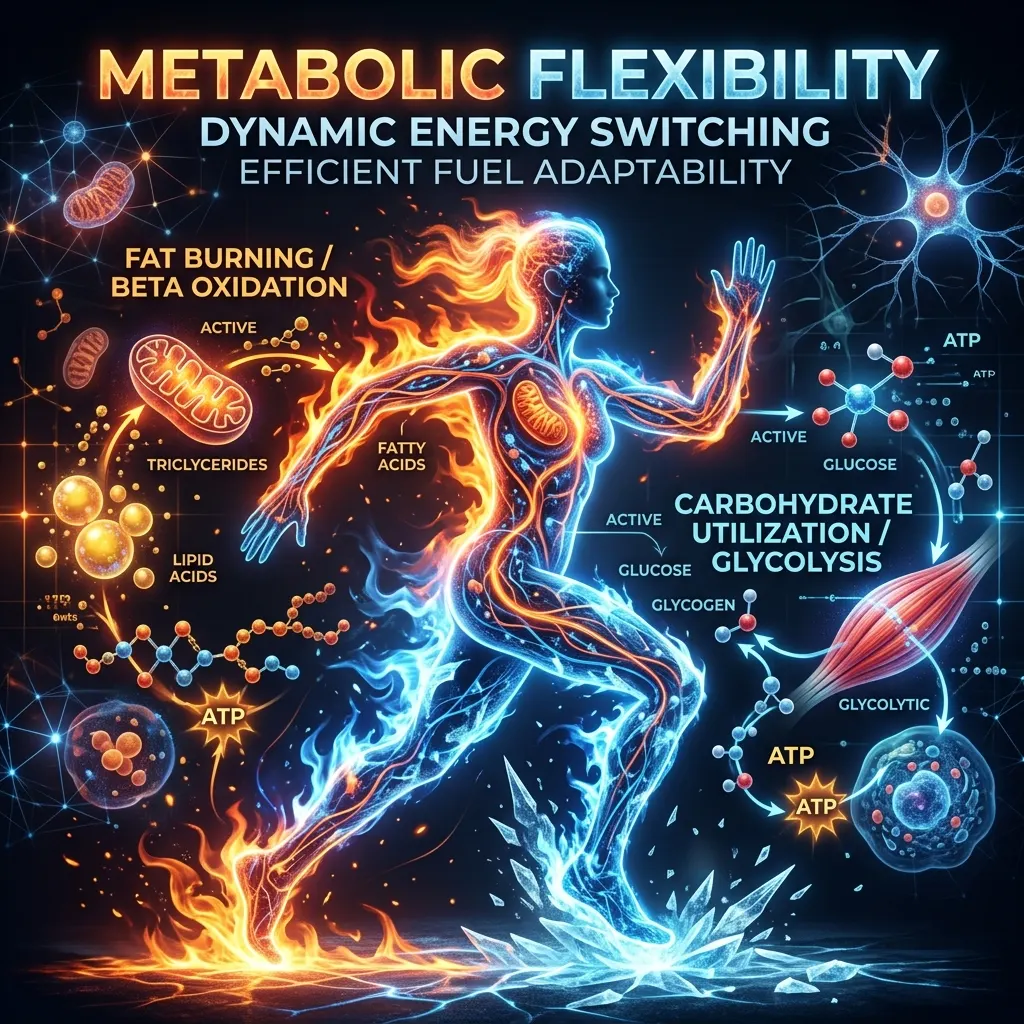
Metabolic flexibility is becoming the cornerstone of optimal fitness in 2026. Rather than relying solely on carbohydrates for energy, metabolically flexible athletes can seamlessly switch between burning carbs and fat depending on training demands and availability of fuel. This isn't just a buzzword—it's the key to sustained performance, stable energy levels, and the ability to maintain fitness across varying training conditions.
What Is Metabolic Flexibility?
Metabolic flexibility refers to your body's ability to efficiently switch between different fuel sources—primarily carbohydrates and fats—based on exercise intensity, availability, and metabolic conditions. A metabolically flexible athlete can:
- Burn fat efficiently during low to moderate intensity training
- Switch to carbohydrate metabolism for high-intensity efforts
- Maintain performance even when carbohydrate availability is limited
- Recover optimally by utilizing the appropriate fuel source for each phase
- Experience stable energy and reduced energy crashes
This is in contrast to "metabolic inflexibility," where athletes are dependent on constant carbohydrate availability and struggle during fat-burning states. This dependency can lead to energy crashes, poor endurance performance, and reduced adaptability to varying training conditions.
Why Metabolic Flexibility Matters in 2026
The shift toward metabolic flexibility in 2026 reflects a broader understanding that elite fitness isn't just about intensity—it's about sustainability and adaptability. Here's why it's becoming central to fitness programming:
1. Sustainable Energy Management
Athletes with metabolic flexibility don't experience the energy crashes associated with carbohydrate dependency. They can manage energy across their day with both carbs and fats, leading to more stable blood sugar and better recovery.
2. Improved Fat Loss Without Performance Drops
Traditional calorie restriction often compromises performance. Metabolic flexibility allows you to lose fat while maintaining strength and power because you're not forcing your body to depend on increasingly scarce carbohydrate availability.
3. Better Endurance and Aerobic Development
Many athletes are now using "fat adaptation" protocols—strategic periods of training in a fasted or low-carb state—to maximize aerobic capacity and fat oxidation rates. This is especially popular among endurance athletes and those pursuing longevity-focused fitness.
4. Reduced Dependency on Fuel Availability
Athletes who are metabolically flexible don't need to constantly fuel their workouts. This reduces bloating, digestive issues, and the need for constant sports nutrition products.
The Science Behind Metabolic Flexibility
Your body has two primary fuel systems:
- Carbohydrate System (Glycolytic): Fast, efficient for high-intensity effort (above 70-80% max heart rate), but dependent on limited glycogen stores
- Fat System (Oxidative): Slow, unlimited in supply, efficient for low to moderate intensity (below 60-70% max heart rate), but requires training to optimize
Most modern diets and training programs heavily favor the carbohydrate system, creating metabolic inflexibility. Your body forgets how to efficiently oxidize fat. This is why many athletes hit a wall during longer efforts or feel fatigued when carbs aren't readily available.
Building metabolic flexibility involves strategically training both systems and creating the stimulus for your body to improve fat oxidation capacity.
How to Build Metabolic Flexibility: A 12-Week Protocol
Phase 1: Establish Your Baseline (Weeks 1-4)
Goal: Assess your current fat oxidation capacity and establish aerobic base training.
- Perform 3-4 zone 2 cardio sessions per week (60-70% max HR)
- Keep one or two sessions completely fasted or in a low-carb state
- Track how you feel: energy levels, appetite, performance
- Maintain normal carbohydrate intake for high-intensity work
- Start using a continuous glucose monitor (CGM) to understand your carbohydrate response patterns
Phase 2: Fat Adaptation (Weeks 5-8)
Goal: Train your body to preferentially burn fat during aerobic sessions while preserving carbohydrates for high-intensity efforts.
- Increase fasted or low-carb zone 2 sessions to 3-4 per week
- These sessions should be 45-90 minutes depending on your fitness level
- Maintain high carbohydrate availability for strength training and high-intensity intervals
- Consider a "periodized carb approach": low carbs on easy days, high carbs on hard days
- Monitor lactate threshold: metabolic flexibility often improves lactate clearance
Phase 3: Integration and Performance Testing (Weeks 9-12)
Goal: Prove your metabolic flexibility with improved performance metrics and sustained energy.
- Perform a fasted high-intensity workout to test your ability to perform without carbohydrates
- Complete a long zone 2 session (90+ minutes) on minimal fuel to assess fat adaptation
- Track performance improvements: better pace at lower heart rates, stable energy, faster recovery
- Transition to strategic carbohydrate timing based on your training demands
Practical Nutrition Strategies for Metabolic Flexibility
The "Periodized Carbohydrate" Approach
Rather than consuming consistent carbohydrate amounts daily, periodize them around your training:
- Easy/Recovery Days: 2-4g carbs per kg body weight, focus on fat and protein
- Moderate Training Days: 4-6g carbs per kg body weight
- High-Intensity Days: 6-10g carbs per kg body weight, front-loaded around the workout
Fasted Training Considerations
Not all fasted training is equal. When pursuing fat adaptation:
- Keep it low intensity: Fasted zone 2 training is ideal. Fasted high-intensity work can be counterproductive
- Start conservatively: Begin with 30-45 minute fasted sessions before progressing to 60-90 minutes
- Don't overdo it: 1-2 fasted sessions per week maximum. Too much fasted training can impair recovery and muscle building
- Listen to your body: If you feel terrible, break your fast. Forcing fasted training through poor performance won't build flexibility
Pre-Emptive Carbohydrate Loading
For high-intensity sessions, your carbohydrates should already be in your system before the workout starts. The modern approach:
- Consume 1-4g carbs per kg of body weight 1-4 hours before training, depending on intensity
- Choose easily digestible carbs: white rice, fruit, sports drinks, oats
- Save complex carbs and fiber for post-workout when digestion is less critical
Key Metrics to Track Metabolic Flexibility
You'll know you're building metabolic flexibility when these metrics improve:
- Fat Oxidation Rate: The amount of fat you burn per minute during aerobic exercise (measured via indirect calorimetry or estimated through pace/power at given heart rates)
- Aerobic Threshold: Your ability to sustain effort at higher intensities while staying in fat-burning zones
- Energy Stability: Reduced energy crashes, better mood, more stable hunger signals
- Recovery Quality: Improved sleep, less muscle soreness, faster adaptation
- Performance on Limited Fuel: Your ability to perform well in fasted states or with minimal carbohydrate availability
If you have a continuous glucose monitor, watch for:
- Smaller glucose spikes after meals as your insulin sensitivity improves
- Better glucose management during and after exercise
- Reduced glucose variability day-to-day
Common Mistakes When Building Metabolic Flexibility
Mistake #1: Over-Restricting Carbohydrates
Metabolic flexibility doesn't mean becoming low-carb. It means using carbohydrates strategically. Chronic under-eating of carbs for training needs will impair performance and recovery, not improve flexibility.
Mistake #2: Doing Everything Fasted
Training all your workouts fasted or very low-carb won't work. Your high-intensity efforts need fuel. Save fasted training for your lowest-intensity sessions.
Mistake #3: Ignoring Individual Variation
Some athletes naturally have higher fat oxidation capacity. Others take longer to adapt. Your genetics, training history, and current body composition all affect how quickly you build metabolic flexibility. Be patient.
Mistake #4: Neglecting Strength and Muscle Building
Getting too caught up in fat adaptation can lead to under-fueling for strength training. Maintain adequate carbohydrate and protein intake for your strength sessions.
Who Benefits Most from Metabolic Flexibility?
Endurance Athletes: Marathoners, ultrarunners, cyclists, and triathletes see massive improvements in endurance capacity and pacing strategy.
Weight Loss Seekers: Those pursuing sustainable fat loss without energy crashes benefit from the stability metabolic flexibility provides.
Hybrid Athletes: Those combining strength and conditioning find they can maintain muscle while in a deficit.
Longevity Focused: Fat adaptation supports metabolic health markers and may enhance lifespan and disease prevention.
High-Level Athletes: Professional and competitive athletes now view metabolic flexibility as essential for peak performance and adaptability across varying competition formats.
Tools to Support Metabolic Flexibility Training
- Continuous Glucose Monitor (CGM): Real-time feedback on your carbohydrate response (Dexcom, Freestyle Libre)
- Heart Rate Variability (HRV) Tracking: Assess recovery and autonomic balance (Oura Ring, Whoop)
- Lactate Threshold Testing: Determine your optimal heart rate zones for fat vs. carb training (sports labs or fitness coaches)
- VO2 Max and Lactate Testing: Measure aerobic capacity improvements over time
- Body Composition Tracking: DEXA scans or bioelectrical impedance to confirm fat loss without muscle loss
- Performance Metrics: Track pace/power at given heart rates to measure aerobic efficiency improvements
The Bottom Line: Why Metabolic Flexibility is the Fitness Trend of 2026
Metabolic flexibility represents a maturation of fitness science in 2026. Rather than chasing the latest extreme diet or workout trend, it's about building a body that can adapt and perform across different metabolic states. This leads to:
- Sustained performance improvements
- Sustainable fat loss without sacrifice
- Better health markers and metabolic function
- Reduced dependence on supplements and constant fueling
- Improved quality of life and energy stability
Start with one fasted zone 2 session per week and strategically time your carbohydrates around hard training. Within 8-12 weeks, you'll notice remarkable improvements in how your body feels and performs. This is the future of fitness—not restriction or extreme protocols, but metabolic optimization.