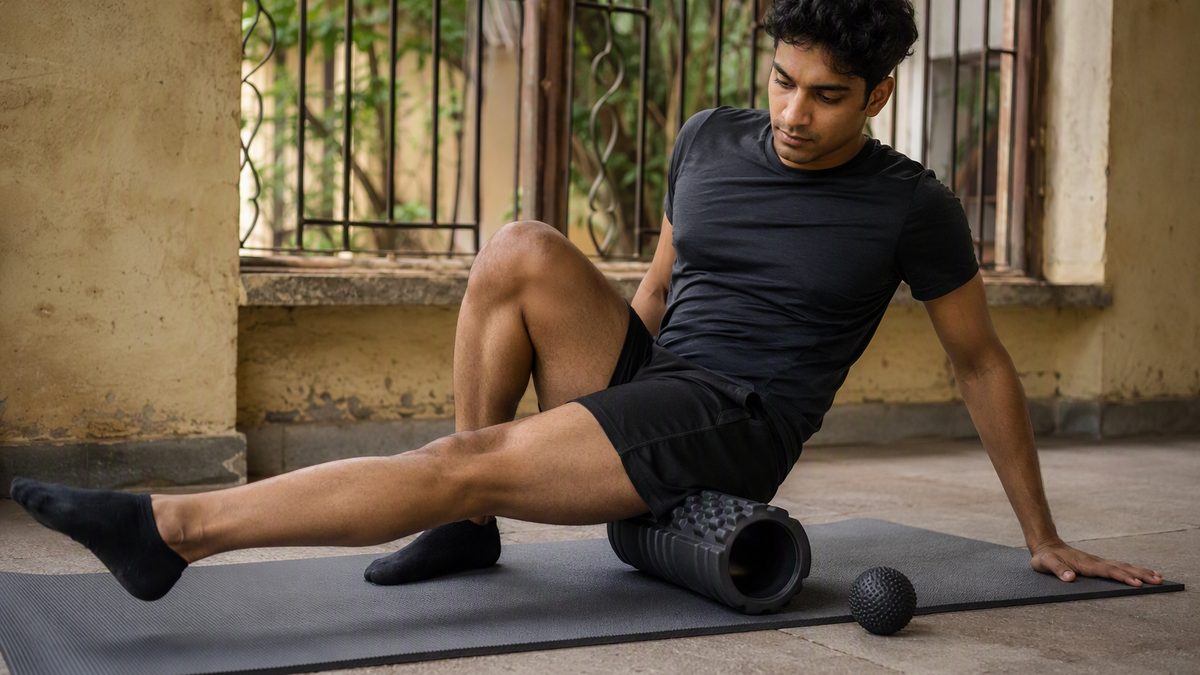
💡 Key Takeaways
- Rolling does not cure arm pump — that is a pressure and grip-endurance problem; forearm rolling only eases the tight feeling briefly.
- The real win is a short-term range-of-motion gain for quads, hips, and glutes, often a few percent up to roughly 10%, without the power loss of long static stretching.
- Roll 30-90 seconds per muscle group at a tolerable ache; keep the tool off the spine, front of neck, and any crash-bruised area.
- After a big weekend ride, rolling modestly eases next-day soreness, but sleep and fuel — not the roller — drive actual recovery between epics.
Plenty of riders believe foam rolling is how you beat arm pump and physically loosen quads that have been hammered by a long descent. Both beliefs are mostly wrong, and clinging to them wastes effort you could spend on what actually works. Rolling does not break up tissue, does not lengthen a tight muscle, and will not solve the forearm swelling that ruins your grip two-thirds of the way down a rough trail.
That is not a reason to throw out the roller. What it genuinely does is smaller and worth understanding: a short-lived bump in range of motion and a looser feeling, delivered through your nervous system rather than by deforming tissue.
This page takes the myths a mountain biker carries — arm pump, melting knots, flushing the legs after a bike-park beatdown — and replaces them with what self-myofascial release can and cannot do, plus exact doses for the muscles riding actually loads.
1. Myth: Rolling My Forearms Will Stop Arm Pump
This is the big one for trail and enduro riders, and it does not hold up. Arm pump is the forearm flexors swelling and fatiguing under sustained isometric grip on a rough descent — a blood-flow and muscular-endurance problem under pressure. Rolling a massage ball into your forearms before or after a ride can make them feel temporarily looser, because rolling raises stretch tolerance and dampens the tight sensation neurally. But it does nothing to the underlying cause. You are not breaking up anything, and the pump will still arrive on the next long, chattery descent.
What actually moves the needle on arm pump is grip and forearm endurance work, a lighter and more relaxed grip technique, suspension and brake-lever setup, and conditioning the position over time. Rolling is at most a feel-good primer alongside those, not a treatment. The honest framing: rolling makes a tight forearm feel better for a few minutes; it does not fix the swelling that wrecks your descents.
The same logic kills two related myths. Rolling is not melting knots or breaking up adhesions — human fascia is far too tough to deform with a ball — and it is not flushing lactic acid from your legs after a climb. Lactate clears on its own within an hour or two and was never what makes you sore. Drop those stories and the tool becomes more useful, not less.
2. What Rolling Genuinely Does for a Rider
Here is the part backed by the evidence and worth keeping. Roll a muscle group slowly for half a minute to a minute and a half and you get a real, short-term increase in range of motion — commonly a few percent up to around 10% right after. The key advantage for a rider is that, unlike long static stretching, this range gain comes without measurably dropping your force or power, so a quick pre-ride roll of the quads and hips primes you to move better without costing you punch on the first climb.
The mechanism is neural. Rolling stimulates sensory receptors, briefly lowers muscle tone and excitability, and raises your tolerance to stretch, so you move through more range before discomfort stops you. It adds a mild calming, pain-dampening effect and a small local blood-flow bump. None of it is structural, and all of it fades within minutes to a couple of hours — which is exactly why it belongs as a warm-up primer and a recovery feel-good, not a fix.
After a bike-park day or a weekend epic, rolling the quads, glutes, and calves modestly reduces how sore and stiff you feel over the next day or two. That is a genuine, if moderate, benefit. It just does not speed the underlying repair, so treat it as comfort, not acceleration.
3. A Rolling Protocol for Trail and Enduro Riding
Match dose to purpose. Pre-ride is a brief primer for the big movers; post-ride you can spend a little longer for the soreness benefit. Roll slowly at a tolerable good-ache, breathe, and keep off bone and the spine.
| Target area | Tool | Pre-ride dose | Post-ride / recovery dose |
|---|---|---|---|
| Quads | Foam roller | 45-60 sec each side | 1-2 min each side, slow |
| Glutes and piriformis | Firm ball | 30-45 sec each side | 1-2 min, pause 20-30 sec on tender spots |
| Calves | Foam roller or ball | 30-45 sec each side | 1-2 min each side |
| Forearm flexors (feel-good only) | Firm ball, gentle | 30 sec each side | 30-60 sec, light pressure |
| Upper back / lats (off spine) | Foam roller | 30-45 sec | 1 min, stay on muscle |
Total a few minutes pre-ride, then warm up for real — easy spinning, leg swings, a build to riding intensity. Rolling does not raise your core temperature or rehearse the movement, so it is the opener, not the warm-up. Post-ride, a few minutes per region, repeated over the next couple of days if you are wrecked, is plenty. Grinding harder or longer does not release more and can bruise tissue — a bad idea on legs you are about to ride again tomorrow.
4. Recovering Between Weekend Epics and Bike-Park Days
Back-to-back big days are where riders most want a recovery shortcut, and rolling is the wrong place to look for one. After a heavy descent day, the quads take an eccentric beating and you will be sore for a day or two regardless. Rolling can make those recovery days feel less stiff and a bit more comfortable, which is worth doing — but it does not shorten the repair timeline, and it is not what gets you fresh for the next epic.
What does that is sleep, food, and managing your ride load. Sleep is the foundational recovery tool, with most tissue and hormonal recovery happening overnight, so a rider stacking weekend epics on poor sleep will recover slowly no matter how diligently they roll. Adequate protein, enough total fuel for multi-hour rides, and not red-lining every weekend matter far more than any amount of self-MFR.
One altitude note, since big rides often go high: thin air and cold degrade sleep and raise fluid demands, and cold blunts thirst while you keep losing water through breathing. None of that is a rolling problem — but it does mean the foundations need extra attention on alpine rides, with the roller staying exactly what it is: a low-cost, feel-good extra on top of real recovery.
5. When a Crash or a Pain Means Put the Roller Down
Crashes are part of the sport, and a roller is not a treatment for crash damage. Never roll over a fresh bruise, an impact site, a suspected strain, or any swollen, warm, or inflamed area — you can make it worse. If you bruise very easily or take blood thinners, get medical clearance before deep rolling at all.
Rolling is for diffuse muscle tightness, not for diagnosing injury. Stop and see a professional rather than rolling through it if you have sharp or localized pain instead of a broad ache, pain that radiates or comes with numbness, tingling, or weakness — relevant for riders with neck and hand symptoms after long descents — or swelling and loss of function. Keep the tool off the spine and low back, the front of the neck, and bony points. If a tight spot keeps coming back no matter how much you roll it, that is a load or strength signal for a clinician, not a cue to roll harder.
Honest bottom line for a rider: foam rolling gives a short, real range-of-motion lift and a modest soreness easing through your nervous system. It will not stop arm pump, melt knots, flush your legs, or fix posture from time in the saddle. Use it in small, regular doses as a primer and a feel-good extra — and let sleep, fuel, and sensible ride load do the actual recovery work.
Trail Riders' Questions on Foam Rolling
Does foam rolling help arm pump on long descents?
Not as a fix. Arm pump is your forearm flexors swelling and fatiguing under sustained grip, a blood-flow and endurance problem. Rolling can make the forearms feel looser for a few minutes by easing the tight sensation, but it does nothing to the cause. Real progress comes from grip and forearm endurance work, a relaxed grip, and brake and suspension setup. Treat rolling as a feel-good primer, not a treatment for the pump itself.
Should I foam roll before a ride or after?
Both, for different reasons. A short pre-ride roll of quads and hips lifts range of motion without costing you power, then warm up properly with easy spinning since rolling alone does not warm you up. After a big descent day, slightly longer rolling of the quads and glutes modestly eases how sore and stiff you feel over the next day or two. Just do not expect it to speed the actual muscle repair — that happens on its own.
Will rolling help me recover faster between weekend epics?
It can make recovery days feel less stiff, but it does not meaningfully shorten the repair timeline after a hard descent. What actually drives recovery between big rides is sleep, adequate protein and fuel, and not red-lining every weekend. Sleep especially does the heavy lifting. Roll if it helps you feel looser, but build your between-epic recovery on the fundamentals, not on the roller.
Is anything different about rolling at altitude?
Rolling itself is unchanged, but altitude changes your foundations. Thin air degrades sleep and raises fluid needs, and cold blunts thirst while you keep losing water breathing. None of that is a rolling problem, but it means hydration and sleep deserve extra care on alpine rides. Keep the roller as a small feel-good extra and put your energy into the basics. Altitude illness is medical — never roll through feeling genuinely unwell.
Disclaimer: This article is for educational purposes only and is not medical advice. Consult a qualified healthcare professional before starting any supplement, nutrition, or training protocol — especially if you are pregnant or breastfeeding, under 18, taking medication, or managing a health condition.
Scientific References & Clinical Sources
- Dupuy O, et al. An Evidence-Based Approach for Choosing Post-exercise Recovery Techniques to Reduce Markers of Muscle Damage, Soreness, Fatigue, and Inflammation: A Systematic Review With Meta-Analysis. Front Physiol, 2018. PMID: 29755363
- Gill ND, et al. Effectiveness of post-match recovery strategies in rugby players. Br J Sports Med, 2006. PMID: 16505085
- Dattilo M, et al. Sleep and muscle recovery: endocrinological and molecular basis for a new and promising hypothesis. Med Hypotheses, 2011. PMID: 21550729
- Halson SL. Sleep in elite athletes and nutritional interventions to enhance sleep. Sports Med, 2014. PMID: 24791913
- Peake JM, et al. A Critical Review of Consumer Wearables, Mobile Applications, and Equipment for Providing Biofeedback, Monitoring Stress, and Sleep in Physically Active Populations. Front Physiol, 2018. PMID: 30002629

