💡 Key Takeaways
- Rolling gives a short-term range-of-motion gain and a looser feeling — often a few percent up to roughly 10% — but it does not fix posture or lengthen tight hips long term.
- Target hip flexors and quads, glutes, and the upper back; roll 30-90 seconds each at a tolerable ache and keep the roller off your spine.
- Desk stiffness feels better right after rolling, but durable change comes from moving more, strengthening, and breaking up long sitting bouts.
- Roll on muscle only — never the low back or front of the neck — and get persistent or radiating pain assessed instead of rolling through it.
The question most desk workers ask: can foam rolling undo eight hours of sitting? Direct answer in three sentences — it helps you feel looser and move through more range for a short window, which is genuinely pleasant after a long screen day, but it does not reverse the effects of sitting or correct posture. Rolling raises your stretch tolerance through the nervous system; it does not lengthen tight hip flexors or rebuild the position your chair pushed you into. The fix for a desk body is moving more, not rolling more.
That is worth saying plainly, because the marketing around rolling promises it melts tightness and resets posture. It does neither.
What it can do — a real short-term mobility bump and a modest easing of stiffness — is still useful for someone who sits all day. Below: where rolling fits a 9-to-6, exact doses for the areas sitting punishes most, why it works, and the honest limits.
1. Can Foam Rolling Undo a Day of Sitting? The Direct Answer
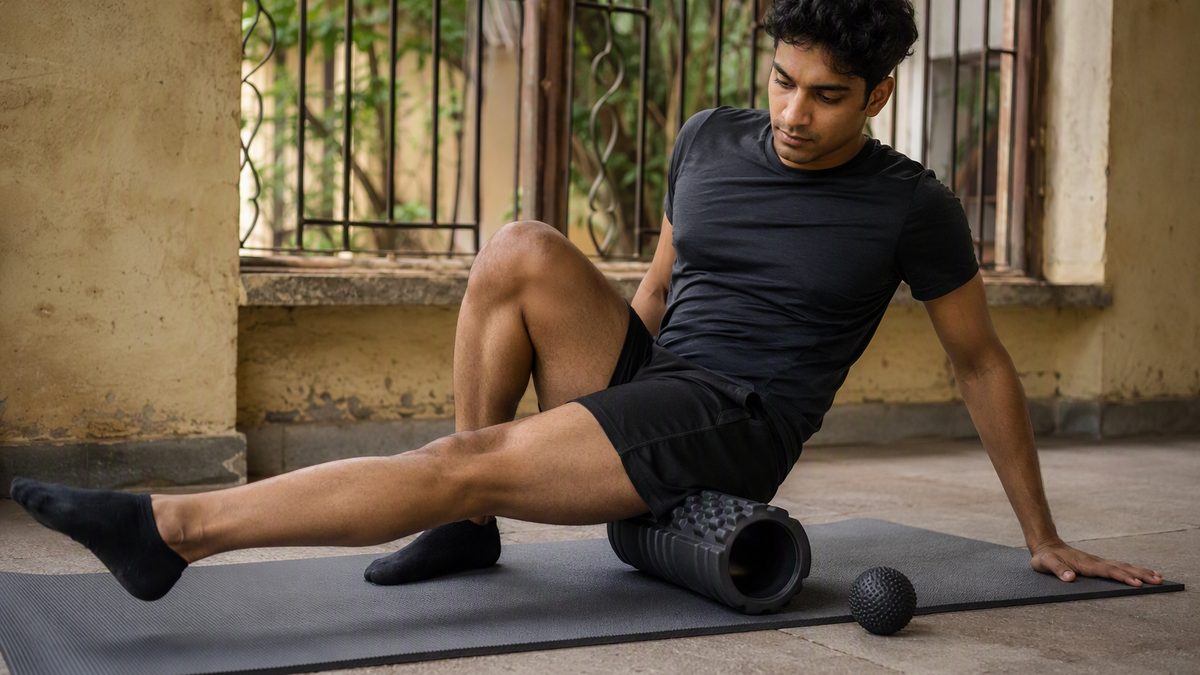
Partly, and only briefly. Roll your hip flexors, quads, and upper back slowly for thirty seconds to a minute and a half each and you get a real, short-term increase in range of motion — a few percent up to around 10% right after — plus a noticeably looser, less-stiff feeling. After a day hunched at a desk, that immediate relief is the genuine benefit, and it is worth having. The catch is that it lasts minutes to a couple of hours, then fades.
What it does not do is the part people most want. Rolling does not lengthen a chronically shortened hip flexor, does not correct rounded posture, and does not fix the muscle imbalances that build up from sitting. Those changes come from moving more often, strengthening the muscles that sitting leaves weak — glutes, mid-back, deep neck flexors — and breaking up long sedentary bouts through the day. Rolling can make a tight area feel better so those movements are more comfortable to do, but it is the warm-up, not the cure.
And one honest point on the deeper issue: even regular gym-goers who sit for long stretches carry a metabolic cost from the sitting itself. Rolling does nothing for that. The answer there is interrupting the sitting with walks and movement, not a roller. So the realistic verdict is — rolling makes a desk body feel better and move better short term, while the actual undoing of sitting is done by movement.
2. Where Rolling Fits a 9-to-6 Schedule
You do not need a special slot. Match a short dose to the moments that already exist in your day, keeping pressure tolerable and off the spine.
| When | Target area | Tool and dose | Goal |
|---|---|---|---|
| Before a workout | Hip flexors, quads, glutes | Foam roller, 45-60 sec each | Prime range, then dynamic warm-up |
| Mid-day desk break | Upper back (off spine) | Foam roller, 30-45 sec | Ease screen-hunch stiffness |
| Stiff glutes from sitting | Glutes and piriformis | Firm ball, 30-45 sec each | Reduce tight feeling |
| Evening wind-down | Calves, quads, glutes | Foam roller, 1-2 min each | Relax, looser feeling before bed |
| Total per session | Mix as needed | 3-6 min | Small, regular doses |
The mid-day break is the underused one. A 30-second upper-back roll between meetings, paired with simply standing and walking, breaks the static hunch better than waiting for the gym. Before training, treat rolling as the opener — three to five minutes, then an actual dynamic warm-up, because rolling does not warm you up or wake the muscles the way movement does. The principle that matters most: a little, regularly, beats one aggressive session a week.
3. Why It Works — and Why It Won't Fix Your Posture
The mechanism is neural, not structural. Rolling stimulates sensory receptors in the tissue, briefly lowers muscle tone and excitability, and raises how much range you tolerate before the stretch sensation stops you. There is also a broad calming, mildly pain-dampening effect and a small bump in local blood flow. The result is a looser feeling and a few extra degrees of motion — a real, but temporary, change in sensation and tolerance, not in the muscle's length or your posture.
This is exactly why rolling cannot fix a desk-shaped body. You are not breaking up adhesions or melting knots; human fascia is far too tough to deform with bodyweight pressure, and there is no knot dissolving. The tight hip flexors and rounded upper back that come from sitting are about habitual position and muscle balance, and those only change with loading through range, strengthening, and changing how much you sit. Rolling makes them feel better in the moment, which can genuinely help you move more — but the durable correction is movement and strength, full stop.
So set expectations honestly. If a tight spot in your neck or back feels better after rolling but returns every single afternoon, the roller is not failing — it was never going to fix the cause. That recurring tightness is a signal to change your setup, your movement breaks, and your strength work, not to roll the spot harder.
4. The Desk-Worker Mistakes to Avoid
The first is rolling the low back directly to chase that stiff, achy desk feeling. Do not. Keep the roller on muscle — glutes, lats, the mid-back over the muscle — and off the spine itself, which is not something to roll over. Low-back stiffness from sitting is better addressed by glute and core work and by getting up more, not by grinding a roller into your lumbar spine.
The second is treating one rolling session, or one workout, as if it cancels the sitting. It does not. The metabolic and stiffness costs of long sedentary bouts are about the bouts themselves; the antidote is frequency of movement across the day — short walks, standing, the occasional desk-side mobility minute — not a single intense effort. A movement snack every hour does more for a desk body than a heroic evening roll.
The third is expecting too much and buying too much. A basic foam roller and one firm ball cover almost everything an office worker needs; you do not need an expensive massage gun to remodel tissue, because nothing remodels tissue here. If you want the habit to stick, small and frequent is the model — our guide to building durable fitness habits is more useful here than any gadget. And remember the real levers: sleep, regular movement, and managing stress outrank any roller for how a desk-bound body feels.
5. When Desk Pain Needs More Than a Roller
Rolling is for ordinary, diffuse stiffness and soreness — not for diagnosing or treating a pain problem. Stop and see a professional rather than rolling through it if you have sharp or localized pain instead of a broad tolerable ache, pain that radiates down an arm or leg or comes with numbness, tingling, or weakness, or stiffness and pain that persist or keep recurring despite changing your setup and moving more. Desk workers especially should take neck pain with arm symptoms or persistent low-back pain to a clinician, not a roller.
Some areas are off-limits regardless. Never roll the front of the neck, the spine and low back directly, or over a numb or inflamed area. If you have a clotting disorder, take blood thinners, bruise very easily, or have any condition affecting circulation or sensation, get medical clearance before deep self-MFR or a massage gun. Persistent ergonomic pain deserves real assessment, not more pressure.
Keep the whole thing in proportion. The biggest levers for a desk-bound body are interrupting the sitting, training consistently, sleeping enough, and managing stress. Foam rolling is a low-cost, feel-good extra that makes you a little looser and more comfortable in the moment. Use it that way — regularly and gently — and let movement and the fundamentals do the real work.
Desk Workers' Questions on Foam Rolling
Does foam rolling actually undo sitting all day?
Only the feeling of it, and only briefly. Rolling gives a short-term range-of-motion gain and eases stiffness for minutes to a couple of hours, which is pleasant after a long screen day. But it does not reverse the metabolic cost of sitting or lengthen tight hips. The real undoing of a sedentary day is moving more often — short walks, standing breaks, movement snacks. Use rolling for short-term relief, not as a substitute for getting up.
Will rolling fix my rounded posture from desk work?
No. Rolling does not correct posture or fix muscle imbalances — those come from habitual position and strength. It can make a rounded upper back feel looser for a short while, which may help you move better, but the change is in sensation and stretch tolerance, not structure. Durable posture change needs strengthening the mid-back and glutes, loading through range, and sitting less. Treat rolling as a comfortable adjunct to that work, not the fix.
When should I roll around a 9-to-6 schedule?
Fit short doses into moments you already have. A 30-second upper-back roll on a mid-day break eases screen hunch. Before a workout, roll hips and quads for a few minutes then do a real dynamic warm-up. An evening session of a few minutes can help you feel looser before bed. A little and regularly beats one long weekly session — and pairing rolling with simply standing and walking does far more than rolling alone.
Can I roll my low back to relieve desk stiffness?
Keep the roller off your spine and low back directly. Roll the muscles around it instead — glutes, lats, and the mid-back over muscle — at a tolerable pressure. Low-back stiffness from sitting responds better to glute and core strengthening and to getting up more often than to rolling the lumbar spine. If low-back pain is sharp, radiates, or persists, see a clinician rather than rolling it harder.
Disclaimer: This article is for educational purposes only and is not medical advice. Consult a qualified healthcare professional before starting any supplement, nutrition, or training protocol — especially if you are pregnant or breastfeeding, under 18, taking medication, or managing a health condition.
Scientific References & Clinical Sources
- Dupuy O, et al. An Evidence-Based Approach for Choosing Post-exercise Recovery Techniques to Reduce Markers of Muscle Damage, Soreness, Fatigue, and Inflammation: A Systematic Review With Meta-Analysis. Front Physiol, 2018. PMID: 29755363
- Gill ND, et al. Effectiveness of post-match recovery strategies in rugby players. Br J Sports Med, 2006. PMID: 16505085
- Dattilo M, et al. Sleep and muscle recovery: endocrinological and molecular basis for a new and promising hypothesis. Med Hypotheses, 2011. PMID: 21550729
- Fullagar HH, et al. Sleep and athletic performance: the effects of sleep loss on exercise performance. Sports Med, 2015. PMID: 25315456
- Peake JM, et al. A Critical Review of Consumer Wearables, Mobile Applications, and Equipment for Providing Biofeedback, Monitoring Stress, and Sleep in Physically Active Populations. Front Physiol, 2018. PMID: 30002629

