💡 Key Takeaways
- Rolling doesn't 'break up knots' or remodel fascia in your trashed quads, it works through the nervous system, raising stretch tolerance and easing a tight feeling.
- The real wins: a short-term range-of-motion bump and a modest cut in next-day soreness, useful after eccentric quad-heavy descent days.
- Roll quads, glutes, and calves 60-90 seconds each after skiing, slow and tolerable; off-season eccentric leg prep does more for opening-week DOMS than any rolling.
- Cold and altitude blunt thirst while raising fluid needs; rehydrate and skip the apres-ski alcohol-on-altitude trap, rolling fixes neither.
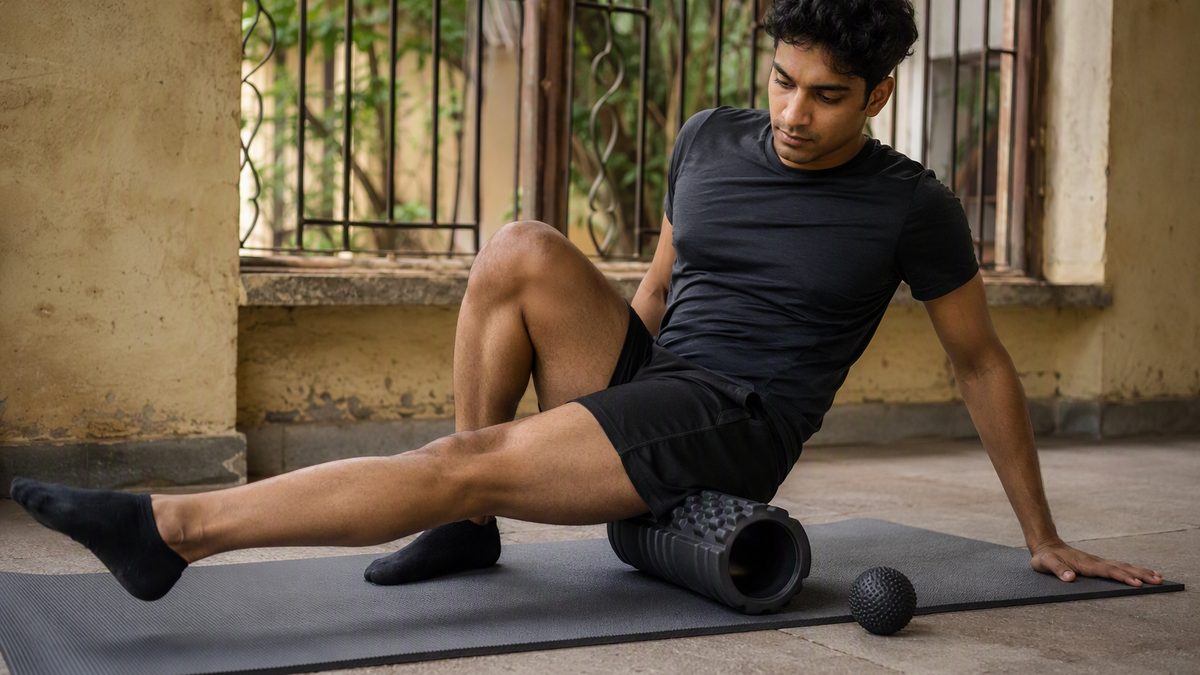
You've heard it on every chairlift and in every ski-shop recovery aisle: foam rolling "breaks up the knots" and "melts the adhesions" in quads wrecked from a long descent day. It's a tidy story, you grind on a roller, the tight tissue releases, the soreness drains out. It's also wrong, and believing it leads skiers to roll too hard, too long, expecting a fix the tool can't deliver.
Human fascia is far too tough to be deformed by a roller and your bodyweight. You are not dissolving a literal knot or remodeling stuck tissue. What's actually happening is neural: rolling quiets the nervous system's sense of tension and raises your tolerance to stretch, so your legs feel looser and move through more range, briefly. That's a real, useful effect, just not the mechanical one the myth promises.
This page replaces the melt-the-knots story with what self-myofascial release genuinely does for ski legs, how to roll quads and calves after a hard day on snow, and why your off-season eccentric prep, hydration, and sleep matter far more than how aggressively you attack a foam roller.
1. The Myth: 'Rolling Breaks Up the Knots in My Quads'
The melt-the-knots framing fails on basic mechanics. Fascia is dense, strong connective tissue, and the pressure a foam roller and your bodyweight can apply isn't remotely enough to meaningfully deform it or 'break up' an adhesion. There's no knot dissolving under the roller, no scar tissue being smashed apart. If that were possible, every aggressive rolling session would be doing damage, not therapy.
The lactic-acid cousin of the myth is just as off. Rolling does not 'flush out' the burn from a bump run, lactate clears on its own within an hour or two and was never what made your quads sore the next morning. That soreness is delayed-onset muscle soreness from the heavy eccentric load of controlling your descent, and no amount of rolling drains it out of the tissue.
So what is happening when your legs feel better after rolling? Your nervous system is the actor. Rolling stimulates sensory receptors that briefly lower muscle tone and your sense of tightness, and it raises how far you can move before the stretch sensation stops you. Add a mild calming effect and a short blood-flow bump, and your trashed quads feel looser, even though the tissue itself hasn't structurally changed.
2. What Rolling Honestly Does for Trashed Ski Legs
Drop the magic and the real benefits are modest but worth having. The best-supported effect is a short-term rise in range of motion, often a few percent up to roughly 10% right after rolling, and crucially it comes without the strength and power loss that long static stretching can cause. That's why a brief roll is a sensible primer before clicking in: looser legs, no blunted output.
The second honest benefit is recovery-flavored. Rolling after a hard day is linked to a modest reduction in next-day soreness and a better sense of recovery. For an eccentric, quad-hammering sport, that means a sore-leg morning after a big day can feel a touch less brutal. It's a real effect, but moderate and partly subjective, it doesn't speed the actual tissue-repair timeline of that soreness in any large way.
Set expectations against the soreness clock. Early-season DOMS from unaccustomed eccentric load peaks around 24 to 72 hours after the day and resolves on its own within a few days no matter what you do. So part of any 'rolling fixed my legs' impression is just soreness fading on schedule. Rolling may make those days feel modestly better; it doesn't change the repair timeline.
3. Post-Ski Leg Routine: Quads, Glutes, Calves
Match the routine to where ski load actually lands, the quads above all, then glutes and calves. Doses below are practical consensus ranges, presented as approximate.
| Timing | Area | Dose | How |
|---|---|---|---|
| Morning, pre-first-run | Quads, glutes | 30-45 sec each, 1 pass | Brief primer, then a real dynamic warm-up before clicking in |
| Apres-ski, evening | Quads | 60-90 sec each leg | Slow passes; pause 20-30 sec on tender spots |
| Apres-ski, evening | Glutes, calves | 60 sec each (ball for glutes) | Glutes via a ball seated; calves slow on the roller |
| Rest day mid-trip | Whole legs light | 3-4 min total | Gentle maintenance, not a grinding session |
| Off-season prep block | After leg-strength work | 60-90 sec per group | Pair with eccentric training that actually builds DOMS resistance |
Two cautions for the slopes. Keep every pass slow, about an inch a second, with a tolerable 'good ache,' not sharp pain; hammering harder doesn't release more and can leave you bruised on top of beaten-up. And keep the roller on muscle, your quads, glutes, and calf bellies, and off your spine, the front of your neck, your knee joint, and any bony point. If a spot is sharply painful rather than broadly achy, that's not a rolling target.
4. Why Opening-Week Legs Need Prep, Not Just a Roller
Here's the honest hierarchy. The reason you're destroyed after day one every season isn't a rolling deficit, it's that your legs aren't conditioned to the eccentric load of skiing. The durable fix is off-season eccentric leg work, squats, step-downs, and lunges through range, built up before December so your quads tolerate the descent load. Rolling can make those training sessions feel a bit looser, but it's the loading that builds the resistance to DOMS, not the foam.
Altitude and cold add their own demands rolling can't touch. Cold blunts your thirst while you keep losing water through your breath, and altitude raises your fluid needs and degrades sleep, so dehydration sneaks up even when you don't feel thirsty. Rehydrate deliberately, and treat the apres-ski beer with respect: alcohol on top of altitude and a fluid deficit is a genuine bad combination, and a foam roller does nothing to offset it.
Keep rolling in its lane behind the real recovery levers. Sleep is where most hormonal and tissue repair happens, and altitude already degrades it, so protecting seven to nine hours matters far more than any rolling routine; adequate protein and energy to repair eccentric damage matter more too. Judge whether rolling helps with simple checks, rate leg soreness 0 to 10 before and after, and notice whether your squat-down to click in feels easier. And know the medical line: altitude illness, with headache, nausea, or breathlessness, is not something to roll through, it needs descent and care.
Chairlift Questions Skiers Ask About Foam Rolling
Does foam rolling break up the knots in my quads after a big day?
No. Fascia and muscle are far too tough to be 'broken up' or have knots 'melted' by a roller and your bodyweight, that mechanism isn't real. What actually happens is your nervous system briefly lowers its sense of tension and raises your stretch tolerance, so your quads feel looser and move through more range. The relief is genuine, but it's neural and short-lived, not a structural release of stuck tissue.
Why am I destroyed after day one every season, and will rolling fix it?
Day-one wreckage comes from the heavy eccentric load of controlling descents on legs that lost their conditioning over summer. Rolling won't fix that, it only makes legs feel a bit looser short-term. The real prevention is off-season eccentric leg work, squats and step-downs through range built up before the season, so your quads tolerate the load. Rolling is a useful sidekick to that training, not a substitute for it.
Does altitude change how I should use foam rolling?
Rolling itself works the same at altitude, but altitude changes your priorities around it. Cold blunts thirst while you keep losing fluid, and altitude raises fluid needs and harms sleep, so rehydration and sleep matter more than any rolling routine. Rolling can ease a tight, sore feeling, but it does nothing for altitude's fluid and sleep costs, and never roll through altitude-illness symptoms like headache or nausea, those need descent and care.
Can I maintain my legs during a five-day-a-week ski season with rolling?
Rolling helps you feel looser and modestly less sore across consecutive ski days, which is genuinely useful on a heavy week, but it doesn't maintain strength or conditioning by itself. To hold your legs together through a busy season, keep some strength work in, protect sleep, fuel and hydrate well, and use rolling as the feel-better extra. A few minutes on quads, glutes, and calves each evening fits that role nicely.
Disclaimer: This article is for educational purposes only and is not medical advice. Consult a qualified healthcare professional before starting any supplement, nutrition, or training protocol — especially if you are pregnant or breastfeeding, under 18, taking medication, or managing a health condition.
Scientific References & Clinical Sources
- Dupuy O, et al. An Evidence-Based Approach for Choosing Post-exercise Recovery Techniques to Reduce Markers of Muscle Damage, Soreness, Fatigue, and Inflammation: A Systematic Review With Meta-Analysis. Front Physiol, 2018. PMID: 29755363
- Gill ND, et al. Effectiveness of post-match recovery strategies in rugby players. Br J Sports Med, 2006. PMID: 16505085
- Dattilo M, et al. Sleep and muscle recovery: endocrinological and molecular basis for a new and promising hypothesis. Med Hypotheses, 2011. PMID: 21550729
- Fullagar HH, et al. Sleep and athletic performance: the effects of sleep loss on exercise performance. Sports Med, 2015. PMID: 25315456
- Peake JM, et al. A Critical Review of Consumer Wearables, Mobile Applications, and Equipment for Providing Biofeedback, Monitoring Stress, and Sleep in Physically Active Populations. Front Physiol, 2018. PMID: 30002629

