💡 Key Takeaways
- Foam rolling is low-risk for young players: a short-term range-of-motion bump and a modest cut in next-day soreness, working through the nervous system, not by 'breaking up' anything.
- It fits as a brief pre-warm-up primer and a gentle post-match wind-down, 30-60 seconds per muscle group, slow and tolerable.
- Keep the roller on muscle and off growth-plate spots like the knee just below the kneecap (Osgood-Schlatter) or the heel (Sever's); sharp or worsening pain there means see a clinician, not roll harder.
- Food and sleep do the real recovery work during a congested fixture week; rolling is a small extra, and parents and coaches should be in the loop.
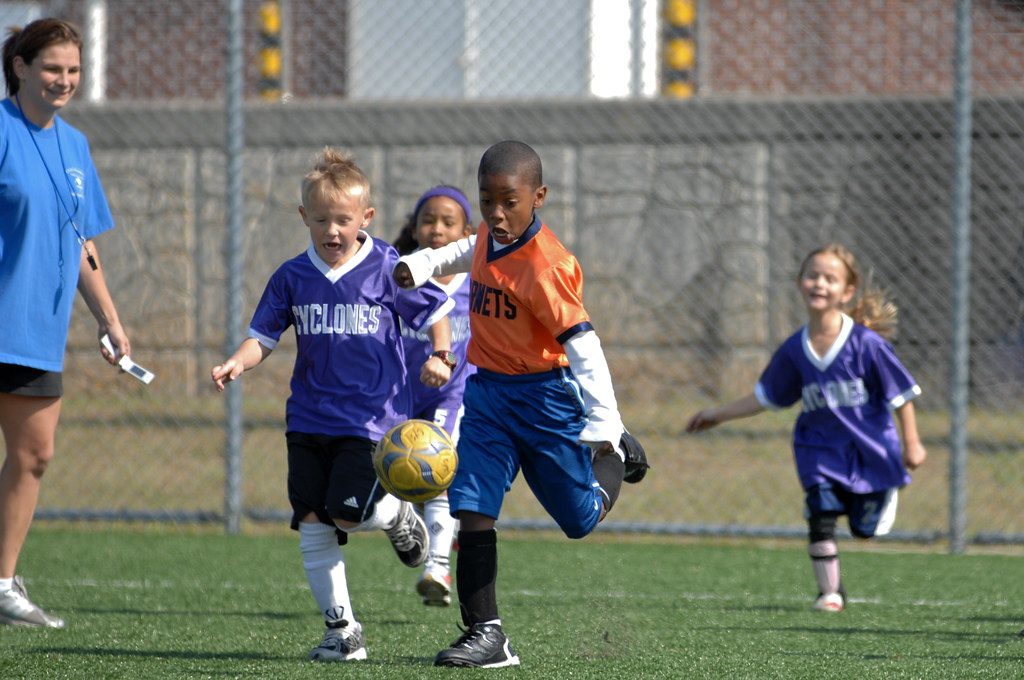
Picture a normal week: three or four club practices, a match or two, school PE on top, and maybe a tournament weekend with several games packed together. Somewhere in that congested schedule a young player wants to feel less stiff and bounce back between games, and a foam roller is one cheap, simple tool that can fit into the gaps, before the warm-up and after the final whistle.
The honest promise is small. Rolling won't make anyone faster or fix the fatigue of a four-game weekend, but it can briefly loosen tight legs before a session and take a little edge off soreness afterward. For a growing player, the key is fitting it in simply and safely, around the bony spots that need protecting during growth spurts, and remembering it's a minor extra next to the food and sleep that actually drive recovery.
This page walks through where rolling slots into a real soccer week, how to do it safely with growth plates in mind, what it genuinely does, and why parents, coaches, and the dinner table matter far more than any roller.
1. Where Rolling Fits in a Practice-and-Match Week
Start with the actual week, then drop rolling into the gaps. Before a practice or match, a quick loosen-up on the legs as part of getting ready; after a hard session or game, a gentle few minutes to wind down. It doesn't need its own slot or a long block, it fits into the minutes you already spend warming up and cooling down. The doses below are sensible approximate ranges, not strict rules.
| Point in the week | Target muscles | Dose | Purpose |
|---|---|---|---|
| Before practice / match | Quads, glutes, calves | 30-45 sec each, 1 pass | Loosen up, then do the team's dynamic warm-up |
| After a hard session or game | Worked leg muscles | 45-60 sec each, gentle | Take a little edge off next-day soreness |
| Between tournament games | Sorest muscles only | 30-60 sec each, light | Feel a bit fresher; not a deep grind |
| Evening of a heavy day | Quads, calves | 60 sec each, slow | Wind down; help settle toward sleep |
| Rest day | Whole legs light | 3-4 min total | Keep the habit small and consistent |
Two simple rules. Roll slowly, about an inch a second, with a 'good ache' you can breathe through, never sharp pain, and don't grind hard thinking it does more, because it doesn't and it can just bruise. And keep the roller on muscle, the quads, glutes, hamstrings, and calves, and off the spine, the front of the neck, the joints, and any bony point. Pre-match rolling should be brief so it loosens you without tiring you before kickoff.
2. Doing It Safely Around Growing Bodies
One caution matters most for young players: bones are still growing, and the growth plates near joints can be sensitive, especially during a spurt. Two common ones in soccer are Osgood-Schlatter, which causes pain at the bony bump just below the kneecap, and Sever's, which causes heel pain. Those bony spots are not foam-rolling targets. Keep the roller on the muscle, the thigh, the calf, well away from any painful bony area, and never press a roller or ball directly onto a sore bone.
Know the line between soreness and a problem. A broad, diffuse ache in the muscles after a hard week that eases as you warm up is normal, and rolling territory. But sharp, localized, or worsening pain, especially at a bony spot near a joint, or pain that radiates or comes with numbness, tingling, or weakness, is not something to roll through. That's a stop-and-see-a-clinician signal. Playing or rolling through growth-plate pain is exactly what you don't want to do at this age.
Keep the whole thing gentle and unfussy. A young player doesn't need an aggressive routine or fancy gear, a basic foam roller is plenty, used slowly and briefly. The goal is to feel a bit looser and less stiff, not to chase some deep 'release.' If something hurts sharply when you roll it, stop and tell an adult rather than pushing harder.
3. What Foam Rolling Really Does (No Hype Version)
Rolling works through the nervous system, not by changing the muscle. When you roll, sensory receptors send signals that briefly lower your sense of tightness and raise how far you can move before the stretch feeling stops you, so your legs feel looser for a little while. There's also a mild calming effect and a short bump in blood flow. The muscle feels freer, but it hasn't actually changed length or 'released' anything.
That means the big claims you'll hear are wrong. Rolling does not 'break up knots' or 'melt adhesions', your tissue is far too tough to be deformed by a roller. It does not 'flush out lactic acid', that's gone within an hour or two and never caused your soreness in the first place. And it won't fix posture or make you faster. The real benefits are modest: a short-term range boost and a small reduction in how sore you feel the next day.
Keep the timing in mind too. The looser feeling lasts minutes to maybe a couple of hours, then fades. Soreness from a hard match or unfamiliar session peaks around a day to three days later and goes away on its own within a few days no matter what, so if rolling seemed to 'fix' your legs, some of that is just soreness fading on its own. Rolling may make those days feel a bit better, not speed up the real recovery.
4. Food, Sleep, and Telling Parents and Coaches
Here's what actually drives recovery for a growing player, and it isn't a roller. Food and sleep do the heavy lifting, and young athletes have bigger needs than adults because they're growing and training at the same time. Tournament weekends fueled on snack-bar snacks and skipped meals leave you flat far faster than any rolling deficit, so eating proper meals with enough protein through the day, and getting 8 to 10 hours of sleep, matters far more than any foam roller. Skip energy drinks as pre-game fuel, and don't copy what pro players post online, food first, always.
Loop in your parents and coach. Foam rolling is harmless, so this isn't about getting permission, it's about good habits, the adults guiding you should know what you're doing for training and recovery. It also means someone can help spot whether a 'tight spot' is really a growth-related injury you should get checked, and can manage tournament loads sensibly so you're not stacking extra training onto an already full schedule. Playing through growth-plate pain or hiding it from adults is exactly the wrong move.
In hot summer tournaments, hydration and heat policies matter more than any rolling, drink to your plan and follow the event's heat rules. Judge whether rolling helps with a simple 0-to-10 soreness check before and after, and notice if a movement feels easier right after. For help building small recovery habits that survive a busy school-and-soccer week, our guide to building fitness habits is a good place to start.
Foam Rolling Questions Young Players and Parents Ask
Is foam rolling appropriate at my age?
Yes, foam rolling is low-risk for a healthy young player. It's just slow, gentle pressure on a muscle, and it doesn't affect growth. The important part is keeping the roller on muscle and off bony areas, especially painful spots near the knee or heel during a growth spurt, and never pushing into sharp pain. Keep it brief and gentle, and let your parents and coach know you're using it.
How do I handle a four-game tournament weekend with foam rolling?
Use it lightly, not as a fix. A brief loosen-up before games and a gentle minute or two on the sorest muscles between or after them can help you feel a little fresher. But the real recovery between games comes from eating proper meals, drinking enough, and resting, not from rolling. Don't grind hard hoping it erases fatigue; it can't. Fuel, hydrate, and sleep are what carry you through a packed weekend.
Should foam rolling come instead of eating well to recover?
No, never, food does the real recovery work and rolling is just a small extra. As a growing player you need plenty of food and protein through the day plus 8 to 10 hours of sleep, and those matter far more than any roller. Foam rolling can make your legs feel a bit looser and less sore, which is fine to use, but it can't replace meals or sleep. Eat first, sleep first, roll second.
What should I tell my coach and parents about using a foam roller?
Just tell them you're using one to loosen up and ease soreness, it's harmless, so it's about keeping them informed, not asking permission. Being open matters because they can help spot if a 'tight spot' is actually a growth-related injury that needs a clinician, and they can manage your overall load so you're not overdoing it. Keeping parents and coaches in the loop is exactly how a young athlete should handle training and recovery.
Disclaimer: This article is for educational purposes only and is not medical advice. Consult a qualified healthcare professional before starting any supplement, nutrition, or training protocol — especially if you are pregnant or breastfeeding, under 18, taking medication, or managing a health condition.
Scientific References & Clinical Sources
- Dupuy O, et al. An Evidence-Based Approach for Choosing Post-exercise Recovery Techniques to Reduce Markers of Muscle Damage, Soreness, Fatigue, and Inflammation: A Systematic Review With Meta-Analysis. Front Physiol, 2018. PMID: 29755363
- Gill ND, et al. Effectiveness of post-match recovery strategies in rugby players. Br J Sports Med, 2006. PMID: 16505085
- Dattilo M, et al. Sleep and muscle recovery: endocrinological and molecular basis for a new and promising hypothesis. Med Hypotheses, 2011. PMID: 21550729
- Halson SL. Sleep in elite athletes and nutritional interventions to enhance sleep. Sports Med, 2014. PMID: 24791913
- Peake JM, et al. A Critical Review of Consumer Wearables, Mobile Applications, and Equipment for Providing Biofeedback, Monitoring Stress, and Sleep in Physically Active Populations. Front Physiol, 2018. PMID: 30002629
UltraFit360 is a free AI fitness coach with weekly coaching reports, workout programs and photo meal logging. See all features.

