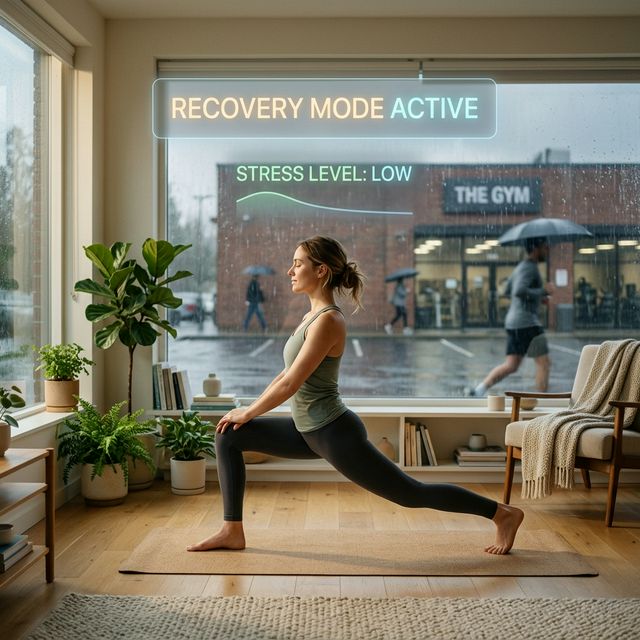
The best athletes in the world are not just stronger or faster than everyone else — they recover better. And increasingly, coaches and sports scientists are pointing to one underlying factor that separates athletes who adapt from those who stagnate: nervous system regulation. In 2026, this concept has moved well beyond the stress-management advice you once found in wellness blogs. Understanding and actively training your autonomic nervous system is now considered a fundamental pillar of athletic performance, sitting alongside nutrition, sleep, and strength programming as non-negotiable for serious competitors at any level.
What Is the Autonomic Nervous System — and Why Does It Matter for Athletes?
Your autonomic nervous system (ANS) operates below conscious awareness, governing functions like heart rate, digestion, hormone release, and immune response. It has two primary branches that work in opposition and in concert:
- Sympathetic nervous system (SNS): The "fight or flight" branch. It accelerates heart rate, diverts blood to working muscles, suppresses digestion, and releases adrenaline and cortisol. This is essential for performance — you need sympathetic activation to sprint, lift heavy, or compete.
- Parasympathetic nervous system (PNS): The "rest and digest" branch. It slows heart rate, promotes recovery, stimulates tissue repair, supports immune function, and governs deep sleep quality. Without robust parasympathetic capacity, you cannot fully recover between training sessions.
Most people think of this as a binary switch — you're either stressed or you're relaxed. In reality, athletic performance depends on the flexibility of this system: the ability to ramp up sympathetically when demanded, then return efficiently to a parasympathetic baseline. Athletes with poor autonomic flexibility get stuck in chronic sympathetic dominance, which shows up as poor sleep, elevated resting heart rate, irritability, persistent muscle soreness, and training plateaus.
Heart Rate Variability: The Window Into Your Nervous System
Heart rate variability (HRV) has become the most practical metric for assessing autonomic balance. HRV measures the millisecond-level variation between consecutive heartbeats. Counterintuitively, higher variability is better — it reflects a nervous system that is responsive and adaptable rather than locked into a rigid, stress-driven rhythm.
When your parasympathetic system is dominant, it produces irregular, variable inter-beat intervals through a process called respiratory sinus arrhythmia. When you're in sympathetic overdrive — overtrained, sleep-deprived, or fighting off illness — beat-to-beat intervals become more uniform and HRV drops. This is why a morning HRV reading can tell you more about your readiness to train hard than any subjective feeling, especially early in a session before fatigue has fully surfaced.
Key points to understand about HRV:
- Your personal baseline matters more than population averages. A score of 55 ms might be excellent for one person and concerning for another. Trends over time within your own data are what drive decisions.
- HRV is acutely suppressed by alcohol, poor sleep, illness, psychological stress, and high training load. Seeing it drop after a hard week of training is normal and expected — the concern is when it stays low.
- Chronic low HRV predicts overreaching and injury risk better than many other metrics, giving you a lead indicator rather than a lagging one.
- Consistent HRV measurement — same time each morning, ideally supine and within five minutes of waking — dramatically improves the signal-to-noise ratio.
The Vagus Nerve: Your Recovery Superhighway
The vagus nerve is the primary conduit of parasympathetic activity, running from your brainstem through your heart, lungs, and gut. Vagal tone — essentially how active and responsive your vagus nerve is — is one of the strongest predictors of autonomic health and recovery capacity. Higher vagal tone correlates with faster post-exercise heart rate recovery, better inflammatory regulation, improved mood, and stronger immune responses.
The good news is that vagal tone is trainable. It responds to deliberate, repeated stimulation. Several evidence-based methods improve vagal tone over time:
- Slow, diaphragmatic breathing — particularly with an extended exhale — directly stimulates vagal afferents and shifts the nervous system toward parasympathetic dominance within minutes.
- Cold exposure — cold water immersion and cold showers trigger a vagal rebound after the initial sympathetic spike, strengthening the system's recovery response over repeated exposures.
- Humming, singing, and gargling — these activate the vagus nerve through the musculature of the throat and larynx. Less discussed in athletic circles but well-supported by the underlying anatomy.
- Social connection and safety cues — the polyvagal theory describes a ventral vagal state activated by eye contact, co-regulation, and feelings of social safety. Team environments and coaching relationships are not just psychologically important; they are physiologically restorative.
Breathwork Protocols That Actually Move the Needle
Breathwork has earned its place in performance circles not through trend-following but through a clear mechanistic rationale. The breath is the only autonomic function you can consciously override, making it the most accessible lever for shifting nervous system state on demand.
Different protocols serve different purposes for athletes:
- Box breathing (4-4-4-4): Equal inhale, hold, exhale, hold. Effective for pre-competition stress regulation — it neither over-activates nor sedates. Used by military special operations units to manage performance under pressure.
- Extended exhale breathing (4-7-8 or 5-5 with elongated exhale): When the exhale is longer than the inhale, heart rate slows and parasympathetic tone rises. Ideal for post-training recovery windows, pre-sleep routines, and active rest days.
- Physiological sigh (double inhale through the nose, long exhale through the mouth): The fastest known method to reduce acute stress and lower CO2 buildup in the blood. Useful between sets, before a big lift, or to reset after a tough interval.
- Cyclic hyperventilation (Wim Hof-style): Intentional over-breathing followed by breath retention. Creates a controlled acute stress response, which — when performed in a safe, controlled context — may improve stress tolerance and trigger adaptive responses over time. Not recommended around training sessions as it temporarily impairs fine motor control.
Consistency matters more than intensity here. Ten minutes of slow breathing daily — separate from any formal workout — builds cumulative adaptations in vagal tone and HRV over weeks and months.
Cold Exposure: Stress Inoculation for the Nervous System
Cold exposure — whether through cold water immersion, contrast showers, or outdoor cold exposure — elicits a powerful sympathetic response followed by a pronounced parasympathetic rebound. Over repeated exposures, the initial stress response diminishes while the recovery rebound remains strong. The net effect is a nervous system that activates sharply and recovers quickly: precisely the autonomic flexibility that underpins elite performance.
For practical application, timing matters significantly:
- Post-workout cold immersion (within an hour of training) can blunt acute muscle adaptations if overused with strength work, since some inflammation is required for hypertrophic signaling. It remains useful for recovery from competitions or high-volume endurance efforts where rapid recovery matters more than long-term adaptation.
- Morning cold exposure (independent of training) produces a natural cortisol peak that aligns with the body's circadian rhythm, supporting daytime alertness without disrupting sleep cycles.
- Cold exposure separated from training by several hours captures the recovery and nervous system benefits without interfering with adaptation signaling.
Starting with 30 to 60 seconds of cold water at the end of a warm shower is a viable entry point. Progressively extending duration and decreasing temperature over weeks allows the nervous system to adapt without triggering avoidance or excessive discomfort.
Integrating Nervous System Work Into Your Training Week
Nervous system regulation is not a standalone modality to add on top of an already-packed schedule. It is a lens through which you interpret and structure everything else. A few practical principles:
- Use HRV trends to govern intensity decisions. On days when HRV is meaningfully below your rolling baseline, treat the session as technical work, mobility, or low-intensity aerobic activity regardless of what the program says. Forcing high-intensity work into a suppressed nervous system deepens the hole rather than building fitness.
- Build parasympathetic anchors into your day. A five-minute breathing protocol post-workout, a short walk after lunch, consistent sleep and wake times — these are not luxuries. They maintain the baseline from which you can spike sympathetically during training.
- Recognize the cumulative load of life stress. Your nervous system does not distinguish between training stress and psychological stress. A tough work week, poor sleep, and relationship conflict all draw from the same autonomic reserve as your training load. Accounting for total life load — not just sets and reps — is what separates sustainable programming from burnout cycles.
- Periodize your nervous system demands. Just as training periodization includes deload weeks, build in recovery phases where breathwork volume increases, cold exposure is used daily, and training intensity is deliberately reduced to allow the parasympathetic system to restore baseline.
The 2026 Athlete: Wired, Recovered, and Ready
The conversation around athletic performance has matured considerably. Training harder and eating cleaner remain important — but the athletes who consistently perform at their ceiling are those who have learned to manage their nervous system as deliberately as they manage their macros or their periodization blocks. Autonomic balance is not a soft skill. It is a physiological capacity that can be measured, trained, and optimized with the same rigor as strength or VO2 max.
The frameworks are clear: build sympathetic capacity through hard training, build parasympathetic capacity and flexibility through breathwork, cold exposure, and deliberate recovery practices, and use HRV as your daily calibration tool. Athletes who do this don't just feel better — they adapt faster, get injured less, and perform more consistently under the pressure that matters.
UltraFit360 tracks your HRV trends and daily readiness scores alongside your training load, giving you a complete picture of where your nervous system sits each morning — so every session decision is grounded in data, not guesswork. Start logging your readiness in the app daily to see how your autonomic balance shifts with your training, sleep, and recovery habits over time.
Transform Your Fitness Journey
Log your workouts, track your diet, and get AI coaching insights — all with UltraFit360.