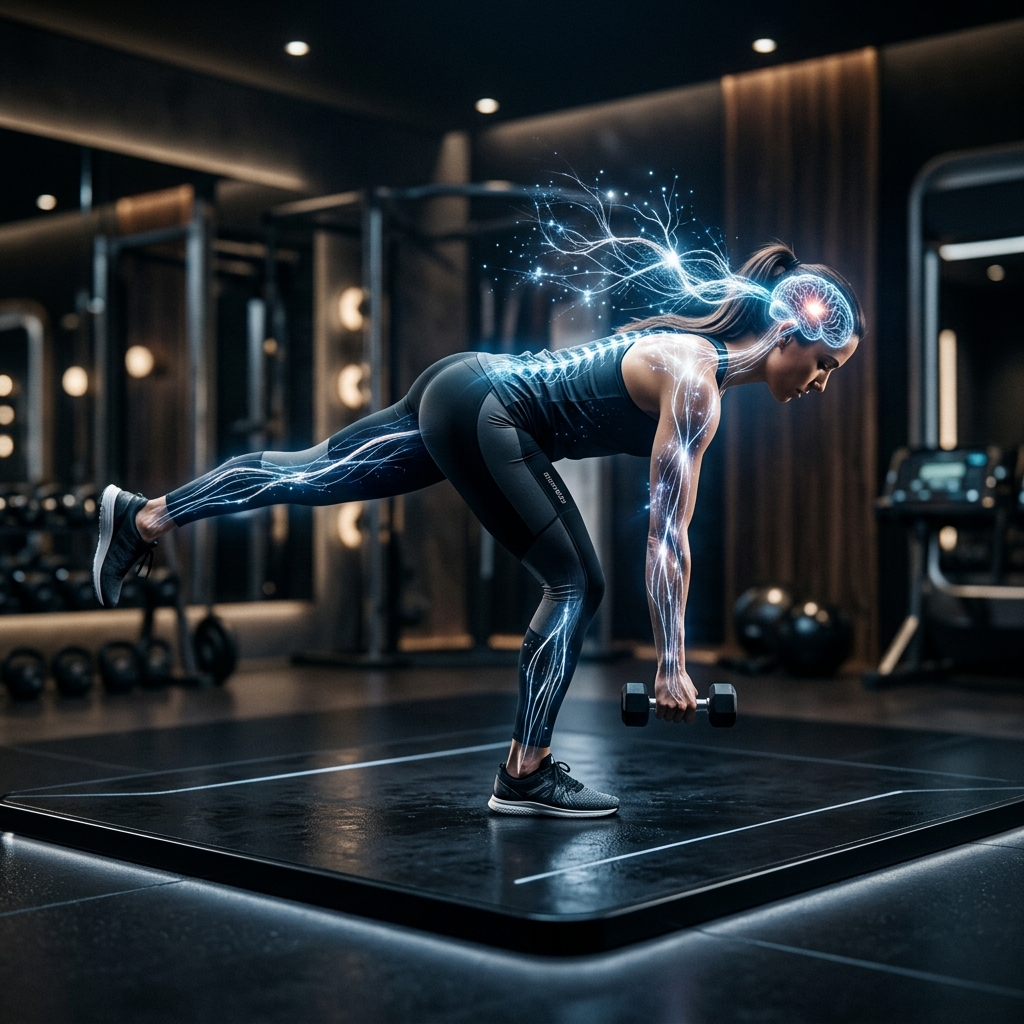
For decades, fitness was segregated into silos: "Cardio" for the heart, "Lifting" for the muscles, and "Sudoku" for the brain. But as we move deeper into 2026, the scientific consensus has shifted. We now understand Neuro-Fitness — the specialized branch of training that uses complex physical movement to stimulate brain plasticity, cognitive longevity, and structural health.
In 2026, the trendiest athletes aren't just measuring their bicep circumference; they're measuring their proprioceptive acuity (their brain's ability to sense their body's position in space). Why? Because it's the single best predictor of longevity and cognitive vitality in our 40s, 50s, and beyond.
The Biological Logic: Neuroplasticity Through Demand
Your brain is a metabolically expensive organ. It only keeps the pathways it uses. While repetitive "machine-based" gym work is great for muscle growth, it's virtually invisible to your brain. Machines provide the stability for you, meaning your stabilizer muscles and their associated neural pathways stay dormant.
Neuro-Fitness forces the brain to solve problems in real-time. Every time you perform a complex, unstable, or unilateral movement, your cerebellum and prefrontal cortex must communicate at lightning speeds to maintain equilibrium. This is where the biological "magic" of BDNF (Brain-Derived Neurotrophic Factor) occurs.
The Three Pillars of Neuro-Fitness in 2026
1. Unilateral Training (Single-Leg/Arm)
Standard bilateral movements (like a squat with both legs) are great for moving maximum weight. But unilateral movements (like a single-leg deadlift) force the brain to manage balance, rotation, and cross-body stabilization simultaneously. This activates the contralateral neural pathways, effectively "cross-training" your brain's hemispheres.
2. Proprioceptive Challenge (Balance Work)
In 2026, we've moved past simple balance boards. High-performance Neuro-Fitness involves "Dynamic Instability." This includes training on uneven surfaces, catching objects while balancing, or closing your eyes during simple movements. These drills force your vestibular system to integrate with your muscles without visual aid.
3. Hand-Eye/Eye-Foot Coordination
Complex coordination drills (like jumping rope with variable patterns or agility ladder work) stimulate the growth of new synapses in the cerebral cortex. This type of "intelligent movement" has been shown to improve mental focus, processing speed, and executive function in adults.
Why Neuro-Fitness Is Your Longevity Insurance
The leading cause of late-life morbidity isn't just lack of muscle; it's the loss of coordination leading to falls. By training your "Neural Map" when you're young and mid-aged, you are building a biological reserve. A sharp cerebellum prevents the "clumsiness" associated with aging and keeps your reaction times equivalent to people 20 years younger.
The "Brain Gains" Checklist: A Sample Routine
| Movement Category | Example Exercise | Neural Target |
|---|---|---|
| Unilateral | Single-Leg RDL | Contralateral Integration |
| Equilibrium | Heel-to-Toe Walk (Eyes Closed) | Vestibular System Acuity |
| Coordination | Alternating Kettlebell Swings | Rhythm & Timing Pathways |
| Agility | Lateral Box Shuffles | Frontal Lobe Decision Making |
Conclusion: Train the Software, Not Just the Hardware
Muscle is the hardware; the nervous system is the software. In 2026, the best fitness programs are "Full Stack." By integrating Neuro-Fitness into your weekly routine — even for just 15 minutes twice a week — you aren't just building a stronger body; you're building a more resilient, agile, and younger brain. Stop just lifting; start solving the movements.