💡 Key Takeaways
- Run a default rule, not a decision: a fixed per-meal protein dose of about 0.3-0.4 g/kg (roughly 30-40 g) at the same three or four windows, anywhere.
- Daily target is 1.6-2.2 g/kg; total intake matters far more than timing, so a missed window is recoverable.
- Restaurant and travel meals hit the dose easily with one defaulted protein order; a pre-sleep shake covers a thin day.
- Heavy alcohol at events blunts muscle building near training; keep the big drinking nights away from your sessions.
Picture a normal Tuesday. A 6am call before the gym, a sandwich inhaled between meetings, an airport, then a client dinner that runs long with wine you did not pour yourself. Nowhere in that day is there a calm moment to calculate macros, and that is exactly why most protein advice fails the people with the least time to follow it.
So this is built around the day you actually have, not the one a meal-prep blogger imagines. The whole protocol reduces to one default rule you apply on autopilot: the same protein dose, at the same few windows, in any city. No daily decisions, no perfect-week thinking, no scale in your hotel room.
Below you will see where that dose slots into a real travel day, the exact grams for your bodyweight, why the science says timing matters less than you fear, and how to keep client dinners and time zones from quietly eating your results.
1. Where the Dose Slots Into a 60-Hour Week
Map protein to anchors you already have, not new tasks. You wake, you break from meetings, you eat dinner, you sleep. Hang one protein hit on each and the day covers itself without a single new reminder.
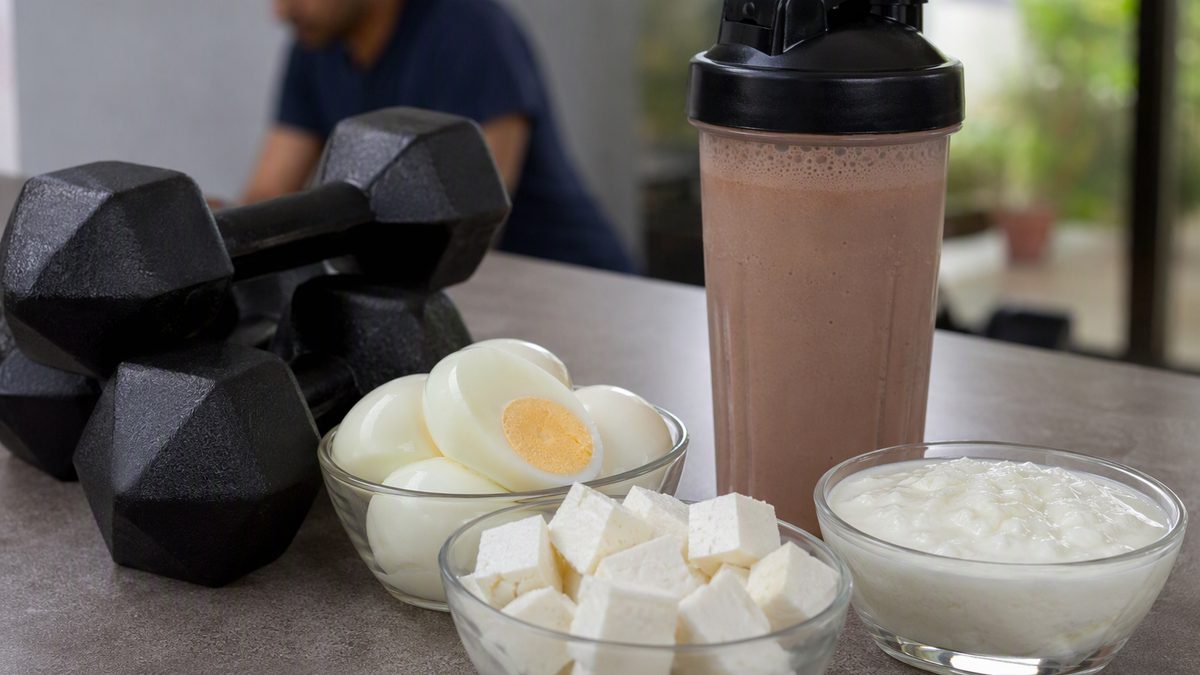
- Morning, around the workout. If you train early, the first solid meal carries your first dose. Eggs and Greek yogurt in a hotel breakfast, or a shaker if the call runs into the gym slot.
- Midday reset. The default lunch order is a protein the size of two palms over greens or grains. This is the window executives skip most, then over-eat later to compensate.
- Client or working dinner. Almost every restaurant menu hits the dose if you default to fish, steak, or chicken as the anchor and treat the rest as sides.
- Pre-sleep insurance. On a day that fell apart, 30 to 40 grams of casein or a shake before bed rescues the total and feeds recovery overnight.
That is the entire system: three or four anchors, one defaulted protein order each. You are not adding decisions to a decision-fatigued day; you are removing them by making the protein choice automatic.
2. Your Default Dose by Bodyweight
One number to memorize and reuse everywhere. Each meal wants roughly 0.3 to 0.4 g/kg of quality protein to clear the leucine threshold that switches muscle building on; hit it three or four times and you land your daily 1.6 to 2.2 g/kg without arithmetic. Find your row, then order the same shape of meal in every city.
| Your bodyweight | Default per-meal dose (~0.35 g/kg) | Daily target (1.6-2.2 g/kg) | The default restaurant order |
|---|---|---|---|
| 70 kg (154 lb) | 28-30 g | 112-154 g | One fish or chicken main over salad |
| 80 kg (176 lb) | 30-34 g | 128-176 g | A 200 g steak or two eggs plus a side of meat |
| 90 kg (198 lb) | 34-38 g | 144-198 g | A large main plus a starter of prawns or edamame |
| 100 kg (220 lb) | 38-42 g | 160-220 g | A generous main and a protein side, skip the bread |
| Any meal you miss | Cover with a 30-40 g shake | Daily total is what counts | Keep two travel sachets in your bag |
Two rules keep this airport-proof. Pack single-serve whey sachets so a missed window is never a missed dose, and let the pre-sleep shake be your safety net rather than a habit you skip when tired. The science behind that bedtime dose is in our guide to protein before bed.
3. Why You Can Stop Worrying About Timing
The fear that haunts busy people is that an erratic schedule ruins everything. It does not. The strict post-workout anabolic window, the idea you must eat protein within 30 to 60 minutes or lose the session, is largely a myth; once total daily protein is matched, that timing advantage disappears and the practical window runs several hours wide. We unpack the evidence in our look at the post-workout protein window myth.
What this buys you is enormous freedom. A delayed flight, a meeting that swallows lunch, a workout you push to evening, none of it sabotages results as long as the daily total lands. That is precisely why a default rule works: you are optimizing the thing that matters, total intake spread across a few meals, and ignoring the thing that does not, perfect timing to the minute.
The deeper reason your protein still counts hours later is the training itself. A resistance session keeps muscle sensitive to amino acids for 24 to 48 hours, so protein eaten across that whole stretch is used efficiently. You are feeding a window that stays open all day, not chasing a 30-minute door. That same logic covers rest days and travel days with no workout at all: yesterday's session has your muscle primed to use today's protein, so a hotel day off the rack is not a day off the dose.
There is one situation where eating protein near the session genuinely helps: if you trained fasted before that 6am call, or you know the next real meal is hours away. In that case, pull a dose closer to the workout. Otherwise, let the meals fall where your schedule allows and trust the daily total.
4. Client Dinners, Alcohol, and Time Zones
Three executive realities deserve straight answers. First, alcohol. Heavy drinking around training genuinely blunts muscle building; large post-exercise doses cut muscle synthesis by a quarter or more even when protein is eaten alongside. The practical move is not abstinence but separation: keep the big client-dinner drinking nights away from your training days, and the occasional moderate glass is a far smaller concern.
Second, time zones. Your protein anchors travel with your meals, not the clock, so whatever counts as breakfast, lunch, and dinner in the local day is where the dose goes. Jet lag scrambles sleep and appetite, which makes the pre-sleep shake more useful, not less, as a guaranteed dose when meals are chaotic.
Third, the metric to watch, since you asked for one. Skip the obsession with the scale and track strength on a couple of key lifts plus bodyweight trend over weeks. If strength stalls while you train, check whether you are actually hitting the per-meal dose before changing anything else. One honest note for this group: your annual executive physical is the natural moment to confirm the higher-protein approach suits your kidneys and overall health, and to flag any supplement you have added.
Protein Questions From the Road
Does alcohol at client dinners ruin this?
Not if you separate it from training. Heavy drinking near a session blunts muscle building, with large doses cutting synthesis by a quarter or more even when protein is eaten too. The fix is timing: keep the big drinking nights away from your training days. An occasional moderate glass with dinner is a much smaller concern. You do not need to abstain, just avoid pairing a heavy night with the day you trained hard.
Can I keep this up across time zones?
Yes, because your protein anchors follow your meals, not the clock. Whatever counts as breakfast, lunch, and dinner locally is where the dose goes. Jet lag scrambles sleep and appetite, which makes the pre-sleep shake more valuable as a guaranteed dose when meals are unpredictable. Total daily protein is what matters, and timing is forgiving, so a shifted schedule does not break the plan as long as the total lands.
What single metric should I watch?
Strength on two key lifts, tracked over weeks, with bodyweight trend alongside it. Skip daily scale-watching, which mostly reflects water and food, not muscle. If strength stalls while you keep training, that is your cue to check whether you are truly hitting the per-meal protein dose before touching the program. Your annual physical adds a deeper checkpoint to confirm the approach suits your health and to review any supplement you take.
What's the minimum effective routine when I travel?
Hold the per-meal protein dose at three anchors and you have done the nutrition part, regardless of the gym. Default to one protein-led order at lunch and dinner, carry whey sachets for missed windows, and use a pre-sleep shake on broken days. For training, even two short hotel-gym resistance sessions a week keep muscle sensitive to the protein you are eating. Consistency on the dose beats a perfect routine you cannot sustain on the road.
Disclaimer: This article is for educational purposes only and is not medical advice. Consult a qualified healthcare professional before starting any supplement, nutrition, or training protocol — especially if you are pregnant or breastfeeding, under 18, taking medication, or managing a health condition.
Scientific References & Clinical Sources
- Morton RW, et al. A systematic review, meta-analysis and meta-regression of the effect of protein supplementation on resistance training-induced gains in muscle mass and strength in healthy adults. Br J Sports Med, 2018. PMID: 28698222
- Schoenfeld BJ, et al. The effect of protein timing on muscle strength and hypertrophy: a meta-analysis. J Int Soc Sports Nutr, 2013. PMID: 24299050
- Aragon AA, Schoenfeld BJ. Nutrient timing revisited: is there a post-exercise anabolic window?. J Int Soc Sports Nutr, 2013. PMID: 23360586
- Parr EB, et al. Alcohol ingestion impairs maximal post-exercise rates of myofibrillar protein synthesis following a single bout of concurrent training. PLoS One, 2014. PMID: 24533082
- Res PT, et al. Protein ingestion before sleep improves postexercise overnight recovery. Med Sci Sports Exerc, 2012. PMID: 22330017

