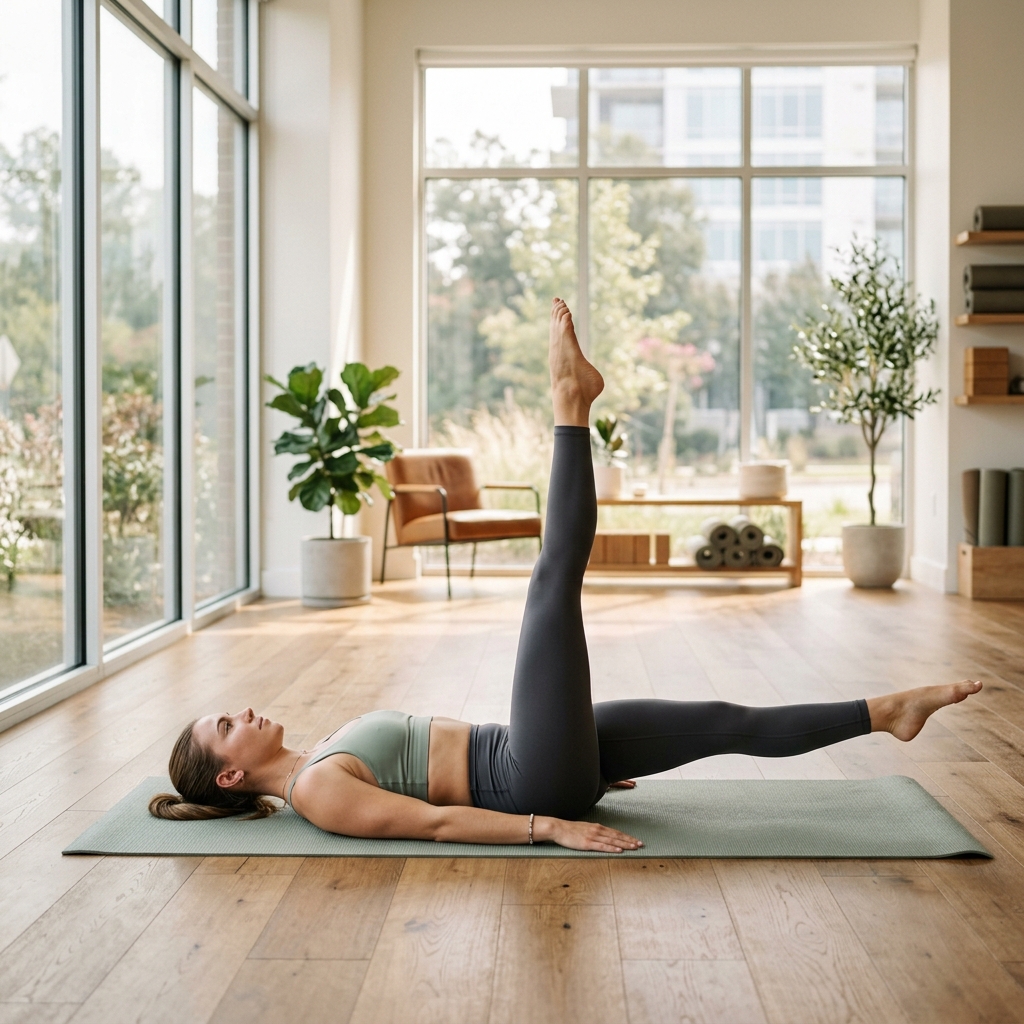
Pilates has claimed the title of the #1 most-booked workout worldwide for three consecutive years — and in 2026, interest has surged another 66%. It's not a fad. From rehabilitation clinics to elite athletic training centres, pilates has proven itself as a foundational practice that builds real-world strength from the inside out. If you've been curious but never taken the leap, this guide is your complete starting point.
Why Pilates Is Trending in 2026
The fitness industry has undergone a philosophical shift. After years of glorifying high-intensity training and "no pain, no gain" culture, athletes, coaches, and everyday gym-goers are rediscovering the value of controlled, intentional movement. Pilates sits at the intersection of strength, flexibility, and mindfulness — exactly where modern fitness is heading.
Unlike exercises that prioritise external load or speed, pilates focuses on neuromuscular control — the brain's ability to activate the right muscles, in the right sequence, at the right time. This is why physiotherapists prescribe it for injury rehab, why athletes use it for performance, and why desk-bound professionals swear by it for posture correction.
What Is Pilates? A Brief History
Pilates was developed in the early 20th century by Joseph Pilates, a German physical trainer who designed his method — originally called "Contrology" — to rehabilitate injured soldiers during World War I. He believed that modern lifestyles were causing physical deterioration and that a system of controlled exercises could restore the body's natural balance.
His method is built on six core principles:
- Centering — All movement originates from the core ("powerhouse")
- Concentration — Full mental focus on every movement
- Control — No sloppy, momentum-driven reps
- Precision — Every angle and position matters
- Breath — Coordinated breathing powers each exercise
- Flow — Smooth, continuous movement patterns
2026 Science: Neural Control & Spine Elasticity
In 2026, we’ve moved beyond "locking the core." Modern pilates focuses on Neuromuscular Efficiency—yours brain's ability to selectively activate deep stabilizers without over-tensing global muscles. This promotes **Spine Elasticity**, allowing yours back to absorb load like a spring. This is why pilates is a critical adjunct to yours strength training fundamentals.
The Pelvic Floor: The Real Anchor
Most beginners ignore the Pelvic Floor Integration. In 2026, we view the pelvic floor as the true floor of yours core cylinder. Proper coordination during pilates movements ensures intra-abdominal pressure is managed correctly, preventing injury and improving intra-articular stability as described in ours mobility and flexibility guide.
Key Benefits of Pilates
1. Bulletproof Core Strength
Pilates doesn't just train your "abs" — it strengthens the entire cylinder of muscles that stabilise your spine, including the transverse abdominis, multifidus, pelvic floor, and diaphragm. A 2023 meta-analysis in the Journal of Bodywork and Movement Therapies found that pilates practitioners showed 32% greater core endurance compared to non-practitioners.
2. Flexibility & Mobility
Unlike static stretching, pilates builds active flexibility — the ability to use your full range of motion under control. This translates directly to better squat depth, improved overhead position, and reduced injury risk during sports.
3. Injury Prevention & Rehab
Pilates is used in clinical rehabilitation worldwide. Its low-impact, controlled nature makes it safe for people recovering from back injuries, knee surgeries, and postpartum recovery. It targets the stabiliser muscles that heavy lifting often neglects.
4. Posture Correction
If you sit at a desk for 8+ hours a day, your hip flexors shorten, your upper back rounds, and your neck cranes forward. Pilates systematically reverses these patterns by strengthening the posterior chain and opening the anterior body.
5. Stress Relief & Mental Clarity
The breath-focused, mindful nature of pilates activates the parasympathetic nervous system, lowering cortisol and improving focus. Many practitioners report that a pilates session feels like a combination of a workout and a meditation.
Pilates vs Yoga vs Strength Training
| Attribute | Pilates | Yoga | Strength Training |
|---|---|---|---|
| Primary Focus | Core stability & control | Flexibility & spiritual practice | Muscle hypertrophy & strength |
| Equipment | Mat, reformer, props | Mat only | Barbells, dumbbells, machines |
| Injury Risk | Very low | Low | Moderate |
| Calorie Burn | 200-350/hr | 150-300/hr | 250-500/hr |
| Best For | Core, posture, rehab | Flexibility, mindfulness | Muscle building, bone density |
8 Essential Pilates Exercises for Beginners
1. The Hundred
The signature pilates warm-up. Lie on your back, lift your head and shoulders, extend your legs to a tabletop position (or straight out for a challenge), and pump your arms up and down rapidly while breathing in for 5 counts and out for 5 counts. Complete 10 cycles = 100 pumps.
2. Leg Circles
Lying on your back, one leg extended to the ceiling, draw controlled circles with your toes. This builds hip stability, stretches the hamstrings, and challenges pelvic control. 5 circles each direction per leg.
3. Rolling Like a Ball
Sitting at the front of your mat, tuck into a tight ball, roll back to your shoulder blades, and return to balance without letting your feet touch the floor. This teaches spinal articulation and builds abdominal control.
4. Single Leg Stretch
Head and shoulders lifted, one knee pulled to chest while the other leg extends at a 45° angle. Alternate sides with control. This is core stabilisation training disguised as a simple exercise.
5. Double Leg Stretch
Similar position, but both arms reach overhead while both legs extend simultaneously, then sweep everything back in. It's harder than it looks and teaches total body coordination.
6. Spine Stretch Forward
Sitting tall with legs extended and separated, hinge forward from the waist while reaching through your arms. This stretches the entire posterior chain and teaches spinal segmental movement.
7. The Saw
Seated with legs extended and arms wide, rotate your torso and reach your pinky past the opposite foot in a "sawing" motion. This combines rotation, flexion, and hamstring stretch — three in one.
8. Swimming
Lying face down, lift opposite arm and leg and alternate rapidly in a "flutter." This strengthens the posterior chain, improves spinal extension, and builds back endurance.
Pilates Equipment Guide
Mat Pilates (Beginner-Friendly)
All you need is a mat and your bodyweight. This is the most accessible and affordable way to start. A thick, non-slip mat (around 15mm) is ideal for comfort during spine-based exercises. Cost: $20-60 for a good mat.
Reformer Pilates
The reformer is a sliding carriage with springs that provide variable resistance. It's the gold standard of pilates equipment and the reason studio pilates feels so different from mat work. Classes typically run $25-50 per session, and home reformers range from $300-5,000+.
Props & Accessories
- Pilates Ring (Magic Circle) — Adds resistance to inner/outer thigh and arm exercises ($15-30)
- Resistance Bands — Versatile for assisted stretching and added resistance ($10-25)
- Foam Roller — Used for balance challenges and myofascial release ($15-30)
- Stability Ball — Adds instability for advanced core work ($15-25)
Getting Started: Your First 4 Weeks
Week 1-2: Foundation (15 minutes, 3x/week)
Focus on The Hundred, Leg Circles, Rolling Like a Ball, and Spine Stretch Forward. Prioritise form over intensity. Learn to breathe laterally (into the sides of your ribcage, not your belly) — this is the pilates breath pattern.
Week 3-4: Build (25 minutes, 3-4x/week)
Add Single Leg Stretch, Double Leg Stretch, The Saw, and Swimming. Start combining exercises into flows. You should notice improved posture and core awareness by the end of week 4.
- Holding your breath — breathing is integral, not optional
- Using momentum — every movement should be controlled
- Flattening your lower back — maintain a neutral pelvis
- Tensing your neck — let your core do the lifting, not your head
Frequently Asked Questions
How often should I do pilates?
Joseph Pilates himself recommended 3-4 times per week. For beginners, 2-3 sessions is plenty. If you're combining it with strength training, 2 dedicated pilates sessions per week works well.
Can I lose weight with pilates?
Pilates alone is not a high-calorie-burning exercise, but it builds lean muscle, improves posture (which makes you look leaner immediately), and the body awareness transfers to better nutrition habits. Pair it with a modest calorie deficit and macro tracking for best results.
Is pilates good for back pain?
Yes — it's one of the most evidence-backed exercises for chronic lower back pain. A 2024 Cochrane review concluded that pilates is at least as effective as other forms of exercise for reducing back pain and improving function. Always check with your doctor first if you have acute injuries.
Do men do pilates?
Absolutely. Pilates was invented by a man, and many elite male athletes — from NBA players to Premier League footballers — use it for injury prevention and performance. The "pilates is for women" perception is outdated and inaccurate.
Conclusion: Your Strongest Foundation
Pilates is not a replacement for strength training — it's the foundation that makes everything else work better. Better core stability means safer squats. Better flexibility means deeper ranges of motion. Better body awareness means fewer injuries and faster progress in every other area of fitness.
Start with the 8 exercises above, commit to 3 sessions a week, and give yourself 4 weeks. The results will speak for themselves.
Track Your Pilates Progress
Log your workouts, track your flexibility gains, and get AI coaching insights — all free with UltraFit360.