💡 Key Takeaways
- The 30-minute anabolic window is a myth; once daily protein is matched, the timing benefit disappears and the usable window is hours wide.
- Aim for 20-40 g of protein in your post-workout meal, about 0.3-0.4 g per kg, plus some quality carbs and a drink.
- Hitting roughly 1.6-2.2 g of protein per kg across the whole day is what builds muscle, not the speed of any single meal.
- Your joints adapt slower than your muscles, so soreness is normal early; ramp gradually and get a medical check if you were sedentary for years.
Somewhere between your first week back in the gym and your third, you probably heard it: you have to slam a protein shake within 30 minutes of finishing, or your workout was wasted. So now you are racing out of the gym, half-panicked, sloshing a shaker in the car. Put it down. That deadline is one of the most stubborn myths in fitness, and it is making your return to training more stressful than it needs to be.
Here is the honest version. The post-workout meal does real work, repairing muscle, topping up fuel, replacing fluid, but it is not a bomb with a 30-minute timer. The science says the window is hours wide, and what actually decides your results is how much protein you eat across the entire day.
This guide takes apart the window myth, then gives you a simple recovery plate sized to your bodyweight, the early mistakes returning lifters make, and why your joints, not your muscles, are the thing to respect first.
1. The Myth: "Eat Within 30 Minutes or It's Wasted"
The anabolic window is the belief that muscle has a brief post-exercise period, usually pegged at 30 to 60 minutes, when protein must arrive or the gains slip away. It sounds urgent and scientific, which is exactly why supplement marketing loved it. The trouble is that the research stopped supporting it years ago.
When scientists pooled the timing studies and made sure both groups ate the same total protein for the day, the apparent benefit of eating immediately after training vanished. The edge was never the clock; it was that the fast-eaters often ended up with more protein overall. Separate work mapping the actual window found it is several hours wide, not a 30-minute sprint. For a beginner over 40 eating normal meals around one daily session, there is no race.
This matters for you specifically because the panic version of recovery nutrition burns the willpower you should be spending on the habit itself. Returning to training in your 40s is hard enough without an invented deadline. Building a sustainable routine beats sprinting to beat a stopwatch that was never running.
2. What Actually Drives Recovery After 40
If the clock is not the lever, what is? Total daily protein, full stop. Across the research, muscle gain tracks how much protein you eat in a day, with the useful target landing around 1.6 to 2.2 grams per kilogram of bodyweight. Whether one of those feedings happens 20 minutes or 2 hours after your workout barely moves the needle.
Your post-workout meal still has three honest jobs: protein to repair the muscle you trained, carbohydrate to top up the fuel you burned, and fluid to replace sweat. The fix for all three is unglamorous: eat a normal balanced meal, with a real protein source and some quality carbs, within a couple of hours. The first-half-hour scramble adds nothing.
There is one exception worth knowing. If you train early before eating anything, fasted, then eating protein soon after genuinely helps, because your body has been in a net-breakdown state and a feeding flips it positive. If you ate a meal an hour or two before training, that food is still working and there is no urgency at all.
3. A Simple Recovery Plate, Sized to Your Bodyweight
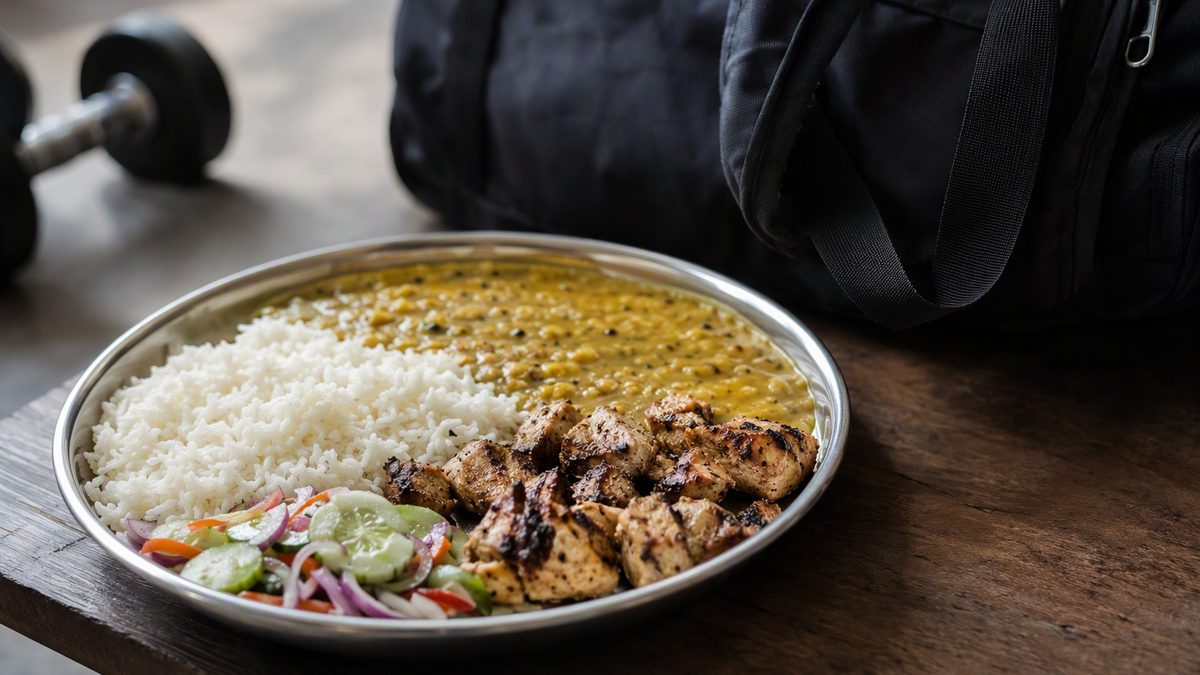
You do not need exotic products. A balanced plate covers protein and carbs at once, and whole food brings fiber and fluid along for free. Find your bodyweight, hit the protein target in the meal after training, and add quality carbs and a drink. Pick the option that fits your day.
| Your bodyweight | Post-workout protein (0.3-0.4 g/kg) | Quick meal option | Sit-down meal option |
|---|---|---|---|
| 70 kg (154 lb) | 21-28 g | Greek yogurt with berries and granola | Chicken sandwich with fruit |
| 80 kg (176 lb) | 24-32 g | Whey shake with a banana | Eggs and toast with fruit; or chicken, rice, and veg |
| 90 kg (198 lb) | 27-36 g | Chocolate milk plus a yogurt | Salmon with potatoes and greens |
| 100 kg (220 lb) | 30-40 g | Two-scoop shake with oats and fruit | Burrito bowl with beans, rice, and chicken |
A couple of practical notes. A shake earns its keep when you trained fasted, can't stomach solid food right after a hard session, or won't reach a real meal for a few hours, otherwise a normal plate is just as good. Rehydrate to thirst and check your urine runs pale yellow; you do not need a special sports drink after ordinary gym sessions, since food supplies the sodium you lost. And remember the day, not the meal: spreading similar protein across breakfast, lunch, and dinner does more than perfecting one post-workout feeding.
4. Early Mistakes Returning Lifters Make
- Treating the window as real. Racing to eat in 30 minutes adds nothing if your daily protein is already covered. Relax the clock and watch the day.
- Carbs-only after lifting. A banana or a sports drink alone leaves repair undersupplied. Pair carbs with a real protein source.
- Going too hard, week one. Soreness is not the goal, and your tendons and joints adapt slower than your muscles. Ramp volume gradually.
- Copying a 25-year-old's plan. Slower recovery and poorer sleep than your younger self mean recovery food and rest matter more, not less.
- Stacking supplements over basics. No powder beats simply hitting your daily protein, sleeping, and showing up consistently.
5. Respect Your Joints Before You Chase Muscle
One thing that surprises returning lifters over 40: the muscles feel fine in a week, but the elbows, knees, and shoulders grumble for longer. That is real physiology, not weakness. Connective tissue adapts more slowly than muscle at any age, and that gap widens with the years. No recovery meal fixes a joint you overloaded too fast.
So the smartest move is to let nutrition support a sensible ramp rather than excuse an aggressive one. Hit your protein and carbs to fuel adaptation, keep added body mass useful rather than excess, and add load gradually, week over week, so tendons keep pace with the muscle. If you were sedentary for years or take medication for blood pressure or anything else, get a quick medical check before pushing intensity. And watch the simple signals over a month or two: steady performance, manageable soreness, and a bodyweight trend heading where you want it mean the plan is working.
Recovery Questions From Returning Lifters Over 40
Is it too late to see real results starting in my 40s?
Not at all. Adults in their 40s and well beyond build muscle and strength when they train and eat enough protein; age changes the pace, not the response. The lever is total daily protein, around 1.6 to 2.2 grams per kilogram, paired with consistent resistance work. Your post-workout meal is just one of those daily feedings, not a make-or-break deadline. Start gradually, respect your joints, and judge progress at week eight.
Do I really have to drink a shake right after my workout?
No. The 30-minute window is a myth; once your daily protein is matched, eating immediately offers no extra benefit, and the usable period is hours wide. A normal balanced meal within a couple of hours is fine. A shake is just convenient, useful mainly if you trained fasted, can't face solid food after hard training, or won't reach a real meal for a while. Otherwise a plate of whole food works just as well.
Why do my joints hurt more than my muscles when I start back?
Because connective tissue adapts slower than muscle, and that gap grows with age. Your muscles recover within days, but tendons and joints need longer to handle new load. No recovery meal shortcuts that. Fuel adaptation with adequate protein and carbs, then add volume gradually rather than chasing soreness. If joint pain persists or you were sedentary for years, get it checked before pushing intensity.
Do I need different recovery numbers than a 25-year-old?
The protein target is similar, roughly 0.3 to 0.4 grams per kilogram in the post-workout meal and 1.6 to 2.2 grams per kilogram across the day. What differs is the margin for error: slower connective-tissue adaptation, more life stress, and poorer sleep mean recovery food and rest matter more for you. So hit the numbers consistently, ramp load gradually, and prioritize sleep, which younger lifters can sometimes get away with shortchanging.
Disclaimer: This article is for educational purposes only and is not medical advice. Consult a qualified healthcare professional before starting any supplement, nutrition, or training protocol — especially if you are pregnant or breastfeeding, under 18, taking medication, or managing a health condition.
Scientific References & Clinical Sources
- Schoenfeld BJ, et al. The effect of protein timing on muscle strength and hypertrophy: a meta-analysis. J Int Soc Sports Nutr, 2013. PMID: 24299050
- Aragon AA, Schoenfeld BJ. Nutrient timing revisited: is there a post-exercise anabolic window?. J Int Soc Sports Nutr, 2013. PMID: 23360586
- Morton RW, et al. A systematic review, meta-analysis and meta-regression of the effect of protein supplementation on resistance training-induced gains in muscle mass and strength in healthy adults. Br J Sports Med, 2018. PMID: 28698222
- Phillips SM, Van Loon LJ. Dietary protein for athletes: from requirements to optimum adaptation. J Sports Sci, 2011. PMID: 22150425
- Thomas DT, et al. American College of Sports Medicine Joint Position Statement: Nutrition and Athletic Performance. Med Sci Sports Exerc, 2016. PMID: 26891166

